English हिन्दी
Connect with us

India News

CJI talks of attempt to weaken judiciary, says need to overcome personal ambitions

Published

on

CJI talks of attempt to weaken judiciary, says need to overcome personal ambitions

Chief Justice of India Dipak Misra, who faced severe criticism from four senior-most SC judges in January this year regarding administrative matters of the top court and an abortive move to impeach him, made an indirect reference to the matter in his address on the occasion of the Independence Day today.

Speaking after hoisting the national flag in Supreme Court at the function organised by Supreme Court Bar Association, the CJI said “to criticise, attack and destroy a system is quite easy” but “what is difficult and challenging is to transform it into a performing one”.

“For this, one has to transcend one’s personal ambitions and grievances. Rather constructive steps need to be taken with positive mindset of reform, no matter howsoever small”, he said while addressing a gathering after unfurling the national flag at the Supreme Court.

He said “concrete reforms must be undertaken with rationality, maturity, responsibility and composure” and that “it is necessary to be productive instead of being counter-productive”.

He added that there may be some elements who may endeavour to weaken the institution. “But we refuse, you and I altogether, to succumb to them…We have to serve the lady of justice, the queen of justice. She holds the scales of justice symbolising that the act of delivering and imparting justice has to be balanced as far as possible and that is the basic essence of justice. Anyone who tries to create any kind of dent in that balance is hurting the queen of justice. And when queen of justice sheds tears, possibly all of us will shed tears”, the CJI sought to remind.

Claiming democracy was at stake, the judges had pointed fingers at the administration of the Supreme Court and flagged their concerns about assignment of sensitive cases to junior judges.

CJI Dipak Misra had faced severe criticism from four senior-most SC judges in January this year when, in an unprecedented step, the four senior-most judges of the Supreme Court held a press conference to raise certain grievances about the administrative orders of the CJI.

The judges had said they were discharging their debt to the nation and that addressing media was their last resort.

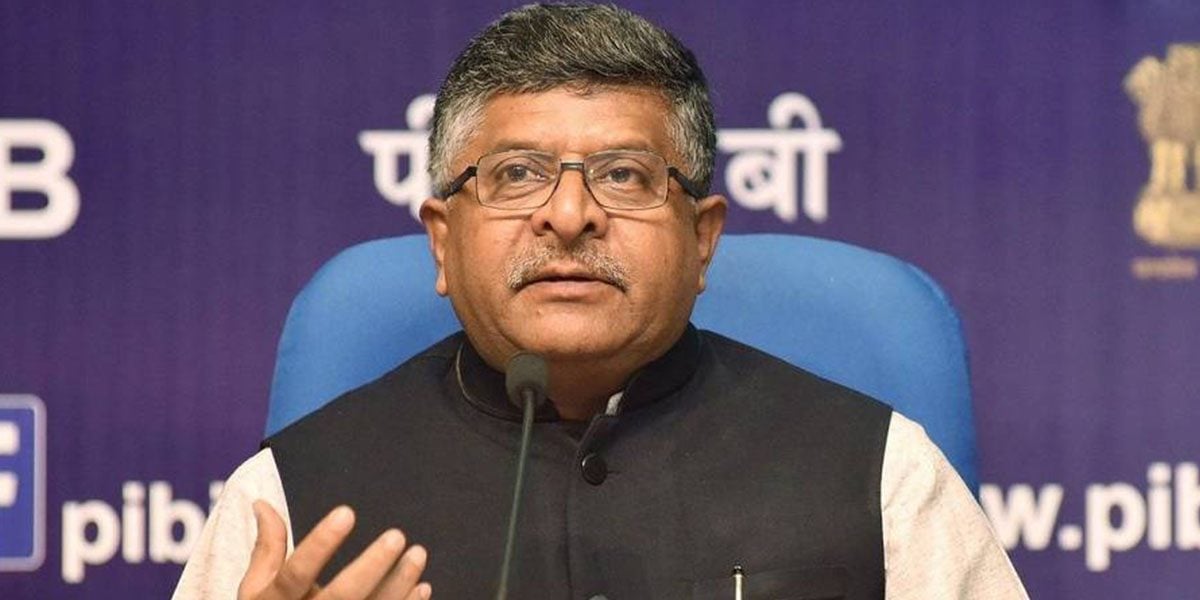
Referring to the mention of “polity of identity” in Law Minister Ravi Shankar Prasad’s speech at the event, CJI Misra said: “I am happy that the Law Minister has talked about the identity of the citizens. This identity has to be founded on the idea of humanism which is fundamentally constitutional and legitimate.

“How far we follow this path only the future will tell.”

Speaking earlier, the Law Minister, while recalling the trauma of partition, said that despite large-scale destruction and dislocations, India chose not to be theocratic. Referring to the different phases of development over last seven decades, the Law Minister said initially it was a “polity of want, then came polity of identity and now we have polity of aspiration and hope”.

Prasad also flagged the issue of frivolous PILs. PILs were “respected” and “accepted”, Prasad said adding the “judiciary must intervene to set things right” where there was “deprivation of the rights of the poor, the marginalised, abuse of power for nepotism it personal purposes, or downright corruption by executive heads, political or bureaucratic”.

He added that “while I notice with satisfaction that the Supreme Court is imposing a lot of cost on fly by night PILs, but there need to have some kind of audit, some kind of understanding the larger perspective of PIL is not lost”.

The Law Minister also called for striking a healthy balance between the three organs of the state, saying that governance of the country must be left to the elected representatives as governance and accountability go together.

There have been voices from the executive about interference from courts. The SC has pulled up the government on a number of issues, giving stern directions on several issues like police reforms, mob lynching, aadhaar, etc.

India News

Congress suspends 5 Haryana MLAs over cross-voting in Rajya Sabha polls

Congress suspends five Haryana MLAs for cross-voting in Rajya Sabha elections, citing serious indiscipline and anti-party activities.

Published

on

The Congress has suspended five of its MLAs in Haryana for cross-voting during the recent Rajya Sabha elections, taking disciplinary action over what it described as “anti-party activities”.

The move came after the state unit reviewed the conduct of certain legislators during the polls, where some were found to have voted against the party’s authorised candidate.

Five MLAs suspended after disciplinary process

According to party sources, the MLAs were issued show-cause notices seeking an explanation for their actions. After reviewing their responses, the Congress disciplinary committee recommended suspension.

The decision was approved by the party leadership, including Congress president Mallikarjun Kharge, and has been implemented with immediate effect.

Party calls it ‘grave indiscipline’

Haryana Congress chief Udai Bhan said the action was necessary to uphold party discipline, stressing that defying the official party line during elections weakens organisational unity.

He said the party takes such violations seriously and will continue to act against any form of indiscipline.

Leadership backs strict action

Senior Congress leader and Leader of Opposition Bhupinder Singh Hooda supported the decision, saying it was taken after due consideration.

He noted that while Rajya Sabha elections are conducted through an open ballot system, allowing legislators some flexibility, the party retains the authority to initiate internal disciplinary action in cases of deviation.

Background

The action follows cross-voting reported during the recent Rajya Sabha elections in Haryana, which led to internal concerns within the party. The development has highlighted organisational challenges and prompted the leadership to take corrective steps to reinforce discipline.

Continue Reading

India News

Harivansh set to be elected Rajya Sabha Deputy Chairperson unopposed

Harivansh is set to be elected unopposed as Rajya Sabha Deputy Chairman after no opposition nominations were filed before the deadline.

Published

on

Former Rajya Sabha Deputy Chairman Harivansh is set to be re-elected to the same post unopposed in the election due to be held later today.
The date has been fixed by the Chairman under the relevant rules governing the conduct of business in the Upper House.
According to sources, the deadline for submitting motions for the election was 12 noon on April 16. A total of five notices were received within the stipulated time, all proposing Harivansh for the post.

Multiple nominations, single candidate
The motions were submitted by members across parties, including Jagat Prakash Nadda, Nitin Nabin, Nirmala Sitharaman, Sanjay Kumar Jha, and Jayant Chaudhary, each backed by seconding members.
All five motions explicitly state that Harivansh be chosen as the Deputy Chairman of the Rajya Sabha.

No opposition nomination filed

Notably, no motion was submitted by the Opposition before the deadline. This effectively clears the path for a unanimous election, as there is no contest for the position.
As per parliamentary procedure, motions will be taken up one by one. Once any one motion is adopted by the House, the remaining motions will not be put to vote.

Likely to be elected by voice vote
In line with established practice, the first motion — expected to be moved by Nadda — may be adopted through a voice vote. Following this, the Chairman will formally declare Harivansh as elected Deputy Chairman.
After the declaration, Harivansh will be escorted to the Chair by members from both the Treasury and Opposition benches, adhering to parliamentary convention.

Continue Reading

India News

Amit Shah counters delimitation concerns, says southern states to gain Lok Sabha seats

Amit Shah assures Parliament that southern states will gain Lok Sabha seats after delimitation, countering opposition criticism during the women’s reservation debate.

Published

on

Amit Shah

Union Home Minister Amit Shah on Thursday addressed concerns over the proposed delimitation exercise, asserting in the Lok Sabha that southern states will not lose representation but instead see an increase in their number of seats.

His remarks came during a heated debate linked to the implementation of women’s reservation, where opposition parties have raised fears that population-based delimitation could reduce the political weight of southern states.

Shah rejected these claims, calling them misleading, and said the proposed framework ensures fairness while expanding the overall strength of the Lok Sabha.

Seat count to rise with expansion of Lok Sabha

The government has indicated that the total number of Lok Sabha seats could increase significantly as part of the delimitation process. In this expanded House, the combined representation of southern states is expected to rise from 129 seats at present to around 195 seats.

Shah emphasised that no state will lose seats in absolute terms, and the exercise is designed to reflect population changes while maintaining balance across regions.

State-wise projections shared in Parliament

During his address, Shah also provided indicative figures for individual southern states, suggesting notable increases in representation. According to the projections:

  • Tamil Nadu could see its seats rise substantially
  • Kerala, Telangana, and Andhra Pradesh are also expected to gain additional seats
  • Karnataka’s representation may increase as well

These figures were presented to counter the argument that delimitation would disproportionately favour northern states.

Political debate intensifies over linkage with women’s quota

The delimitation exercise has been closely linked to the rollout of women’s reservation, which proposes one-third seats for women in Parliament and state assemblies.

Opposition leaders have questioned this linkage, arguing that tying reservation to delimitation could delay its implementation and raise federal concerns. Some leaders have also warned that the move could impact national unity if apprehensions among states are not addressed.

The government, however, maintains that the reforms are necessary to ensure equitable representation and to align the electoral system with demographic realities.

Centre dismisses ‘false narrative’ on southern states

Shah reiterated that concerns about southern states losing influence are unfounded. He said the delimitation process will increase representation across regions and described the criticism as a “false narrative” aimed at creating confusion.

The issue is expected to remain a key flashpoint as Parliament continues discussions on the women’s reservation framework and related legislative changes.

Continue Reading

Trending

© Copyright 2022 APNLIVE.com