English हिन्दी
Connect with us

India News

Delhi Police arrests woman for killing boyfriend’s 11-year-old son, dumping body in bed box

The police added that they restricted down potential hiding places and started looking for her after searching her parent’s and relatives’ homes.

Published

on

Delhi Woman

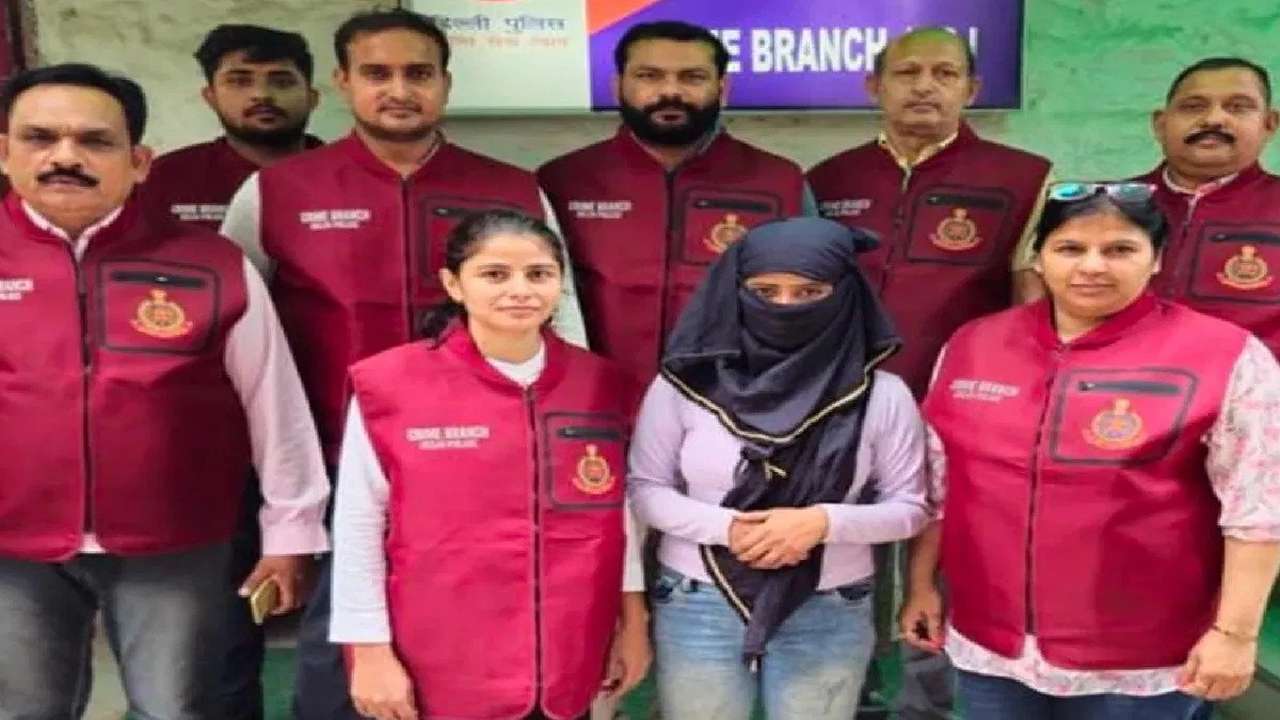
A 24-year-old woman has been detained by the Delhi Police Crime Branch on suspicion of killing her boyfriend’s 11-year-old son, whom she apparently saw as a barrier to their relationship. The youngster was allegedly strangled while sleeping by the accused, Pooja, who then hid his body inside the box of their bed before fleeing the scene.

Pooja confessed to the act and accepted responsibility after being apprehended, according to the police.

She and Jitender lived together in the Ranhola area of West Delhi. She allegedly blamed the minor boy for Jitender’s failure to get a divorce from his wife.

On Sunday in Bakkarwala, police detained Pooja Kumari after searching through 300 CCTV cameras that were set up in various sites. The crime branch claimed that the accused was frequently shifting her hiding places and eluding the police squad.

On August 10, BLK Hospital notified Delhi Police that an 11-year-old had been taken there dead with signs of strangling all around his neck.

On October 8, 2023, an 11-year-old male minor was brutally killed by strangulation, and his body was discovered hidden inside a bed. As a result, a police station in Inderpuri registered a FIR under section 302 of the IPC, according to Delhi Police.

CTV footage was analysed, and it was found from the footage that one woman, namely Pooja, was the last person to visit the deceased’s home, they continued. The police added that they restricted down potential hiding places and started looking for her after searching her parent’s and relatives’ homes.
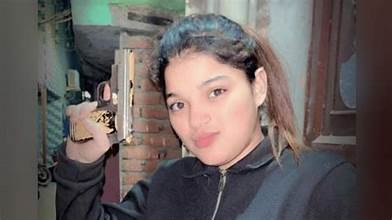
The police further said Pooja was allegedly married to the deceased minor’s father, but Jitender was already married and had promised Pooja that he would divorce his first wife. After some time, Jitender decided against seeking a divorce and starting in December 2022, he moved back in with his first wife.

Pooja allegedly made up her plan to kill Jitender’s son on August 10 while they slept after getting angry by this, according to the police.

India News

Rahul Gandhi’s T-shirt style gets a colourful twist for Gen Z outreach

Rahul Gandhi has adopted colourful shirts during his nationwide “Chhatron Ki Goonj” programme as the Congress steps up its outreach to Gen Z.

Published

on

Congress leader Rahul Gandhi has added a new twist to his public image as he steps up outreach to Gen Z through the nationwide “Chhatron Ki Goonj” programme.

The Leader of the Opposition in the Lok Sabha, who became known for wearing T-shirts during the 2022 Bharat Jodo Yatra, has recently been seen in brightly coloured shirts at several student-focused events.

The change marks a departure from the white T-shirts that became closely associated with his appearance during the Bharat Jodo Yatra, when he walked from Kanyakumari to Kashmir.

From white T-shirts to colourful shirts

Rahul Gandhi wore white T-shirts during the Bharat Jodo Yatra, including during its winter leg. He subsequently continued to appear in T-shirts at party programmes and political events.

The style also became a subject of political criticism, with the BJP repeatedly targeting Gandhi over his choice of attire and describing him as “non-serious”.

Gandhi, however, continued with the T-shirt look and it was also adopted by some Congress leaders who had traditionally appeared in kurta-pyjamas.

His latest appearances have brought a more colourful wardrobe into focus.

Rahul Gandhi’s colourful appearances

Gandhi wore a blue shirt at the first “Chhatron Ki Goonj” event in Kota, where he addressed the issue of paper leaks.

In Dehradun, he was seen wearing a shirt instead of his usual T-shirt. At an event in Allahabad, he wore a pink shirt while interacting with students, drawing discussion on social media.

He later appeared in a yellow shirt at an event in Pune.

The Pune programme focused specifically on female students and working women, with Gandhi addressing issues related to women’s safety, freedom and rights.

Congress steps up Gen Z outreach

The “Chhatron Ki Goonj” programme is part of Rahul Gandhi’s outreach to young people, with paper leaks and issues affecting students among the subjects being highlighted.

The Congress is also seeking to engage young women through programmes and interactions focused on issues concerning them.

Youth and women remain important voter groups in elections, and the Congress is increasingly focusing its outreach on Gen Z as it seeks to strengthen its connection with younger voters.

Gandhi’s colourful shirts have consequently become an additional talking point during his latest student and youth engagements.

Continue Reading

India News

MK Stalin announces major DMK organisational Changes in Tamil Nadu

MK Stalin has announced a major DMK organisational overhaul, introducing age and term limits and expanding party districts from 77 to 110.

Published

on

DMK chief MK Stalin has announced a major overhaul of the party’s organisational structure, months after the party lost the Tamil Nadu assembly election.

Acknowledging the defeat, Stalin said the party must openly recognise its mistakes. He also pointed to the functioning of party office-bearers as one of the factors behind the electoral loss.

“Although there are several reasons for our defeat, the functioning of our party office-bearers is also one of them,” Stalin said, stressing that the party must acknowledge its shortcomings and ensure better performance at every level.

Stalin also described the DMK as a “specialist” in making comebacks and said the party would return stronger.

Age and term limits for party posts

Among the major changes announced by Stalin are age and tenure limits for party positions.

Stalin said the changes would involve a significant restructuring of the DMK’s administrative system, with priority being given to new faces. He said the measures were intended to make the party sustainable for the next 100 years and help restore the trust of young people and women.

Under the new rules, branch secretaries must be aged 45 or below and can hold the position for a maximum of two terms.

District secretaries, meanwhile, must be below 70 years of age and can serve for a maximum of three terms.

DMK to increase party districts from 77 to 110

The DMK executive committee has approved increasing the number of party districts from 77 to 110.

The expansion will be implemented as part of the party’s 16th organisational elections. Revenue districts will generally be reorganised so that each party district covers two assembly constituencies.

Where only one constituency remains after the reorganisation, it will be attached to another suitable party district within the same revenue district as a third constituency.

Stalin has been authorised to determine and announce the constituencies that will form the 110 party districts.

New branch structure planned in urban areas

The DMK will also introduce a new branch-level structure in urban areas, along with the post of branch secretary.

The new system will initially be implemented in Chennai, Coimbatore, Madurai, Tiruchirappalli and Salem. It may subsequently be extended to other corporations.

Once the new party districts are announced, district executive committees will have to meet and establish the union, city, area, town, ward and branch-level units within 15 days.

The organisational changes come as the DMK seeks to restructure its party machinery and prepare for its political comeback following its assembly election defeat.

Continue Reading

India News

PM Modi says India’s political stability makes India a bright spot for growth

PM Modi said India’s political stability and policy continuity are helping make the country a bright spot of growth amid global concerns.

Published

on

Narendra Modi 12345

Prime Minister Narendra Modi on Friday said India has political stability and continuity in its policies, describing the country as a bright spot of growth and hope amid global concerns over economic growth.

Addressing the Economic Times World Leaders Forum, PM Modi said India is continuing to push reforms across sectors to maintain its growth momentum. He said reforms remain a key commitment of his government.

The Prime Minister said the NDA government has a clear roadmap for reforms, with a strong focus on governance. He also said the government is using incentives to encourage higher production.

PM Modi highlights shift in regulatory approach

PM Modi said his government is changing the country’s regulatory framework and moving away from what he described as a “prohibited-unless-permitted” approach.

He said the government believes there should be no regulation for an activity that has not been explicitly prohibited under law. According to him, the aim is to bring next-generation reforms at the policy and governance levels while improving ease of living.

He also contrasted the current Production Linked Incentive (PLI) model with what he described as a “Production Linked Punishment” approach followed by previous governments.

Focus on infrastructure and manufacturing

PM Modi cited changes in areas including the Indian Railways, Delhi Metro and Namo Rapid Rail as examples of reforms reflecting India’s changing needs.

He also said the government has changed the approach towards border infrastructure, which he described as a strength rather than a weakness.

The Prime Minister further highlighted India’s affordable data services and domestic mobile-phone manufacturing while discussing the country’s economic transformation.

India seen as a growth bright spot

PM Modi said the world is facing several concerns related to growth, including the weaponisation of resources, but India is being viewed as a bright spot of growth.

He said India’s political stability, policy continuity and reform efforts are helping sustain the country’s growth momentum.

Continue Reading

Trending

© Copyright 2022 APNLIVE.com