
India News
Delhi Arbitration and Conciliation Council, WICCI holds their first meeting, aims to work for benefit of women empowerment
Delhi Arbitration and Conciliation Council members will also recommend government and other institutions on various policy making.


The Delhi Arbitration and Conciliation Council, WICCI President Vinita Sahay and Vice President Sandhya Kohli on Tuesday conducted the council’s first physical meeting at Jangpura Extension, New Delhi. Along with the President and Vice President, all 36 Council members took part in the meeting.
As per sources, the major objective of the council members is to spread a robust council who will work for the Council and for the benefit of women empowerment with the spirit of sisterhood.
The vision of the council members is to interact with other councils who are registered with Women’s Indian Chamber of Commerce and Industry (WICCI) nationally and internationally with an effort to inform them that Delhi Arbitration and Conciliation Council, WICCI is a team of experienced and dedicated arbitrators, who will keep in view the spirit of the amended Arbitration and Conciliation Act 2016.
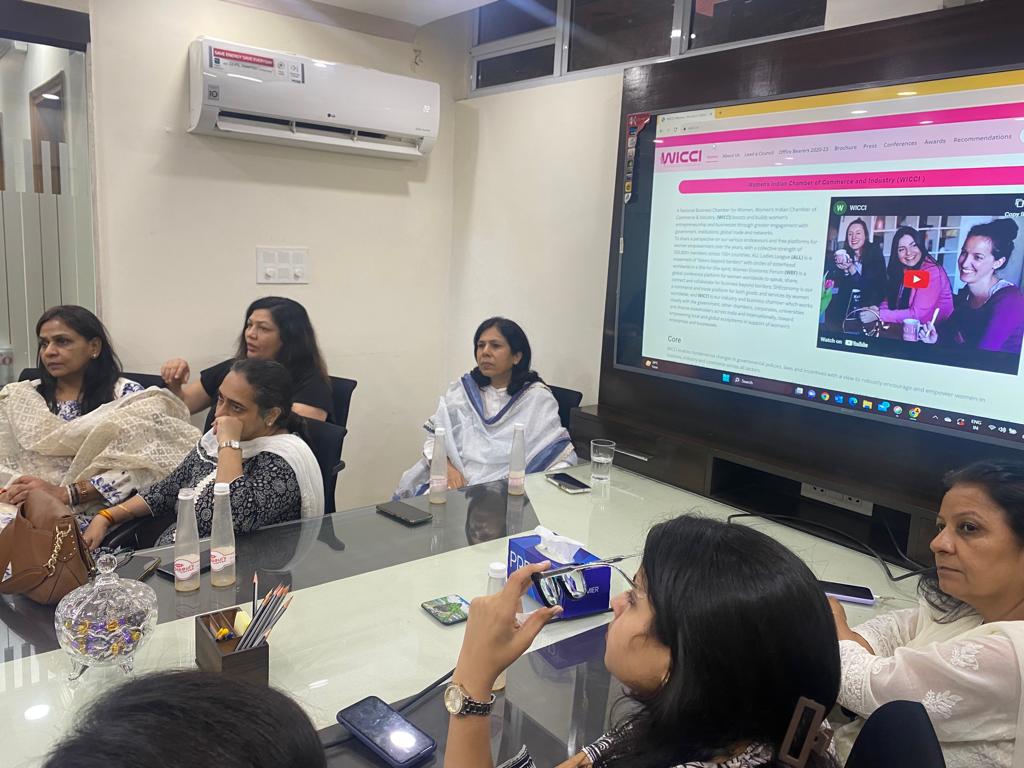
Furthermore, the Delhi Arbitration and Conciliation Council members will also recommend government and other institutions on various policy making. Sources stated that the first meeting was a great success and deliberations were carried out with all council members present in the meeting.
In the Delhi Arbitration and Conciliation Council’s meeting, the council members discussed how to achieve the aforesaid objectives, conduct monthly meetings of council to review action plan, organise webinars and seminars for the awareness of women and further focus on women empowerment by the council of Arbitration and Conciliation initiated in 2023.
Women’s Indian Chamber of Commerce and Industry (WICCI) is a National Business Chamber for Women that strengthens and builds women’s entrepreneurship and businesses through greater engagement with government, institutions, global trade and networks.
Women’s Indian Chamber of Commerce and Industry (WICCI) also enables fundamental changes in governmental policies, laws and incentives with a view to robustly encourage and empower women in business, industry and commerce across all sectors.
India News
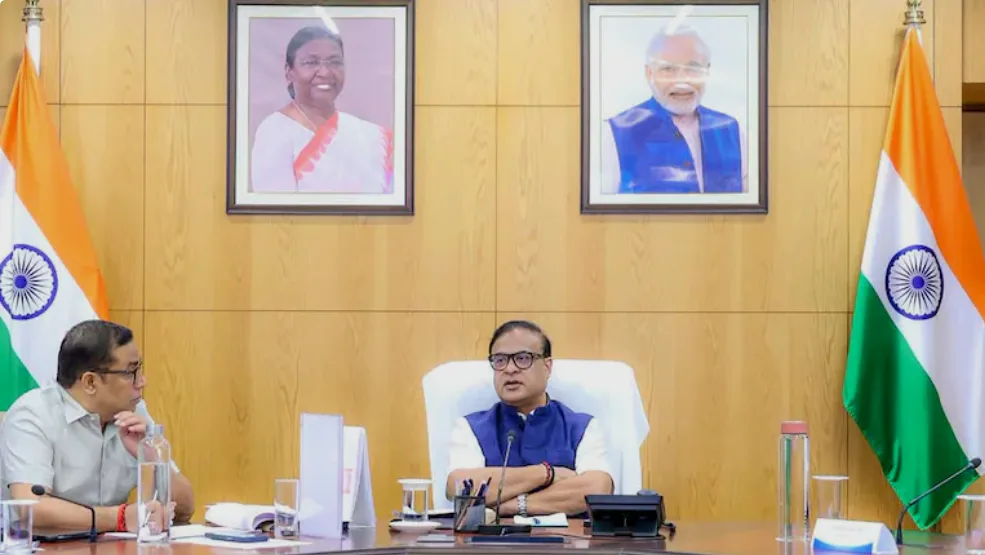
Assam makes Muslim marriage registration compulsory under new rules
Assam has approved rules for compulsory registration of Muslim marriages, with couples able to register through government marriage registrars.

India News
Trump-Xi Summit: Trade, Taiwan and AI among key takeaways
Trade, Taiwan, artificial intelligence and strategic rivalry were among the key issues highlighted during Donald Trump’s summit with Xi Jinping in Washington.

India News
Akhilesh Yadav launches SP’s 2027 UP poll campaign from Rahul Gandhi’s seat
Akhilesh Yadav launched the Samajwadi Party’s 2027 Uttar Pradesh Assembly election campaign from Rae Bareli, represented by Rahul Gandhi in the Lok Sabha.

Veteran actor Mushtaq Khan, known for Welcome and Hera Pheri, dies at 56

Cockroach Janta Party gives CEC Gyanesh Kumar 48 hours to resign, warns of nationwide protests

Rahul Gandhi attacks CEC Gyanesh Kumar, says vote chori leads to kanoon chori

Asian Games 2026: Gurindervir Singh, Animesh Kujur lead India athletics campaign

Akhilesh Yadav launches SP’s 2027 UP poll campaign from Rahul Gandhi’s seat

Assam makes Muslim marriage registration compulsory under new rules

Trump-Xi Summit: Trade, Taiwan and AI among key takeaways
Akhilesh Yadav launches SP’s 2027 UP poll campaign from Rahul Gandhi’s seat
Asian Games 2026: Gurindervir Singh, Animesh Kujur lead India athletics campaign
Cockroach Janta Party gives CEC Gyanesh Kumar 48 hours to resign, warns of nationwide protests

Afghan Men Try To Hang With The Jet Engine Of The Aircraft in Kabul- Afghanistan News – Kabul News
Trending Top 10 News: 10000 Crore Fine on Flipkart, Apple to Launch Unique Feature, Hdfc Bank Job Ad

Trending Top 10 News: Nokia 6310, Apple sales, Bachpan ka Pyar Video Kid, Dainik Bhaskar IT Raid

Trending Top 10 News: Canada bans Indian flights, Rain in Delhi NCR, AIMIM Twitter hacked, Raj Kundra case

Trending Top 10 News: Shein India, Apple New Service, Pocket Oxygen, Oppo Launched New Phone
-
 Entertainment16 hours ago
Veteran actor Mushtaq Khan, known for Welcome and Hera Pheri, dies at 56
-
 India News16 hours ago
Cockroach Janta Party gives CEC Gyanesh Kumar 48 hours to resign, warns of nationwide protests
-
 India News17 hours ago
Rahul Gandhi attacks CEC Gyanesh Kumar, says vote chori leads to kanoon chori
-
 LATEST SPORTS NEWS15 hours ago
Asian Games 2026: Gurindervir Singh, Animesh Kujur lead India athletics campaign
-
India News2 hours ago
Akhilesh Yadav launches SP’s 2027 UP poll campaign from Rahul Gandhi’s seat
-
 India News2 hours ago
Trump-Xi Summit: Trade, Taiwan and AI among key takeaways
-
 India News2 hours ago
Assam makes Muslim marriage registration compulsory under new rules
