English हिन्दी
Connect with us

LATEST SPORTS NEWS

A Sports Plan for India: conceived and directed by bureaucrats

Published

on

A Sports Plan for India: conceived and directed by bureaucrats

By Sanjiv Bhatia

The recent success of Indian athletes at the Asian games must be applauded. Five Hundred and seventy athletes competed in thirty-nine sports to win a total of 69 medals. It is time now to think ahead on how to build on this success and take Indian sports forward.

The NitiAyog has come up with a plan called First Play which lays down a strategy for getting India 50 medals in the 2024 Olympics. For a country that won two medals in 2016, and has a total of 23 medals over the last 70 years, this goal seems to be a real stretch. What makes this goal sheer delusion, however, is NitiAyog’s plan to get there.

Bureaucrats run the NitiAyog. They are bright people and surely mean well for the country. But they are programmed to find solutions that run through the government machinery. More government involvement, more policies, more regulations, and more committees are their solution to all problems. It is baffling that an institute tasked with transforming India would ignore the inexorable truth that market-based solutions that allow individuals to pursue goals based on their own set of skills and incentives are the best way to achieve optimum performance.

Niti’sFirst Play plan includes, among other things, ‘targeting’ ten priority sports based on past success and something they call ‘high winning potential’. It sounds like the License Raj policy that destroyed India’s economic growth for five decades. Allowing bureaucrats and politicians to pick priority sectors did not work for our economy and will certainly not help Indian sports. If anything, it assures political meddling since prioritised sports will get higher public funds. For example, Haryana, which produces a high number of wrestlers, will unquestionably want wrestling to be a priority sport.

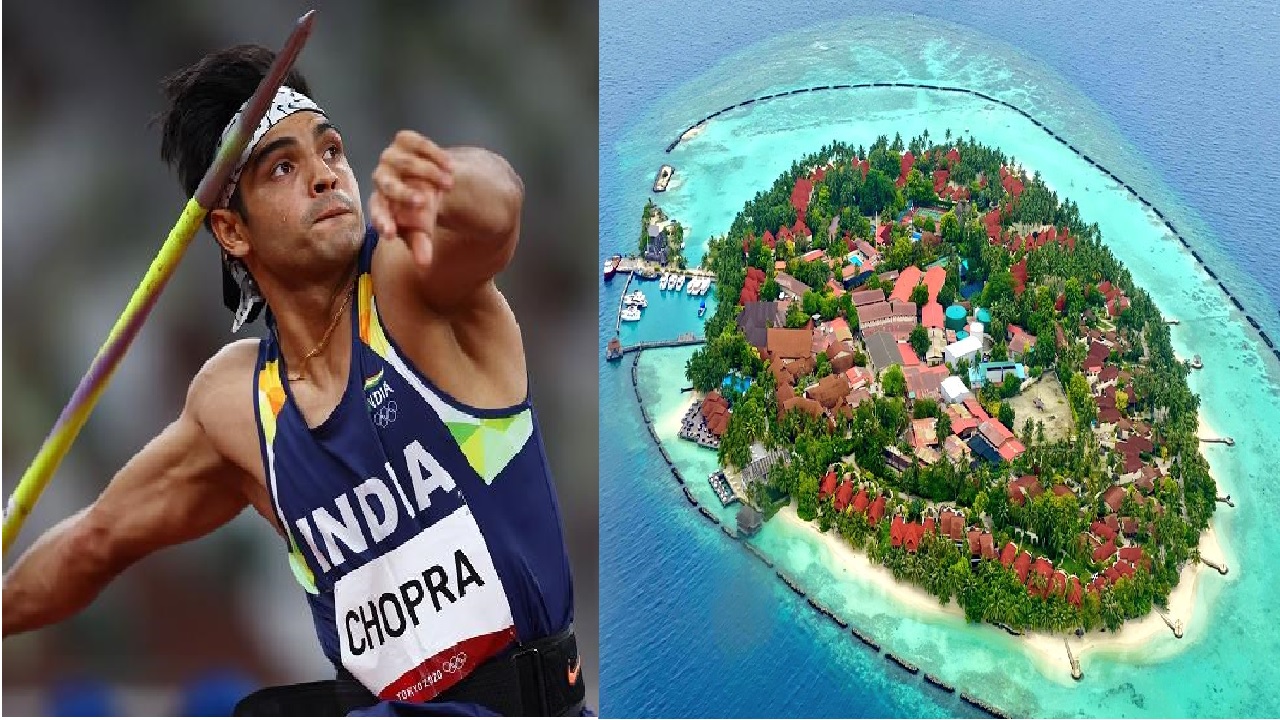
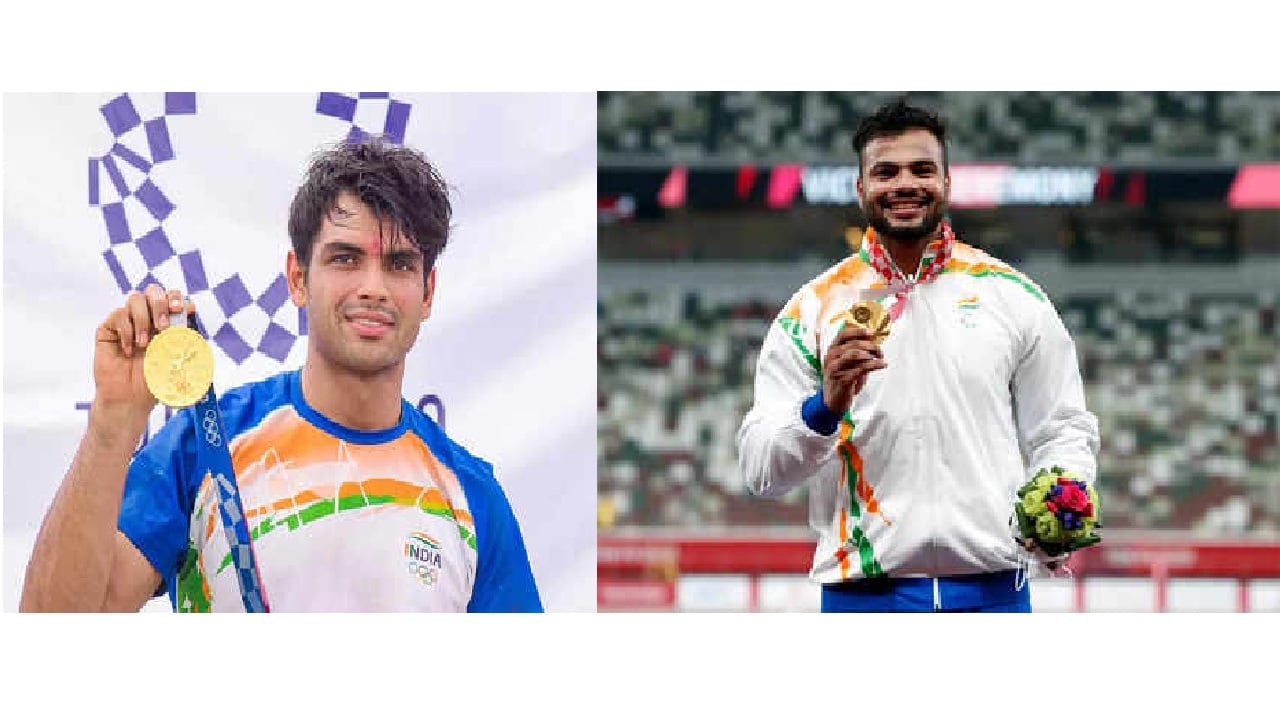
Neeraj Chopra, India’s Javelin throw Gold medallist, would never succeed under Niti’s plan because Javelin would have never been a priority sport. It has no track record of success. Neither would Swapna Barman who won the Gold in Heptathlon nor would we have seen the likes of Milkha Singh and PT Usha winning in a sport like 400 meters which in their days would not have been a priority sport. And DipaKarmakar, the Indian gymnast would not have medalled at the 2016 Olympics, because gymnastics has little history in India and would not be prioritized.

It has always been the success of an elite athlete that increases participation in a sport. It was the success of Mark Spitz that provided an impetus for the next generation of U.S. swimmers like Michael Phelps and not some wacky government prioritisation scheme. Likewise, Usain Bolt’s success has ignited more athletic interest in Jamaica than any government scheme. Let natural talent decide which sports India medals in, not some bureaucrat or politician.

A good model for India to follow is the USA, a country which has dominated world athletics with over 2500 Olympic medals over the last hundred years, and where the government has absolutely no involvement in sports. The United States Olympic Committee is a non-profit organisation funded entirely through private sources, but more importantly, also privately managed. Unlike India, the USA does not have a Ministry of Sports. So, one has to ask the question that with no government funding of its Olympic efforts, and no Ministry for sports how has the U.S. performed better than other countries over the last ten decades?

The answer is straightforward. Government bureaucracies and Ministries are not a help but a hindrance for optimum athletic performance. It is the freedom to pursue one’s dreams and the monetary rewards that follow from winning that has led to an explosion of talent in U.S. sports. Let’s mimic this successful model in India. The country unshackled its economy from government controls in the 1990’s and per capita income grew ten-fold over the next two decades. If India does the same for sports, its medal tally could also increase ten-fold. Let private sports companies develop business models to find, train and support the best athletic talent. A market-based process which creates the right incentives for private companies to unearth the best talent, to provide them with the best in facilities and coaching, and to produce world-class athletes, should be the bedrock of India’s sports policy.

To win 50 Olympic medals the country needs to make sports a business. Athletes, from beginners through to high-performance amateurs or professionals, represent the basis of the sports industry. They are the engine of the sports economy. They create demand for coaches and trainers, they are consumers of manufactured sporting goods, and they use the sporting facilities. High-performance athletes attract people to the stadium for amateur or professional sports events, and their performances are broadcast on TV. The economic activity related to the sport and recreational service industries also has a broad impact on the economy. Thousands of jobs tied directly to sporting activity are created by new companies engaged in the discovery, management, training of athletes, and manufacturing of sporting, athletic and recreation equipment.

The world of professional sports operates entirely in the private domain. Whether it is professional basketball in the form of the NBA, or global soccer clubs like Manchester United, Real Madrid, Chelsea–every one of them is privately owned or has shares traded on a stock exchange. That is the direction for sports in India. Some of it is already happening and private clubs in Cricket, Soccer, Tennis, Badminton, and even Kabaddi have found a way to monetise themselves using the power of private enterprise and the free market.

Private sports clubs and schools, similar to the ones in Norway and Finland, must be encouraged. Private sports management companies armed with the best functional movement and muscle testing equipment could identify potential athletes from a very early age. One of the world’s largest sports management company, IMG, has designed a systematic approach that tests athletes to assess their performance levels using sport-specific standardised tests. There are even some new, but unproven, genetic tests which can show the disposition of a person towards a particular sport.  All of this science is now coming into the sports business, and private capital would jump at the opportunity to deploy it in a massive market like India.

Eventually what will make India a successful sporting country is not more government involvement but creating the right incentives for the athletes. And these incentives are best created by a free market which is unencumbered by government control.  Corporate sponsorship is a form of survival for most athletes. It covers the cost of living and training for athletes. Private sports management companies could be invited to invest in the development of Indian athletes. These companies are in the business of finding talent, paying for their training, finding the best trainers, coaches and performance psychologists, and eventually benefiting themselves and the athletes they represent by maximising their sponsorship value. Michael Phelps alone has won more medals in the last four Olympics than India has in over seventy years, yet he has never received a penny from the US government; sponsorship pays for his living and training.

In the 2018 budget, the government of India allocated almost Rs 2196 crores for sports. Bureaucrats and politicians still control and run the country’s sports. The NitiAyog’sFirst Play plan is just more of the same thing: more government involvement, more rules, more government agencies, more bureaucracy, and more corruption. India needs to transform the way it thinks about sports. Sports should become an industry with its sports schools, sports clubs, private coaching academies, sports management companies, equipment manufacturers, professional leagues, TV rights, sponsorships etc. The Sports Ministry should be abolished, and all regulatory barriers to entry should be removed to allow private sports management companies to find, adopt, train, support, and convert Indian athletes into world-class medal winners.

The only way to get to 50 medals by 2024 is to get the government out of the business of managing sports. Otherwise, like the bureaucrats at the NitiAyog, we can all keep dreaming.

The author is a financial economist and founder of contractwithindia.com

 

LATEST SPORTS NEWS

PM Modi praises Team India after historic T20 World Cup triumph

Prime Minister Narendra Modi congratulated Team India after its dominant win over New Zealand in the T20 World Cup 2026 final, praising the team’s exceptional skills, determination and teamwork.

Published

on

PM Narendra Modi

India’s victory in the ICC Men’s T20 World Cup 2026 drew praise from political leaders across the country, with Prime Minister Narendra Modi congratulating the national team for what he described as a triumph built on “exceptional skills, determination, and teamwork”.

India defeated New Zealand by 96 runs in the final, securing the title and becoming the first team to win the T20 World Cup three times.

In a message posted online, the prime minister said the team showed remarkable resilience throughout the tournament and made the nation proud.

“Congratulations to the Indian team on winning the ICC Men’s T20 World Cup! This remarkable triumph reflects exceptional skills, determination, and teamwork. They have shown outstanding grit through the tournament. This victory has filled every Indian heart with pride and joy. Well done, Team India,” he wrote.

President Murmu congratulates team

President Droupadi Murmu also congratulated the players and the support staff, saying the achievement marked a historic moment for Indian cricket.

She said the win had brought immense pride and happiness to cricket lovers across the country and highlighted the depth of talent among India’s youth.

“Heartiest congratulations to Team India which scaled several peaks of history by winning the ICC Men’s T20 World Cup emphatically. India has the proud distinction of being the only country to win the cup three times. It is also the only team to win the cup twice in a row,” she said in her message.

The president also praised the entire squad, team management, and support staff for their collective effort.

Amit Shah hails team’s performance

Union Home Minister Amit Shah applauded the team for its consistent performance during the tournament and said the victory had brought glory to the country.

“What a victory…!! Hats-off to World Champion #TeamIndia. Your exceptional performance throughout the tournament and the vigorous display of mettle has brought glory and pride for the nation. Congratulations to the entire team for making every Indian proud,” he said.

India dominate the final

Led by captain Suryakumar Yadav, India delivered a dominant performance in the final.

Batting first after losing the toss, India posted a massive total of 255 runs. Sanju Samson played a crucial innings of 89 runs, while Abhishek Sharma struck the fastest half-century of the tournament off just 18 balls. Ishan Kishan also contributed with a quick 54 off 25 balls, helping India reach the highest total ever recorded in a T20 World Cup final.

India’s bowlers then sealed the victory with an impressive display. Jasprit Bumrah took four wickets for 15 runs, while Axar Patel picked up three wickets. Varun Chakravarthy, Abhishek Sharma, and Hardik Pandya claimed one wicket each.

The match ended when Abhishek Sharma dismissed New Zealand’s Jacob Duffy on the final ball of the 19th over, confirming India’s emphatic victory.

Continue Reading

Cricket news

India’s T20 World Cup triumph validates Gautam Gambhir’s approach, coach dedicates win to Dravid and Laxman

Gautam Gambhir said he is accountable only to the team dressing room after India defeated New Zealand by 96 runs to win the 2026 T20 World Cup and dedicated the title to Rahul Dravid and VVS Laxman.

Published

on

Gautam Gambhir (1)

India’s victory in the 2026 T20 World Cup has become a moment of redemption for head coach Gautam Gambhir, who had faced heavy criticism after a series of Test defeats earlier in his tenure.

India defeated New Zealand national cricket team by 96 runs in the final to clinch their third T20 World Cup title, becoming the first team to achieve the feat. The win also marked the first time a team successfully defended the trophy after lifting it in the previous edition.

Gambhir says accountability lies within the dressing room

Speaking after the final, Gambhir said he does not measure his work based on public opinion or social media reactions.

“My accountability is not for people on social media. My accountability is to those 30 people in that change room,” Gambhir said during the post-match press conference.

The former India opener added that a coach’s success ultimately depends on the players.

“A coach is as good as his team. Players made me the coach I am,” he said.

Trophy dedicated to Dravid and Laxman

Despite celebrating a major triumph, Gambhir chose to acknowledge the contributions of two former India greats — Rahul Dravid and VVS Laxman.

Dravid had guided India to the T20 World Cup title in 2024 before Gambhir took over the role, while Laxman currently heads the BCCI’s Centre of Excellence.

“I would dedicate this trophy to Rahul Dravid and VVS Laxman. To Rahul bhai for putting the Indian team in a place and Laxman for creating the pipeline at the CoE,” Gambhir said.

He also expressed gratitude to chief selector Ajit Agarkar and ICC chairman Jay Shah, recalling their support during difficult phases.

“Ajit Agarkar took a lot of flak and worked with honesty. And Jay bhai called me during my lowest ebb after the losses to New Zealand and South Africa,” he noted.

India dominate final with bat and ball

India produced a commanding performance in the final. Batting first, the team posted a massive total of 255 for five.

Sanju Samson led the charge with a blistering 89, while Abhishek Sharma (52) and Ishan Kishan (54) struck quick half-centuries to put New Zealand under pressure.

Defending the total, India bowled out New Zealand for 159. Jasprit Bumrah starred with figures of 4 for 15, while Axar Patel claimed three wickets.

Suryakumar backs Gambhir’s philosophy

India captain Suryakumar Yadav praised Gambhir’s leadership and said the pair share a strong understanding built during their time at Kolkata Knight Riders.

“I played four years under GG’s captaincy. We have never had arguments because the goal has always been how the team can win,” Suryakumar said.

He also stressed that the team’s focus remains on collective success rather than individual milestones.

Looking ahead, the captain said India would now aim for gold when cricket makes its Olympic appearance at the 2028 Los Angeles Olympics.

Continue Reading

Cricket news

India win record third T20 World Cup after thrashing New Zealand in 2026 final

India defeated New Zealand by 96 runs in the T20 World Cup 2026 final in Ahmedabad, becoming the first team to win the tournament three times and defend the title.

Published

on

india wins worldcup 2026

India scripted history by defeating New Zealand by 96 runs in the ICC Men’s T20 World Cup 2026 final at the Narendra Modi Stadium in Ahmedabad on Sunday, becoming the first team to win the tournament three times and also the first to successfully defend the title.

Batting first after being put in, India produced a powerful performance with the bat to post 255 for 5 in 20 overs, the highest total ever recorded in a T20 World Cup final.

Sanju Samson led the charge with an impressive 89, while Abhishek Sharma played a stunning cameo, smashing the fastest half-century of the tournament off just 18 balls. Ishan Kishan added 54 from 25 balls and Shivam Dube provided late momentum with a quick 26 off only eight deliveries.

New Zealand fall short in steep chase

Chasing a daunting target of 256, New Zealand struggled to keep pace with the required run rate and were eventually bowled out for 159 in 19 overs.

Jasprit Bumrah delivered a match-winning spell, taking four wickets while conceding just 15 runs in his four overs. Axar Patel also made a strong impact with three wickets.

With the emphatic victory, India secured their third T20 World Cup title after previous triumphs in 2007 and 2024.

Historic achievement for India

The victory marked several milestones for the Indian team. They became the first side to:

  • Win the T20 World Cup three times
  • Defend the T20 World Cup title
  • Win the tournament on home soil

The triumph also capped a successful era under captain Suryakumar Yadav and head coach Gautam Gambhir, with India continuing their dominance in the shortest format of the game.

Continue Reading

Trending

© Copyright 2022 APNLIVE.com