English हिन्दी
Connect with us

India News

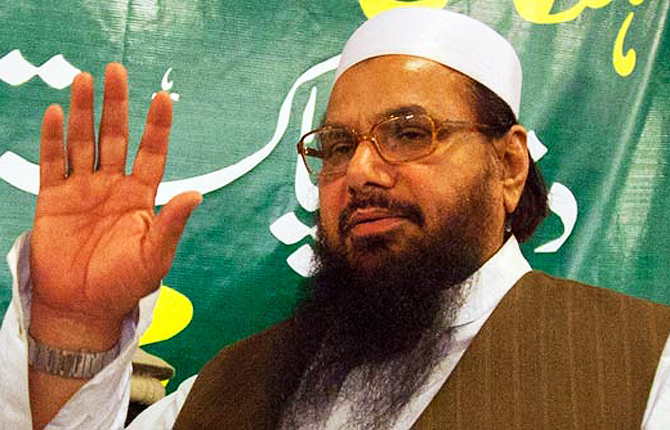
Pakistan denies India request to extradite 26/11 mastermind Hafiz Saeed, says no bilateral extradition treaty

Pakistan’s Foreign Office Spokesperson Mumtaz Zahra Baloch that it is pertinent to note that no bilateral extradition treaty exists between Pakistan and India.

Published

on

Pakistan affirmed that India has sought the extradition of Lashkar-e-Taiba (LeT) founder Hafiz Saeed. Responding to India’s request, Pakistan added that there was no bilateral extradition treaty between the two countries. Notably, the 2008 Mumbai attack mastermind and a UN-proscribed terrorist Hafiz Saeed is wanted by Indian investigation agencies in multiple terror cases.

Ministry of External Affairs spokesperson Arindam Bagchi on Friday said that the request for extraditing Pakistan-based Saeed, along with certain documents, was sent to Islamabad recently. He added that they have conveyed a request along with relevant supporting documents to the government of Pakistan.

Reports said that Pakistan’s Foreign Office Spokesperson Mumtaz Zahra Baloch asserted that her country received a request from the Indian authorities seeking Saeed’s extradition in a so-called money laundering case. She further added that it is pertinent to note that no bilateral extradition treaty exists between Pakistan and India. Though New Delhi does not have an extradition pact with Islamabad, people familiar with the matter said extradition is possible even in the absence of such a framework pact.
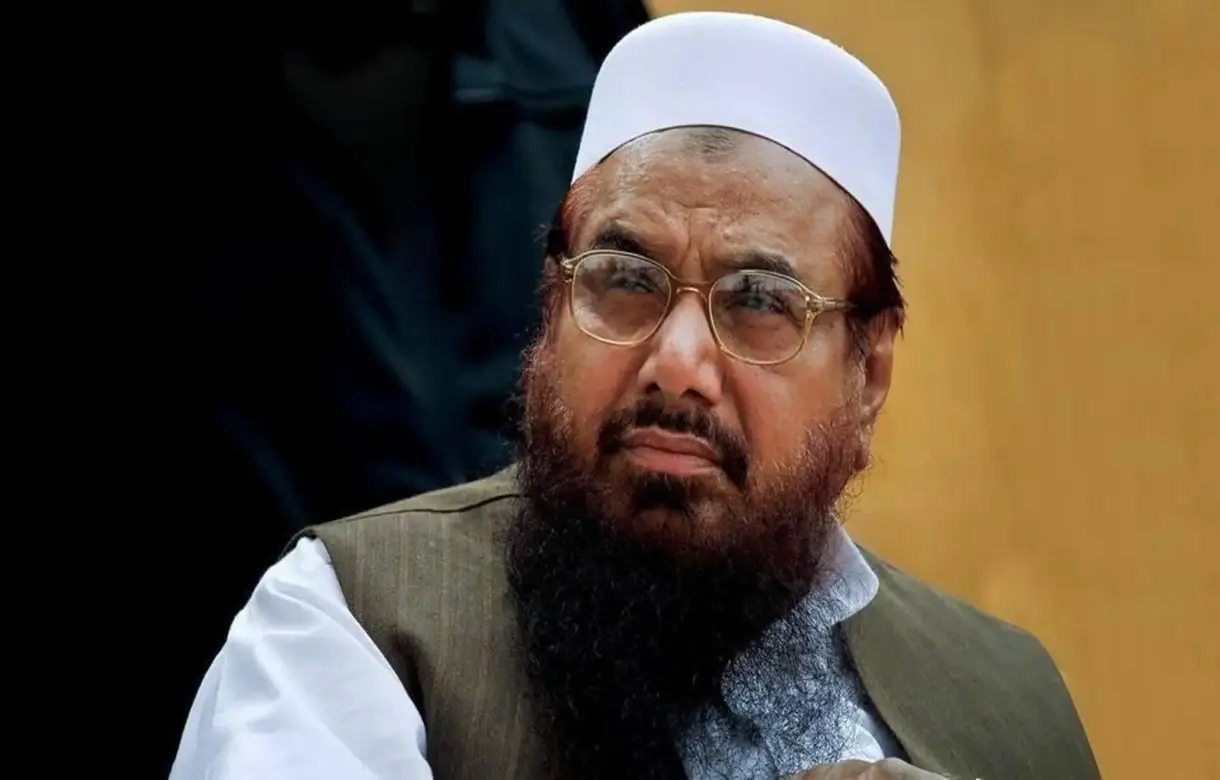
The Mumbai terror attack mastermind Hafiz Saeed is a hardline cleric who was arrested in July 2019 by the Counter Terrorism Department (CTD), following 23 first information reports registered against him and his close associates. Hafiz Saeed was given a combined sentence of 33 years imprisonment in April 2022 by an anti-terrorism court in two cases of terror financing.

Furthermore, Hafiz Saeed has been listed as one of India’s most wanted terrorists and carries a $10 million bounty placed by the US for his alleged involvement in the 26/11 Mumbai attacks. The terror attacks, orchestrated on November 26, 2008, over the course of four days, killed as many as 166 people and injured 300.

India’s extradition request follows amid a recent development that Hafiz Saeed-backed Pakistan Markazi Muslim League (PMML) will contest the upcoming general elections in Pakistan. Additionally, Hafiz Saeed’s son Talha Saeed is also in the run and will contest the elections from the National Assembly’s constituency NA-127, Lahore.

India News

Rahul Gandhi, Rajnath Singh clash in Lok Sabha over ex-Army chief’s unpublished book on Ladakh

Lok Sabha proceedings were disrupted after Rahul Gandhi cited an unpublished book by former Army chief General MM Naravane on the Ladakh stand-off, drawing objections from Rajnath Singh and other BJP leaders.

Published

on

Rahul Gandhi

A sharp confrontation unfolded in the Lok Sabha on Monday after Leader of Opposition Rahul Gandhi referred to an unpublished book by former Army chief General MM Naravane while speaking on the 2020 India-China Ladakh stand-off, prompting strong objections from treasury benches.

Rahul Gandhi began his address by holding a printout of a magazine article that carried an essay on General Naravane’s yet-to-be-published memoir, Four Stars of Destiny. The reference immediately drew an intervention from Defence Minister Rajnath Singh, who objected to the citation, saying quoting an unpublished book violated parliamentary rules.

Objections from treasury benches

Rajnath Singh demanded that the Leader of Opposition place the book before the House, arguing that since the memoir had not been formally published, its contents could not be cited during proceedings. The objection was echoed by Home Minister Amit Shah, who questioned how references could be made to material that was not publicly available.

Parliamentary Affairs Minister Kiren Rijiju went a step further, suggesting that the House should deliberate on action against members who do not comply with the Speaker’s rulings.

As Rahul Gandhi persisted, repeatedly referring to “Chinese tanks” while discussing the eastern Ladakh situation, the opposition from BJP members intensified, leading to sustained disruptions.

Opposition support and continued disruptions

Samajwadi Party chief Akhilesh Yadav backed Rahul Gandhi, stating that issues concerning China were sensitive and that the Leader of Opposition should be allowed to present his views in the House.

Responding to the objections, Rahul Gandhi questioned the resistance to his remarks, asking what in the book was causing such concern. He maintained that both the article and the contents he was quoting were “100 per cent authentic.”

The Congress leader also said he had not intended to raise the issue but felt compelled to do so after BJP MP Tejasvi Surya questioned the patriotism of the Congress and its leadership.

Government, Congress trade charges

Government sources accused Rahul Gandhi of setting a dangerous precedent by citing material from an unpublished book, alleging that such references could be misused to make unverified claims on the floor of Parliament.

Congress MP Priyanka Gandhi defended her brother, saying he was not attempting to defame the Army and was merely reading an excerpt attributed to the former Army chief. She accused the ruling party of resisting discussion whenever uncomfortable issues surfaced.

House adjourned amid chaos

The repeated interruptions forced Lok Sabha Speaker Om Birla to adjourn the House till 3 pm. When proceedings resumed, similar scenes played out as Rahul Gandhi again attempted to speak on the subject, leading to further disruptions and another adjournment.

Continue Reading

India News

P Chidambaram avoids commenting on Trump’s dead economy remark echoed by Rahul Gandhi

Chidambaram stays silent on Trump’s ‘dead economy’ remark echoed by Rahul Gandhi as Congress critiques Union Budget 2026.

Published

on

P Chidambaram

Finance Minister Nirmala Sitharaman on Sunday presented her ninth consecutive union budget, stopping just short of Morarji Desai’s record of ten.

Congress MP P Chidambaram, however, avoided commenting on the ‘India is a dead economy’ statement made by former US President Donald Trump last July, which was later echoed by Rahul Gandhi.

Speaking to reporters after reviewing the budget, Chidambaram said he could not respond as he lacked the full context of Trump’s original remarks.

The comment by Trump followed India’s continued purchase of Russian crude oil, which the US had criticized as indirectly funding military action in Ukraine. Trump imposed a 25 per cent penalty tariff on Indian imports and added: “I don’t care what India does with Russia. They can take their dead economies down together, for all I care.”

Rahul Gandhi later supported the statement, saying, “He is right, everybody knows this except the Prime Minister and Finance Minister. I am glad President Trump stated a fact…”

The remark sparked a political debate, with BJP leaders criticizing Gandhi, while some Congress members, including Rajya Sabha MP Rajiv Shukla, called the statement “completely wrong.”

Ahead of the budget, Gandhi had highlighted the impact of US tariffs on small textile businesses, noting on X: “50 per cent US tariffs are badly hurting textile exporters. Job losses, shutdowns… are reality of our ‘dead economy’.”

The debate gained traction following the budget announcement, which did not offer immediate relief to middle-class taxpayers and saw markets react sharply, with the Sensex closing 1,500 points lower on Sunday.

Chidambaram, as usual, led Congress’ critique of the budget, pointing to a decrease in capital expenditure as a percentage of GDP from 3.2 per cent in FY25 to 3.1 per cent, despite the proposal of Rs 12.2 lakh crore for capex. He added, “Revenue receipts short by Rs 78,086 crore… total expenditure short by Rs 1,00,503 crore… revenue expenditure short by Rs 75,168 crore… capex was cut by Rs 1,44,376 crore… not a word was said to explain this…”

Rahul Gandhi echoed the criticism, highlighting issues such as unemployment, farmers’ distress, declining household savings, and low investment. “A budget that refuses course correction and is blind to India’s real crises,” he said on X.

Responding to the criticism, Finance Minister Sitharaman said, “With due respects, I don’t know what course correction he is referring to. The economy and its fundamentals are strong.”

Continue Reading

India News

Earthquake of 4.6 magnitude hits Andaman and Nicobar Islands

A 4.6 magnitude earthquake struck the Nicobar Islands at 10 km depth, highlighting the region’s seismic activity and potential risks from shallow tremors.

Published

on

earthquake-tremors

An earthquake measuring 4.6 on the Richter scale struck the Andaman and Nicobar Islands early Monday at around 3:30 am, the National Center of Seismology (NCS) reported.

According to the NCS, the tremor occurred at a shallow depth of 10 km. The earthquake’s epicenter was located at a latitude of 9.03° North and a longitude of 92.78° East, placing it in the Nicobar Islands region.

In a post on X, the NCS confirmed the details: “EQ of M: 4.6, On: 02/02/2026 03:31:12 IST, Lat: 9.03 N, Long: 92.78 E, Depth: 10 Km, Location: Nicobar Islands.”

The Andaman and Nicobar Islands fall under Seismic Zone V, according to India’s seismic zoning map (1893-1984), making them one of the most earthquake-prone regions in the world. Historically, the islands have experienced several major earthquakes, including the devastating tremor on December 26, 2004, which caused significant land displacement and triggered tsunami waves, resulting in heavy loss of life and property.

Experts note that shallow earthquakes, like the one recorded on Monday, can be more hazardous than deeper ones. Seismic waves from shallow quakes travel a shorter distance to the surface, causing stronger ground shaking and posing higher risks to structures and human safety.

Continue Reading

Trending

© Copyright 2022 APNLIVE.com