English हिन्दी
Connect with us

India News

Farmers protest: Government proposes 5-year MSP plan during 4th round of talks

The farmers in protest have requested two days for their forums to debate the government’s plan, but a decision on their other primary demands has not yet been made.

Published

on

The central government presented a five-year plan comprising the purchase of pulses, maize, and cotton commodities at minimum support prices (MSP) at the fourth round of negotiations with protesting farmer groups.

Following out-of-the-box thinking, a panel consisting of Minister of Agriculture and Farmer Welfare Arjun Munda, Minister of Commerce and Industry Piyush Goyal, and Minister of State for Home Affairs Nityanand Rai presented the suggestion to farmers.

Goyal called the discussions positive, adding that the representatives of the farmers brought up a number of issues during the discussion.

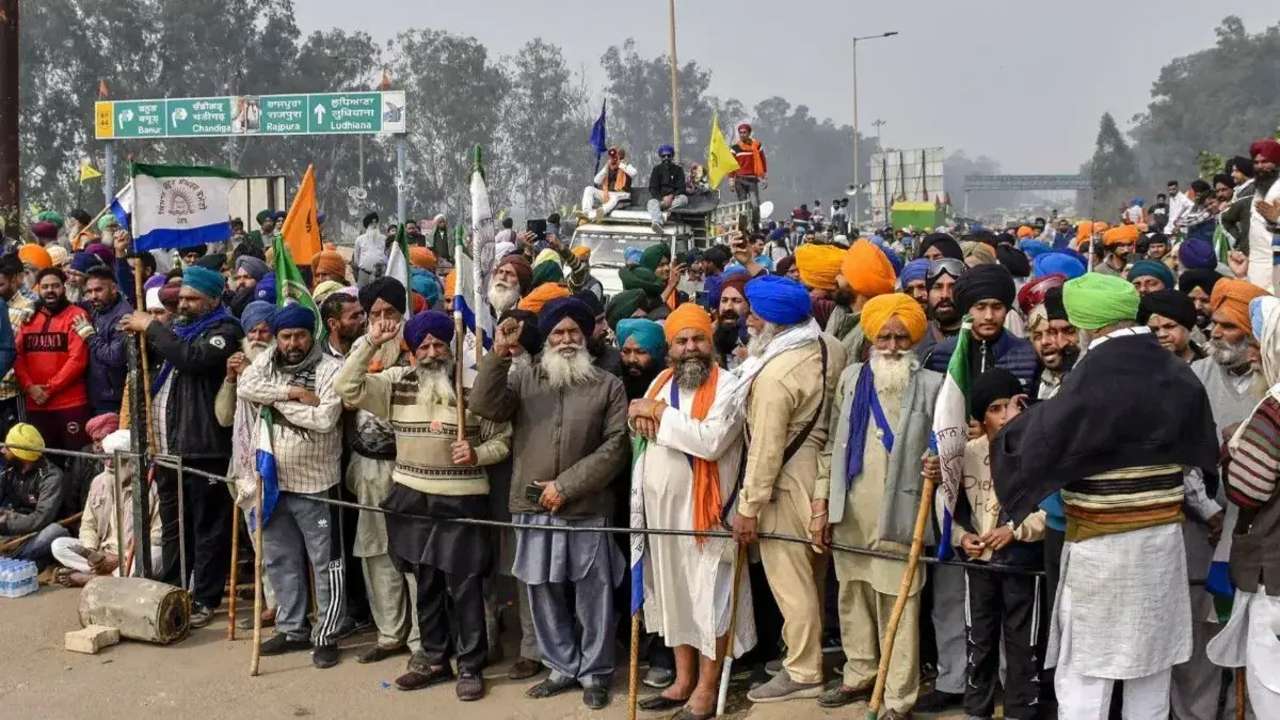
Farmer leaders from the Kisan Mazdoor Morcha and the Samyukta Kisan Morcha (Non-Political) said that they will consult with experts before to making a decision and will deliberate on the Center’s proposal at their forums on February 19–20. Following this development in the negotiations, they also momentarily called off the Delhi Chalo march.

The farmers in protest have requested two days for their forums to debate the government’s plan, but a decision on their other primary demands has not yet been made.
The term MSP describes a price that the government sets in order to shield farmers against sharp drops in crop prices. For farmers, this guarantee serves as a safety net and keeps losses at away.

After their discussion with the farmers, Union Minister Consumer Affairs, Food, and Public Distribution Piyush Goyal informed reporters, Cooperative societies like the NCCF and Nafed will contract with farmers who grow tur dal, urad dal, masoor dal, or maize to buy their crop at MSP for the next five years.

The farmers began their protest on February 13 in order to demand a number of things, such as a minimum price for 23 crops guaranteed by the state, a forgiveness of loans, social security benefits like pensions, and an overhaul of the crop insurance program.

India News

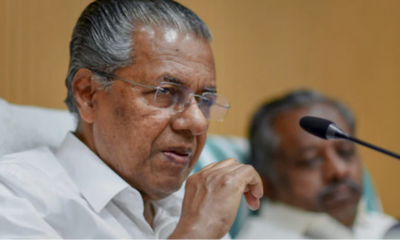
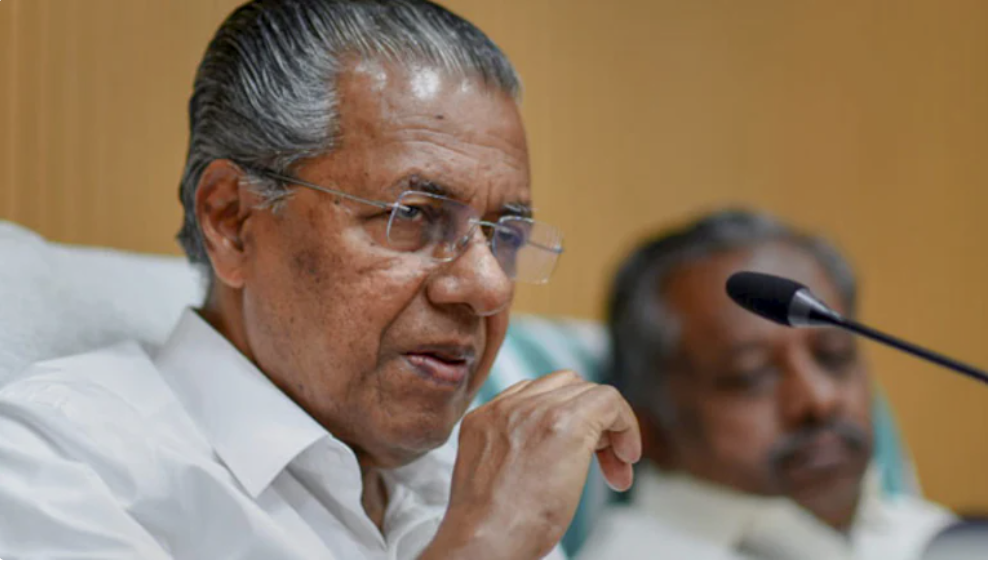
ED summons Pinarayi Vijayan in money laundering case

The Enforcement Directorate has summoned former Kerala chief minister Pinarayi Vijayan for questioning in a money-laundering investigation linked to alleged payments by Cochin Minerals and Rutile Ltd to his daughter’s company, Exalogic Solutions.

Published

on

The Enforcement Directorate (ED) has summoned former Kerala chief minister Pinarayi Vijayan for questioning in connection with a money-laundering investigation linked to Cochin Minerals and Rutile Ltd (CMRL). Officials said he has been asked to appear before the agency at its Kochi office on October 23.

The summons has been issued under the Prevention of Money Laundering Act (PMLA). The investigation concerns alleged payments by CMRL to Exalogic Solutions, a now-defunct company associated with Vijayan’s daughter, Veena T.

The development comes after Kerala’s Vigilance and Anti-Corruption Bureau (VACB) registered cases against Vijayan and members of his family in connection with the alleged bribery case.

What is the CMRL-Exalogic case?

The case centres on alleged payments made by CMRL to Exalogic Solutions under the guise of information technology consultancy services.

According to the ED, CMRL allegedly made fraudulent payments of Rs. 2.78 crore to the company. The agency is examining the financial transactions as part of its money-laundering investigation. These remain allegations and should not be treated as established criminal wrongdoing.

The matter came before the Kerala High Court, which on October 9 directed the VACB to register a case based on material submitted by the ED. The state agency subsequently registered cases involving Vijayan and his family members.

Pinarayi Vijayan challenges FIR order

Vijayan approached the Supreme Court on October 16, challenging the Kerala High Court order directing the registration of an FIR against him.

The legal challenge followed developments in the state courts concerning the alleged CMRL-Exalogic transactions. The ED’s summons is a separate step in its investigation under the anti-money-laundering law.

The case involves allegations of financial irregularities linked to payments to Exalogic Solutions. The investigation and legal proceedings are ongoing; the summons itself does not establish guilt.

Continue Reading

India News

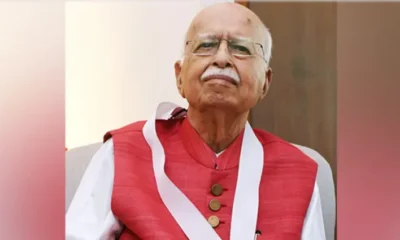
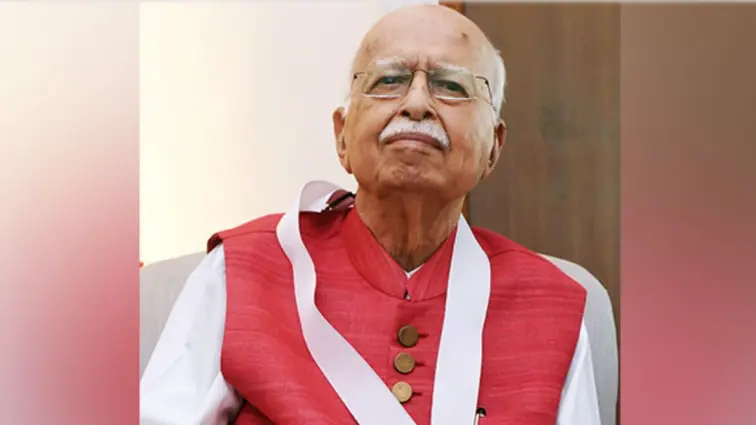
LK Advani, 98, hospitalised in Delhi with chest infection

Veteran BJP leader LK Advani, 98, has been admitted to Delhi’s Indraprastha Apollo Hospital with a chest infection. Hospital officials said his condition was stable.
Published

on

Veteran Bharatiya Janata Party (BJP) leader and former Deputy Prime Minister Lal Krishna Advani has been admitted to Indraprastha Apollo Hospital in Delhi with a chest infection. Hospital officials have said that his condition is stable.

The 98-year-old leader was brought to the hospital at around 7.30 pm on Friday, October 16, and admitted to its pulmonary department. He is receiving treatment and remains under observation by a team of doctors, with medical tests underway.

LK Advani’s recent hospitalisation

Advani was previously admitted to Apollo Hospital in May 2026 because of age-related health complications. He remained under medical care for a few days before being discharged, according to the report.

In December 2024, the veteran BJP leader was admitted to the intensive care unit (ICU) at Indraprastha Apollo Hospital for medical management and investigations. He received treatment under the supervision of a neurologist, and the hospital had described his condition as stable at the time.

On December 17, 2024, the hospital reported gradual improvement and indicated that he was likely to be moved out of the ICU within the next one to two days.

Advani’s political career

Advani has been a prominent figure in the BJP’s rise in Indian politics. He served as the party’s president on multiple occasions and played a significant role in expanding its organisational presence.

His 1990 Ram Rath Yatra became a major event in the country’s political history. He later served as Union Home Minister and was India’s Deputy Prime Minister from 2002 to 2004 in the government led by Atal Bihari Vajpayee.

In recognition of his contribution to public life, Advani was awarded the Bharat Ratna, India’s highest civilian honour, in 2024. He had previously received the Padma Vibhushan in 2015.

Continue Reading

India News

Centre sends 3 letters to Punjab government after anti-drug activist’s killing

The Centre has sought reports from the Punjab government on three incidents linked to allegations surrounding drug-related activities, including the killing of anti-drug activist Parvinder Singh Jhota.
Published

on

Amit Shah

The Union government has sought detailed explanations from the Punjab government regarding three incidents linked to concerns over drug-related activities in the state. The move follows the killing of anti-drug activist Parvinder Singh Jhota in Mansa and comes amid renewed scrutiny of the state’s drug problem and law-and-order situation.

The Ministry of Home Affairs (MHA) sent three letters to the Punjab chief secretary on October 16, with copies to the state’s director general of police. The communications sought information about Jhota’s killing, the fatal attack on Bikramjit Singh in Gurdaspur district, and the reported suicide of Gulzar Singh in September.

What the Centre’s three letters cover

The first letter concerned the October 13 killing of Parvinder Singh, popularly known as Jhota, who was known for raising concerns about drug abuse and alleged illegal sales of intoxicating substances in Punjab.

The ministry sought a comprehensive factual report on the incident and details of the steps taken by the state government following his death. It also asked about action taken on the Union government’s Vision Document on Narcotics Control for 2026–2029.

The document outlines measures to strengthen anti-narcotics enforcement, including dedicated anti-narcotics task forces, financial investigations, prosecution under the Narcotic Drugs and Psychotropic Substances Act, and action against transnational drug networks.

The second letter concerned the attack in Mari Panwan village in Gurdaspur district, in which Bikramjit Singh died and Nishan Singh and Gurmukh Singh were critically injured.

According to accounts cited in the report, the three men had objected to alleged drug peddling in their village before being attacked with sharp-edged weapons. However, police have denied that the incident was motivated by drug-related disputes and said an investigation was underway. Bikramjit’s relatives have also disputed the police account that the murder followed a dispute over a mobile phone.

The third letter sought details about Gulzar Singh’s death on September 8. The ministry referred to reports that he had raised concerns about the availability of synthetic drugs and had faced pressure and harassment from the local village panchayat. These allegations form part of the circumstances the Centre has asked the state government to examine and report on.

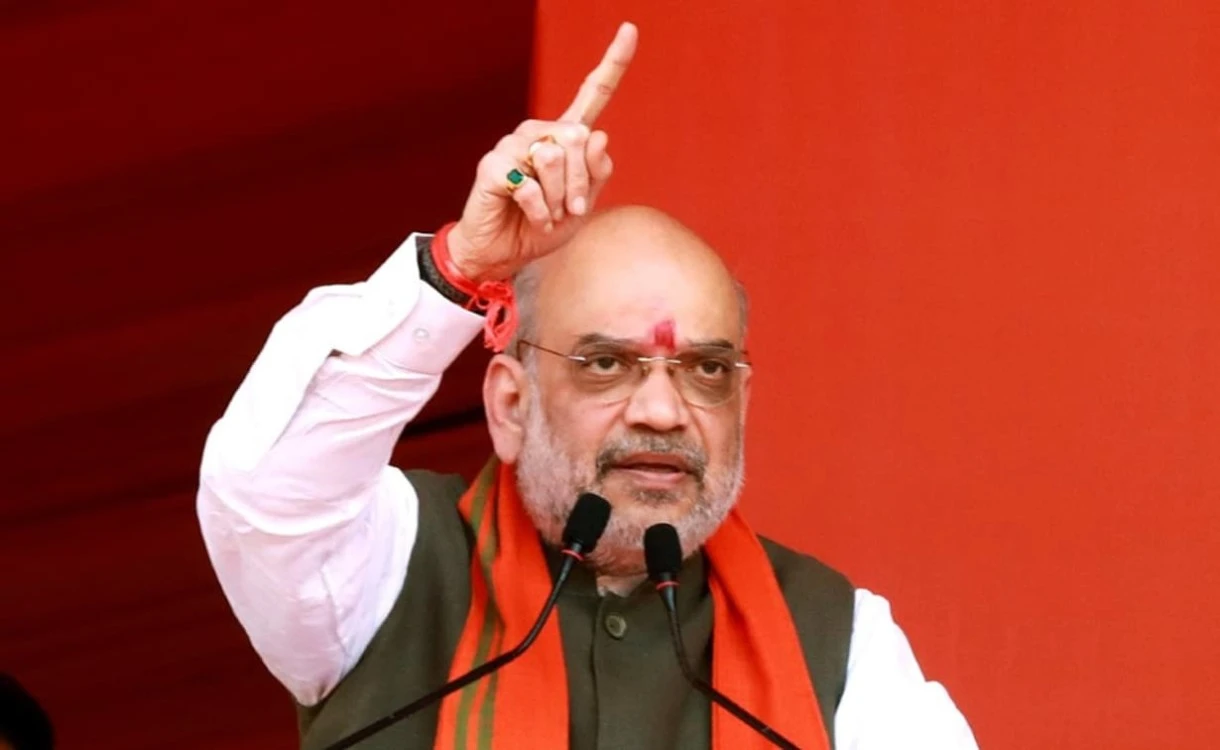
Amit Shah raises questions over Punjab’s law and order

Union Home Minister Amit Shah also raised concerns about the situation in Punjab, referring to the challenges posed by drugs, gangsterism and organised crime.

Questioning the Bhagwant Mann-led government over public safety, Shah called for action against the drug trade, protection for young people and strict measures against criminals.

The Centre’s requests place the three incidents under scrutiny, although the alleged links between the attacks or deaths and opposition to drug-related activities remain subject to the specific circumstances and investigations in each case.

Continue Reading

Trending

© Copyright 2022 APNLIVE.com