English हिन्दी
Connect with us

India News

Four high court chief justices elevated as Supreme Court judges

Published

on

Supreme Court

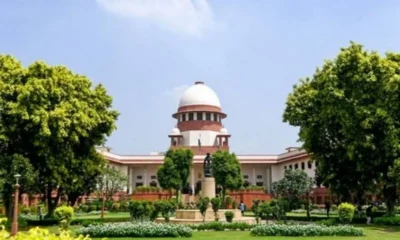
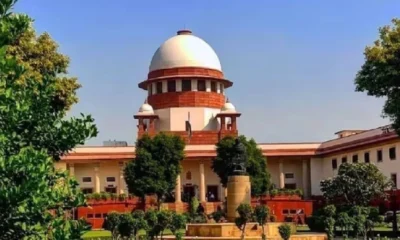
Four high court chief justices were today (Friday, November 2) sworn in as judges of the Supreme Court.

Remarkably, the Centre notified the appointment of these judges just 48 hours after the top court’s collegium recommended their names for elevation to the Supreme Court. The collegiums had approved their names on Tuesday and the Union law ministry notified the appointments of Justices Hemant Gupta, Ajay Rastogi, MR Shah and R Subhash Reddy late on Thursday night.

The appointment of the judges raises the strength of the Supreme Court to 28 against a sanctioned strength of 31.

However, before the year is out, in two months two senior-most judges after Chief Justice Ranjan Gogoi – Justices Madan B Lokur and Justice Kurian Joseph are set to retire:  Justice Joseph’s stint will end on November 29, while Justice Lokur will demit office on December 30.

It may be recalled that Justices Lokur and Joseph, along with now retired Justice J Chelameswar were part of the unprecedented ‘judges press conference’ earlier this year – incumbent Chief Justice Gogoi was the fourth judge at this meet – where they red flagged a slew of issues that they believed were wrong at the apex court. Among the issues raised by the four judges at the press conference was also the delay in the Centre’s approval of the Memorandum of Procedure (MoP) for deciding the process of appointments to the judiciary.

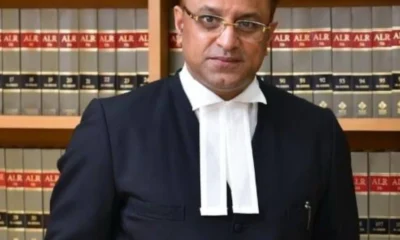
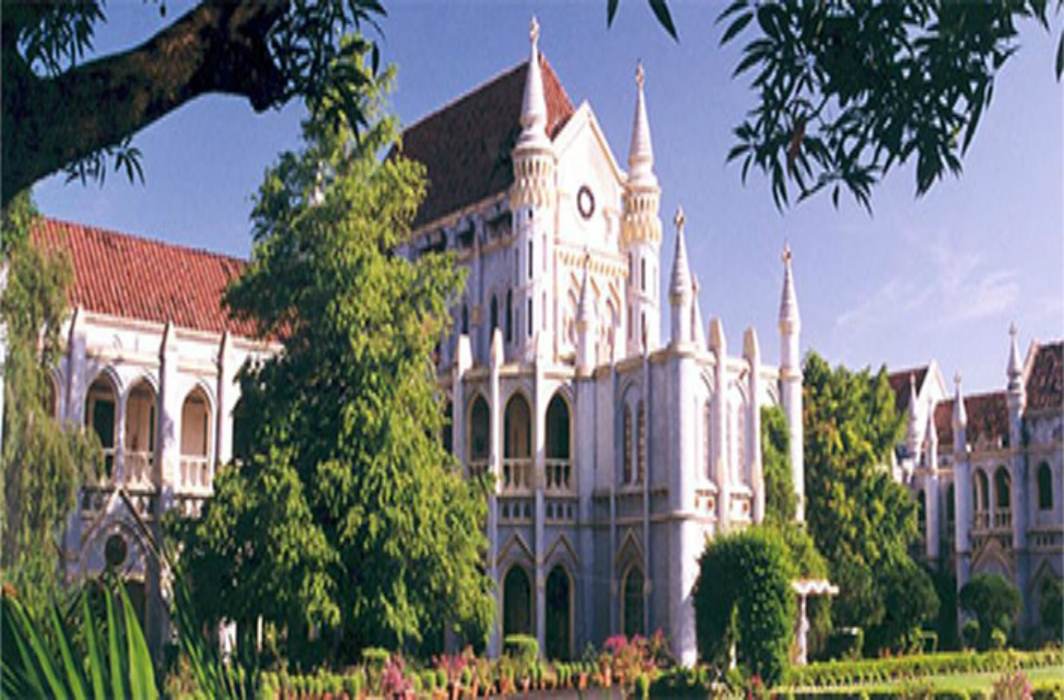
Of the newly appointed judges, Justice Gupta was the Chief Justice of the Madhya Pradesh High Court, while Justice Rastogi was the Chief Justice of the Tripura High Court. Justice Shah and Justice Reddy were chief justices of the Patna and Gujarat high courts respectively.

Justice Gupta was appointed as a judge of the Punjab and Haryana High Court on July 2, 2002, and on February 8, 2016, he was transferred to the Patna High Court where he was appointed as the Acting Chief Justice on October 29, 2016. He was appointed as the Chief Justice of the Madhya Pradesh High Court on March 18, 2017.

Justice Rastogi was appointed as a judge of the Rajasthan High Court in September, 2004 and was also made the Acting Chief Justice there. He had taken oath as the Chief Justice of the Tripura High Court on March 1, 2018.

Justice Shah was appointed as a judge of the Gujarat High Court on March 7, 2004 and later in August this year, he was sworn in as the Chief Justice of the Patna High Court.

Justice Reddy was elevated as an additional judge of the Andhra Pradesh High Court on December 2, 2002. He was elevated as the Chief Justice of the Gujarat High Court on February 13, 2016.

India News

Congress suspends 5 Haryana MLAs over cross-voting in Rajya Sabha polls

Congress suspends five Haryana MLAs for cross-voting in Rajya Sabha elections, citing serious indiscipline and anti-party activities.

Published

on

The Congress has suspended five of its MLAs in Haryana for cross-voting during the recent Rajya Sabha elections, taking disciplinary action over what it described as “anti-party activities”.

The move came after the state unit reviewed the conduct of certain legislators during the polls, where some were found to have voted against the party’s authorised candidate.

Five MLAs suspended after disciplinary process

According to party sources, the MLAs were issued show-cause notices seeking an explanation for their actions. After reviewing their responses, the Congress disciplinary committee recommended suspension.

The decision was approved by the party leadership, including Congress president Mallikarjun Kharge, and has been implemented with immediate effect.

Party calls it ‘grave indiscipline’

Haryana Congress chief Udai Bhan said the action was necessary to uphold party discipline, stressing that defying the official party line during elections weakens organisational unity.

He said the party takes such violations seriously and will continue to act against any form of indiscipline.

Leadership backs strict action

Senior Congress leader and Leader of Opposition Bhupinder Singh Hooda supported the decision, saying it was taken after due consideration.

He noted that while Rajya Sabha elections are conducted through an open ballot system, allowing legislators some flexibility, the party retains the authority to initiate internal disciplinary action in cases of deviation.

Background

The action follows cross-voting reported during the recent Rajya Sabha elections in Haryana, which led to internal concerns within the party. The development has highlighted organisational challenges and prompted the leadership to take corrective steps to reinforce discipline.

Continue Reading

India News

Harivansh set to be elected Rajya Sabha Deputy Chairperson unopposed

Harivansh is set to be elected unopposed as Rajya Sabha Deputy Chairman after no opposition nominations were filed before the deadline.

Published

on

Former Rajya Sabha Deputy Chairman Harivansh is set to be re-elected to the same post unopposed in the election due to be held later today.
The date has been fixed by the Chairman under the relevant rules governing the conduct of business in the Upper House.
According to sources, the deadline for submitting motions for the election was 12 noon on April 16. A total of five notices were received within the stipulated time, all proposing Harivansh for the post.

Multiple nominations, single candidate
The motions were submitted by members across parties, including Jagat Prakash Nadda, Nitin Nabin, Nirmala Sitharaman, Sanjay Kumar Jha, and Jayant Chaudhary, each backed by seconding members.
All five motions explicitly state that Harivansh be chosen as the Deputy Chairman of the Rajya Sabha.

No opposition nomination filed

Notably, no motion was submitted by the Opposition before the deadline. This effectively clears the path for a unanimous election, as there is no contest for the position.
As per parliamentary procedure, motions will be taken up one by one. Once any one motion is adopted by the House, the remaining motions will not be put to vote.

Likely to be elected by voice vote
In line with established practice, the first motion — expected to be moved by Nadda — may be adopted through a voice vote. Following this, the Chairman will formally declare Harivansh as elected Deputy Chairman.
After the declaration, Harivansh will be escorted to the Chair by members from both the Treasury and Opposition benches, adhering to parliamentary convention.

Continue Reading

India News

Amit Shah counters delimitation concerns, says southern states to gain Lok Sabha seats

Amit Shah assures Parliament that southern states will gain Lok Sabha seats after delimitation, countering opposition criticism during the women’s reservation debate.

Published

on

Amit Shah

Union Home Minister Amit Shah on Thursday addressed concerns over the proposed delimitation exercise, asserting in the Lok Sabha that southern states will not lose representation but instead see an increase in their number of seats.

His remarks came during a heated debate linked to the implementation of women’s reservation, where opposition parties have raised fears that population-based delimitation could reduce the political weight of southern states.

Shah rejected these claims, calling them misleading, and said the proposed framework ensures fairness while expanding the overall strength of the Lok Sabha.

Seat count to rise with expansion of Lok Sabha

The government has indicated that the total number of Lok Sabha seats could increase significantly as part of the delimitation process. In this expanded House, the combined representation of southern states is expected to rise from 129 seats at present to around 195 seats.

Shah emphasised that no state will lose seats in absolute terms, and the exercise is designed to reflect population changes while maintaining balance across regions.

State-wise projections shared in Parliament

During his address, Shah also provided indicative figures for individual southern states, suggesting notable increases in representation. According to the projections:

  • Tamil Nadu could see its seats rise substantially
  • Kerala, Telangana, and Andhra Pradesh are also expected to gain additional seats
  • Karnataka’s representation may increase as well

These figures were presented to counter the argument that delimitation would disproportionately favour northern states.

Political debate intensifies over linkage with women’s quota

The delimitation exercise has been closely linked to the rollout of women’s reservation, which proposes one-third seats for women in Parliament and state assemblies.

Opposition leaders have questioned this linkage, arguing that tying reservation to delimitation could delay its implementation and raise federal concerns. Some leaders have also warned that the move could impact national unity if apprehensions among states are not addressed.

The government, however, maintains that the reforms are necessary to ensure equitable representation and to align the electoral system with demographic realities.

Centre dismisses ‘false narrative’ on southern states

Shah reiterated that concerns about southern states losing influence are unfounded. He said the delimitation process will increase representation across regions and described the criticism as a “false narrative” aimed at creating confusion.

The issue is expected to remain a key flashpoint as Parliament continues discussions on the women’s reservation framework and related legislative changes.

Continue Reading

Trending

© Copyright 2022 APNLIVE.com