English हिन्दी
Connect with us

India News

Supreme Court Bar Association elects Pradeep Rai as President

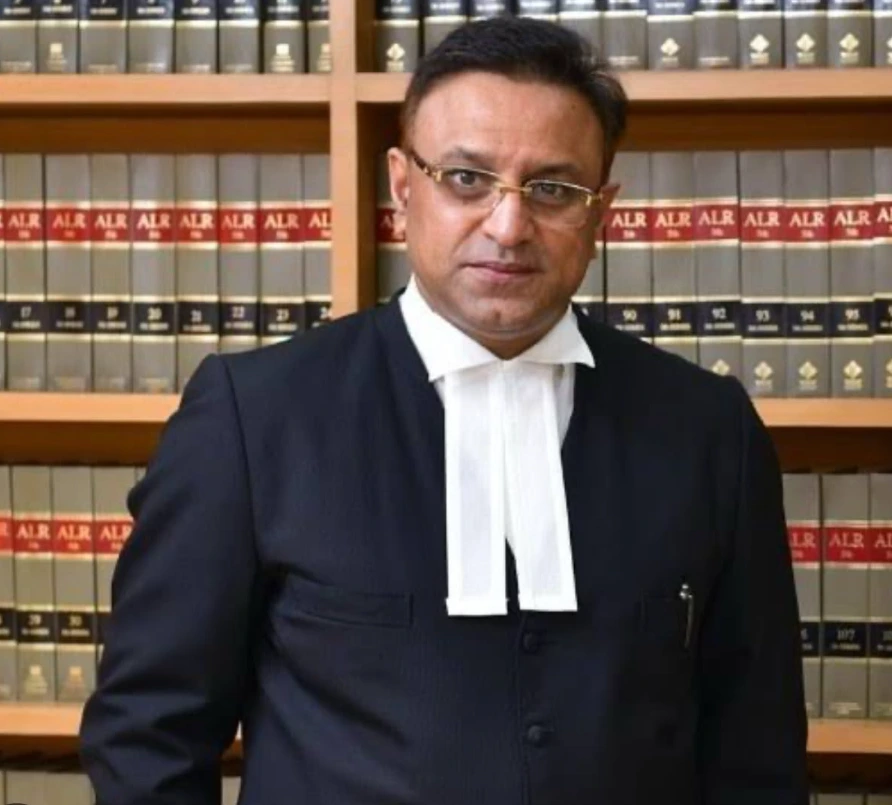
Senior Advocate Pradeep Rai has been elected president of the Supreme Court Bar Association after defeating Anupam Lal Das with 822 votes.

Published

on

Senior Advocate Pradeep Rai has been elected president of the Supreme Court Bar Association (SCBA), securing a decisive mandate in the 2026 election. Rai received 822 votes to defeat Senior Advocate Anupam Lal Das, who secured 451 votes.

The result places Rai at the helm of the representative body of advocates practising before the Supreme Court and gives him the responsibility of leading the Association on issues concerning the professional interests, welfare and institutional concerns of its members.

The SCBA occupies an important position as the collective representative of advocates appearing before the Supreme Court. Its responsibilities extend beyond the administration of the Association, with matters relating to the professional interests and welfare of members forming an important part of its institutional role.

Eight candidates contested for SCBA president

The presidential election was keenly contested, with eight candidates entering the race for the top post.

Those contesting for the position included Senior Advocate Pradeep Rai, Senior Advocate Mahalakshmi Pavani, Md Izhar Alam, Senior Advocate Adish Aggarwala, Gaurav Bhatia, Senior Advocate Anupam Lal Das, Senior Advocate Sukumar Pattjoshi and Senior Advocate Siddharth Mridul.

Rai ultimately emerged victorious with 822 votes, while Anupam Lal Das finished with 451 votes.

The election brought several issues concerning the functioning of the Association and the concerns of members of the Bar into focus. Professional opportunities for advocates, welfare measures and greater institutional responsiveness were among the broader issues surrounding the contest.

Rai’s agenda focused on reform and professional empowerment

Rai’s campaign was centred on an agenda of institutional reform and professional empowerment.

One of the areas highlighted during the campaign was the need to expand opportunities for younger members of the Bar. The agenda also included strengthening welfare mechanisms and addressing structural concerns affecting advocates practising before the country’s highest constitutional court.

The emphasis on younger advocates and welfare measures comes amid wider concerns within professional bodies about ensuring adequate institutional support and opportunities for members of the legal profession.

Rai’s electoral mandate now places the responsibility on the incoming leadership to translate these campaign priorities into concrete measures for members of the Association.

Significance of the SCBA leadership

The election comes against the backdrop of an evolving discussion on the role of Bar associations in ensuring effective representation and protecting the independence and institutional autonomy of the legal profession.

The SCBA has a distinctive position within India’s constitutional and legal framework as the collective representative of advocates appearing before the Supreme Court.

The Association also provides a platform for members of the Bar to deliberate on issues affecting their profession and the functioning of the legal system. Its leadership therefore has an important role in representing the collective concerns of advocates and maintaining an effective institutional forum for discussion.

Rai’s return to the Association’s leadership

For Pradeep Rai, the election victory marks a return to the leadership of the Supreme Court Bar Association.

Rai has previously served as the Association’s Vice President and has remained an active voice on issues concerning the Bar.

His latest electoral mandate brings with it the responsibility of taking forward the priorities outlined during the campaign while ensuring that the Association’s decision-making remains responsive to the wider interests of its membership.

The challenge before the new leadership will be to convert electoral assurances into tangible institutional measures while maintaining continuity in the Association’s functioning.

Bench-Bar dialogue among key institutional issues

The SCBA election also assumes significance in the context of the continuing dialogue between the Bench and the Bar on matters relating to institutional governance, professional ethics, access to justice and the working conditions of advocates.

A strong and autonomous Bar is an important component of the constitutional framework, particularly in a judicial system where advocates play a critical role in assisting courts in the administration of justice.

The Association’s leadership will therefore be expected to balance the professional and welfare concerns of its members with its wider institutional responsibilities.

What lies ahead for the new SCBA leadership

With the election process concluded, attention will now turn to the implementation of the incoming leadership’s stated agenda.

For Rai, the immediate task will be to work towards the priorities outlined during the election campaign, including measures aimed at expanding opportunities for younger advocates, strengthening welfare mechanisms and addressing structural concerns affecting members of the Bar.

The new leadership will also have to ensure that the SCBA continues to function as an effective forum for representation, deliberation and collective advocacy.

Rai’s victory consequently represents more than a change in office-bearers. It gives the new leadership a fresh mandate to address the concerns of Supreme Court advocates and shape the Association’s institutional priorities during its new term.

India News

Acharya Balkrishna acquitted in 15-year-old forged documents case

Acharya Balkrishna has been acquitted by a Dehradun CBI court in a 15-year-old case involving allegations of obtaining a passport using forged documents.

Published

on

Acharya Balkrishna, a close associate of Yoga Guru Ramdev and general secretary of Patanjali Yogpeeth, has been acquitted in a 15-year-old case involving allegations of obtaining a passport using forged educational and other documents.

The Special Judicial Magistrate (CBI) court in Dehradun also acquitted Naresh Chandra Dwivedi, who was accused of providing the alleged forged documents to Balkrishna.

The Central Bureau of Investigation (CBI) registered the case and began its investigation in 2011 following a complaint alleging that Balkrishna was a Nepali national who had obtained an Indian passport using forged documents.

The case involved allegations related to the procurement of a passport on the basis of forged educational and other documents. After a prolonged legal process, the court acquitted Balkrishna and Dwivedi.

The Special Judicial Magistrate (CBI) court in Dehradun acquitted both accused in the case.

Naresh Chandra Dwivedi was facing allegations of providing forged documents to Balkrishna. The court’s verdict brought the 15-year-old proceedings to an end with the acquittal of both accused.

Continue Reading

India News

Delhi buildings over 50 years old may face safety audits after Satya Niketan collapse

The Centre is considering regular safety audits of DDA buildings more than 50 years old following the deadly Satya Niketan collapse.

Published

on

Haryana CM Manohar Lal Khattar

The Centre is considering a plan to conduct safety audits of Delhi Development Authority (DDA) buildings that are more than 50 years old, Union Housing and Urban Affairs Minister Manohar Lal Khattar said on Monday.

The proposal comes a day after a five-storey building in Delhi’s Satya Niketan collapsed, killing seven people and trapping several others under the debris.

Khattar said the Ministry of Housing and Urban Affairs is examining the proposal for safety audits of older DDA buildings. Under the plan, such buildings could undergo audits at intervals of 10 years, five years and three years.

Safety audits proposed for older DDA buildings

According to the minister, the government is looking at a system under which DDA buildings crossing the 50-year mark would undergo periodic safety assessments.

The proposal is aimed at identifying structural safety concerns in ageing buildings and ensuring that necessary action can be taken.

Khattar also said the Municipal Corporation of Delhi should take action at its own level to prevent similar incidents.

“I am deeply saddened by the heart-wrenching incident that occurred yesterday at Satya Niketan in Delhi,” Khattar said.

Proposal follows Satya Niketan building collapse

The proposed safety audit plan comes after a five-storey building in Satya Niketan, near Delhi University’s South Campus, collapsed on Sunday.

The building collapsed during repair work, killing seven people. Twelve people were rescued during the operation, according to the report.

The incident has renewed concerns about the safety of ageing and vulnerable structures in the national capital.

Khattar’s proposal specifically concerns DDA buildings that are more than 50 years old, while the minister also called for action by the Municipal Corporation of Delhi to prevent such incidents.

Possible audit intervals under consideration

The ministry is considering safety audits at different intervals, including:

  • Every 10 years
  • Every five years
  • Every three years

The details of the proposed system, including how the audits would be implemented, are yet to be finalised.

The proposal comes amid heightened scrutiny of building safety in Delhi following the Satya Niketan collapse.

Continue Reading

India News

Nandigram bypoll on October 6 after Suvendu Adhikari vacates seat

The Election Commission has announced October 6 as the polling date for the Nandigram bypoll, with votes to be counted on October 9.

Published

on

Suvendu-Adhikari

The Election Commission has announced the schedule for the Nandigram bypoll in West Bengal, with voting set to take place on October 6. The counting of votes will be held on October 9.

The by-election has been necessitated by Chief Minister Suvendu Adhikari vacating the Nandigram Assembly seat after winning the constituency as well as Bhabanipur in the 2026 West Bengal Assembly elections. Adhikari decided to retain Bhabanipur and give up his Nandigram seat.

The Election Commission said the poll process will formally begin with the issue of the gazette notification on September 9.

Nandigram bypoll schedule

According to the election schedule, candidates can file their nominations until September 16. The nomination papers will be scrutinised on September 17, while September 19 will be the last date for withdrawal of candidature.

Polling in Nandigram will be conducted on October 6 and votes will be counted on October 9. The Election Commission has said the entire election process will be completed by October 11.

Why is a Nandigram bypoll being held?

The Nandigram Assembly seat fell vacant after Suvendu Adhikari resigned from the constituency.

Adhikari had contested the 2026 West Bengal Assembly elections from both Nandigram and Bhabanipur and won both seats. He subsequently chose to retain Bhabanipur and vacate Nandigram, making a by-election necessary for the constituency.

The Nandigram contest is also significant because Adhikari had defeated Trinamool Congress chief Mamata Banerjee from the constituency in the 2021 West Bengal Assembly election.

Rejinagar bypoll also scheduled

The Election Commission has also announced a by-election for the Rejinagar Assembly constituency in West Bengal. The Rejinagar seat became vacant after Aam Janata Unnayan Party founder Humayun Kabir gave it up.

Polling for Rejinagar will also be held on October 6, with counting scheduled for October 9.

Continue Reading

Trending

© Copyright 2022 APNLIVE.com

Left Menu Icon