English हिन्दी
Connect with us

India News

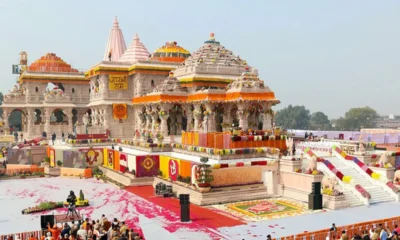
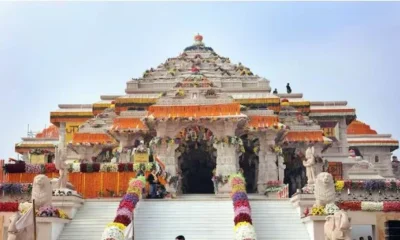
Ayodhya Deepotsav 2024: 28 lakh lamps at Ram Temple, 1100 people to perform aarti on Saryu Ghat

More than 30,000 volunteers are mobilised to support the lighting of 28 lakh diyas across 55 ghats

Published

on

Ayodhya Deepotsav 2024: 28 lakh diyas at Ram Temple, 1100 people to perform aarti on Saryu Ghat

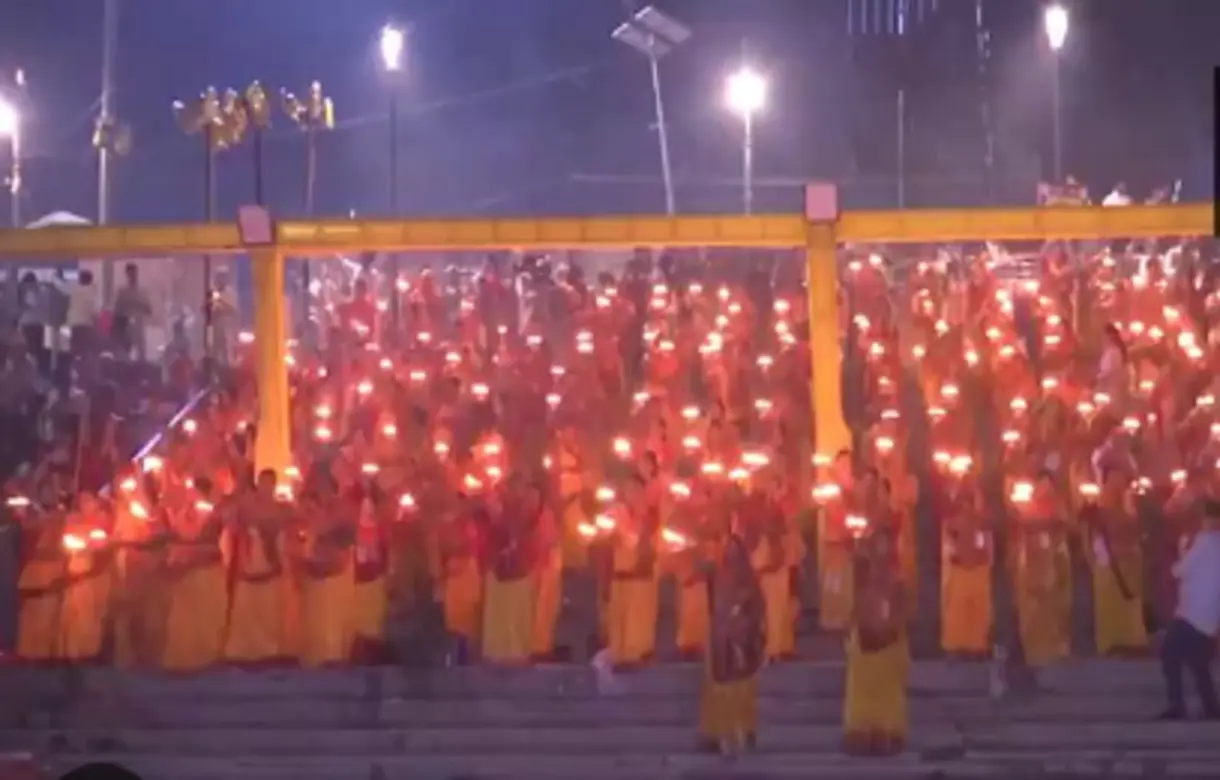
The Uttar Pradesh government is all set for a historic Guinness World Record attempt by lighting nearly 28 lakh diyas at the Ram Temple in Ayodhya on Deepotsav on Wednesday. Additionally, more than 1100 people are set to perform the largest aarti together on Saryu Ghat. 

Uttar Pradesh minister Jaiveer Singh said that this is the first Deepotsav after the Pran Pratistha of Ram Mandir in Ayodhya, and every effort has been made to give grandeur and divinity to the programme. He added that many things will be made to create new records this year. 

Jaiveer Singh also said that CM Yogi Aditynath will attend the event. He mentioned that artists are coming from many countries. He hailed that the special thing this year will be that they have managed to light 28 lakh diyas by breaking all previous records. Besides, they will also perform Aarti with 1100 diyas at the Sarayug Ghat with 1100 Vedacharyas, he continued.

More than 30,000 volunteers are mobilised to support the lighting of 28 lakh diyas across 55 ghats, with prominent areas such as New Ghat, Old Ghat, and Bhajan Sandhya being primary locations for the festivities. Chief Minister Yogi Adityanath, Union Minister Gajendra Singh Shekhawat, and other key officials are expected to attend, highlighting the event’s significance.

Furthermore, a team from Guinness World Records is overseeing the Deepotsav festivities, aiming to set two records: a 1,100-person Saryu Aarti and the lighting of 28 lakh diyas. Earlier on Tuesday, a 30-member team led by Guinness World Records consultant Nischal Barot began counting the diyas across the 55 ghats of the Saryu using drones.

Reportedly, an elaborate Shobha Yatra is also planned with 18 tableaus and artists from six countries and 16 Indian states participating, amplifying the event’s cultural diversity. In order to ensure safety, nearly 10,000 security personnel, including undercover officers, have been deployed, and 17 key routes leading to Ram Ki Paidi are restricted to pass holders only. Additionally, LED screens have been installed for live viewing, accommodating the crowds with arrangements for 5,000-6,000 people, while additional viewing points across the city ensure widespread access.

Also, special low-soot lamps are being used to raise environmental awareness, and the Animal Husbandry Department has committed to lighting 1,50,000 Gau Deep for the occasion. Security measures are tight, with the ATS, STF, and CRPF commandos deployed. In an attempt to avoid pollution, wax lamps are used outside the main temple building,  and decoration efforts are carefully overseen to prevent any damage to temple structures.

India News

Rahul Gandhi, Centre clash over Ladakh deepens as eight Congress MPs suspended

The Lok Sabha saw repeated disruptions after Rahul Gandhi was denied permission to speak on the Ladakh issue, leading to protests and the suspension of eight Congress MPs.

Published

on

Chaos engulfed the Lok Sabha on Tuesday as tensions between the opposition and the ruling Bharatiya Janata Party intensified over Congress leader Rahul Gandhi’s attempt to raise the issue of the India-China military standoff in Ladakh. The disruption eventually led to the suspension of eight Congress MPs for the remainder of the parliamentary session.

The confrontation unfolded after the Leader of the Opposition tried, for the second consecutive day, to read out excerpts from an unpublished book by former Army chief General M.M. Naravane that refer to the 2020 Ladakh crisis. The Speaker denied permission, citing procedural rules, triggering protests from opposition members.

Several MPs protested by refusing to speak when called upon, expressing solidarity with Gandhi. The uproar forced repeated adjournments of the House and, according to reports, involved members throwing pieces of paper towards the Chair.

Following the disorder, eight Congress MPs — including Hibi Eden, Amarinder Raja Warring and Manickam Tagor — were suspended. Warring later questioned the action, saying the protests were in response to Gandhi being denied the opportunity to speak despite having authenticated the document and submitted it to the House.

The BJP strongly criticised the Congress leadership. Party MP Anurag Thakur accused Rahul Gandhi of undermining Parliament and insulting the armed forces, alleging that the opposition was attempting to distract from recent government actions, including the presentation of the Union Budget. He also said the BJP would move a formal complaint seeking strict action against the suspended MPs.

Outside Parliament, Gandhi accused the ruling party of trying to silence him, saying he was prevented from speaking on the sensitive issue of the India-China border. He argued that he had followed procedure by authenticating the content he wished to quote but was still denied permission.

What happened a day earlier

On Monday, the Speaker had also disallowed Gandhi from reading the excerpts, with senior ministers countering his remarks during the debate. Government sources later maintained that the Congress leader violated House rules by attempting to introduce unpublished material into the official record without prior approval.

When proceedings resumed on Tuesday, Gandhi again raised the matter, insisting that the information had been authenticated. As the Speaker moved on to other members, two opposition MPs from the Samajwadi Party and Trinamool Congress declined to speak, signalling their support for him.

Rahul Gandhi targets India-US trade deal

Separately, Gandhi also criticised Prime Minister Narendra Modi over what he described as a lack of transparency surrounding the India-US trade deal. He questioned how negotiations that had reportedly remained unresolved for months were concluded overnight and alleged that the agreement compromised the interests of Indian farmers, particularly in agriculture and dairy.

Government sources, however, rejected these claims, stating that sensitive sectors would remain protected and that the deal does not undermine farmers’ interests. They said contentious issues, including market access, had been carefully handled.

The opposition has demanded full disclosure of the terms of the agreement, even as both sides continue to trade sharp political accusations inside and outside Parliament.

Continue Reading

India News

Mamata Banerjee alleges mass voter deletions in Bengal, targets Election Commission

Mamata Banerjee has accused the Election Commission of deleting thousands of voter names without due process, raising questions over the timing of the exercise ahead of elections.

Published

on

Mamata Banerjee

West Bengal Chief Minister Mamata Banerjee on Monday intensified her attack on the Election Commission over voter roll revisions, alleging that a large number of names have been deleted without due process as the state heads towards elections.

Addressing party workers, Banerjee claimed that 40,000 voters’ names were removed from her constituency alone, alleging that the deletions were carried out unilaterally and without giving voters a chance to be heard.

“In my constituency they have deleted 40,000 voters’ names unilaterally… Even a murderer gets a chance to defend himself,” she said.

Allegations against election officials

The chief minister directly accused an election official, alleging political bias and irregular conduct in the revision process. She claimed that voter names were being removed while officials sat in Election Commission offices, calling the process illegal.

“They cannot do it, it is illegal. 58 lakh names have been unilaterally deleted,” she said, echoing claims earlier made by Trinamool Congress leader Abhishek Banerjee.

Banerjee also alleged that individuals described as “micro-observers” had been appointed illegally, claiming they had no role under the Representation of the People Act and were linked to the BJP.

‘Alive but marked dead’

In a dramatic moment during her address, the chief minister asked those present who had been marked as deceased in the voter lists to raise their hands.

“See, they are alive but as per the Election Commission they are dead,” she said.

She further alleged that names were being deleted under the category of “logical discrepancy,” adding that even noted economist and Nobel laureate Amartya Sen had earlier been questioned regarding the age of his mother.

Questions over timing of voter roll exercise

While stating that she did not oppose the Special Intensive Revision process in principle, Banerjee questioned the timing of the exercise.

“I have no problem with SIR, but why do it on the eve of elections? Why not after elections?” she asked.

Reiterating confidence in her party’s organisational strength, the chief minister said she was prepared to fight the issue politically and democratically.

Continue Reading

India News

Supreme Court raps Meta over WhatsApp privacy policy

The Supreme Court warned Meta that it would not tolerate any compromise of citizens’ privacy while hearing a case related to WhatsApp’s 2021 privacy policy and a CCI penalty.

Published

on

WhatsApp

The Supreme Court on Tuesday delivered strong observations against Meta, the parent company of WhatsApp, over the messaging platform’s 2021 privacy policy, warning that it would not tolerate any compromise of citizens’ privacy.

A bench led by Chief Justice Surya said the court would not allow the sharing of user data in a manner that exploits Indians, remarking that privacy protections under the Constitution must be followed. “You can’t play with privacy… we will not allow you to share a single digit of our data,” the Chief Justice said during the hearing.

The matter relates to a plea challenging the law tribunal’s decision that upheld a ₹213 crore penalty imposed by the Competition Commission of India (CCI) on WhatsApp, while also permitting certain data-sharing practices for advertising purposes.

Court questions accessibility of privacy policy

During the hearing, the court raised concerns about whether WhatsApp’s privacy policy could realistically be understood by large sections of the population, particularly those who are poor or not formally educated.

The bench questioned if users such as roadside vendors, rural residents, or people who do not speak English would be able to comprehend the policy’s terms. It also expressed scepticism about the effectiveness of opt-out clauses, stating that even legally trained individuals find such policies difficult to understand.

Describing the alleged data practices as potentially exploitative, the court said it would not allow private information to be taken without genuine and informed consent from users.

The Chief Justice also cited a personal example, suggesting that users often begin seeing advertisements shortly after exchanging sensitive messages on WhatsApp, such as medical conversations, raising questions about how user data is being utilised.

Arguments from government and Meta

Appearing for the government, Solicitor General Tushar Mehta criticised WhatsApp’s data-sharing practices, calling them exploitative and commercially driven. In response, the Chief Justice said that if companies cannot operate in line with constitutional values, they should not do business in India.

Senior advocates Mukul Rohatgi and Akhil Sibal, appearing for Meta and WhatsApp, countered the allegations by asserting that all WhatsApp messages are end-to-end encrypted and that the company cannot read message content.

Background of the case

In November 2024, the CCI ruled against WhatsApp over its 2021 privacy policy, holding that the company had abused its dominant market position by effectively forcing users to accept the updated terms.

The watchdog objected to WhatsApp making continued access to messaging services conditional on permitting data-sharing with other Meta platforms, leading to the imposition of a ₹213 crore fine. Meta has deposited the penalty.

In January 2025, Meta and WhatsApp challenged the CCI order. Later, in November 2025, the law tribunal lifted a five-year restriction on data-sharing while maintaining the financial penalty.

Continue Reading

Trending

© Copyright 2022 APNLIVE.com