English हिन्दी
Connect with us

India News

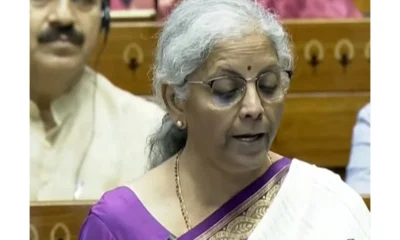
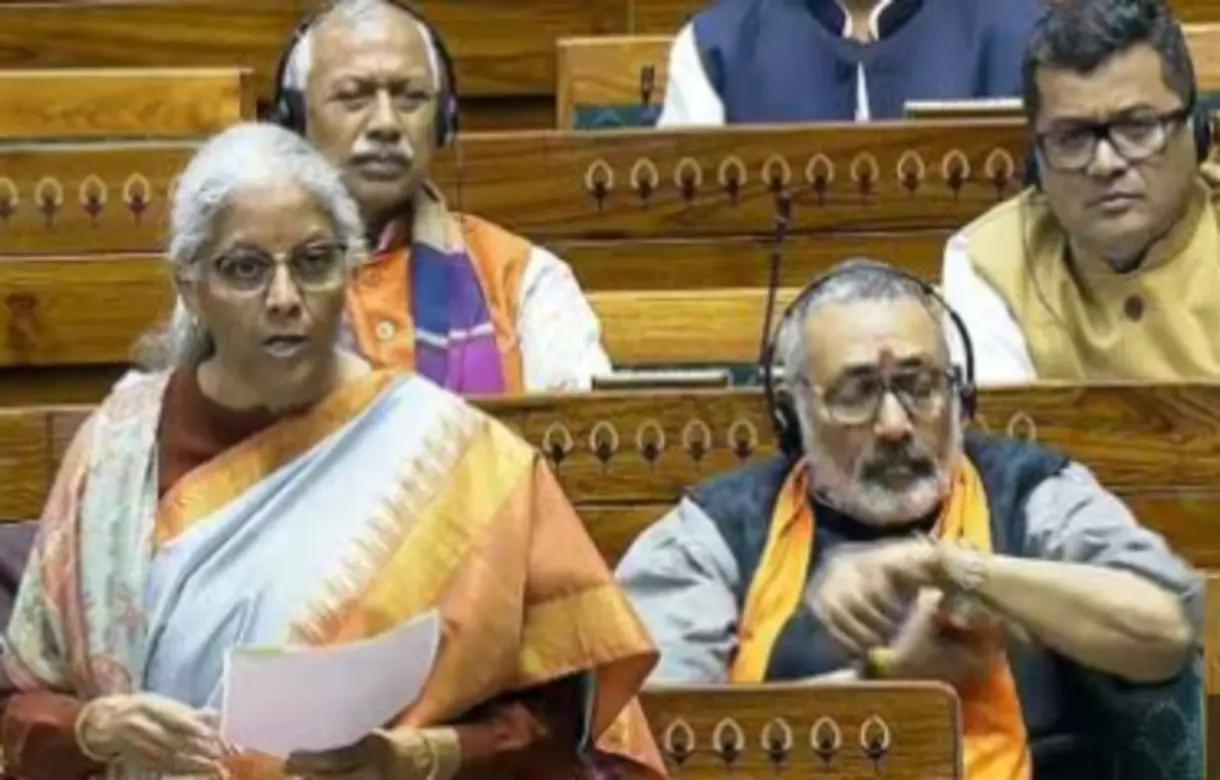
Finance Minister Nirmala Sitharaman moves Banking Laws Amendment Bill, says will strengthen governance

The proposed amendments seek to increase the tenure of directors other than the chairperson and full-time directors in cooperative banks from eight years to ten years.

Published

on

Finance Minister Nirmala Sitharaman moves Banking Laws Amendment Bill, says will strengthen governance

Union Finance Minister Nirmala Sitharaman today said that the Banking Laws (Amendment) Bill will strengthen governance in the Indian banking sector besides enhancing consumer’s and customer’s convenience with respect to nominations and protection of investors.

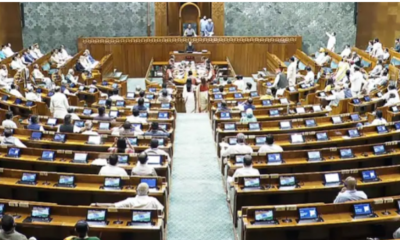
The Finance Minister moved the Banking Laws (Amendment) Bill, 2024, for consideration and passing in Lok Sabha. The aforesaid bill seeks to improve governance standards and provide consistency in reporting by banks to the Reserve Bank of India. Furthermore, the amendments will also ensure better protection for depositors and investors and will also improve the quality of services in the public sector banks.

After the bill is passed, the Banking Regulation Act will allow up to four nominees for depositors. This will include provisions for simultaneous and successive nominations, offering greater flexibility and convenience for depositors and their legal heirs, especially concerning deposits, articles, safe custody and safety lockers.

Reports stated that the proposed amendments seek to increase the tenure of directors other than the chairperson and full-time directors in cooperative banks from eight years to ten years. Altogether 19 amendments are proposed in the Banking Laws Amendment Bill 2024. In order to ensure consistency in reporting by banks, the bill provides for reporting to RBI on the last day of every fortnight instead of Fridays.
Under the aegis RBI Act, scheduled banks must maintain a certain level of average daily balance with the RBI as cash reserves. This average daily balance is based on the average of the balances held by banks at the closing of business of each day of a fortnight.

Notably, a fortnight is defined as the period from Saturday to the second following Friday (including both days). The said Bill changes the definition of a fortnight to the period from the first day to the fifteenth day of each month or the sixteenth day to the last day of each month. Additionally, the bill also changes this definition under the Banking Regulation Act where non-scheduled banks are required to maintain cash reserves.

The bill further redefines substantial interest in a company, currently it refers to holding shares of over Rs 5 lakh rupees or 10 per cent of the paid up capital whichever is less, this has been proposed to be hiked to Rs 2 crore. The Centre is also empowered to alter the amount through a notification.

The proposed bill also allows a director of a central cooperative bank to serve on the board of a state cooperative bank. At present, directors can hold positions in only one institution and not more.

The structure of the cooperative bank necessitates this as unless a person is elected to one layer of the cooperative, they can’t get into the next layer and as a result, they will necessarily have to hold a position at more than one place.

The said bill also provides that any person whose shares or unclaimed/unpaid money is transferred to the Investor Education and Protection Fund (IEPF), he can claim the transfer or refund. At present, if money in any account remains unpaid or unclaimed for seven years, it is transferred to the IEPF.

India News

PM Modi urges people to buy handloom products, share Get Ready With Me videos on National Handloom Day

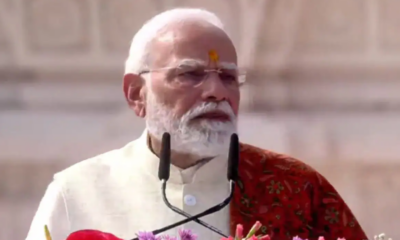
PM Narendra Modi appealed to people to purchase handloom products and share ‘Get Ready With Me’ videos on social media to support weavers and promote India’s handloom heritage ahead of National Handloom Day.

Published

on

Prime Minister Narendra Modi has urged people to purchase handloom products and share videos on social media to promote India’s traditional weaving industry ahead of National Handloom Day.

In a video message posted on his Instagram handle on the eve of National Handloom Day, the Prime Minister said celebrating the occasion would provide support to the country’s weavers and small traders.

He encouraged people to showcase their favourite handloom products by creating short videos, including “Get Ready With Me” videos, and sharing them online to help popularise India’s diverse handloom traditions.

PM recalls Swadeshi Movement’s legacy

Highlighting the historical significance of August 7, PM Modi said it was on this day in 1905 that the Swadeshi Movement against British rule began, bringing people across the country together.

Referring to the recent Friendship Day celebrations, he appealed to citizens to celebrate National Handloom Day with enthusiasm and participate in promoting Indian handloom products.

The Prime Minister said the campaign aims to attract people from across the world to India’s handloom products while strengthening the country’s journey towards self-reliance. He added that buying handloom products and sharing videos online would financially support weavers and small enterprises.

Continue Reading

India News

Lok Sabha passes Bill allowing government to permit charges on UPI and digital payments

The Lok Sabha has passed a Bill amending the Payment and Settlement Systems Act, allowing the government to permit charges on UPI and other notified digital payment modes by removing the legal restriction on Merchant Discount Rate.

Published

on

The Lok Sabha on Thursday passed the Taxation and Other Laws (Amendment) Bill, 2026, paving the way for the central government to permit banks and payment service providers to levy charges on Unified Payments Interface (UPI) and other notified electronic payment modes.

The amendment changes provisions of the Payment and Settlement Systems Act, 2007, removing the existing legal restriction that barred banks and payment system providers from charging Merchant Discount Rate (MDR) on specified electronic payment methods.

The Bill was passed by voice vote after the House resumed proceedings at 2 pm following an earlier adjournment.

What changes under the Bill?

The amendment replaces the reference to electronic payment modes prescribed under Section 269SU of the Income Tax Act with a provision allowing the central government to notify one or more electronic payment modes for which charges may be permitted.

The revised provision states that the government may specify the applicable electronic payment modes through an official notification after the law comes into force.

At present, Section 10A of the Payment and Settlement Systems Act prohibits banks and payment system providers from imposing any direct or indirect charges on prescribed electronic payment modes.

Meanwhile, Section 269SU of the Income Tax Act requires businesses with an annual turnover exceeding ₹50 crore to provide specified digital payment options, including BHIM-UPI QR codes and RuPay debit cards.

UPI remains free for now

While RTGS and NEFT transactions already attract service charges in certain cases, UPI payments have so far remained exempt from Merchant Discount Rate (MDR).

The amendment itself does not immediately introduce charges on UPI transactions. Instead, it authorises the government to notify eligible electronic payment modes and permit charges in the future.

Government cites sustainability of digital payments ecosystem

According to the government, the proposed changes aim to create a sustainable revenue model for banks, payment service providers (PSPs) and payment infrastructure companies that support India’s rapidly expanding digital payments ecosystem.

The proposal seeks to balance the interests of consumers and small businesses while ensuring adequate investment in payment infrastructure.

RBI Governor: Too early to discuss MDR rollout

A day before the Bill was passed, Reserve Bank of India Governor Sanjay Malhotra described discussions on imposing MDR on digital payments as “premature”.

He said investment in payment infrastructure must be funded either through taxation or by adopting a “user pays” model through Merchant Discount Rate.

Malhotra noted that the government is currently bringing the legislative amendment and said it would be appropriate to wait for further developments before drawing conclusions.

He also said that under the user-pays principle, the merchant or person using the service bears the cost, whereas in the absence of MDR, the expenses are effectively supported through public taxation.

Industry has long sought MDR on UPI

The question of introducing MDR on UPI has remained a key issue for banks and payment industry stakeholders, who have argued for a sustainable compensation mechanism as digital payment volumes continue to rise.

Some industry observers have suggested that, if introduced in the future, MDR could apply only to higher-value merchant transactions rather than peer-to-peer UPI transfers. However, the Bill does not specify any such threshold or implementation framework.

Continue Reading

India News

RSS chief Mohan Bhagwat says Gen Z protesters are our own people, not anti-national

RSS chief Mohan Bhagwat said Gen Z protesters should not be called anti-national, describing protests as a democratic form of dialogue and urging engagement with young people.

Published

on

Mohan Bhagwat

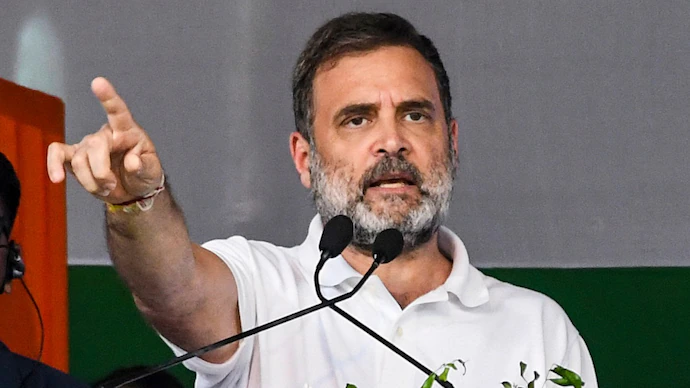
The Rashtriya Swayamsevak Sangh (RSS) chief Mohan Bhagwat on Thursday said members of Generation Z (Gen Z) should not be labelled anti-national merely because they participate in protests. Speaking at the Mumbai Conference titled ‘The Role of Youth in Uniting the World, the Indian Way’, he said young protesters are “our own people” and their concerns should be addressed through dialogue.

Bhagwat said that while protests are part of democracy, they should be carried out through democratic means. He also expressed confidence in the younger generation, describing Gen Z and Gen Alpha as more honest and receptive to the values of patriotism and public service.

Bhagwat calls dialogue essential in a democracy

Addressing the conference, Bhagwat said Gen Z should not be viewed as anti-national for raising concerns.

“If the Gen Z is agitating, they certainly aren’t anti-nationals; they are our own people, our next generation,” he said, adding that a sense of belonging and continuous dialogue are necessary to resolve differences.

He also said that while he would not discourage protests, democracy provides appropriate ways to express dissent.

Says protest is a legitimate form of dialogue

Bhagwat described protests as a democratic mechanism when regular communication fails to resolve issues.

He said that if discussions do not produce results, people naturally raise their voices to draw attention to unresolved concerns, calling protests another form of dialogue in a democratic society.

RSS chief compares Gen Z with earlier generations

Reflecting on generational differences, Bhagwat said today’s youth are more inclined to question authority than previous generations.

According to him, earlier generations generally accepted what elders said without questioning, whereas Gen Z and Gen Alpha seek logical explanations before accepting viewpoints.

He also remarked that he considers the younger generation more honest and said he would readily place his trust in Gen Z.

Remarks come after student protests in Delhi

Bhagwat’s comments come days after student protests in Delhi over alleged undergraduate medical entrance examination paper leaks. The demonstrations, led by the Cockroach Janta Party, resulted in the resignation of Education Minister Dharmendra Pradhan.

When asked whether earlier dialogue could have prevented the situation from escalating, Bhagwat said that if an undesirable situation develops, there must have been shortcomings somewhere that need to be identified and corrected.

On pellet gun allegations

Responding to a question about the reported use of pellet guns against protesting students, Bhagwat said he did not have complete information about the incident.

He said he would need to examine the facts before commenting on what happened or determining where responsibility lay.

Continue Reading

Trending

© Copyright 2022 APNLIVE.com