English हिन्दी
Connect with us

India News

Lok Sabha passes Bankers’ Books Evidence Bill, 2026 to recognise digital bank records as evidence

The Lok Sabha has passed the Bankers’ Books Evidence Bill, 2026, replacing the colonial-era law and recognising digital, electronic and cloud-based bank records as admissible evidence in courts.

Published

on

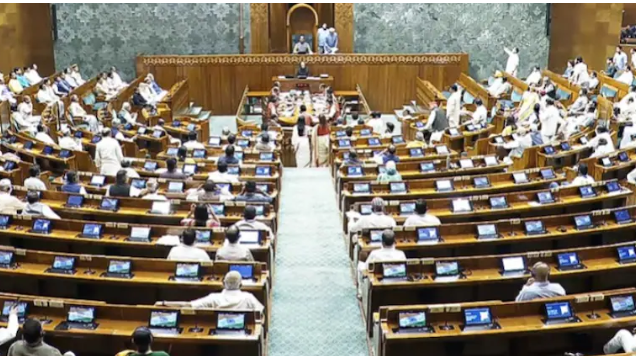
The Lok Sabha on Wednesday passed the Bankers’ Books Evidence Bill, 2026, paving the way for digital and electronic bank records to be recognised as admissible evidence in courts. The proposed law aims to replace the colonial-era Bankers’ Books Evidence Act, 1891 and update the legal framework in line with modern banking practices.

Bill passed amid opposition protests

The legislation was passed through a voice vote after persistent disruptions in the House prevented a detailed discussion.

When the Lok Sabha reconvened at 2 pm following an earlier adjournment, opposition members continued raising slogans despite repeated appeals from the Chair to take up the Bill for discussion.

Finance Minister Nirmala Sitharaman moved the Bill for consideration and passage amid the disruptions. With the protests continuing, the House passed the legislation without a debate. The Bill had been introduced in the Lok Sabha on Monday.

What the new Bill proposes

The proposed law, to be known as the Bankers’ Books Evidence Act, 2026, seeks to modernise the legal framework governing bank records used in legal proceedings.

According to the statement of objects and reasons, rapid technological advancement and the growing use of digital banking have made it necessary to update the existing law, which was enacted when banking records were maintained primarily in physical form.

The Bill expands the definition of “bankers’ books” to include records maintained in physical, electronic, digital, virtual, cloud-based and other formats. This aims to create a technology-neutral and future-ready legal framework for the banking sector.

Key provisions of the legislation

The Bill also proposes standardised certificate formats and allows authentication through manual, digital or electronic signatures. It expressly recognises electronic bank records as admissible evidence and permits their production in either physical or electronic form during legal proceedings.

Another provision empowers the central government to extend the applicability of the law to other entities or classes of entities operating in the financial sector, subject to specified conditions.

The legislation also defines the term “special cause”, under which a court may direct a bank officer to produce bankers’ books or appear as a witness to prove transactions, accounts or other matters in legal proceedings where the bank is not a party.

Why the law is being replaced

The existing Bankers’ Books Evidence Act, 1891 was enacted during the pre-independence period to allow certified copies of bank records to be accepted as evidence without requiring the original records to be produced before the court.

Since the law was framed when banking records were predominantly maintained in physical form, the government has proposed replacing it with legislation better suited to today’s digital banking ecosystem.

India News

Supreme Court rejects Tarun Tejpal’s plea, grants three weeks to surrender

Supreme Court rejects Tarun Tejpal’s surrender exemption plea and grants him three weeks to surrender.

Published

on

The Supreme Court on Tuesday rejected former Tehelka Editor-in-Chief Tarun Tejpal’s plea seeking exemption from surrender in connection with the 2013 rape case.

The court directed Tejpal to surrender within three weeks. His appeal challenging the Bombay High Court’s conviction and 10-year prison sentence is to be taken up subject to compliance with the surrender requirement.

The Bombay High Court’s Goa bench had convicted Tejpal on August 6 and sentenced him to 10 years in prison, overturning his acquittal by a trial court in 2021.

What happened in the Supreme Court

During Tuesday’s hearing, the Goa government argued that Tejpal’s appeal could be heard only after he surrendered and submitted the required surrender certificate.

The Supreme Court rules require a person challenging a conviction to surrender before the appeal is heard, although an exemption from surrender can be sought.

Tejpal’s lawyer, Kapil Sibal, argued that the Bombay High Court had already stayed the operation of the conviction and that requiring him to surrender again would not be appropriate. Sibal also said Tejpal was prepared to go into custody if the Supreme Court did not grant relief.

Tarun Tejpal case

The case dates back to 2013, when a female journalist accused Tejpal of sexually assaulting her inside a hotel elevator during an event in Panaji.

Tejpal was arrested on November 30, 2013, and was later charged under provisions of the Indian Penal Code relating to rape, sexual harassment and wrongful confinement. He pleaded not guilty.

In May 2021, the Goa Sessions Court acquitted Tejpal, holding that the prosecution had failed to establish the case beyond reasonable doubt. The Goa government subsequently challenged that decision before the Bombay High Court.

The Bombay High Court later overturned the acquittal and convicted Tejpal, sentencing him to 10 years in prison.

The Goa government has also approached the Supreme Court seeking enhancement of the sentence.

Continue Reading

India News

Rahul Gandhi, Kharge question caste census method, seek OBC list

Rahul Gandhi and Mallikarjun Kharge have questioned the proposed caste census method and demanded a separate OBC drop-down list.

Published

on

Rahul Gandhi Mallikarjun Kharge

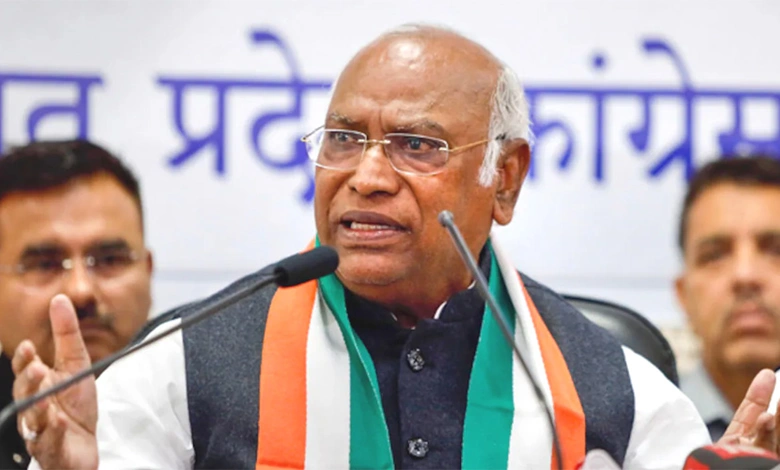
Congress president Mallikarjun Kharge and Leader of the Opposition in the Lok Sabha Rahul Gandhi have written a joint letter to Prime Minister Narendra Modi, raising concerns over the proposed method for recording caste information in the 2027 Census.

The Congress leaders have particularly objected to the absence of a separate OBC column in the caste-related questionnaire. They argued that the current system may not accurately reflect the size of India’s Other Backward Classes (OBC) population.

Sharing the letter on social media, Mr Kharge said that conducting a caste census was not enough and that it also needed to be carried out correctly.

The two leaders described the proposed method of recording caste information as “misleading” and outlined what they said were its potential shortcomings.

Rahul Gandhi, Kharge raise concerns over caste names

According to the letter, under the proposed approach, the caste name provided by an individual would be recorded as given.

Rahul Gandhi and Mallikarjun Kharge argued that the same caste can be known by different names, sub-castes and linguistic variations across different parts of India. They said this could result in members of the same caste being recorded under different names.

The Congress leaders contended that this could fragment a single caste across a very large number of entries and make the resulting data difficult to use effectively.

They have therefore demanded that the government withdraw the existing caste census questionnaire and prepare a new one after consultations with political parties, experts and the public.

Congress seeks OBC drop-down list

Rahul Gandhi and Mallikarjun Kharge have suggested creating a drop-down list of castes to address the issue.

They said such a list could be prepared using existing government lists, including those for Socially and Educationally Backward Classes, along with data from the Anthropological Survey of India.

The Congress leaders also attached caste lists used in surveys conducted in Telangana and Bihar, saying the same methodology had been used in those exercises.

Their key demand is for a separate drop-down list for the OBC category in the caste-related questionnaire.

What is the caste question in the 2027 Census?

The Centre released a list of 40 questions for the 2027 Census around two weeks ago.

The tenth question relates to caste. According to the information cited by the Congress leaders, a drop-down list has been provided for Scheduled Castes and Scheduled Tribes, while an open-ended format has been adopted for other caste responses.

The Congress has demanded that a similar drop-down list be introduced for the OBC category.

Jairam Ramesh alleges Centre is delaying caste census

Congress General Secretary Jairam Ramesh, while releasing the letter at a press conference, alleged that the Centre did not have a genuine intention to conduct a caste census.

He described the current process as a “deception” and accused the government of deliberately attempting to put the caste census on the back burner. These are allegations made by the Congress and are presented as such.

The issue comes amid continued demands from the Congress for an accurate caste census.

A few days ago, Rahul Gandhi, while addressing an event organised by the Congress party’s OBC department, said that if the OBC community took to the streets like “Gen Z students”, the government would be forced to yield.

Continue Reading

India News

Delhi witnesses heavy rain for second day, IMD issues red alert

Delhi is witnessing heavy rain for the second consecutive day, with the IMD issuing a red alert for thunderstorms, lightning, gusty winds and heavy rainfall.

Published

on

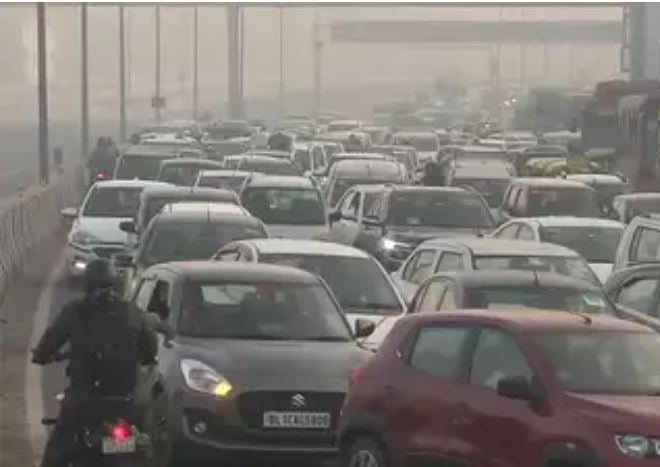
Delhi is witnessing another spell of heavy rain on Tuesday, a day after intense showers caused widespread waterlogging and traffic disruption across the national capital. The India Meteorological Department (IMD) has issued a red alert for Delhi, warning of heavy rain along with thunderstorms, lightning and gusty winds.

According to an IMD update issued at 6:45 am, heavy rainfall was likely over Delhi during the following two to three hours. Moderate rain accompanied by thunderstorms, lightning and winds of 30-40 kmph was also expected at many places, while heavy rain was likely at a few locations.

The alert covers several districts, including Central Delhi, East Delhi, New Delhi, North Delhi, North East Delhi, North West Delhi, Shahdara, South Delhi, South East Delhi, South West Delhi and West Delhi.

Delhi Airport flight operations remain normal

Despite the adverse weather forecast, flight operations at Delhi Airport are currently normal, according to a passenger advisory.

The advisory said that inclement weather conditions were expected in the vicinity of the airport but confirmed that flight operations remained normal at the time of the update.

However, the situation was different on Monday when heavy rain and adverse weather affected flight operations. A total of 15 flights were diverted from Delhi Airport, including three international flights.

Of the 15 diverted flights, 12 were sent to Jaipur, two to Chandigarh and one to Lucknow.

What caused Delhi’s intense rainfall?

An IMD scientist, Dr Shashi Kant, attributed the intense rainfall to the interaction of two different air masses.

According to him, dry northerly winds were moving into Delhi from the north, while moisture-laden easterly winds associated with a low-pressure area forming near West Bengal were flowing from the Bay of Bengal.

The interaction between these air masses resulted in high-intensity rainfall accompanied by thunderstorms over Delhi.

Gurugram faces severe waterlogging

Neighbouring Gurugram also witnessed severe waterlogging on Monday following around an hour of rain.

Several key areas were affected, including Rajiv Chowk, IFFCO Chowk, Railway Road, Sector 5, Old Delhi Road, Mehrauli Road and Basai Road.

Visuals showed school buses stranded on submerged roads, while motorists were seen dragging their vehicles through waterlogged stretches.

Following the disruption, the Gurugram administration asked offices to allow employees to work from home. Schools were also asked to conduct classes through online mode.

Delhi rain alert: What is the latest update?

The IMD has issued a red alert for Delhi, with heavy rain, thunderstorms, lightning and gusty winds expected across several parts of the capital.

Continue Reading

Trending

© Copyright 2022 APNLIVE.com