English हिन्दी
Connect with us

India News

PM Modi says Genome India Project an important milestone in Biotechnology revolution

He noted that the project, which received approval five years ago, was successfully completed thanks to the relentless efforts of our scientists, who overcame obstacles posed by the Covid pandemic.

Published

on

In TV speech, PM Modi attacks Congress, TMC, DMK, SP for blocking women's reservation

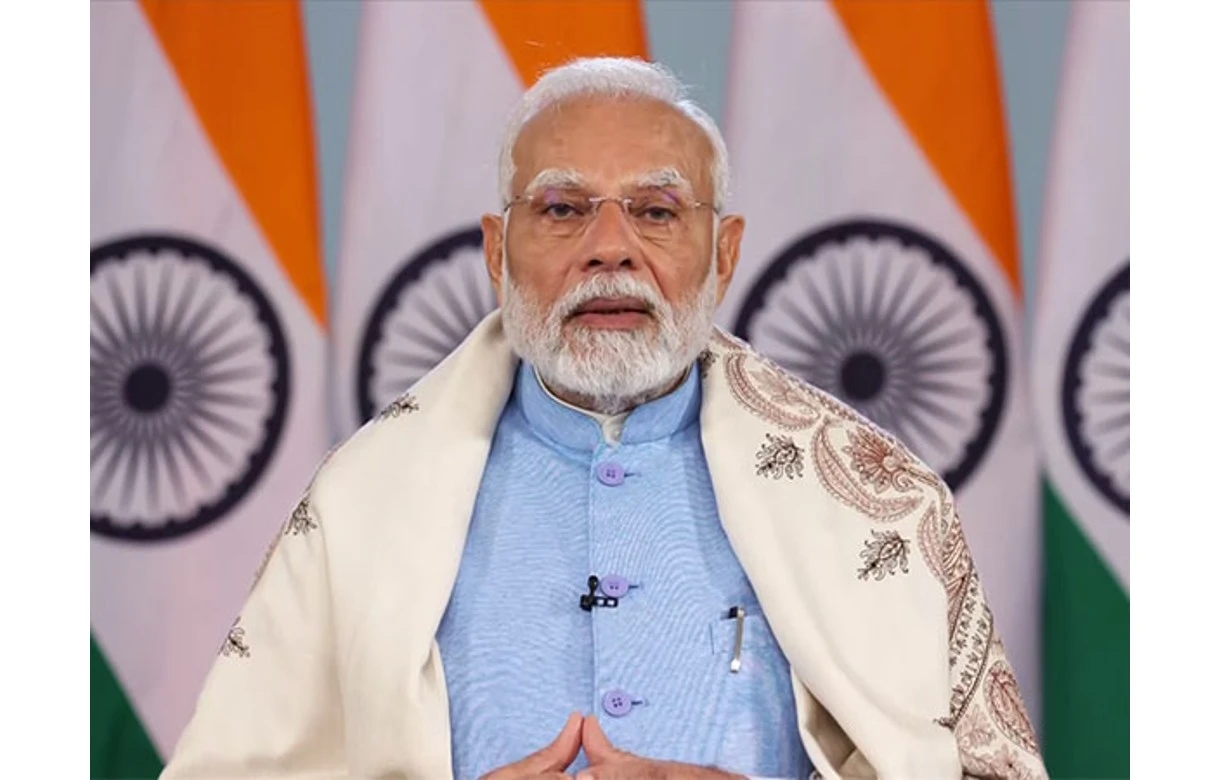
Prime Minister Narendra Modi hailed the completion of the Genome India Project (GIP) on Thursday, describing it as a pivotal moment in the nation’s biotechnology arena.

He noted that the project, which received approval five years ago, was successfully completed thanks to the relentless efforts of our scientists, who overcame obstacles posed by the Covid pandemic.
During his address, Modi highlighted the contributions of over 20 esteemed research institutions, including IISc, IITs, CSIR, and DBT-BRIC, that played key roles in this research initiative.

He announced that the genomic sequences of 10,000 Indians are now housed at the Indian Biological Data Center, expressing confidence that this project will become a hallmark in biotechnology research. He extended his congratulations to all stakeholders involved.

“The Genome India Project is a significant milestone in the biotechnology revolution,” Modi declared. He emphasized the project’s success in creating a diverse genetic resource by sequencing genomes from 10,000 individuals representing various populations across the country. This data will be accessible to scientists and researchers, offering insights into India’s genetic landscape and greatly assisting in national policy-making and planning.

Addressing experts and scientists, the Prime Minister acknowledged India’s vast diversity—not only in food, language, and geography but also in the genetic composition of its people. He stressed the importance of understanding genetic identities to devise effective treatments, noting that the nature of diseases can vary significantly.

He specifically pointed out the challenge of sickle cell anemia among tribal communities and the national effort to address it. Modi mentioned that understanding regional variations in genetic disorders necessitates a comprehensive genetic study to recognize the unique genomic patterns within India’s population.

He asserted that this knowledge would enable the development of targeted solutions and effective medications for specific groups, emphasizing that sickle cell anemia is just one example of a broader issue.

He also highlighted the lack of awareness in India regarding many hereditary genetic diseases, stating that the Genome India Project would facilitate the development of effective treatments for such conditions.

In discussing the future, Modi stated, “The integration of biotechnology and biomass in the 21st century is foundational for establishing a developed India as a Bio Economy.” He outlined the goals of the Bio Economy, which include the optimal utilization of natural resources, promotion of bio-based products and services, and the creation of new employment opportunities in this sector. He pointed out that the Bio Economy fosters sustainable development and innovation.

The Prime Minister noted that India’s Bio Economy has seen rapid growth over the past decade, expanding from 10 billions in 2014 to 150 billion today. He emphasized the nation’s ambition to elevate its Bio Economy further and mentioned the recent launch of the Bio E3 Policy.

He articulated that this policy would help India emerge as a leader in the global biotech landscape, akin to the IT revolution, acknowledging the vital role of scientists in this mission and extending his best wishes to them.

India News

Abhishek Banerjee says will not bow to BJP after nearly 11 hours of ED questioning

After spending nearly 11 hours before the Enforcement Directorate, TMC leader Abhishek Banerjee said he would not bow to the BJP and accused the ruling party of using investigative agencies for political purposes.

Published

on

Abhishek Banerjee

Trinamool Congress leader and Diamond Harbour MP Abhishek Banerjee on Tuesday said he would not bow to the BJP after spending nearly 11 hours being questioned by the Enforcement Directorate (ED) in connection with an ongoing investigation.

Speaking after the questioning, Banerjee alleged that central agencies were being used to target opposition leaders and asserted that he would continue his political fight despite what he described as sustained pressure.

The TMC leader has repeatedly maintained that investigations involving him are politically motivated, a charge he has made on several previous occasions while appearing before central agencies.

His appearance before the ED comes amid a period of heightened political activity and multiple investigations involving leaders in West Bengal. Recent days have also seen Banerjee face summons and questioning in separate matters by state investigative agencies.

After leaving the ED office, Banerjee reiterated that he would not be intimidated and said he remained committed to his political responsibilities. He also accused the BJP of attempting to weaken opposition parties through investigative action, an allegation that the BJP has rejected in the past.

The Enforcement Directorate has not publicly commented on Banerjee’s remarks. The investigation related to the questioning remains ongoing.

Continue Reading

India News

DMK attacks Rahul Gandhi, accuses him of weakening opposition unity

DMK has intensified its criticism of Rahul Gandhi, alleging that the Congress leader’s actions have weakened opposition unity and strained relations within the INDIA bloc.

Published

on

Rahul-Gandhi

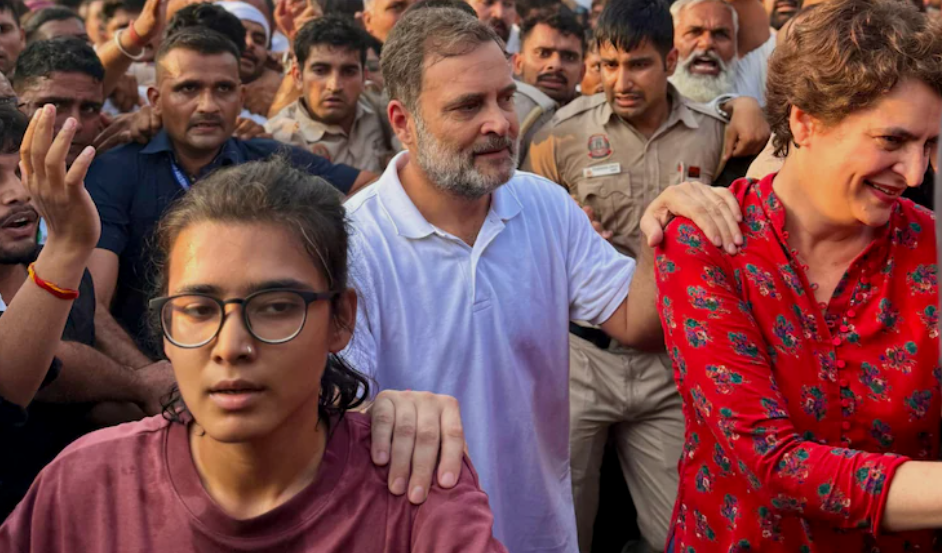
The war of words between the DMK and Congress has intensified, with the DMK launching a strong attack on Leader of Opposition Rahul Gandhi and accusing him of contributing to divisions within the opposition alliance. The criticism comes amid strained ties between the two parties following their political split in Tamil Nadu.

According to the DMK, Rahul Gandhi’s political approach has weakened unity among opposition parties. The party’s IT wing mocked the Congress leader on social media, while an editorial published in the DMK’s official mouthpiece Murasoli questioned his recent remarks on opposition solidarity.

DMK questions Rahul Gandhi’s remarks on opposition unity

In its editorial, Murasoli argued that Rahul Gandhi was speaking about opposition unity despite, according to the DMK, contributing to disagreements among alliance partners in several states. The publication cited criticism directed at Congress by various opposition parties and suggested that the party’s actions had often created tensions within the INDIA bloc.

The editorial also referred to past political disputes involving Congress and Left parties, particularly in Kerala, claiming such episodes had raised concerns among opposition allies about Congress’s approach toward its partners.

Tamil Nadu political fallout adds to tensions

The attack comes after a major political realignment in Tamil Nadu. Following the 2026 Assembly elections, Congress ended its alliance with the DMK and joined the government led by Vijay’s Tamilaga Vettri Kazhagam (TVK). The move left the DMK in the opposition and significantly altered the political equation between the two former allies.

The DMK has alleged that Congress benefited from the alliance during the election and later abandoned its partner. The party’s editorial questioned whether assurances from Congress leadership would be trusted by alliance partners after the developments in Tamil Nadu.

Congress rejects allegations

Congress has not issued a detailed official response to the editorial, but party sources have rejected the allegations. According to the party, its decisions in Tamil Nadu were made in line with the mandate delivered by voters and were not intended to undermine either the DMK or the broader opposition alliance.

The latest exchange highlights growing strains between two key opposition parties even as leaders continue to stress cooperation on national issues. Just days earlier, Rahul Gandhi had said that the DMK remained aligned with the opposition on defending the “idea of India” despite political differences.

Continue Reading

Entertainment

Kumkum Bhagya actor Sanchita Ugale dies by suicide near Mumbai at 22

Television actor Sanchita Ugale, known for Kumkum Bhagya and Wagle Ki Duniya, died by suicide at her residence near Mumbai. Police have launched an investigation.

Published

on

Sanchita Ugale

Television actor Sanchita Ugale, known for her appearances in Kumkum Bhagya, Wagle Ki Duniya and Dilwali Dulha Le Jayegi, died by suicide at her residence in Nalasopara East near Mumbai on June 14. She was 22.

According to police officials, the incident took place at her home in Achole village, Nalasopara East. Authorities said Ugale had locked herself inside her bedroom and was later found hanging from a ceiling fan. Family members and local residents rushed her to a hospital, where doctors declared her dead.

Police have registered an Accidental Death Report (ADR) and launched an investigation into the circumstances surrounding her death. Officials said inquiries are underway and the exact reason behind the incident has not yet been established.

Career across television, OTT and films

Ugale had built a growing presence in the entertainment industry through television, streaming projects and films. Apart from Kumkum Bhagya and Wagle Ki Duniya, she played a lead role in Dilwali Dulha Le Jayegi. She also appeared in OTT projects such as Crime Aaj Kal and Silence 2.

The actor was also associated with the film Chhaava, which contributed to her growing recognition among audiences.

Last social media post draws attention

Following news of her death, social media users shared and commented on Ugale’s final Instagram post, which had been uploaded hours before the incident. The post showed the actor in traditional attire lip-syncing to a classic Bollywood song. Fans expressed shock and grief after learning of her death.

Continue Reading

Trending

© Copyright 2022 APNLIVE.com