English हिन्दी
Connect with us

Latest Politics News

Congress says Waqf Bill part of BJP’s strategy to damage harmony

“The Waqf (Amendment) Bill, 2024, is an assault on the Constitution of India itself. It seeks to demonize minority communities, dilute constitutional guarantees of equal rights, and defame their traditions and institutions to keep society perpetually divided for political benefits,” he said.

Published

on

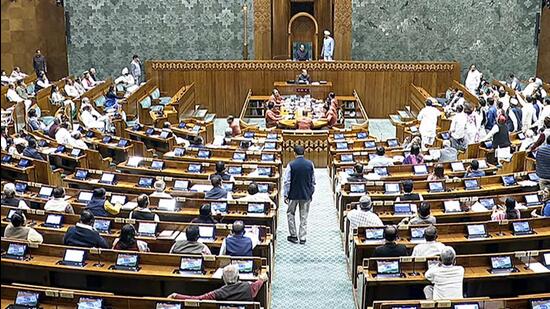
The Congress on Sunday launched a sharp critique of Prime Minister Narendra Modi-led government over the proposed Waqf (Amendment) Bill, 2024, accusing the BJP of undermining social harmony and targeting minority communities for electoral gains.

In a strongly worded statement, Congress general secretary in-charge communication Jairam Ramesh alleged that the bill is designed to polarize society and weaken the administrative framework of waqf institutions.

Ramesh claimed that the bill, which was reportedly pushed through the Joint Parliamentary Committee (JPC) without detailed clause-by-clause discussions, violates parliamentary norms and poses a threat to India’s constitutional values.

“The Waqf (Amendment) Bill, 2024, is an assault on the Constitution of India itself. It seeks to demonize minority communities, dilute constitutional guarantees of equal rights, and defame their traditions and institutions to keep society perpetually divided for political benefits,” he said.

The Congress leader outlined five key concerns with the proposed amendments:

  1. Weakening of Waqf Institutions: Ramesh argued that the bill aims to diminish the authority and stature of national and state waqf boards and tribunals, effectively stripping minority communities of their right to manage their religious and cultural affairs.
  2. Ambiguity in Waqf Definition: The bill allegedly alters the definition of waqf, creating confusion over who can donate land for waqf purposes. Ramesh criticized the removal of the “waqf-by-user” concept, which was established by judicial precedent to protect long-standing customary practices.
  3. Erosion of Existing Protections: The Congress accused the government of removing crucial provisions from the current law without justification, thereby weakening the administration of waqf properties.
  4. Encroachment Defenses: Ramesh claimed that the bill introduces measures to protect individuals who have illegally occupied waqf lands, undermining efforts to reclaim such properties.
  5. Excessive Powers to Government Officials: The bill reportedly grants sweeping authority to collectors and other government officials to derecognize waqf properties based on complaints or allegations, even before a final decision is reached.

Ramesh emphasized that these changes would allow state government officers to unilaterally derecognize waqf properties, leaving them vulnerable to arbitrary decisions. “Officers will now have the power to derecognize any waqf on mere allegations, treating the property as government-owned until proven otherwise,” he said.

The Congress’s criticism comes amid speculation that the government may introduce the Waqf Bill for passage in Parliament following the approval of the Finance Bill. The party has called for a thorough review of the proposed amendments, urging the government to prioritize social harmony and uphold constitutional principles.

India News

Uddhav Sena MPs unreachable as Delhi meetings fuel fresh split speculation

Fresh uncertainty surrounds Shiv Sena (UBT) after several MPs reportedly became unreachable, with attention now focused on crucial meetings in Delhi.

Published

on

Fresh political uncertainty has gripped the Shiv Sena (UBT) after several of its Lok Sabha MPs reportedly became unreachable, prompting senior leaders to make personal efforts to contact them amid growing speculation of a possible rebellion within the party.

Party chief Uddhav Thackeray and other senior leaders are understood to be reaching out to MPs as concerns grow over potential defections. The developments come ahead of a parliamentary committee meeting in Delhi, where several MPs from the Uddhav Thackeray camp are expected to gather.

Reports suggest that some MPs from the Shiv Sena (UBT) faction could hold discussions in the national capital alongside leaders from the rival Shiv Sena led by Eknath Shinde. Sources have indicated that a group of MPs may explore forming a separate faction in Parliament before potentially aligning with the Shinde-led camp, although no official announcement has been made.

Names being discussed in political circles include MPs such as Sanjay Dina Patil, Sanjay Deshmukh, Nagesh Patil Ashtikar, Omraje Nimbalkar, Bhausaheb Wakchaure and Sanjay Jadhav. However, at least one MP, Sanjay Dina Patil, has publicly rejected reports linking him to any rebel group.

Meanwhile, senior Uddhav camp leaders including Arvind Sawant and Anil Desai are expected to remain actively engaged in efforts to maintain party unity. Rajya Sabha MP Sanjay Raut has also been in Delhi amid the unfolding developments.

The latest episode has revived memories of previous political upheavals in Maharashtra and intensified speculation over whether the Shiv Sena (UBT) could face another significant organisational challenge in the coming days. As meetings continue in Delhi, political observers will be closely watching for any formal announcements from either camp.

Continue Reading

India News

Abhishek Banerjee says will not bow to BJP after nearly 11 hours of ED questioning

After spending nearly 11 hours before the Enforcement Directorate, TMC leader Abhishek Banerjee said he would not bow to the BJP and accused the ruling party of using investigative agencies for political purposes.

Published

on

Abhishek Banerjee

Trinamool Congress leader and Diamond Harbour MP Abhishek Banerjee on Tuesday said he would not bow to the BJP after spending nearly 11 hours being questioned by the Enforcement Directorate (ED) in connection with an ongoing investigation.

Speaking after the questioning, Banerjee alleged that central agencies were being used to target opposition leaders and asserted that he would continue his political fight despite what he described as sustained pressure.

The TMC leader has repeatedly maintained that investigations involving him are politically motivated, a charge he has made on several previous occasions while appearing before central agencies.

His appearance before the ED comes amid a period of heightened political activity and multiple investigations involving leaders in West Bengal. Recent days have also seen Banerjee face summons and questioning in separate matters by state investigative agencies.

After leaving the ED office, Banerjee reiterated that he would not be intimidated and said he remained committed to his political responsibilities. He also accused the BJP of attempting to weaken opposition parties through investigative action, an allegation that the BJP has rejected in the past.

The Enforcement Directorate has not publicly commented on Banerjee’s remarks. The investigation related to the questioning remains ongoing.

Continue Reading

India News

DMK attacks Rahul Gandhi, accuses him of weakening opposition unity

DMK has intensified its criticism of Rahul Gandhi, alleging that the Congress leader’s actions have weakened opposition unity and strained relations within the INDIA bloc.

Published

on

Rahul-Gandhi

The war of words between the DMK and Congress has intensified, with the DMK launching a strong attack on Leader of Opposition Rahul Gandhi and accusing him of contributing to divisions within the opposition alliance. The criticism comes amid strained ties between the two parties following their political split in Tamil Nadu.

According to the DMK, Rahul Gandhi’s political approach has weakened unity among opposition parties. The party’s IT wing mocked the Congress leader on social media, while an editorial published in the DMK’s official mouthpiece Murasoli questioned his recent remarks on opposition solidarity.

DMK questions Rahul Gandhi’s remarks on opposition unity

In its editorial, Murasoli argued that Rahul Gandhi was speaking about opposition unity despite, according to the DMK, contributing to disagreements among alliance partners in several states. The publication cited criticism directed at Congress by various opposition parties and suggested that the party’s actions had often created tensions within the INDIA bloc.

The editorial also referred to past political disputes involving Congress and Left parties, particularly in Kerala, claiming such episodes had raised concerns among opposition allies about Congress’s approach toward its partners.

Tamil Nadu political fallout adds to tensions

The attack comes after a major political realignment in Tamil Nadu. Following the 2026 Assembly elections, Congress ended its alliance with the DMK and joined the government led by Vijay’s Tamilaga Vettri Kazhagam (TVK). The move left the DMK in the opposition and significantly altered the political equation between the two former allies.

The DMK has alleged that Congress benefited from the alliance during the election and later abandoned its partner. The party’s editorial questioned whether assurances from Congress leadership would be trusted by alliance partners after the developments in Tamil Nadu.

Congress rejects allegations

Congress has not issued a detailed official response to the editorial, but party sources have rejected the allegations. According to the party, its decisions in Tamil Nadu were made in line with the mandate delivered by voters and were not intended to undermine either the DMK or the broader opposition alliance.

The latest exchange highlights growing strains between two key opposition parties even as leaders continue to stress cooperation on national issues. Just days earlier, Rahul Gandhi had said that the DMK remained aligned with the opposition on defending the “idea of India” despite political differences.

Continue Reading

Trending

© Copyright 2022 APNLIVE.com