English हिन्दी
Connect with us

Latest world news

Jaishankar denies Trump’s claim of brokering India-Pakistan ceasefire using trade leverage

Foreign Minister S Jaishankar has contradicted US President Donald Trump’s claim that trade pressure brought India and Pakistan to a ceasefire agreement after Operation Sindoor.

Published

on

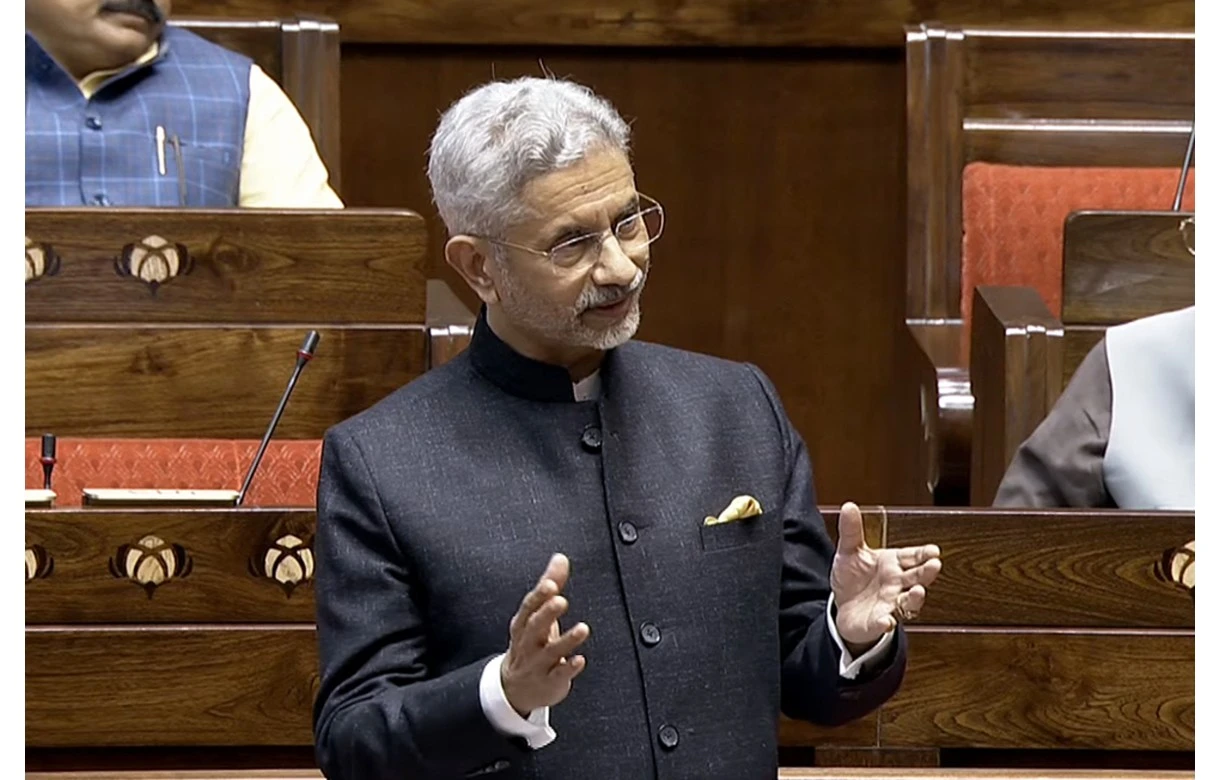
In a sharp rebuttal to US President Donald Trump’s recent assertion, External Affairs Minister S Jaishankar has dismissed claims that the ceasefire between India and Pakistan following Operation Sindoor was influenced by trade negotiations. Jaishankar clarified that there was no link between trade discussions and the diplomatic engagement surrounding the military escalation.

Speaking during a fireside chat hosted by a media platform in New York, Jaishankar recounted his presence during the crucial conversation between Prime Minister Narendra Modi and US Vice President JD Vance on the night of May 9. He asserted that the Indian side did not accept any form of nuclear or trade-related blackmail from Pakistan and was prepared to respond decisively to any aggression.

“I was in the room when Vice President Vance spoke to Prime Minister Modi,” Jaishankar said, emphasizing that Pakistan’s threats were met with firm resolve by the Indian leadership. He also noted that Pakistani forces launched a major assault later that night, which was countered swiftly by Indian troops.

Subsequent diplomatic conversations began the next morning, when Jaishankar spoke to US Secretary of State Marco Rubio. Rubio conveyed that Pakistan was ready for dialogue. That same afternoon, Pakistan’s military establishment reached out directly to India’s Director General of Military Operations seeking a ceasefire.

Jaishankar was unequivocal in stating, “So I can only tell you from my personal experience what happened,” countering Trump’s claim that he pressured both sides using the prospect of halting trade deals. Trump, during a press conference in The Hague, had claimed: “I ended that with a series of phone calls on trade.”

In contrast, Jaishankar stressed that India’s response was shaped by national security priorities, not trade concerns. “Trade and diplomacy function independently. The idea that trade was linked to our military decisions is just not accurate,” he said.

The Indian foreign minister also addressed the April 22 terror attack in Jammu and Kashmir’s Pahalgam, calling it an “act of economic warfare.” He highlighted that the assault by the Resistance Front, a Lashkar-e-Taiba affiliate, aimed to destabilize tourism and provoke communal violence by targeting people based on religious identity.

Jaishankar asserted that the Indian government could not let cross-border terrorism go unchallenged simply because the perpetrators operated from across the boundary. Operation Sindoor was launched as a direct response to the attack.

Refuting suggestions of a soft response, Jaishankar reiterated that India’s actions were driven by principle: “The idea that they are on that side of the border and therefore immune from retaliation is a proposition that we chose to challenge.”

Latest world news

Trump calls PM Modi friend, says had very good conversation amid West Asia tensions

Trump described PM Modi as a friend after a 40-minute call focusing on Iran tensions, trade and strategic ties.

Published

on

Donald Trump statement

US President Donald Trump described Prime Minister Narendra Modi as a “friend” and said the two leaders had a “very good conversation” during a recent phone call held amid rising tensions in West Asia.

The call, which lasted around 40 minutes, comes shortly after developments in the ongoing Iran-related conflict and diplomatic efforts in the region. During the conversation, both leaders discussed key issues including regional security, trade, and bilateral cooperation.

The interaction marks one of the first high-level engagements between the two leaders following recent ceasefire-related developments involving the United States and Iran. The evolving situation in West Asia, including concerns around stability and global energy routes, was a significant focus of the discussion.

Officials indicated that the leaders also reviewed progress in India-US ties and reiterated their commitment to strengthening the strategic partnership across multiple sectors.

The phone call reflects continued coordination between New Delhi and Washington as geopolitical tensions persist in the Middle East, with both sides maintaining close communication on global and regional issues.

Continue Reading

Latest world news

Israel-Lebanon ceasefire to begin within hours as Trump announces 10-day truce

Israel and Lebanon may begin a 10-day ceasefire within hours after a proposal announced by Donald Trump amid ongoing tensions.

Published

on

Donald Trump

A temporary halt in hostilities between Israel and Lebanon is expected to begin within hours after US President Donald Trump announced a proposed 10-day ceasefire between the two sides, amid ongoing tensions in the region.

According to his statement, the ceasefire is likely to take effect around 5 p.m. Eastern Time, although independent confirmation from both sides is still awaited.

The development follows discussions involving Israeli Prime Minister Benjamin Netanyahu and Lebanese President Joseph Aoun, with mediation efforts led by the United States.

Officials indicated that the proposed truce is aimed at creating a limited window to reduce violence and potentially pave the way for broader diplomatic engagement. The situation along the Israel-Lebanon border has remained tense in recent weeks, with escalation linked to the activities of Hezbollah.

Diplomatic efforts have intensified in recent days, with discussions facilitated by the United States, including the involvement of US Secretary of State Marco Rubio. However, details of the agreement and the extent of coordination between the parties remain unclear.

The situation remains fluid, and the success of the ceasefire will depend on adherence by all sides involved. The conflict has already led to significant humanitarian and geopolitical consequences, including displacement and disruption in affected areas.

While the proposed ceasefire is being seen as an important step toward de-escalation, broader negotiations involving regional stakeholders are expected to be necessary for any lasting resolution.

Continue Reading

Latest world news

US ends oil sanctions waiver for Iran and Russia, impact likely on India’s energy imports

The US decision to end the Iran and Russia oil waiver may impact India’s oil imports, fuel prices and global energy markets.

Published

on

US oil tanker

The United States has decided not to extend a temporary sanctions waiver that allowed limited trade in Iranian and Russian oil, marking a shift towards stricter enforcement of economic restrictions.

The waiver, introduced in March 2026, had permitted the sale of oil already loaded on ships to stabilise global supply during heightened geopolitical tensions. However, it is now set to expire around mid-April without renewal.

US officials have indicated that the move is part of a broader strategy to increase pressure on both Iran and Russia amid ongoing conflicts and geopolitical tensions.

What the waiver did and why it mattered

The short-term waiver allowed millions of barrels of oil—estimated at around 140 million barrels—to enter global markets, helping ease supply shortages and prevent sharp price spikes.

It also enabled countries like India to purchase discounted crude oil from Russia and resume limited imports from Iran after years of restrictions.

Impact on India

India, one of the world’s largest oil importers, is expected to feel the impact of the decision in several ways:

  • Reduced access to discounted oil
    India had been buying cheaper Russian crude and recently resumed Iranian imports under the waiver. Its end may limit these options.
  • Potential rise in fuel costs
    With fewer discounted supplies available, India may need to rely more on costlier sources, which could increase domestic fuel prices.
  • Supply diversification pressure
    India may need to explore alternative suppliers in the Middle East, Africa, or the US to maintain energy security.
  • Geopolitical balancing challenge
    The move adds pressure on India to align with US sanctions while managing its own economic interests.

Global energy market concerns

The end of the waiver comes at a time when global oil markets are already under stress due to conflict in West Asia and disruptions in key routes like the Strait of Hormuz.

Analysts warn that tightening sanctions could:

  • Reduce global oil supply
  • Increase price volatility
  • Intensify competition among major buyers like India and China

Bigger picture

The US decision reflects a broader shift from temporary relief measures to stricter enforcement of sanctions, even if it risks tightening global energy markets.

For India, the development highlights a recurring challenge—balancing affordable energy access with geopolitical realities.

Continue Reading

Trending

© Copyright 2022 APNLIVE.com