English हिन्दी
Connect with us

India News

JK Police block Omar Abdullah from entering martyrs’ memorial

Published

on

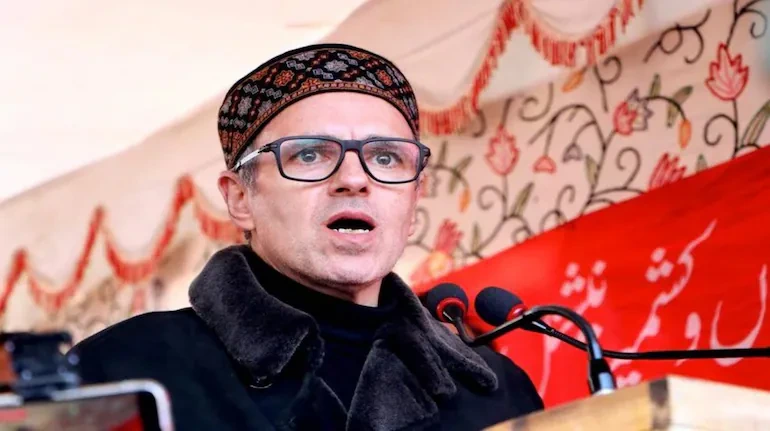
Jammu and Kashmir Chief Minister Omar Abdullah found himself in fisticuffs with Jammu and Kashmir Police near the Martyrs’ Graveyard in Srinagar on Monday morning. In a video shared by Abdullah, police can be seen restraining him and his supporters from entering the memorial.

The J&K CM and his supporters were there to pay their respects to Kashmiri protesters who had been killed by Maharaja Hari Singh’s Dogra forces on July 13, 1931. The police have been observing July 13 at the graveyard with a gun salute and floral tributes. However, this year the administration had prohibited any function at the Martyrs’ Graveyard, and had issued warnings of strict action against those who defied the restrictions.

Abdullah’s video captured the incident of what he called “physical grappling” by the “protectors of law”, as he and his supporters were denied entrance. Abdullah said that his actions were lawful, and questioned the police intervention, demanding explanation for their attempts to prevent them from offering prayers at the graves. He pointed out that the restrictions were set in place for the previous day, but the police still restricted them today.

The J&K CM recounted how he bypassed the initial blockade in front of his residence by not informing law enforcement of his movements and driving to the site. He said he faced multiple manhandling attempts by uniformed policemen after he parked his car at Nowhatta Chowk. He slammed the police calling them “shameless” and condemned their disregard for the law. The National Conference leader likened July 13 to Jallianwala Bagh, and added, the police sometimes behave as though the people are their slaves.

Emphasizing that they are not slaves to anyone, the leader asserted that if they serve anyone, it is the people. The remarks were directed at the forces operating under the control of Lieutenant Governor Manoj Sinha.

Access to the Martyrs’ Graveyard has been restricted to the public on July 13 after the abrogation of Article 370 in 2019. While the Hari Singh birth anniversary has been declared a public holiday, there is no such respite for the massacre anniversary on July 13. Further, December 5, the birth anniversary of Sher-e-Kashmir, Sheikh Abdullah, is no longer official holiday.

India News

PM Modi to inaugurate Rs 169-crore RBI data centre in Odisha on October 25

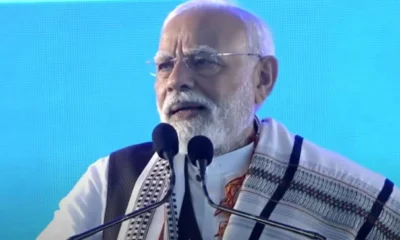
Prime Minister Narendra Modi is scheduled to visit Odisha on October 25 to inaugurate the Reserve Bank of India’s Rs. 169-crore data centre in Jatni, near Bhubaneswar.

Published

on

Prime Minister Narendra Modi is scheduled to visit Odisha on October 25 to inaugurate the Reserve Bank of India’s (RBI) Rs. 169-crore data centre at Info Valley-II in Jatni, on the outskirts of Bhubaneswar.

According to the tentative itinerary shared by the Odisha Chief Secretary’s office, the Prime Minister is expected to arrive at Biju Patnaik International Airport in Bhubaneswar at around 4:30 pm aboard a special Indian Air Force aircraft. He will then travel by helicopter to the Khurda helipad before proceeding by road to the RBI facility for the inauguration.

The Prime Minister is likely to spend around an hour at the facility before returning to Bhubaneswar and departing from the state at approximately 6:30 pm.

RBI data centre to strengthen financial infrastructure

Spread across 18.55 acres, the new data centre is designed to strengthen the RBI’s data management, disaster recovery, cybersecurity and business continuity capabilities.

The facility will support critical central banking functions, including currency management, payment and settlement systems, and regulatory operations. It is also expected to serve as a backup to the RBI’s existing data centre in Navi Mumbai.

The new facility will be the RBI’s second data centre of this kind, following its existing centre in Navi Mumbai.

Why the data centre is located in Jatni

The site at Info Valley-II was selected for its geographical stability. According to an official, its location away from seismically active zones and high-risk international border areas is intended to reduce exposure to natural disasters and geopolitical vulnerabilities.

The project is intended to help maintain the continuity of essential RBI operations while strengthening the security and resilience of India’s financial infrastructure.

The foundation stone for the facility was laid by then RBI Governor Shaktikanta Das on March 22, 2023.

PM Modi’s ninth Odisha visit since 2024

The October 25 programme is expected to be Prime Minister Modi’s ninth visit to Odisha since the BJP government was formed in the state in 2024, according to Odisha BJP vice-president Jatin Mohanty.

Chief Minister Mohan Charan Majhi and Chief Secretary Anu Garg have reviewed preparations for the Prime Minister’s scheduled visit.

The inauguration is part of efforts to strengthen Odisha’s digital infrastructure. The project is also expected to support the state’s ambitions in technology and electronics manufacturing, as stated by the BJP leader.

Continue Reading

India News

Om Prakash Mathur sworn in as Keralam Governor

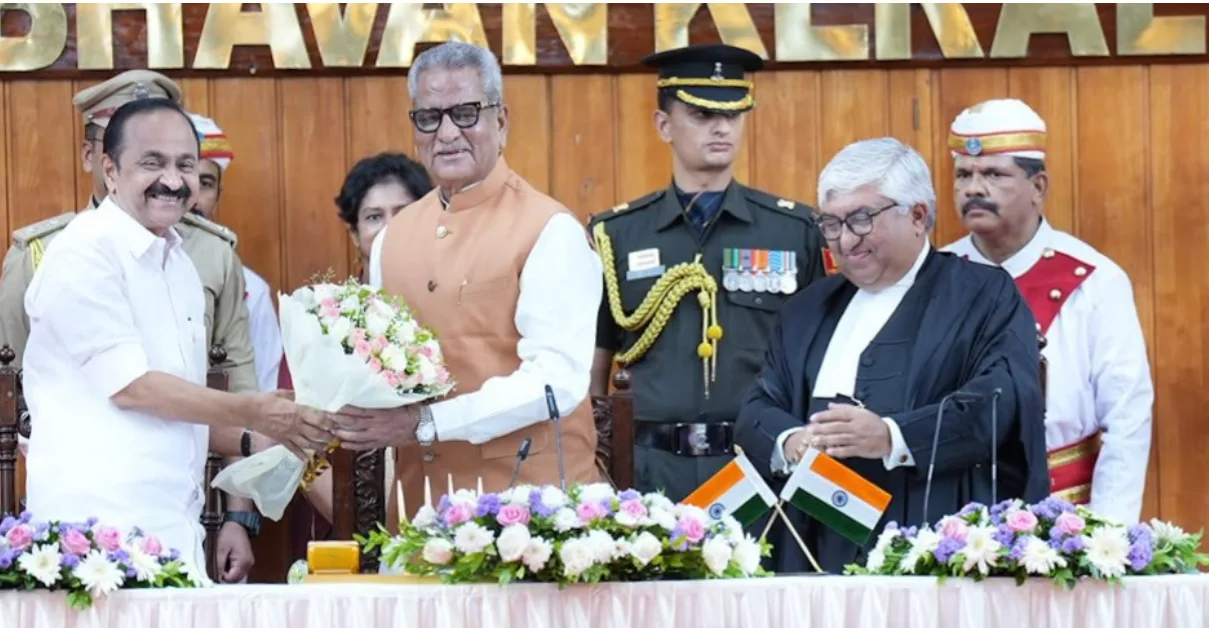
Om Prakash Mathur was sworn in as Keralam Governor on Friday. Kerala High Court Chief Justice Soumen Sen administered the oath at Lok Bhavan in Thiruvananthapuram.
Published

on

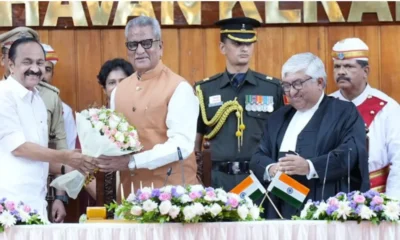
Om Prakash Mathur, a veteran Bharatiya Janata Party (BJP) leader and former Governor of Sikkim, was sworn in as the Governor of Keralam on Friday, October 23. The oath-taking ceremony was held at Lok Bhavan in Thiruvananthapuram, where Kerala High Court Chief Justice Soumen Sen administered the oath of office.

Kerala Chief Minister V D Satheesan and members of his Cabinet attended the ceremony, along with leaders from various political parties. However, leaders of the Left Democratic Front (LDF), the state’s key opposition alliance, did not participate in the event, according to the report.

Before the oath was administered, the appointment order issued by President Droupadi Murmu was read out. Mathur took the oath in Hindi and formally assumed office. The ceremony concluded with the national song Vande Mataram and the national anthem being played by the band.

Who is Om Prakash Mathur?

Mathur hails from Bedal village in the Bali tehsil of Rajasthan’s Pali district. He graduated from Rajasthan University and entered public life as a pracharak of the Rashtriya Swayamsevak Sangh (RSS).

During his political career, Mathur served as the BJP’s national general secretary in charge of Gujarat and represented Rajasthan in the Rajya Sabha. He was appointed Governor of Sikkim in July 2024 before being named to the Keralam post in the latest gubernatorial reshuffle.

Mathur succeeds Rajendra Vishwanath Arlekar

Mathur replaces Rajendra Vishwanath Arlekar, who has been appointed Governor of Tamil Nadu. President Droupadi Murmu announced the gubernatorial appointments on October 12, with the changes taking effect as the appointees assumed charge of their respective offices.

The change comes against the backdrop of disputes between successive Kerala governments and governors over university administration. The governor also serves as the chancellor of the state’s universities, with responsibilities related to their administration.

Previous disagreements over the appointment of vice-chancellors and other senior university officials had led to legal proceedings. Both the LDF and the United Democratic Front (UDF) have raised objections to appointments they alleged involved individuals associated with the BJP and RSS.

Continue Reading

India News

Two election commissioners complained against senior poll officer, RTI reveals

An RTI response has shed light on complaints by two Election Commissioners against a senior poll panel officer and the Cabinet Secretariat’s decision not to intervene directly.
Published

on

An RTI response has brought fresh details to light about complaints submitted by two Election Commissioners against a senior official of the Election Commission of India (ECI), including the Cabinet Secretariat’s decision not to intervene directly in the matter.

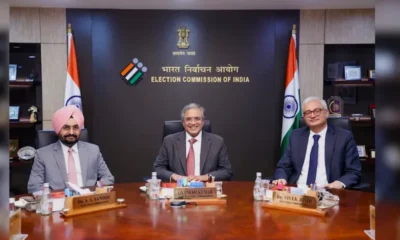
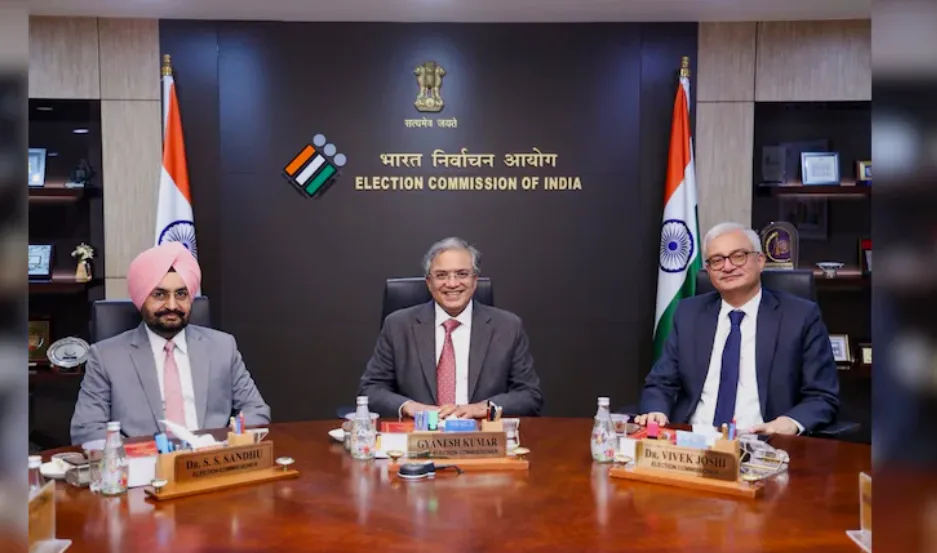
Election Commissioners Sukhbir Singh Sandhu and Vivek Joshi wrote separate letters to Cabinet Secretary T V Somanathan on July 29, 2026, raising concerns about the working of Senior Deputy Election Commissioner Maneesh Garg.

The complaints followed an order concerning the allocation of responsibilities among senior officers in the poll panel. The Cabinet Secretariat subsequently acknowledged the communications and shared them with relevant offices, while noting that direct action could be inappropriate without an official communication from the Commission as a whole.

Why the two Election Commissioners raised concerns

The dispute centred on a work-allocation order issued on July 28, when Garg took temporary charge as the link officer for the Deputy Election Commissioner handling administration, who was on leave.

According to the complaints, Garg issued an order reallocating responsibilities among senior and equivalent-ranking officers without discussing the changes with the Commission or the officers concerned.

Sandhu reportedly objected that the revised allocation had been made without consultation, while Joshi stated that a file he requested from the Administration Division was not provided to him.

The two Commissioners also referred to previous instructions against making such changes without prior discussion or approval from the Commission.

Why the Cabinet Secretariat did not intervene

Records disclosed through the RTI process indicate that the Cabinet Secretariat considered the complaints but concluded that direct intervention could be inappropriate.

In its internal deliberations, the Secretariat noted that the Election Commission is a constitutional body designed to function independently of executive interference. It also observed that the letters had been sent by the two Commissioners in their individual capacities rather than as an official communication from the Commission collectively.

The Secretariat therefore considered it appropriate to acknowledge the letters and inform the Chief Election Commissioner’s office, rather than take direct action against the official.

The Department of Personnel and Training was also informed so that the matter could be placed on record for future consideration concerning the officer.

What happened after the complaints

The Cabinet Secretariat’s records show that internal discussions took place on August 3 and August 4. The Cabinet Secretary acknowledged the two letters on August 5 and forwarded the matter to the relevant offices.

The Election Commission had also issued a clarification on September 26, stating that the dispute did not concern a policy matter or the Commission’s IT division, but the functioning of an officer posted to the poll panel.

The Commission said the work-reallocation orders were not implemented following directions from the two Commissioners and that oversight of the IT division had not actually been withdrawn.

The RTI disclosures provide an official record of how the complaints were handled by the Cabinet Secretariat, while also highlighting the institutional considerations involved in deciding whether the executive should intervene in the functioning of a constitutional body.

Continue Reading

Trending

© Copyright 2022 APNLIVE.com