English हिन्दी
Connect with us

India News

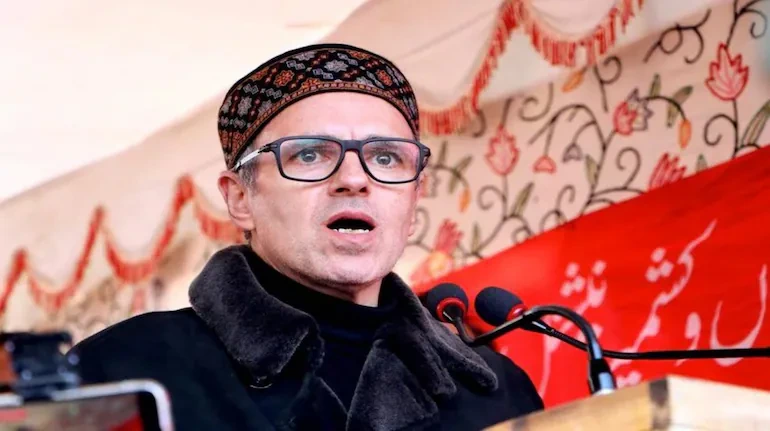
Omar Abdullah distances INDIA bloc from Congress’s vote chori campaign

Omar Abdullah has clarified that the INDIA opposition bloc is not linked to the Congress’s ‘vote chori’ campaign, saying each party is free to set its own agenda.

Published

on

Jammu and Kashmir Chief Minister and National Conference leader Omar Abdullah has drawn a clear line between the INDIA opposition bloc and the Congress’s ongoing ‘vote chori’ campaign, stating that the alliance has no role in the issue being raised by the grand old party.

Speaking to the media, Abdullah said every political party within the alliance is free to decide its own priorities. He underlined that the Congress has chosen to focus on alleged irregularities linked to voter lists and electoral processes, while other parties may pursue different agendas.

According to Abdullah, the INDIA bloc as a collective is not associated with the ‘vote chori’ narrative. He added that no party within the alliance should dictate what issues another constituent should raise in public discourse.

The remarks came days after the Congress organised a large rally in the national capital to intensify its campaign. The party has alleged that the Election Commission is working in favour of the BJP to influence electoral outcomes. Both the poll body and the ruling party have rejected these claims.

INDIA bloc cohesion under scrutiny

Abdullah’s comments have gained significance as they follow his recent observation that the INDIA bloc is currently on “life support”. That remark, made during an interaction at a leadership summit in Delhi, triggered mixed reactions from alliance partners.

At the event, Abdullah had said the opposition grouping revives intermittently but struggles to maintain momentum, especially after electoral setbacks. He also pointed to the Bihar political developments, suggesting that decisions taken by the alliance may have contributed to Nitish Kumar returning to the NDA fold. He further cited the inability to accommodate the Hemant Soren-led Jharkhand Mukti Morcha in Bihar seat-sharing talks as a missed opportunity.

Allies respond to Omar Abdullah’s remarks

Reactions from within the INDIA bloc reflected differing views on Abdullah’s assessment. RJD leader Manoj Jha termed the remarks “rushed” and said responsibility for strengthening the alliance lies with all constituents, including Abdullah himself.

CPI general secretary D Raja called for introspection among alliance partners, questioning the lack of coordination despite the stated objective of defeating the BJP and safeguarding democratic values.

Samajwadi Party MP Rajeev Rai disagreed with the “life support” analogy, saying electoral defeats are part of politics and should not demoralise opposition forces. He cautioned that internal pessimism only serves the BJP’s interests.

BJP targets opposition unity

The BJP seized on the comments to attack the opposition bloc’s unity. Senior leader Shahnawaz Hussain dismissed the INDIA alliance as defunct, claiming it lost relevance after the Lok Sabha elections and lacks leadership and a clear policy direction.

Abdullah’s latest clarification on the ‘vote chori’ campaign reinforces the visible differences within the opposition alliance, even as its constituents continue to debate strategy and coordination ahead of future political battles.

India News

TMC faces fresh turbulence as speculation grows over possible breakaway faction in Bengal

The Trinamool Congress is facing fresh internal challenges as reports of dissent and possible plans for a breakaway political formation gain attention following the party’s defeat in the West Bengal Assembly elections.

Published

on

The Trinamool Congress (TMC) is facing renewed signs of internal unrest, with political speculation mounting over the possibility of a breakaway group emerging in West Bengal after the party’s recent electoral setback. Reports of disgruntled legislators distancing themselves from the party leadership have fuelled discussions about a potential new political formation led by rebel leaders rather than by veteran leader Mamata Banerjee.

The buzz comes shortly after the expulsion of two TMC MLAs over alleged anti-party activities. According to reports, concerns within the party have intensified amid claims that several legislators are unhappy with the current leadership structure and the role of the party’s top decision-makers.

Adding to the speculation, a large number of TMC legislators reportedly skipped a scheduled meeting at Mamata Banerjee’s residence, a development that has been interpreted by political observers as a sign of growing discontent within the organisation.

Split rumours gain momentum after election defeat

The developments come in the aftermath of the 2026 West Bengal Assembly election, in which the BJP secured a decisive victory while the Trinamool Congress suffered a major setback after 15 years in power. The defeat triggered debates within the party over its future direction and leadership.

Reports suggest that discussions are taking place among some legislators regarding the possibility of forming a separate political platform. The situation has drawn comparisons with Maharashtra’s political realignments in recent years, though no formal announcement regarding a split has been made.

Meanwhile, Mamata Banerjee has publicly dismissed rebel voices, stating that the party is stronger without those working against its interests. She has also alleged that there are organised efforts to weaken the Trinamool Congress following its electoral defeat.

While speculation continues, there has been no official confirmation of a new party being launched. Political observers say the coming weeks could determine whether the current tensions remain internal disagreements or evolve into a larger organisational challenge for the Trinamool Congress.

Continue Reading

India News

TMC faces fresh turmoil as signature controversy exposes internal divisions in Bengal

A political controversy has erupted in West Bengal after two TMC MLAs alleged their signatures were used without consent on a letter endorsing Sobhandeb Chattopadhyay as Leader of Opposition, leading to their expulsion from the party.

Published

on

Mamata Banerjee

The Trinamool Congress (TMC) has found itself at the centre of a fresh political controversy after allegations emerged that signatures of some party legislators were used without their consent on a letter related to the appointment of the Leader of Opposition in the West Bengal Assembly.

The row intensified after two TMC MLAs, Ritabrata Banerjee and Sandipan Saha, reportedly objected to their signatures appearing on a letter endorsing senior party leader Sobhandeb Chattopadhyay for the post of Leader of Opposition. The legislators alleged that they had not signed the document.

Allegations trigger political confrontation

The controversy gained prominence after opposition leader Suvendu Adhikari raised the issue and questioned the authenticity of the signatures submitted to the Assembly Secretariat. The allegations have fuelled a political confrontation between the ruling party and the opposition.

Authorities are examining the matter, with the authenticity of the disputed signatures becoming a key focus of the ongoing inquiry. The investigation is expected to determine whether any procedural irregularities occurred during the submission of the endorsement letter.

TMC expels two MLAs

Amid the controversy, the Trinamool Congress expelled Ritabrata Banerjee and Sandipan Saha from the party. TMC leaders cited anti-party activities as the reason for the action, while the expulsions have further intensified debate around the signature dispute.

The development has brought internal disagreements within the party into public view and added to the political tensions surrounding the issue.

Inquiry continues

Officials are continuing to examine the allegations and related documents. The outcome of the inquiry is expected to clarify the circumstances under which the endorsement letter was submitted and whether any irregularities took place.

Continue Reading

India News

K Annamalai likely to quit BJP after declining Rajya Sabha offer, sources say

Former Tamil Nadu leader K Annamalai is set to exit the BJP after rejecting a Rajya Sabha seat offer. Sources indicate he will launch a new public movement following strategic disagreements over assembly election alliances.

Published

on

K Annamalai

Former Tamil Nadu party chief K Annamalai is expected to resign from the Bharatiya Janata Party following a scheduled meeting with party president Nitin Nabin in Delhi. According to media sources, the former Indian Police Service (IPS) officer believes that his growth and opportunities within the national party have reached a dead end.

The developments follow a reported offer by the leadership to secure a Rajya Sabha seat for him, which he chose to decline. Instead of continuing his journey within the party, he is highly anticipated to introduce a fresh public movement in the state. This grassroots initiative will focus on mobilizing a broad network of volunteers and connecting with like-minded individuals across diverse professional and social spectrums. When questioned regarding the ongoing speculation about establishing his own political platform, he responded, “Please wait. We will sit down and talk in two days.”

The root of tactical disagreements

The impending departure highlights a growing divide concerning the party’s electoral approach leading up to the 2026 state assembly polls. He had strongly advocated for the party to contest the elections independently, relying on the significant grassroots momentum built during his tenure. Conversely, the central leadership opted to resurrect its alliance with the AIADMK, seeking to unite opposition votes against the governing DMK.

This strategic pivot coincided with structural alterations in the state unit’s administration. Media reports indicate that AIADMK general secretary Edappadi K Palaniswami explicitly requested structural changes in leadership as a prerequisite for the partnership, leading to his replacement as the state president. Consequently, he did not contest the assembly elections or play an active role in the frontline campaigning. The alliance ultimately managed to secure just a single seat in the assembly elections.

A rapid political trajectory

He entered the political sphere in 2020 after stepping away from the civil services, quickly advancing through the local party hierarchy. He was appointed as the state vice-president shortly after his entry and ascended to the position of state president within a single year.

As the state chief, he became one of the most prominent faces for the party in a region traditionally dominated by regional Dravidian parties. Through extensive mass outreach programs, aggressive digital campaigns, and high-visibility public interactions, he substantially enhanced the national party’s presence in the state. Despite the momentum, his opposition to traditional alliances and subsequent exclusion from national organizational roles created friction, paving the way for his expected departure.

Continue Reading

Trending

© Copyright 2022 APNLIVE.com