English हिन्दी
Connect with us

Cricket news

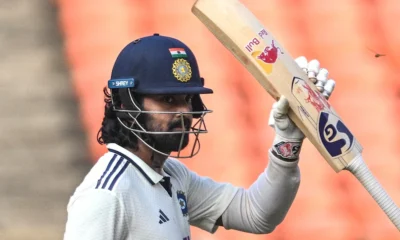
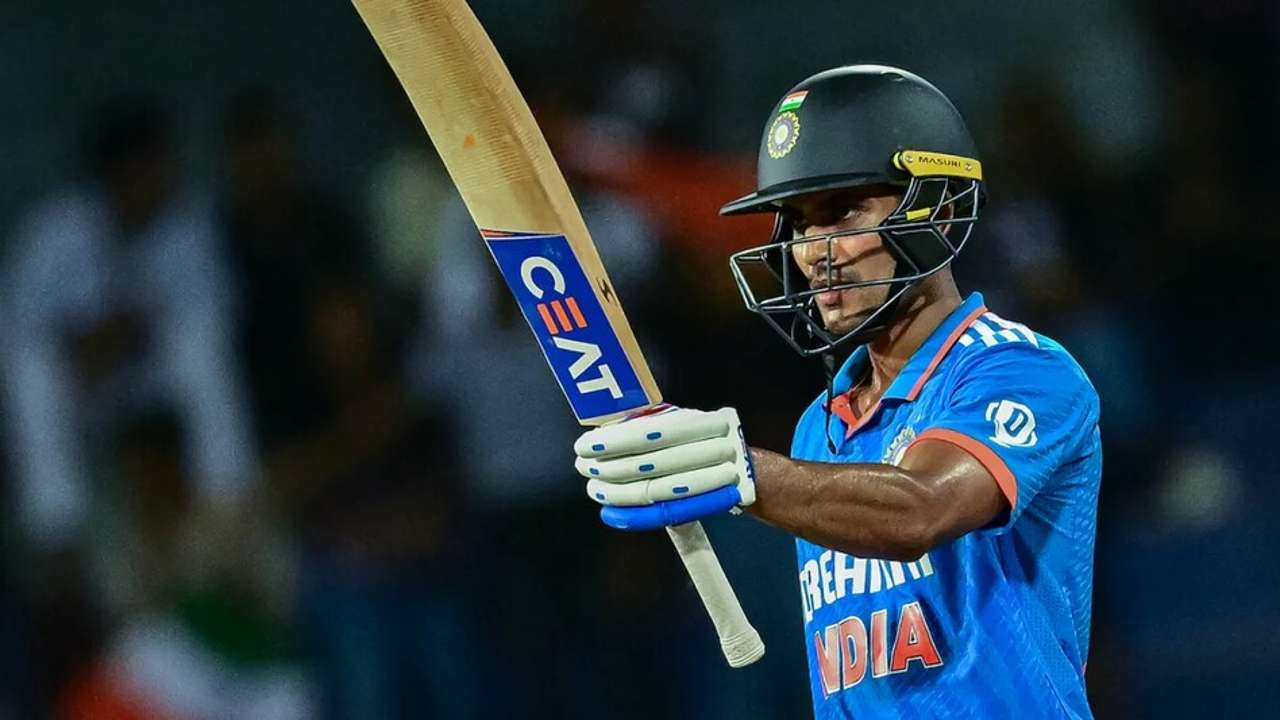
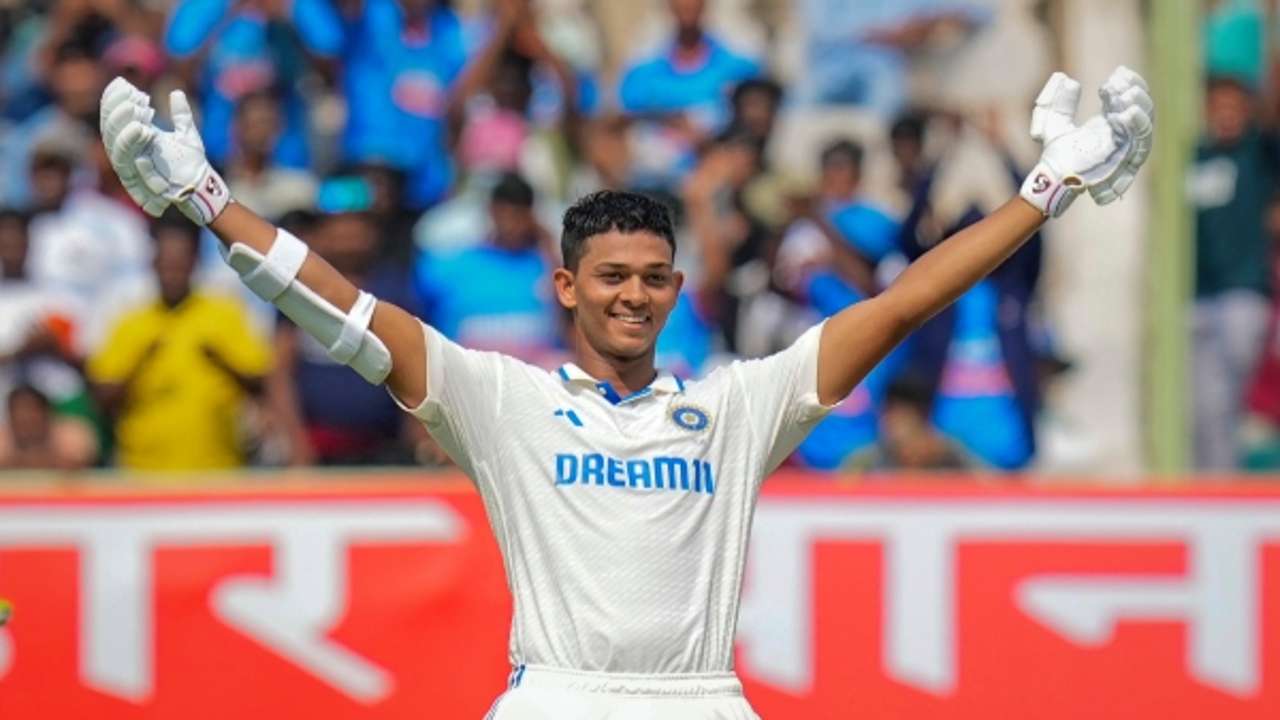
Yashasvi Jaiswal slams 150 as India dominate West Indies on day 1, Shubman Gill suffers minor collision

Yashasvi Jaiswal powered India to a dominant position on Day 1 of the 2nd Test in New Delhi with a fluent 150. Skipper Shubman Gill survived a minor collision while Sudharsan fell short of his maiden century.

Published

on

Yashasvi Jaiswal

India’s young opener Yashasvi Jaiswal continued his stunning red-ball form with a commanding 150-run knock on the opening day of the second Test against West Indies at the Arun Jaitley Stadium in New Delhi. At stumps, India stood tall at 311/2 in 87 overs, with Jaiswal unbeaten alongside skipper Shubman Gill.

Jaiswal reached his seventh Test century, matching Sachin Tendulkar’s record as the only Indian players to score seven or more Test tons before turning 24. The 22-year-old left-hander displayed immaculate control throughout the innings, punishing loose deliveries with elegance and precision.

He shared a crucial second-wicket stand with B Sai Sudharsan, who narrowly missed out on a maiden hundred, falling leg-before for 87 runs. Their partnership marked the first century stand between two Indian left-handers for the second wicket in over five decades.

Shubman Gill’s First Toss Win And Injury Scare

Earlier, India captain Shubman Gill won the toss for the first time as Test skipper and chose to bat first — ending a six-match streak of losing tosses. However, he endured a brief injury scare in the final session after an awkward collision with West Indies wicketkeeper Tevin Imlach while running a single. Both players received on-field treatment and resumed play soon after.

Gill later settled in cautiously, rotating the strike as Jaiswal took charge against the West Indies bowlers. The hosts approached the second new ball cautiously, ensuring no further hiccups before the end of play.

West Indies Struggle To Find Breakthroughs

The visitors, led by Roston Chase, found little success throughout the day. Their bowlers failed to extract much from the surface, and fielding lapses — including a dropped catch — compounded their problems.

The only bright moment came when Sudharsan was trapped in front by sharp turn. Apart from that, India’s batters dictated the tempo, punishing any hint of inconsistency.

India will now look to convert this strong start into a massive first-innings total, with Jaiswal eyeing a double century when play resumes on Day 2.

Cricket news

IPL 2026 auction: Uncapped Prashant Veer and Kartik Sharma become costliest Indian buys

IPL 2026 auction witnessed history as uncapped Prashant Veer and Kartik Sharma fetched Rs 14.2 crore each, the highest ever for uncapped Indian players.

Published

on

Two uncapped Indian cricketers rewrote IPL auction history on Tuesday as Prashant Veer and Kartik Sharma attracted record-breaking bids at the IPL 2026 auction held in Abu Dhabi. Chennai Super Kings secured both players for Rs 14.2 crore each, making them the most expensive uncapped Indians ever signed in the league.

The previous benchmark for an uncapped Indian player stood at Rs 10 crore, a record set in 2022. That mark was comfortably surpassed as franchises went all out for young domestic talent during the auction.

Record-breaking bids for young domestic talent

Prashant Veer, a 20-year-old left-arm spin allrounder from Uttar Pradesh, entered the auction with a base price of Rs 30 lakh. His bidding quickly escalated following interest from multiple franchises before Chennai Super Kings closed the deal at Rs 14.2 crore. Veer has featured in nine domestic T20 matches and came into focus after strong performances in the UP T20 League, the Syed Mushtaq Ali Trophy and Under-23 competitions, which also earned him trials with the franchise.

Kartik Sharma, a 19-year-old wicketkeeper-batter from Rajasthan, matched Veer’s price later in the auction. Also listed at a base price of Rs 30 lakh, Kartik witnessed intense bidding before Chennai Super Kings once again emerged successful. Known for his power-hitting ability in the lower order, Kartik has scored 334 runs in 12 T20 matches at a strike rate of 164, including 28 sixes.

Other uncapped players draw big interest

The strong demand for uncapped Indians was not limited to Veer and Kartik. Jammu and Kashmir fast bowler Auqib Nabi was signed by Delhi Capitals for Rs 8.4 crore after competition from several teams. Nabi, 29, has been a consistent performer in domestic cricket and has taken 15 wickets in seven matches in the ongoing Syed Mushtaq Ali Trophy at an economy rate below eight.

Royal Challengers Bengaluru picked up 23-year-old pace allrounder Mangesh Yadav for Rs 5.2 crore. Yadav has limited T20 experience but impressed scouts during the Madhya Pradesh Premier League.

Several other uncapped players also crossed or touched the Rs 1 crore mark, underlining the growing focus on domestic depth at the IPL auctions.

Focus on building a strong local core

Speaking after the auction, the Chennai Super Kings camp highlighted the emphasis on identifying skill-specific players and investing in long-term potential. The franchise pointed to extensive scouting across domestic tournaments and the need to adapt team strategies based on the evolving nature of the game.

The IPL 2026 auction marked a significant moment for uncapped Indian players, with franchises showing willingness to invest heavily in emerging talent alongside established names.

Continue Reading

Cricket news

T20 2026 World Cup tickets go on sale with prices starting at Rs 100

Tickets for the 2026 T20 World Cup go on sale from December 11, with phase one prices starting at Rs100 in India.

Published

on

Ticket sales for the ICC Men’s T20 World Cup 2026 have been announced, with the first phase opening on December 11. The tournament will be hosted jointly by India and Sri Lanka, beginning February 7, and will feature 20 teams competing across 55 matches.

Affordable pricing in first phase

According to media, tickets in phase one will be available at highly accessible rates. Prices start from Rs100 at select venues in India, while tickets in Sri Lanka will be priced from LKR 1000. The ticket window opens at 6.45 pm IST and Sri Lanka time. Details for the second phase of ticket sales are expected to be announced at a later date.

Officials said the pricing strategy is aimed at ensuring wider access to the tournament for fans across different regions and income groups.

Tournament schedule and format

The 2026 edition of the T20 World Cup will follow the same format as the previous tournament. The 20 teams have been divided into four first-round groups, with the top two sides from each group advancing to the Super Eight stage.

Matches will be played in three time slots — morning, afternoon and evening — across venues in both host nations.

First-round groups

  • Group A: India, Pakistan, USA, Netherlands, Namibia
  • Group B: Sri Lanka, Australia, Ireland, Zimbabwe, Oman
  • Group C: England, West Indies, Bangladesh, Nepal, Italy
  • Group D: New Zealand, South Africa, Afghanistan, Canada, UAE

Super Eight and knockout stage

The Super Eight stage will consist of two groups of four teams each, based on first-round qualification. Each team will face the other three sides in its group, with the top two progressing to the semi-finals.

The semi-finals are scheduled for March 4 and March 5, while the final will be played on March 8. Venue arrangements for the knockout matches include Indian cities and Colombo, depending on team qualification scenarios.

Continue Reading

Cricket news

India’s batting reshuffle under Gautam Gambhir draws sharp criticism after 2nd T20I loss

Former players Robin Uthappa and Dale Steyn criticised Gautam Gambhir’s batting shuffle after India’s 51-run defeat in the second T20I against South Africa.

Published

on

Gautam Gambhir

India’s heavy 51-run defeat against South Africa in the second T20I at Mullanpur has sparked intense scrutiny of head coach Gautam Gambhir’s tactical calls, particularly the decision to reshuffle the batting order. Former cricketers Robin Uthappa and Dale Steyn openly questioned the move, calling it a significant error that unsettled the Indian batting line-up

Experts question changes in India’s batting order

India’s chase of a daunting target never gained momentum after early wickets. Captain Suryakumar Yadav did not come in at his usual position, instead walking in after Axar Patel, and managed only five runs. The experiment raised eyebrows among experts, who felt India lost stability at a crucial phase of the innings.

Speaking during the post-match analysis, Robin Uthappa recalled Gambhir’s earlier comments about flexibility in the batting order but said the approach did not suit a high-pressure chase. He argued that when pursuing a big total, the team’s most dependable batters should take responsibility early rather than being pushed down the order.

Uthappa also pointed out that if Axar Patel was used as a pinch-hitter, the role demanded a far more aggressive approach. According to him, India needed calm and assurance after early setbacks, something the shuffled order failed to provide.

Dale Steyn calls decision a ‘major mistake’

Former South Africa pacer Dale Steyn echoed similar concerns, terming the move a “major mistake”. He stressed that Suryakumar Yadav is among India’s best batters and should not be treated as part of a trial-and-error strategy in a competitive T20I.

Steyn questioned the logic behind the left-right combination, noting that a right-handed batter had been dismissed, yet India ended up with two left-handers at the crease. He suggested that experimentation might be understandable in less critical situations, but not in a match where India had a chance to take a 2-1 lead in the series.

Call for clarity in top-order roles

Concluding his analysis, Uthappa urged Gambhir to settle on a fixed top three in the batting order. He emphasised that clarity of roles is essential in T20 cricket, especially during the powerplay overs. While flexibility can work later in the innings, constant changes at the top could harm the team’s rhythm.

Uthappa warned that prolonged experimentation might backfire at crucial moments in major tournaments, stressing that India cannot afford such uncertainty heading into high-stakes events.

Continue Reading

Trending

© Copyright 2022 APNLIVE.com