English हिन्दी
Connect with us

Latest world news

Sheikh Hasina says she would love to return home but only under legitimate Bangladesh government

Sheikh Hasina, ousted from power in 2024, says she will remain in India and not return to Bangladesh unless free and fair elections allow the Awami League to participate.

Published

on

Sheikh Hasina

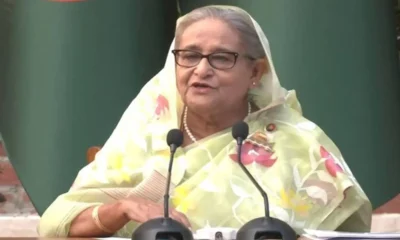
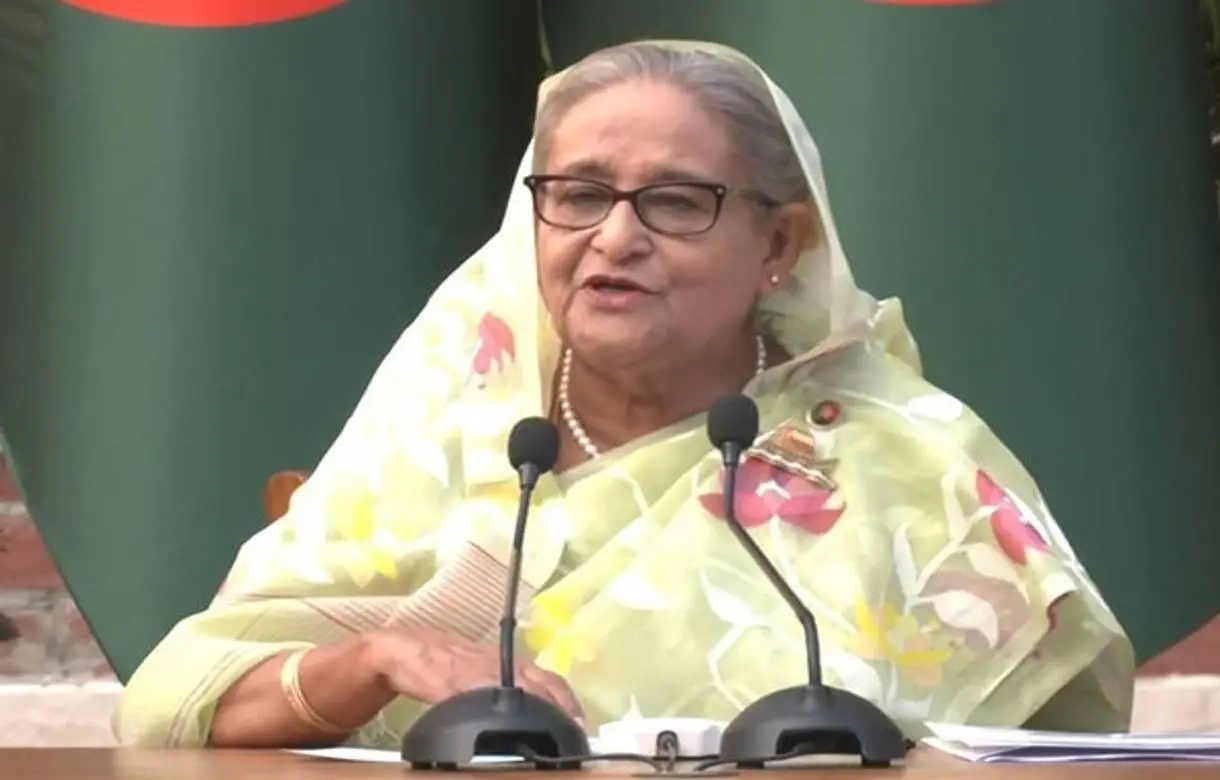
Former Bangladesh Prime Minister Sheikh Hasina has said she will remain in India and not return to her country under any government formed after elections that exclude her party, the Awami League. Speaking from her exile in New Delhi, the 78-year-old leader described the ban on her party as “unjust and self-defeating”.

Hasina fled to India in August 2024 after a student-led uprising that resulted in her ouster. An interim government headed by Nobel laureate Muhammad Yunus has since been in charge, with general elections scheduled for February next year.

“The next government must have electoral legitimacy. Millions of people support the Awami League, so as things stand, they will not vote,” she said in written responses to media. “You cannot disenfranchise millions if you want a political system that works.”

Hope for Awami League’s return to polls

Bangladesh’s Election Commission suspended the Awami League’s registration in May, citing national security and ongoing war crimes investigations against senior party figures. The Nobel laureate-led government also banned all party activities earlier this year.

Hasina said her party is not asking supporters to vote for other parties and still hopes “common sense will prevail” so that the Awami League can contest the election. However, she did not reveal if any communication is ongoing with authorities in Dhaka regarding the issue.

The Awami League and the Bangladesh Nationalist Party (BNP) have dominated the country’s political landscape for decades. The BNP is expected to benefit from the ruling’s absence in the upcoming vote.

Hasina faces war crimes charges

Hasina, credited with driving Bangladesh’s economic growth but accused of human rights violations during her long tenure, is facing charges of crimes against humanity for the violent crackdown on protests in 2024. A verdict from Bangladesh’s International Crimes Tribunal is expected on November 13.

According to UN estimates, up to 1,400 people were killed and thousands injured during the unrest, primarily from gunfire by security forces. Prosecutors also allege she oversaw enforced disappearances and torture of opposition activists through secret detention centres.

Rejecting the allegations, Hasina said, “These proceedings are a politically motivated charade. They’ve been brought by kangaroo courts, with guilty verdicts a foregone conclusion.”

“I live freely in Delhi, but would love to return”

Despite her exile, Hasina remains hopeful that her party will play a role in Bangladesh’s future politics. “It’s not about me or my family,” she said, adding that her son Sajeeb Wazed, based in Washington, could lead if asked.

Hasina, who lost most of her family in the 1975 military coup, said she lives “freely in Delhi” but remains vigilant due to her family’s violent past. She was recently spotted taking a stroll in Lodhi Garden with her security team, acknowledging locals who recognised her.

“I would of course love to go home, so long as the government there was legitimate, the constitution was being upheld, and law and order genuinely prevailed,” she said.

Latest world news

Trump may join Iran-US peace talks in Pakistan, attendance uncertain

Donald Trump could join Iran-US peace talks in Pakistan either in person or virtually, as discussions move forward amid uncertainty over participation.

Published

on

Donald Trump statement

Peace talks between the United States and Iran are being considered in Islamabad, with uncertainty over participation and format

Peace talks between the United States and Iran are being considered in Islamabad, according to media reports, with the possibility that former US President Donald Trump may participate either in person or virtually. However, no final decision on the venue, format or participation has been confirmed.

According to reports citing a Pakistani source, preparations for the talks are moving ahead as scheduled, and both sides are expected to engage in discussions aimed at resolving ongoing tensions.

The proposed talks come at a critical time, as diplomatic efforts continue to stabilise relations amid heightened geopolitical strain. Pakistan is expected to host or facilitate the discussions, hosting the discussions and coordinating with both Washington and Tehran to facilitate dialogue.

Officials familiar with the development indicated that Trump’s participation remains uncertain, with reports indicating he may attend either in person or virtually. His presence—either physically in Islamabad or through virtual means—would signal the importance of the outcome and potentially influence the direction of the talks.

Despite the progress in planning, uncertainty remains over the final composition of delegations and the level of participation from each side. Separate reports suggest that while preparations are underway, clarity over Iran’s attendance and broader engagement is still evolving.

The talks are expected to focus on easing tensions and exploring pathways toward a broader agreement, though key sticking points between the two sides remain unresolved.

Continue Reading

Latest world news

Trump warns of escalation as Iran signals counter-strategy amid Hormuz blockade tensions

As the US-Iran ceasefire nears its end, tensions escalate over the Hormuz blockade with strong warnings from both sides.

Published

on

Donald Trump statement

Ceasefire between US and Iran nears deadline as both sides trade sharp warnings over blockade and military response

Tensions between the United States and Iran have intensified as a fragile ceasefire approaches its deadline, with both sides issuing strong warnings amid ongoing disputes over the Strait of Hormuz.

US President Donald Trump has cautioned that severe military action could follow if negotiations fail, signalling that “bombs will go off” in the absence of a deal. His remarks come as Washington continues a naval blockade targeting Iranian oil exports and maritime movement, a move Tehran has strongly opposed.

Iran, on the other hand, has indicated it is prepared with what it described as “new cards,” suggesting a potential shift in its strategy if the situation escalates further. The standoff reflects deep mistrust between the two sides, even as diplomatic efforts continue in the background.

The current crisis is centred around the Strait of Hormuz, a critical global oil transit route. The United States imposed the blockade after talks failed to produce a breakthrough, aiming to restrict Iran’s oil shipments and increase economic pressure.

Tehran has accused Washington of violating the ceasefire by maintaining the blockade and taking aggressive actions, including the seizure of vessels near the strategic waterway. These developments have further complicated efforts to sustain peace.

A temporary ceasefire, agreed earlier this month, had paused hostilities for two weeks following threats of major escalation. However, with the truce nearing its end, uncertainty looms over whether it will be extended or collapse into renewed conflict.

The situation has also raised concerns globally, as disruptions in the Strait of Hormuz can significantly impact oil supply and international markets. Analysts warn that prolonged tensions could lead to economic instability and further geopolitical strain.

Diplomatic channels remain open, but the sharp rhetoric from both Washington and Tehran indicates that the path to a lasting agreement remains uncertain.

Continue Reading

Latest world news

Japan earthquake triggers tsunami warning after strong 7.4 magnitude tremor off northern coast

A powerful earthquake off northern Japan triggered tsunami warnings and evacuation alerts as authorities monitored waves and aftershocks.

Published

on

A powerful earthquake of magnitude 7.4 struck off the northern coast of Japan on Monday evening, prompting authorities to issue a tsunami warning and urge residents in coastal areas to move to safer locations.

According to officials, the earthquake occurred in the Pacific Ocean near the northeastern region of the country at around 4:53 pm local time. The tremors were strong enough to be felt across a wide area, including parts of Tokyo.

Following the quake, Japan’s meteorological agency issued a tsunami warning for several coastal regions, cautioning that waves of up to 3 metres could hit affected areas.

Initial tsunami waves were recorded shortly after the earthquake, with water levels reaching around 70 to 80 centimetres at some ports in northern Japan. Authorities warned that subsequent waves could be larger and more dangerous.

Emergency alerts were broadcast across the region, urging residents to evacuate coastal zones and move to higher ground. Visuals showed ships leaving ports and emergency messages being displayed on television screens.

As a precautionary measure, bullet train services in parts of northern Japan were temporarily halted, while authorities began assessing the situation and monitoring for aftershocks.

There were no immediate reports of major damage or casualties, but officials said the situation remained under close observation, with warnings still in place for coastal communities.

Japan, located along the seismically active “Ring of Fire,” frequently experiences earthquakes, making rapid response systems and tsunami alerts critical for public safety.

Continue Reading

Trending

© Copyright 2022 APNLIVE.com