English हिन्दी
Connect with us

India News

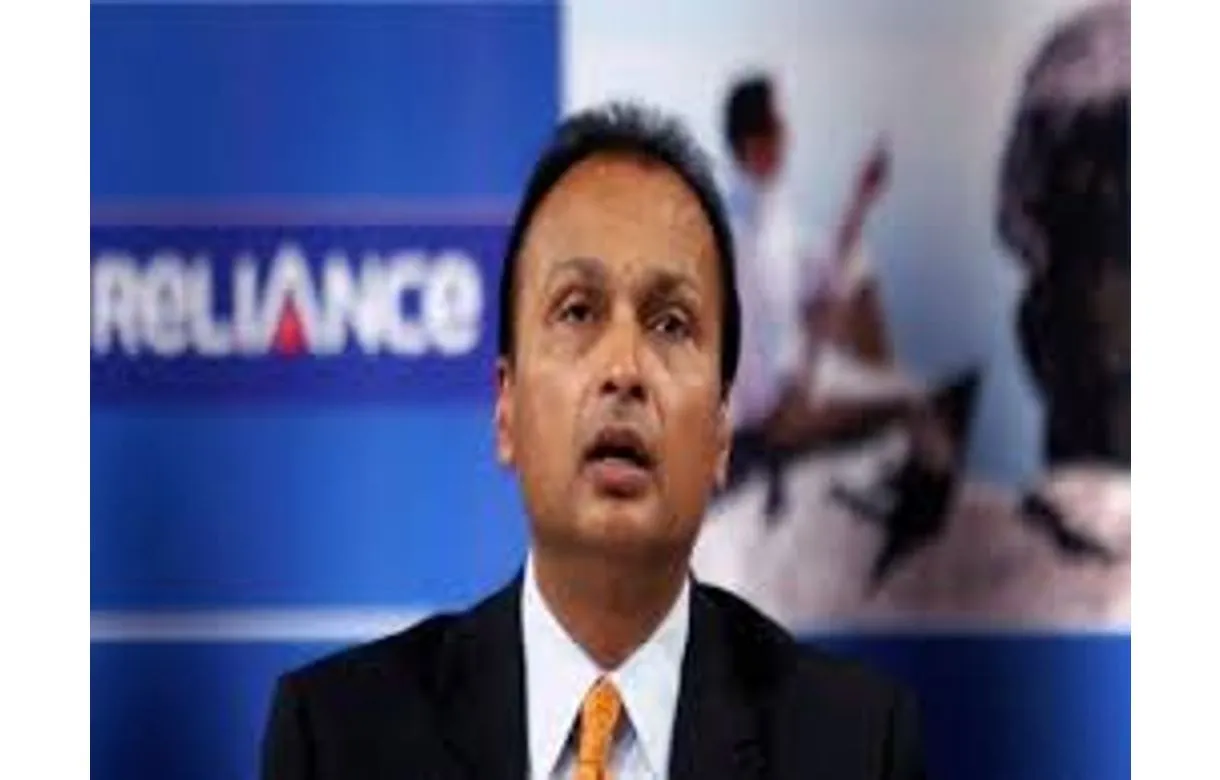
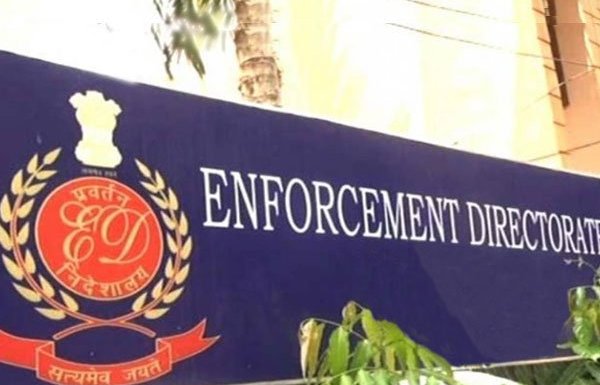
ED attaches assets worth over Rs 3,000 crore in money laundering case against Anil Ambani

Published

on

Assets worth more than Rs 3,000 crore linked to Reliance Group Chairman Anil Ambani, his group companies and linked entities have been attached as part of a money laundering investigation, the Enforcement Directorate (ED) said on Monday.

The federal probe agency issued four provisional orders under the Prevention of Money Laundering Act (PMLA) on October 31 for attaching 42 properties, including the 66-year-old Ambani’s family home in Pali Hill, Mumbai, apart from other residential and commercial properties of his group companies, it said.

A plot of land belonging to the Reliance Centre on Maharaja Ranjit Singh Marg in Delhi and multiple other assets of Reliance Infrastructure Ltd., certain linked entities like Adhar Property Consultancy Private Limited, Mohanbir Hi-tech Build Private Limited, Gamesa Investment Management Private Limited, Vihaan43 Realty Private Limited (earlier known as Kunjbihari Developers Private Limited) and that of Campion Properties Limited have been attached.

These properties are located in the national capital, Noida, Ghaziabad, Mumbai, Pune, Thane, Hyderabad, Chennai and East Godavari district in Andhra Pradesh.

Offices in the ‘Nagin Mahal’ building at Churchgate in Mumbai, flats in BHA Millenium apartments in Noida and Camus Capri Apartments in Hyderabad are among those provisionally attached by the ED.

The total value of the attached assets is more than Rs 3,083 crore, the agency said in a statement.

There was no immediate response from Ambani or his group on the ED action.

The agency said, so far, ED has detected “fraudulent” diversion of public money by various Reliance Anil Ambani group companies, including Reliance Communications Ltd (RCOM), Reliance Home Finance Ltd (RHFL), Reliance Commercial Finance Ltd (RCFL), Reliance Infrastructure Ltd (R-Infra) and Reliance Power Ltd.

The statement said a separate search action was carried out by the agency under the Foreign Exchange Management Act (FEMA) against R-Infra and it was found that Rs 40 crore was “siphoned” from the Jaipur-Reengus highway project.

“Funds moved through Surat-based shell companies to Dubai. The trail has unearthed a wider international hawala network exceeding Rs 600 crore,” it said.

The agency alleged that around 2010-12 onwards, RCOM and its group companies raised thousands of crores from Indian banks, of which Rs 19,694 crore remains outstanding. These assets turned into non-performing assets (NPA), with five banks declaring RCOM’s loan accounts as fraud, it said.

“Loans taken by one entity from one bank were utilised for repayment of loans taken by other entities from other banks, transfer to related parties, and investments in mutual funds, which was in contravention of the terms and conditions of the sanction letter of the loans.”

“In particular, RCOM and its group companies diverted over Rs 13,600 crore used in evergreening loans, over Rs 12,600 crore was diverted to connected parties and over Rs 1,800 crore was invested in fixed deposits and mutual funds, etc.,” it said.

The agency claimed certain loans were “siphoned off” outside India through foreign outward remittances.

It said that during 2017-2019, Yes Bank invested Rs 2,965 crore in RHFL instruments and Rs 2,045 crore in RCFL instruments. By December 2019, these became “non-performing” investments, it claimed.

The “outstanding” was Rs 1,353.50 crore for RHFL and Rs 1,984 crore for RCFL.

The agency added that RHFL and RCFL received public funds of more than Rs 10,000 crore and a large amount of this fund came from Yes Bank.

“Before Yes Bank invested this money in Reliance Anil Ambani group companies, it received huge funds from the erstwhile Reliance Nippon Mutual Fund.

“As per SEBI regulations, Reliance Nippon Mutual Fund could not invest/divert funds directly in Anil Ambani group finance companies due to conflict-of-interest rules,” the agency said.

The ED said it has “detected a pattern of mala fide in this case like pre-decided beneficiaries, manufactured paperwork, waived controls, and disbursals ahead of approvals, followed by swift routing to related entities”.

“This conduct enabled siphoning of public funds,” it said.

The ED, it said, continues to trace the proceeds of crime.

“The recoveries by ED, after following due process of law, are aimed at restoring losses to lenders and, ultimately, benefitting the general public,” it said, hinting at restoring or restituting the assets with “victim” banks, a provision available under the PMLA.

Ambani was questioned in the case by the ED in August.

This came after the agency searched 35 premises of 50 companies and 25 people, including executives of his business group, in Mumbai on July 24.

The ED’s money laundering case stems from a Central Bureau of Investigation FIR.

—PTI

India News

Yogi Adityanath transfers over Rs. 148 crore to 4.60 lakh students

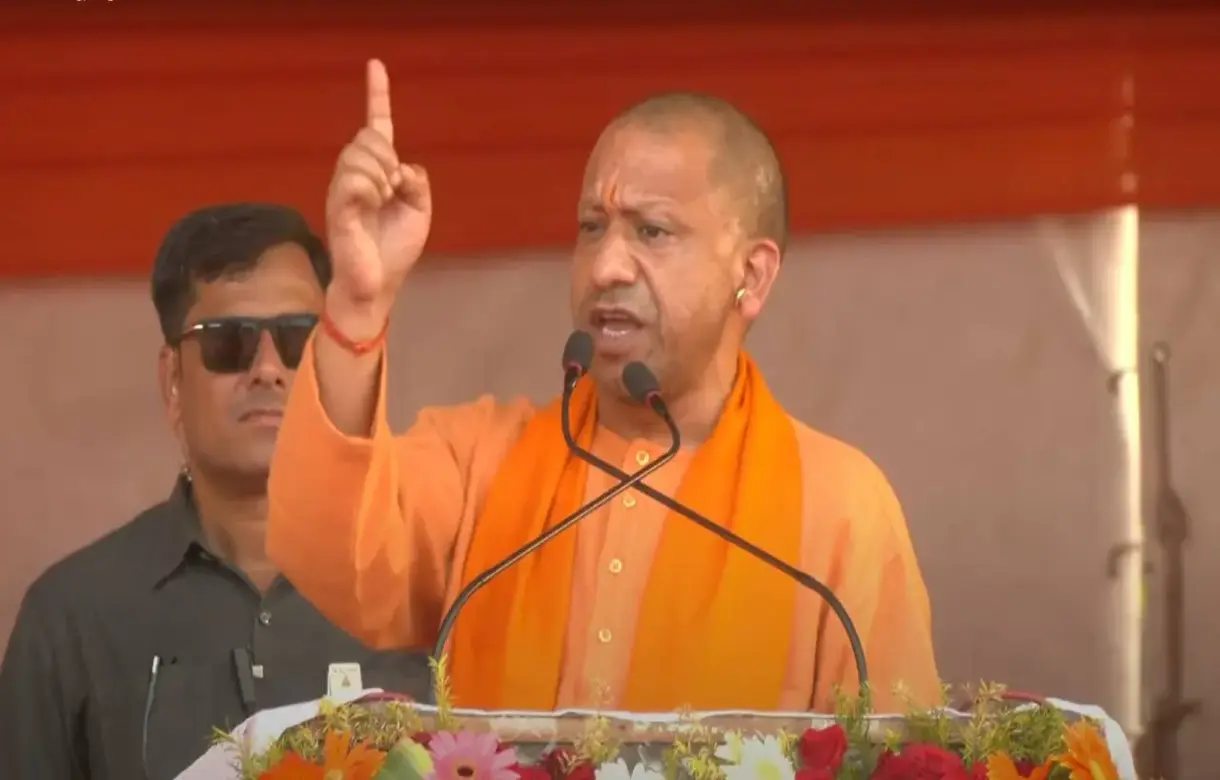
Uttar Pradesh Chief Minister Yogi Adityanath transferred over Rs. 148 crore to the bank accounts of more than 4.60 lakh students under the state’s scholarship and fee reimbursement programme.

Published

on

Yogi Adityanath

Uttar Pradesh Chief Minister Yogi Adityanath transferred more than Rs. 148 crore in scholarship and fee reimbursement funds to over 4.60 lakh students on Saturday, according to the report.

The funds were transferred to students through their bank accounts as part of the state’s scholarship and fee reimbursement programme.

The initiative covers students from different social and economic categories and is aimed at ensuring that financial difficulties do not prevent them from continuing their education.

Yogi Adityanath’s message to students

During the programme, the Uttar Pradesh Chief Minister said that no student should have to discontinue education because of a lack of funds.

He stressed the government’s commitment to providing students with equal opportunities to pursue their education and move forward in life.

The scholarship and fee reimbursement support is intended to provide financial assistance to eligible students while helping them continue their studies.

Scholarship support for UP students

The latest transfer covers more than 4.60 lakh students and involves over Rs. 148 crore in financial assistance. The programme includes scholarship and fee reimbursement support for eligible students.

Other reports on the October 3 distribution said the amount covered students belonging to the Other Backward Classes, Scheduled Castes, general category and minority communities.

The Uttar Pradesh government has also highlighted the use of automation in the scholarship distribution process, saying it has improved transparency and helped ensure timely payments to students.

Continue Reading

India News

Tariffs, export controls increasingly used for strategic purposes, says PM’s Principal Secretary

PM’s Principal Secretary P K Mishra said tariffs, export controls and other restrictions are increasingly being used for strategic purposes amid growing global economic uncertainty.
Published

on

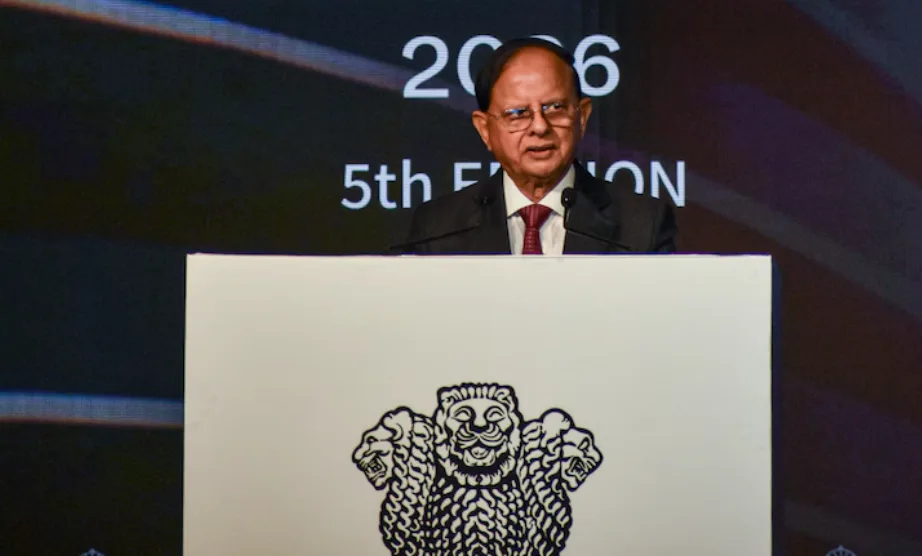
PM’s Principal Secretary P K Mishra has said tariffs, export controls and other restrictions are increasingly being deployed for strategic purposes as countries deal with greater economic uncertainty and disruptions to global supply chains.

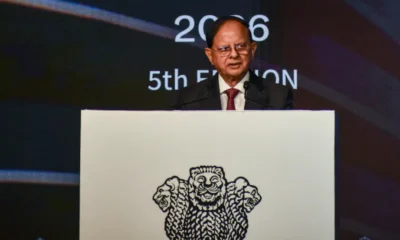
Speaking at the Kautilya Economic Conclave in New Delhi on Saturday, Mr Mishra highlighted the changing nature of economic risks and the need for countries to build resilience without withdrawing from the global economy.

He said the distinction between conventional risks and uncertainty has become increasingly important for economic decision-making. While risks can generally be assessed in terms of probability, uncertainty makes it more difficult to determine the likelihood of different outcomes.

Tariffs and restrictions becoming strategic tools

Mr Mishra said economic disruptions are no longer limited to traditional market risks. Wars, interruptions to shipping routes and geographical choke points can affect food, energy and supply chains across countries.

Referring to such developments, he said tariffs can sometimes become instruments of weaponisation, while other restrictions are increasingly being used for strategic purposes.

He also said export restrictions, sanctions and tariffs can serve purposes beyond conventional commercial objectives, bringing geopolitical considerations more prominently into economic policymaking.

The comments came against the backdrop of discussions on economic resilience at the fifth Kautilya Economic Conclave, whose theme focuses on dealing with global shocks while preserving growth and openness.

India focuses on economic resilience

Mr Mishra said India’s economic strength is supported by its macroeconomic fundamentals and that the country has maintained a high level of growth despite global uncertainty.

He argued that resilience does not require choosing between complete self-sufficiency and globalisation. Instead, countries need to build domestic capabilities in strategically vulnerable areas, diversify sources of supply where concentration creates risks and remain open where global integration supports productivity and competitiveness.

India’s electronics sector, along with pharmaceuticals and semiconductors, provides examples of areas where domestic capabilities can help reduce vulnerability while remaining connected to global markets, he said.

Geography becomes an economic factor

Mr Mishra also pointed to the impact of disruptions around major shipping routes. He said geographical choke points can become sources of vulnerability, particularly for a country such as India that is a major energy importer.

He said India’s response has included maintaining stocks, increasing domestic production where possible and diversifying procurement and supply routes.

The broader issue, according to Mr Mishra, is how economies can preserve the gains of globalisation while becoming less vulnerable to shocks and excessive concentration in particular suppliers or geographical regions.

He said building resilience carries an economic cost, meaning governments need to assess where investment in resilience is justified by the potential economic and social impact of a disruption.

Continue Reading

India News

New UP Congress chief Aradhana Mishra backs stronger alliance with SP 

Newly appointed UP Congress chief Aradhana Mishra said the party would strengthen its alliance with the Samajwadi Party ahead of the 2027 Assembly election.
Published

on

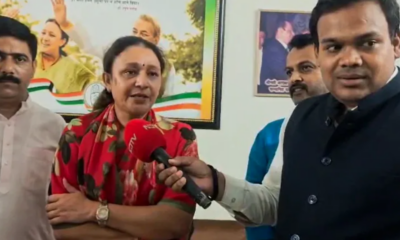
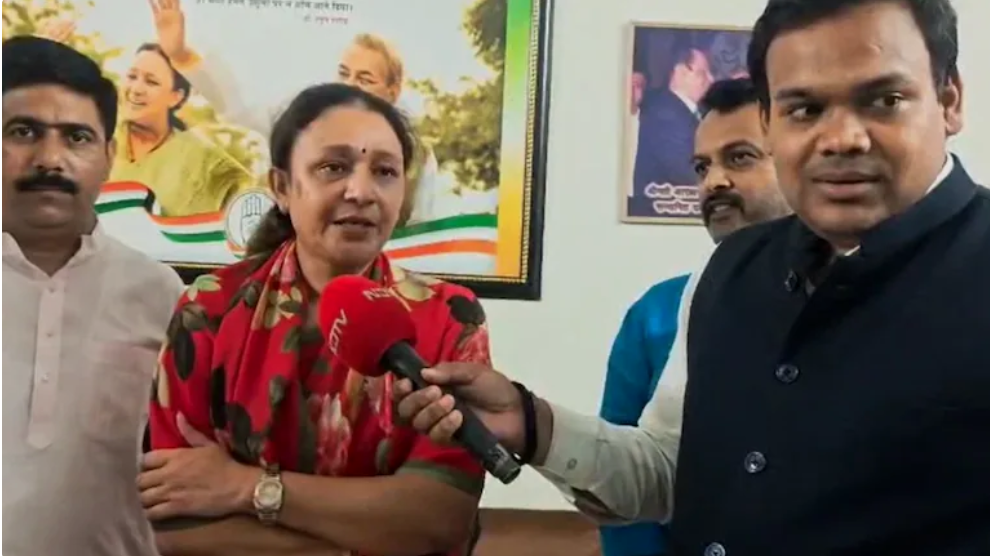
Newly appointed Uttar Pradesh Congress president Aradhana Mishra, also known as Mona, has said the party will take its alliance with the Samajwadi Party forward with full strength ahead of the 2027 Uttar Pradesh Assembly election.

Mishra, the daughter of Congress MP Pramod Tiwari, has been given the responsibility of leading the party’s state unit as Congress prepares for the assembly polls due in around six months, according to the report.

Speaking about Samajwadi Party chief Akhilesh Yadav, Mishra described the SP as a strong partner of the Congress in the INDIA bloc.

“The Samajwadi Party is a partner of ours in the INDIA bloc, and a strong one at that,” she said, while praising the way Akhilesh Yadav has strengthened his party.

Aradhana Mishra backs Congress-SP alliance

Mishra referred to the performance of the INDIA bloc in the 2024 Lok Sabha election in Uttar Pradesh while discussing the alliance’s prospects for the next assembly election.

The INDIA bloc won 43 of Uttar Pradesh’s 80 Lok Sabha seats in the 2024 election, according to the report.

Mishra said the alliance had stopped the BJP’s advance in Uttar Pradesh in the 2024 Lok Sabha election and expressed confidence that the partnership would produce results in the 2027 Assembly election.

“We will take this alliance forward with full strength,” she said.

The new state Congress chief will also have to advance seat-sharing discussions with the Samajwadi Party. The report said Congress wants a larger share of seats, while the SP has not indicated a willingness to give ground, arguing that it is in a stronger position in the state.

Congress announces new UP team

The leadership change is part of a wider organisational reshuffle by the Congress in Uttar Pradesh.

Along with appointing Mishra as state Congress president, the party named Rajya Sabha MP Imran Masood as working president. Chaudhary Virendra Singh was appointed Leader of the Congress Legislature Party.

Devinder Nishad and Alok Prasad were also appointed senior vice presidents of the Uttar Pradesh Congress Committee.

The new appointments bring different social groups into prominent positions in the state organisation. Mishra is a Brahmin, Masood is a Muslim and Rajendra Pal Gautam, the Congress’ AICC in-charge of Uttar Pradesh, is a Dalit, the report said.

Mishra, however, said the Congress does not practise caste or religion-based politics.

She said the party wanted to strengthen the country, protect the Constitution and build a strong alternative ahead of the 2027 election.

Mishra’s challenge ahead of 2027 polls

As the new Uttar Pradesh Congress chief, Mishra will be responsible for strengthening the party’s organisation in the state while also taking forward its alliance with the Samajwadi Party.

The Congress and SP are part of the INDIA bloc in Uttar Pradesh. With seat-sharing discussions ahead of the 2027 Assembly election, Mishra’s comments indicate that the Congress intends to continue working with the Samajwadi Party.

The appointment of Mishra comes alongside other organisational changes aimed at preparing the party for the upcoming assembly election.

Continue Reading

Trending

© Copyright 2022 APNLIVE.com