English हिन्दी
Connect with us

India News

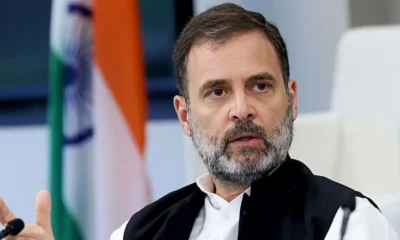
Amit Shah, Rahul Gandhi clash in Lok Sabha as debate on electoral reforms turns heated

A fiery confrontation broke out in the Lok Sabha as Amit Shah and Rahul Gandhi clashed over voter list irregularities, historical allegations, and the Special Intensive Revision process, leading to an Opposition walkout.

Published

on

Amit Shah

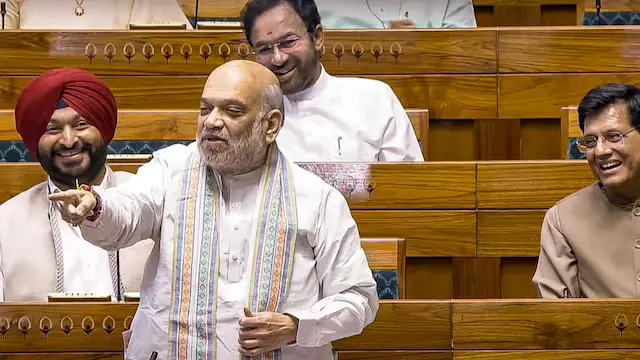
Union Home Minister Amit Shah and Leader of the Opposition Rahul Gandhi were locked in a sharp confrontation in the Lok Sabha during the ongoing debate on electoral reforms. The exchange intensified when Gandhi challenged the Home minister to engage in a direct debate over his press conferences alleging irregularities in voter lists.

Shah counters allegations over voter rolls

During his address, Amit Shah criticised the Opposition for raising doubts about existing voter lists while simultaneously objecting to the Special Intensive Revision (SIR) process. He remarked that concerns over voter rolls often emerged only when the Opposition performed poorly in elections. Taking aim at Gandhi’s earlier briefings on alleged discrepancies—one of which had been described as a “Hydrogen Bomb”—Shah accused certain political families of practicing “generational vote theft”.

As Gandhi intervened, demanding Shah explain the immunity provided to Election Commissioners and challenging him to debate the content of his press conferences, the Home minister firmly stated that Parliament would not run as per Gandhi’s directions and that he would decide the order of his responses.

Rahul Gandhi accuses Home minister of avoiding key questions

Unconvinced by Shah’s reply, Gandhi labelled the minister’s remarks “defensive and fearful”. Shah responded that he would not be provoked and asserted that “vote theft” happens when electoral mandates are overturned.

Attack on Nehru-Gandhi family escalates tensions

Amit Shah intensified his criticism by invoking historical examples. He claimed the first instance of “vote theft” occurred during the selection of India’s first Prime Minister, alleging that Sardar Vallabhbhai Patel had secured more votes than Jawaharlal Nehru from provincial Congress units. Shah also referenced the 1975 court verdict that struck down Indira Gandhi’s election from Rae Bareli, calling the events that followed a major attempt at “vote theft”.

He further mentioned a court case alleging that Sonia Gandhi had cast a vote before becoming an Indian citizen—a point immediately contested by Congress MPs.

Opposition walks out after EVM, SIR remarks

Shah asserted that the Opposition’s objections to Electronic Voting Machines and resistance to SIR were attempts to retain ineligible names, including illegal immigrants, on voter lists. This led to a walkout by Opposition MPs.

Outside Parliament, Gandhi reiterated that the minister had not addressed core issues such as transparency in voter lists, clarity on the EVM architecture, or the evidence he presented in his press conferences.

India News

Noida workers protest under probe as X Storm social media group comes under scanner

Probe into Noida workers protest highlights suspected role of ‘X Storm’ social media group and digital coordination behind the unrest.

Published

on

Authorities have intensified their investigation into the recent workers’ protest in Noida, with a social media network known as “X Storm” now emerging as a key focus in the probe.

The unrest, which began as a demonstration over wage-related concerns, escalated into violence in parts of the industrial hub, prompting a wider inquiry into the factors behind the mobilisation of large groups of workers.

According to officials, investigators are examining how digital platforms may have been used to coordinate the protests. Preliminary findings suggest that multiple online groups and accounts played a role in rapidly mobilising participants and spreading messages related to the agitation.

The role of social media has come under particular scrutiny, with authorities looking into whether organised efforts were made to amplify tensions. Officials are also probing the origin of messages circulated online and the possible involvement of coordinated networks.

Recent findings indicate that such protests may not have been entirely spontaneous. Investigations in similar cases have revealed the use of newly created social media accounts, messaging platforms, and closed groups to mobilise crowds quickly and maintain anonymity.

Additionally, concerns have been raised about external elements potentially influencing the protests. Earlier reports have pointed to the involvement of non-worker participants and coordinated digital campaigns that may have contributed to the escalation of violence.

The Noida protest is part of a broader wave of labour unrest driven by demands for higher wages and improved working conditions. The demonstrations turned violent in some areas, with incidents of stone pelting, arson, and clashes with police reported during the peak of the agitation.

Authorities are now focusing on tracing digital footprints, identifying administrators of online groups, and determining whether there was any larger network orchestrating the unrest.

The investigation remains ongoing, with officials stating that appropriate action will be taken based on the findings.

Continue Reading

India News

Rahul Gandhi’s Bengal poll visit cancelled amid permission row, Congress targets Trinamool

Rahul Gandhi’s Bengal visit was cancelled after authorities did not grant permission, triggering a political row between Congress and Trinamool.

Published

on

Rahul-Gandhi

Congress leader Rahul Gandhi’s scheduled visit to West Bengal for election campaigning has been cancelled after the party failed to secure the required administrative permission for public events.

The visit, planned for April 23, was called off after the party waited until the evening for clearance but did not receive approval in time to make necessary arrangements.

Congress leaders have alleged that the local administration, under the influence of the ruling Trinamool Congress, did not grant permission for the rally. The party claimed that despite waiting until around 6 pm, the approval did not come through, forcing them to cancel the programme.

Trinamool response

The Trinamool Congress rejected the allegations, stating that all political parties must follow established procedures for holding public meetings. A party minister said applications must be submitted through the designated system within a specified time frame before events.

The Trinamool also indicated that the state government is currently in a caretaker role during the election period, suggesting that questions regarding permissions fall under the purview of the Election Commission.

Fresh dates likely

Congress sources said the party is still keen for Rahul Gandhi to campaign in the state and may seek fresh permission for a visit on April 25 or 26.

Political context

The development comes amid heightened political activity ahead of the 2026 West Bengal Assembly elections, where multiple parties are campaigning aggressively. The Congress and Trinamool Congress, despite being part of broader opposition alignments at the national level, remain direct rivals in the state.

Recent reports also indicate that permission-related issues have affected campaign events in the state, with some rallies being cancelled due to lack of police clearance.

Continue Reading

India News

India will never bow to terror, PM Modi says on Pahalgam attack anniversary

PM Modi remembers victims of the Pahalgam terror attack and reiterates India’s unwavering stand against terrorism.

Published

on

Prime Minister Narendra Modi on Wednesday paid tribute to the victims of the Pahalgam terror attack, marking its first anniversary with a strong message against terrorism.

Remembering those who lost their lives, the Prime Minister said the victims “will never be forgotten” and expressed solidarity with their families. He described the attack as a tragedy that continues to weigh on the nation’s conscience.

Reaffirming India’s position, he said the country stands united in both grief and resolve, adding that India will never bow to any form of terror and that the designs of terrorists will not succeed.

The Pahalgam terror attack took place on April 22, 2025, in Jammu and Kashmir, where 26 civilians, mostly tourists, were killed in one of the deadliest attacks on civilians in recent years.

A reminder of national resolve

The anniversary has been observed as a moment of remembrance and reflection across the country. It highlights both the human cost of terrorism and India’s continued commitment to counter such threats.

Security forces have also reiterated their resolve to ensure justice for the victims and maintain strong vigilance against terrorism.

The Prime Minister’s message underscores a broader policy of zero tolerance towards terrorism, reinforcing that acts targeting innocent civilians will not weaken the country’s determination.

Continue Reading

Trending

© Copyright 2022 APNLIVE.com