English हिन्दी
Connect with us

Cricket news

India’s batting reshuffle under Gautam Gambhir draws sharp criticism after 2nd T20I loss

Former players Robin Uthappa and Dale Steyn criticised Gautam Gambhir’s batting shuffle after India’s 51-run defeat in the second T20I against South Africa.

Published

on

Gautam Gambhir

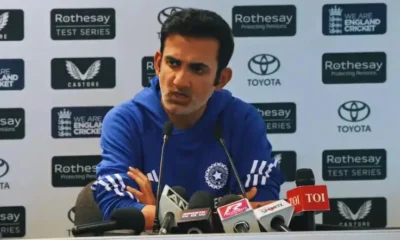
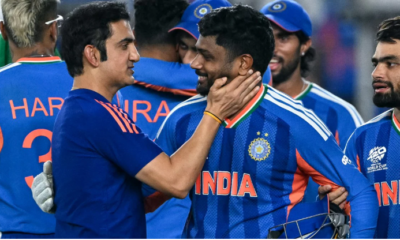
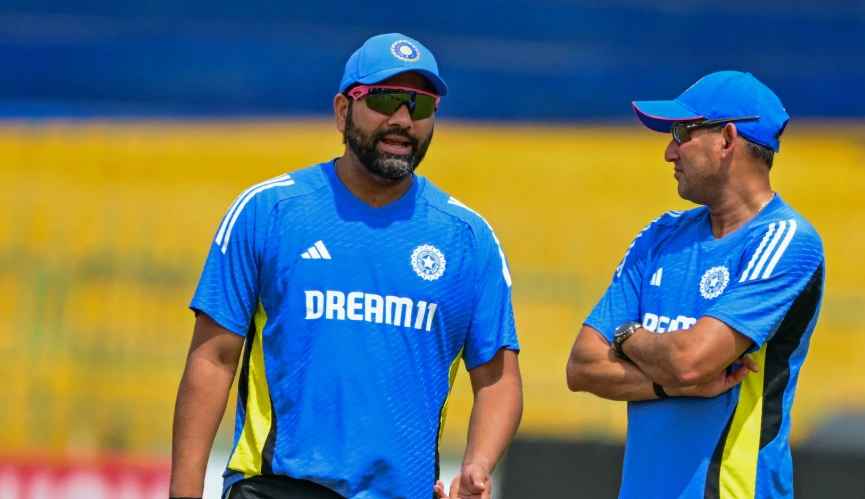
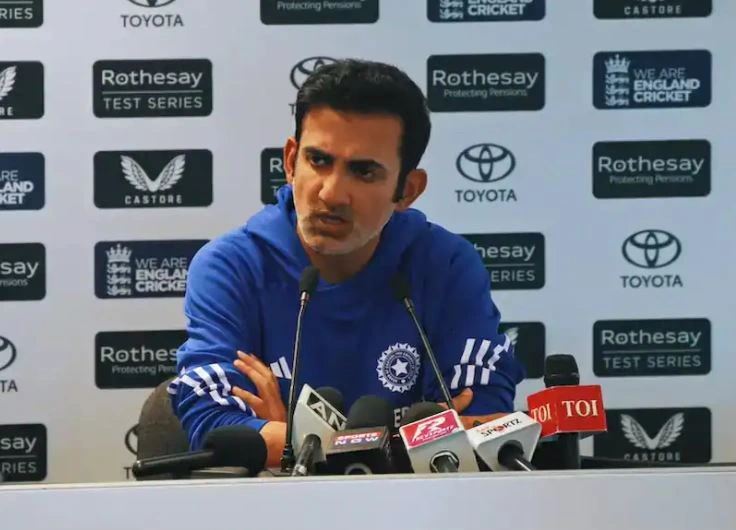
India’s heavy 51-run defeat against South Africa in the second T20I at Mullanpur has sparked intense scrutiny of head coach Gautam Gambhir’s tactical calls, particularly the decision to reshuffle the batting order. Former cricketers Robin Uthappa and Dale Steyn openly questioned the move, calling it a significant error that unsettled the Indian batting line-up

Experts question changes in India’s batting order

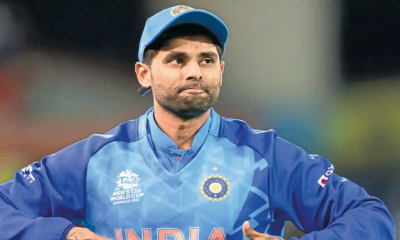
India’s chase of a daunting target never gained momentum after early wickets. Captain Suryakumar Yadav did not come in at his usual position, instead walking in after Axar Patel, and managed only five runs. The experiment raised eyebrows among experts, who felt India lost stability at a crucial phase of the innings.

Speaking during the post-match analysis, Robin Uthappa recalled Gambhir’s earlier comments about flexibility in the batting order but said the approach did not suit a high-pressure chase. He argued that when pursuing a big total, the team’s most dependable batters should take responsibility early rather than being pushed down the order.

Uthappa also pointed out that if Axar Patel was used as a pinch-hitter, the role demanded a far more aggressive approach. According to him, India needed calm and assurance after early setbacks, something the shuffled order failed to provide.

Dale Steyn calls decision a ‘major mistake’

Former South Africa pacer Dale Steyn echoed similar concerns, terming the move a “major mistake”. He stressed that Suryakumar Yadav is among India’s best batters and should not be treated as part of a trial-and-error strategy in a competitive T20I.

Steyn questioned the logic behind the left-right combination, noting that a right-handed batter had been dismissed, yet India ended up with two left-handers at the crease. He suggested that experimentation might be understandable in less critical situations, but not in a match where India had a chance to take a 2-1 lead in the series.

Call for clarity in top-order roles

Concluding his analysis, Uthappa urged Gambhir to settle on a fixed top three in the batting order. He emphasised that clarity of roles is essential in T20 cricket, especially during the powerplay overs. While flexibility can work later in the innings, constant changes at the top could harm the team’s rhythm.

Uthappa warned that prolonged experimentation might backfire at crucial moments in major tournaments, stressing that India cannot afford such uncertainty heading into high-stakes events.

Cricket news

Shivam Dube’s blazing fifty not enough as New Zealand defeat India by 50 runs in 4th T20I

Shivam Dube’s explosive fifty was not enough as India collapsed in a tough chase, losing the fourth T20I to New Zealand by 50 runs in Visakhapatnam.

Published

on

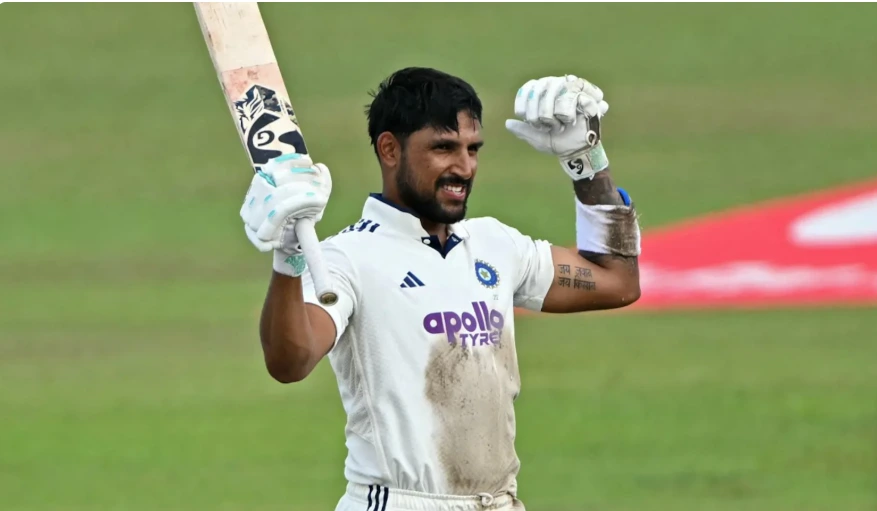
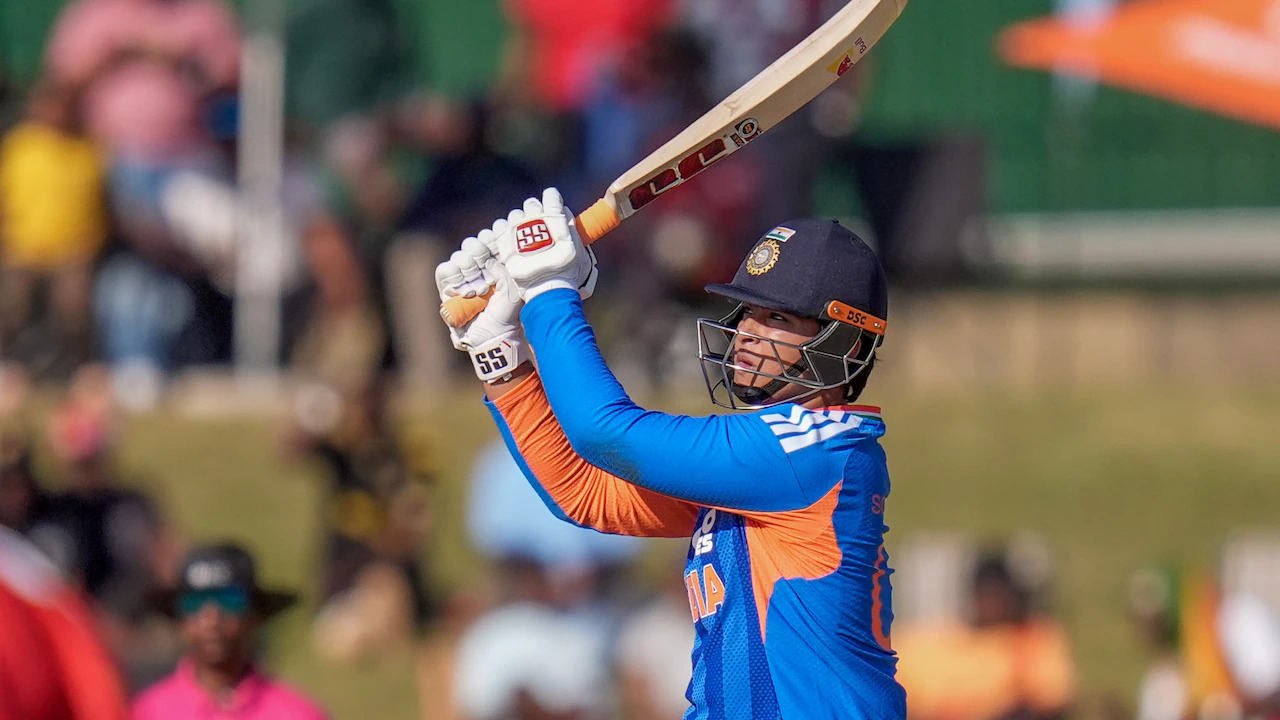
Shivam Dube produced a sensational counter-attacking half-century, but India suffered a comprehensive 50-run defeat against New Zealand in the fourth T20I at Visakhapatnam on Wednesday, as the visitors narrowed the series margin to 3-1.

Chasing a stiff target of 216, India’s innings never gathered momentum after losing early wickets. Dube’s blistering knock of 65 off just 23 balls briefly lifted hopes, but the hosts were eventually dismissed for 165.

India’s chase got off to a disastrous start with Abhishek Sharma falling to the very first ball, mistiming Matt Henry to deep point. Suryakumar Yadav followed soon after, undone by a sharp return catch from Jacob Duffy, leaving India reeling at 9 for two.

Rinku Singh and Sanju Samson attempted to stabilise the innings, but both struggled to accelerate against disciplined New Zealand bowling. Rinku scored 39 before being trapped leg-before by Zak Foulkes, while Samson’s promising stay ended when Mitchell Santner beat him with a straight delivery.

Hardik Pandya failed to make an impact, and India slipped further to 82 for five in the 11th over. It was then that Dube launched a fierce counter-attack, displaying remarkable power and composure despite the rising asking rate.

Dube survived a leg-before decision on 46 via DRS and punished leg-spinner Ish Sodhi with a stunning 29-run over, including five boundaries and three sixes. He brought up his fifty in just 15 balls, clearing the ropes off Duffy, but lacked support from the other end. The sixth-wicket stand added 63 runs, though Harshit Rana contributed only four.

Dube’s innings came to an unfortunate end when Rana’s straight drive deflected off Henry’s hand and crashed into the stumps at the non-striker’s end, effectively ending India’s chase.

Earlier, New Zealand laid the foundation for their imposing total through an explosive opening stand between Tim Seifert and Devon Conway. Seifert top-scored with 62 off 36 balls, striking seven fours and three sixes, while Conway made 44.

The pair raced to 71 without loss in the Power Play and stitched together a 100-run opening partnership. Though India managed to pull things back in the middle overs by taking quick wickets, Daryl Mitchell’s unbeaten 39 off 18 balls powered New Zealand past the 200-run mark.

Despite a brief slowdown, the visitors finished with a commanding total that proved too much for India on the night.

Continue Reading

Cricket news

Scotland announce squad for T20 World Cup 2026 after Bangladesh exit

Scotland have named a 15-member squad for the ICC Men’s T20 World Cup 2026 after being included in the tournament following Bangladesh’s exit.

Published

on

Scotland cricket team

Scotland on Monday announced its 15-member squad for the ICC Men’s T20 World Cup 2026, scheduled to begin on February 7 and jointly hosted by India and Sri Lanka.

The European side was added to the tournament after the International Cricket Council replaced Bangladesh, following the Bangladesh Cricket Board’s decision not to send its team to India due to security concerns. Scotland will be led by Richie Berrington, who has previously captained the side in major international tournaments.

Scotland have featured in six of the nine editions of the T20 World Cup so far, having participated in the 2007, 2009, 2016, 2021, 2022 and 2024 editions.

Squad balance and new faces

Along with the main squad, Scotland also named two travelling reserves and three non-travelling reserves for the marquee event.

Cricket Scotland’s head of performance Steve Snell expressed confidence in the squad’s balance and preparation for sub-continent conditions. He said the selected group offers flexibility for different match situations and challenges expected in India.

Snell also highlighted opportunities for younger players, particularly pacer Zainullah Ihsan, who has impressed at youth and ‘A’ team levels with his pace and skill set. He added that Oliver Davidson earned his place through consistent effort and improvement over recent months.

According to Snell, the players are motivated to compete against the world’s best and are eager to make an impact on the global stage.

Group C fixtures and opening match

Scotland have been placed in Group C, alongside England, Italy, Nepal and the West Indies. Their campaign will begin on February 7 with an opening fixture against the West Indies at Eden Gardens.

Scotland squad for ICC Men’s T20 World Cup 2026

Squad:
Richie Berrington (captain), Tom Bruce, Matthew Cross, Bradley Currie, Oliver Davidson, Chris Greaves, Zainullah Ihsan, Michael Jones, Michael Leask, Finlay McCreath, Brandon McMullen, George Munsey, Safyaan Sharif, Mark Watt, Bradley Wheal

Travelling reserves:
Jasper Davidson, Jack Jarvis

Non-travelling reserves:
Mackenzie Jones, Chris McBride, Charlie Tear

Continue Reading

Cricket news

Over 100 Bangladeshi journalists denied accreditation for T20 World Cup 2026

Over 100 Bangladeshi journalists have reportedly been denied accreditation for the T20 World Cup 2026, with journalist bodies planning discussions as the ICC remains silent.

Published

on

Bangladesh reporter

More than 100 journalists from Bangladesh have reportedly been denied accreditation to cover the T20 World Cup 2026, triggering fresh controversy around the tournament scheduled to be held in India and Sri Lanka from 7 February.

According to reports from Bangladeshi media, between 130 and 150 journalists had applied for accreditation through the International Cricket Council’s media process. However, none of the applicants from Bangladesh have reportedly received approval.

The development comes amid ongoing tensions following the ICC’s earlier decision to replace Bangladesh with Scotland in the T20 World Cup 2026. Bangladesh had also publicly opposed the ICC’s refusal to relocate its scheduled matches to Sri Lanka, a stance that has now drawn further attention in the wake of the reported media restrictions.

Approvals allegedly revoked after initial clearance

The controversy deepened after claims emerged that some Bangladeshi photojournalists initially received accreditation approvals, along with visa support letters, earlier in January. These approvals were later withdrawn, with applicants receiving rejection emails days after the initial confirmation.

One journalist was quoted as saying that an approval email issued by the ICC media department on January 20 was followed by a rejection notice, despite visa documentation having already been issued.

Journalists’ bodies plan response

The issue has also drawn reactions from senior sports journalists in Bangladesh. A veteran journalist, who covered the 1996 Cricket World Cup, said he was surprised by the decision and questioned the reasoning behind rejecting all applications from a single country.

He pointed out that journalists from ICC Associate Member nations are typically allowed to receive accreditation even if their teams are not participating in the tournament.

The Bangladesh Sports Journalists Association is expected to consult with other journalist bodies in the country before deciding on further steps.

As of now, the ICC media department has not issued an official statement clarifying the reported rejection of Bangladeshi journalists’ accreditation applications.

Continue Reading

Trending

© Copyright 2022 APNLIVE.com