English हिन्दी
Connect with us

India News

BJP seals Assam seat-sharing pact, Modi to hold 3 rallies in April

BJP has finalised its Assam seat-sharing plan with allies and is gearing up for an intense campaign led by PM Modi and Amit Shah.

Published

on

pm modi

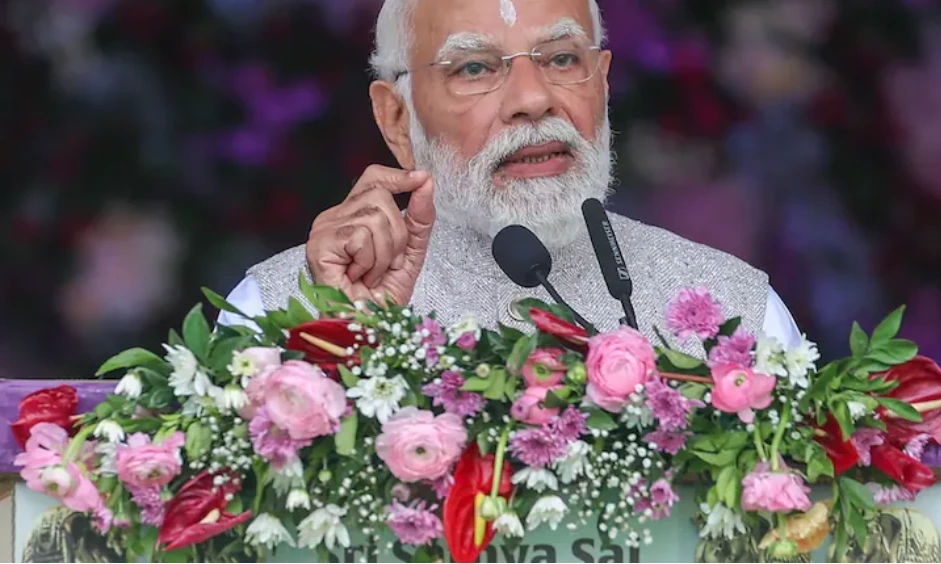
The Bharatiya Janata Party has finalised its seat-sharing arrangement for the upcoming Assam Assembly elections, firming up its strategy alongside National Democratic Alliance partners as campaigning gathers pace in the state.

Under the agreement, the BJP will contest 89 seats, while its allies — Asom Gana Parishad and Bodoland People’s Front — will field candidates in 26 and 11 constituencies respectively. The distribution has been decided after internal deliberations, with the focus now shifting to candidate announcements and campaign execution.

Campaign push led by top leadership

Prime Minister Narendra Modi is expected to address three rallies in Assam during the final leg of the campaign. Tentative dates for the rallies are April 1, April 3 and April 6, with events likely to be held in key constituencies.

Union Home Minister Amit Shah is also set to spearhead an extensive campaign across the state through March, aiming to energise party workers and strengthen voter outreach.

Candidate selection underway

The party’s Central Election Committee is currently meeting to finalise candidates. Sources indicate that approvals for most constituencies are expected soon, and the BJP may release its complete list of candidates within the next two days.

Ticket distribution remains a crucial exercise, with internal discussions highlighting its potential impact on local political dynamics. Party leaders have also touched upon the proposed delimitation exercise scheduled for 2027, which is expected to have long-term implications for Assam’s electoral landscape.

Polling and counting dates

Voting for all 126 Assembly seats in Assam is scheduled for April 9, while the votes will be counted on May 4.

India News

Centre pushes states to cut levies to boost PNG adoption

The Centre has asked states to reduce local levies and streamline approvals to accelerate PNG adoption and city gas infrastructure growth.

Published

on

LPG Cylinder

The Ministry of Petroleum and Natural Gas has urged states and Union Territories to ease local levies and procedural barriers affecting City Gas Distribution (CGD) projects, in a bid to accelerate the adoption of piped natural gas (PNG) as a cleaner fuel alternative.

In a communication sent to Chief Secretaries, Petroleum and Natural Gas Secretary Neeraj Mittal highlighted that high right-of-way charges, road cutting fees, lease rentals and other local levies imposed by urban bodies are discouraging investments in CGD infrastructure.

High costs slowing expansion

The ministry pointed out that the CGD sector, particularly PNG supply to households and commercial establishments, does not receive direct subsidies. As a result, it depends heavily on viable returns, which are being impacted by excessive and inconsistent local charges across states.

It noted that these financial and procedural hurdles are slowing down infrastructure expansion and affecting the broader adoption of natural gas.

Gap between connections and usage

According to the government, while around 12.63 crore PNG connections have been recorded, only about 1.6 crore are currently active. The ministry stressed that improving ease of doing business at state and local levels could help bridge this gap and expand the consumer base.

Officials believe that rationalising levies may initially reduce local revenues but could lead to higher long-term gains through increased gas consumption and economic activity.

LPG shortage adds urgency

The push for PNG adoption comes amid supply constraints in liquefied petroleum gas (LPG), linked to ongoing tensions in the Middle East. Oil marketing companies are currently supplying only 20 per cent of normal commercial LPG demand to states.

To address this, the ministry has proposed increasing LPG allocation to 30 per cent for states that implement reforms supporting PNG and CGD expansion.

Reform-linked incentives for states

The Centre has suggested a set of measures that states can adopt to qualify for higher LPG allocations. These include:

  • Setting up empowered state and district-level committees for faster approvals
  • Introducing single-window clearance with deemed approvals within 24 hours
  • Implementing a dig-and-restore model using bank guarantees instead of restoration charges
  • Eliminating annual rental or lease charges for CGD infrastructure

The ministry said compliance with these reforms would be verified before granting additional LPG allocations.

Industry support measures

The communication also noted that GAIL and its subsidiaries have already allocated full gas supply to the commercial PNG segment to support businesses affected by reduced LPG availability.

The government reiterated that expanding natural gas usage aligns with its broader push for cleaner and domestically sourced energy.

Continue Reading

India News

Delhi Palam fire leaves 6 dead, massive rescue operation underway

Six people died after a fire broke out in a residential building in Delhi’s Palam. Firefighters continue rescue efforts with 30 tenders at the spot.

Published

on

Delhi's palam

A tragic fire incident in southwest Delhi’s Palam area on Wednesday morning claimed the lives of six people, triggering a large-scale emergency response.

According to officials, the blaze erupted in a residential building, prompting immediate action from fire and police authorities. Around 30 fire tenders were rushed to the spot to control the flames and carry out rescue operations.

Authorities said they received a distress call at approximately 7 am reporting the fire at a house within the building. Firefighters were deployed swiftly amid concerns that several residents could be trapped inside the structure.

A fire services official stated that initial information suggested people might still be inside, leading to an intensive search and rescue effort. Emergency teams, including police personnel, reached the congested locality to assist in evacuation and crowd management.

The firefighting operation was still ongoing at the time of reporting. The exact cause of the fire has not yet been determined, and further details are awaited as authorities continue their investigation.

Continue Reading

India News

Centre mandates 60% free seat allocation on flights, caps selection fees

Airlines must now offer 60% seats without extra charges and ensure better seating arrangements for passengers under new government rules.

Published

on

In a significant move aimed at protecting air travellers, the Union Ministry of Civil Aviation has directed airlines to ensure that at least 60 per cent of seats on every flight are offered without any additional selection fee. The decision follows widespread complaints from passengers about hidden charges, particularly for seat selection.

The directive has been issued through the Directorate General of Civil Aviation, which has introduced a series of passenger-friendly norms to enhance transparency and improve the overall flying experience.

Under the new guidelines, airlines have also been instructed to seat passengers travelling on the same PNR together, preferably in adjacent seats. This is expected to address long-standing concerns among families and group travellers, who often face inconvenience due to scattered seating arrangements.

The regulator has further emphasised the need to safeguard passenger rights in situations such as flight delays, cancellations, and denied boarding. Airlines have been asked to prominently display these rights across their websites, mobile applications, booking platforms, and airport counters to ensure better awareness.

In addition, carriers must establish clear and transparent policies regarding the carriage of sports equipment, musical instruments, and pets. The move comes in response to frequent complaints over inconsistent rules and high charges. Airlines have been directed to align such policies with safety and operational standards while ensuring they are communicated in a simple and passenger-friendly manner.

To improve accessibility, the regulator has also asked airlines to share passenger rights information in regional languages.

Continue Reading

Trending

© Copyright 2022 APNLIVE.com