English हिन्दी
Connect with us

Latest world news

India has adequate crude oil reserves, self-reliance essential, says PM amid Iran war

PM Modi told Parliament that India has sufficient crude oil reserves and diversified energy imports as the Iran war disrupts global trade routes and energy supply chains.

Published

on

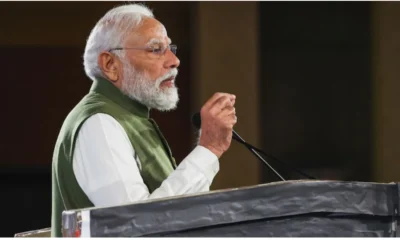
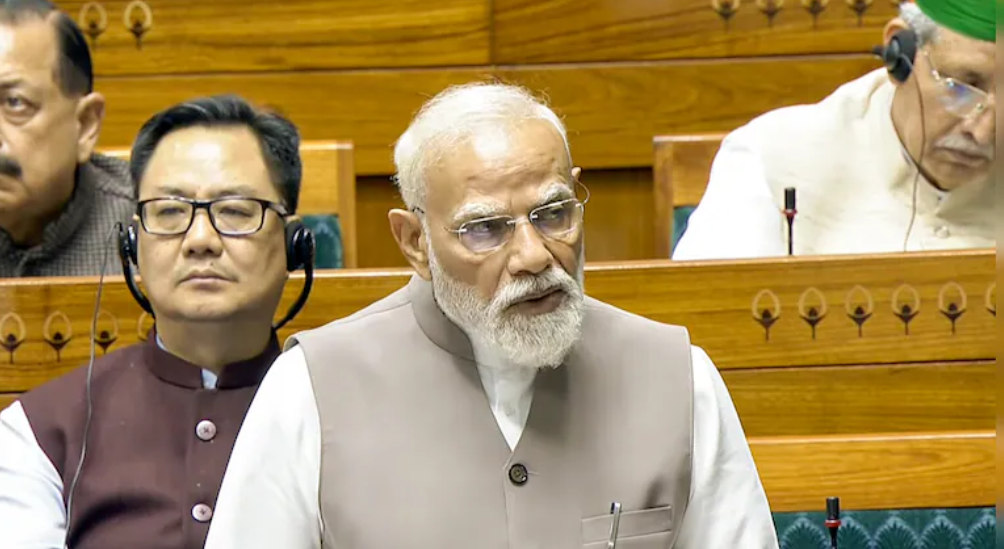
PM Modi speech

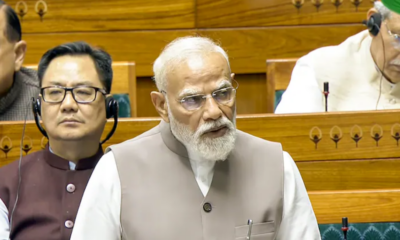
Prime Minister Narendra Modi on Tuesday said India has adequate crude oil reserves and reliable supply arrangements, even as the ongoing conflict in West Asia continues to disrupt global energy markets and trade routes.

Speaking in the Rajya Sabha, the Prime Minister said the war, now in its fourth week, has started affecting international trade routes, leading to disruptions in the supply of key commodities such as petrol, diesel, gas and fertilisers.

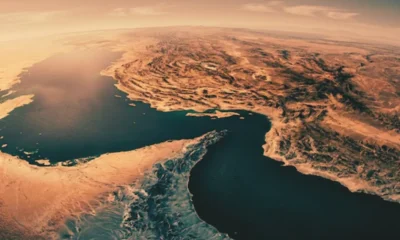
He noted that the conflict has triggered a severe global energy crisis, which is a matter of concern for India. The situation has worsened after Iran retaliated against US-Israeli attacks by restricting traffic through the Strait of Hormuz and targeting energy infrastructure and strategic locations in the region.

The Prime Minister also raised concerns about the safety of Indian citizens and seafarers in the Gulf region. He said many ships remain stranded in the Strait of Hormuz, and a large number of Indian crew members are on board these vessels. He added that the safety of more than one crore Indians living and working in Gulf countries remains a top priority for the government.

PM Modi said he has spoken twice with leaders of West Asian countries since the conflict began and that India remains in constant contact with Gulf nations as well as Iran, Israel and the United States. He stressed that India is pushing for de-escalation, dialogue and the reopening of the Strait of Hormuz, stating that attacks on commercial shipping and disruption of international navigation are unacceptable.

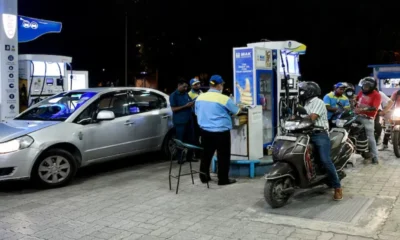
Assuring the country on energy security, the Prime Minister said India has sufficient crude oil storage and has diversified its energy import sources over the years. He said India earlier imported energy from 27 countries, but now sources oil, LNG and LPG from 41 countries.

He added that India has significantly expanded its strategic petroleum reserves over the past decade, with more than 5.3 million metric tonnes of storage capacity created in the last 11 years. Oil companies also maintain substantial reserves of petrol and diesel to manage emergency situations.

The Prime Minister said the government is promoting the use of Piped Natural Gas (PNG) along with LPG to strengthen domestic gas supply. He also emphasised the need for self-reliance, especially in the shipping sector, noting that more than 90 percent of India’s trade is carried on foreign ships, which creates risks during global crises.

To reduce this dependence, the government has launched a major initiative worth around Rs 70,000 crore to build ships in India. He said strengthening domestic capabilities and reducing dependence on other countries is essential for India’s long-term economic and energy security.

The Prime Minister added that despite the global crisis, India’s economic fundamentals remain strong and the government is working on short-term, medium-term and long-term strategies through an inter-ministerial coordination group to reduce the impact of the conflict on the country.

Latest world news

China says it will properly handle differences with India ahead of Modi-Xi talks

China has stressed stronger communication and cooperation with India ahead of President Xi Jinping’s bilateral meeting with PM Modi in Delhi.

Published

on

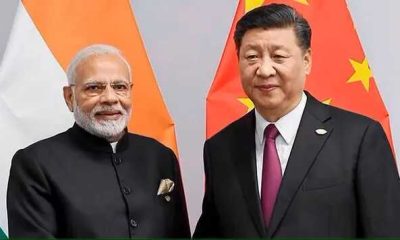
China has said it is ready to strengthen communication and cooperation with India and appropriately manage differences between the two countries ahead of Chinese President Xi Jinping’s meeting with Prime Minister Narendra Modi in New Delhi.

Chinese Ambassador to India Xu Feihong said Beijing and New Delhi were arranging a bilateral meeting between Xi and Modi on the sidelines of the 18th BRICS Summit.

The meeting is scheduled for 5:45 pm on Saturday, according to the report. Xi’s visit marks his return to India after nearly seven years.

China stresses cooperation with India

In a post on X on Friday, Xu said China would work with India in line with the strategic guidance provided by the two leaders.

He said Beijing wanted to approach India-China relations from a strategic and long-term perspective while increasing communication and cooperation.

China said it would properly handle differences and work towards good-neighbourly relations while helping each other succeed. 

Chinese Foreign Ministry spokesperson Mao Ning echoed the position during a media briefing, saying Beijing would work with New Delhi to strengthen communication, expand cooperation and manage differences.

Modi-Xi meeting comes ahead of BRICS Summit

Xi Jinping has travelled to New Delhi to participate in the 18th BRICS Summit, which India is hosting on September 12 and 13.

The Chinese President’s visit comes after a period of strain in India-China relations following the 2020 Galwan Valley clash. Relations have since seen efforts towards stabilisation, including meetings between Modi and Xi in Kazan and Tianjin.

The upcoming meeting in New Delhi will be the third consecutive year in which the two leaders have met, according to the Chinese side.

Xi left Beijing on Saturday for India at the invitation of Prime Minister Modi. His delegation includes senior Chinese officials, including Cai Qi and Wang Yi.

The Modi-Xi bilateral is expected to provide another opportunity for the two sides to maintain high-level engagement while addressing differences in their relationship.

Continue Reading

Latest world news

Iran President Pezeshkian says country will not bow to US, Israel

Iranian President Masoud Pezeshkian, speaking in Delhi, said Iran would not surrender to pressure from the US and Israel and expressed hope for deeper cooperation with India.

Published

on

Iranian President Masoud Pezeshkian on Friday said his country would not surrender to pressure from the United States and Israel, asserting that Iran would continue to push back against what he described as attempts to bully the country.

Pezeshkian made the remarks in New Delhi while addressing Indian religious leaders, intellectuals and business leaders. He had arrived in India earlier in the day to participate in the BRICS Summit.

The Iranian president also expressed hope that his discussions with Prime Minister Narendra Modi would help expand cooperation between India and Iran across several areas.

Pezeshkian says Iran will resist pressure

Speaking about the conflict involving Iran, the US and Israel, Pezeshkian said Iran would not bow to pressure.

He accused the US and Israel of trying to bully Iran and said his country would respond if pushed. Pezeshkian also questioned accusations against Iran and criticised attacks on infrastructure and civilian facilities.

He said the Iranian people would not surrender and emphasised what he described as the importance of equal rights and human values.

Pezeshkian also alleged that 168 schoolchildren were killed in an attack and questioned claims by the US and Israel regarding human rights. These remarks were delivered through a translator, according to the source.

Iran seeks wider cooperation with India

Pezeshkian thanked the Indian government and Prime Minister Modi for the hospitality extended during his visit.

He said his talks with Modi could pave the way for greater cooperation between the two countries in areas including culture, technology, trade, science and the economy.

The Iranian president said India and Iran could work together to revive and strengthen these areas of cooperation.

Modi, Pezeshkian hold bilateral meeting

Modi met Pezeshkian on the sidelines of the BRICS Summit in New Delhi. It was the second meeting between the two leaders in less than two weeks.

They had previously met on the sidelines of the SCO Summit in Bishkek on August 31.

During their latest meeting, the two leaders discussed various aspects of India-Iran relations. Modi thanked Iran for its continued high-level participation in BRICS-related meetings despite the challenging circumstances.

The Prime Minister also thanked Pezeshkian for taking part in the Leaders’ Session of the BRICS Business Forum.

India reiterates call for dialogue

According to the PMO release cited in the report, Modi and Pezeshkian exchanged views on recent developments in West Asia.

Modi reiterated India’s position that issues should be resolved through dialogue and diplomacy. He also stressed the importance of efforts aimed at achieving lasting peace and stability in the region.

The Prime Minister highlighted the need to safeguard freedom of navigation and commerce as well as the safety and well-being of seafarers.

The two sides also discussed continued cooperation on issues of mutual interest in multilateral organisations, including BRICS.

Continue Reading

Latest world news

PM Modi, Iran President Pezeshkian discuss West Asia crisis and trade ties in Delhi

PM Modi met Iranian President Masoud Pezeshkian in Delhi amid West Asia tensions, with talks focusing on regional stability, seafarer safety and India-Iran ties.

Published

on

Prime Minister Narendra Modi met Iranian President Masoud Pezeshkian in New Delhi on Friday for bilateral talks held on the sidelines of the BRICS Summit. The meeting came amid heightened tensions in the Middle East and focused on regional stability, maritime safety and strengthening India-Iran ties.

Pezeshkian arrived in India to attend the BRICS Summit and held discussions with PM Modi for the second time in less than two weeks. Modi had earlier met the Iranian president on August 31 on the sidelines of the Shanghai Cooperation Organisation (SCO) Summit in Bishkek.

During Friday’s meeting, PM Modi highlighted India’s concerns over the continuing crisis in West Asia. He stressed that the safety and security of seafarers remains a top priority for India.

India also reiterated its position that a lasting solution to the regional crisis must come through dialogue and diplomacy. Energy security was another key concern, with India emphasising the need for safe passage for vessels carrying supplies.

The talks took place against the backdrop of the wider Middle East crisis, including the blockade of the Strait of Hormuz, which has raised concerns over energy security and maritime trade. 

Pezeshkian calls for greater BRICS economic resilience

Earlier on Friday, Pezeshkian addressed the BRICS Business Forum and called for greater economic cooperation among member countries.

He said BRICS should focus on strengthening its economic resilience and advocated the use of national currencies for trade among member countries. The Iranian president also argued that the grouping should work toward reducing dependence on the US dollar.

Pezeshkian criticised US sanctions and military actions, saying BRICS should create conditions where legitimate trade cannot be disrupted by the monopolisation of financial instruments.

Modi and Pezeshkian had met in Bishkek

PM Modi and Pezeshkian had last met on August 31 in Bishkek. During that meeting, Modi said India wanted to strengthen its longstanding friendship with Iran and expand and diversify bilateral trade.

The two leaders also discussed developments in the West Asia conflict. Modi reiterated India’s position that disputes should be addressed through dialogue and diplomacy and stressed the importance of protecting civilians, commercial shipping and seafarers.

During the earlier meeting, Pezeshkian had sought India’s diplomatic support in encouraging the conflicting sides to move away from violence and return to negotiations.

The latest Modi-Pezeshkian talks come as India hosts the BRICS Summit in New Delhi, with the regional crisis and its impact on the global economy forming an important backdrop to the high-level discussions.

Continue Reading

Trending

© Copyright 2022 APNLIVE.com