English हिन्दी
Connect with us

India News

Gujarat assembly passes Uniform Civil Code bill, becomes second state after Uttarakhand

Gujarat has become the second state after Uttarakhand to pass a Uniform Civil Code bill covering marriage, divorce, succession and live-in relationships.

Published

on

Gujarat UCC bill

The Gujarat Assembly on Tuesday passed the Uniform Civil Code (UCC) Bill after a debate lasting more than seven hours, with the ruling BJP describing the move as a major reform aimed at ensuring equal laws for all citizens. The opposition Congress and Aam Aadmi Party opposed the bill and demanded that it be sent to a select committee, but it was passed by a majority voice vote.

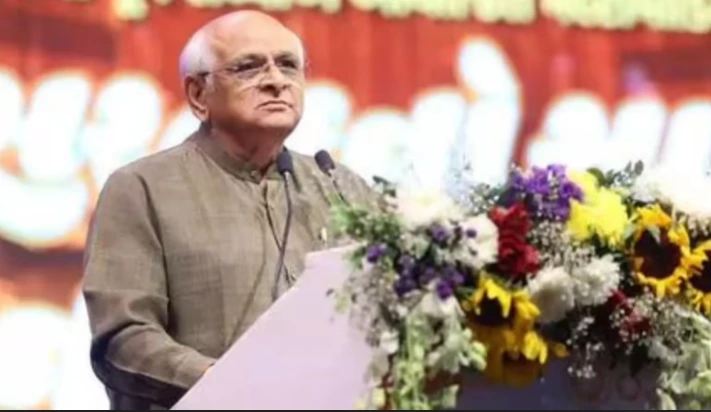
Chief Minister Bhupendra Patel introduced the bill in the assembly earlier in the day, shortly after a state-appointed panel submitted its final report on the implementation of the Uniform Civil Code in the state.

With the passage of the legislation, Gujarat has become the second state in India after Uttarakhand to pass a Uniform Civil Code bill. The proposed law, titled the Gujarat Uniform Civil Code, 2026, will apply across the state and will also cover residents of Gujarat living outside the state.

However, the bill specifies that the provisions of the code will not apply to Scheduled Tribes and certain communities whose customary rights are protected under the Constitution.

According to the bill’s stated objectives, the code aims to establish a uniform legal framework governing matters such as marriage, divorce, succession and live-in relationships, irrespective of religion. The legislation also includes provisions for mandatory registration of live-in relationships and a formal process for their termination.

The bill also prohibits bigamy, stating that a marriage will be considered valid only if neither party has a living spouse at the time of marriage.

While presenting the bill, the Chief Minister said the move was based on constitutional principles and aimed at ensuring equality before the law. He referred to Article 14, which guarantees equality before the law, and Article 44, which directs the state to work towards a Uniform Civil Code.

Opposition leaders strongly objected to the bill. Congress MLA Shailesh Parmar said the bill was introduced in haste and should have been reviewed by a select committee. Another Congress MLA, Amit Chavda, argued that the bill violates constitutional guarantees, while Congress legislator Imran Khedawala described the legislation as anti-Muslim.

Despite the opposition, the government maintained that the legislation reflects the demand for equal justice and a unified legal framework for all citizens in the state.

India News

BJP targets Kejriwal over Sheesh Mahal 2 claim, AAP calls images fake as Raghav Chadha weighs in

BJP alleges Arvind Kejriwal’s new residence is a lavish “Sheesh Mahal 2”, while AAP denies the claims and calls the images fake, escalating political tensions.

Published

on

Arvind Kejriwal

A fresh political confrontation has erupted between the Bharatiya Janata Party and the Aam Aadmi Party over allegations surrounding a newly allotted residence to Arvind Kejriwal, with the BJP dubbing it “Sheesh Mahal 2”.

The controversy began after Parvesh Verma released images and a layout of the bungalow, claiming that high-end amenities in the property were funded using “private money”. The BJP alleged that the residence reflects an extravagant lifestyle, reviving earlier accusations linked to the “Sheesh Mahal” controversy.

The remarks came soon after Kejriwal moved into the government-allotted accommodation in Delhi’s Lodhi Estate, adding political heat to an already tense atmosphere.

In response, AAP leaders rejected the allegations outright, asserting that the images circulated by BJP leaders were not authentic. Party representatives claimed the visuals were sourced from online platforms and do not represent the actual residence.

The party also accused the BJP of spreading misinformation to target Kejriwal politically and damage his public image.

Political tensions rise amid recent defections

The row comes at a time when tensions between the two parties are already high following recent political developments, including the exit of senior leaders from AAP.

Raghav Chadha, who recently shifted political alignment, also weighed in on the issue, adding another dimension to the ongoing confrontation. His remarks are seen as part of a broader political attack on AAP amid internal challenges and shifting loyalties.

The developments have intensified the war of words between the BJP and AAP, with both sides trading allegations over governance, transparency, and political intent.

Ongoing battle of narratives

While the BJP continues to question the nature of the residence and its alleged expenses, AAP has maintained that the claims are baseless and politically motivated.

With both parties standing firm on their positions, the “Sheesh Mahal 2” issue is likely to remain a key flashpoint in Delhi’s political landscape in the coming days.

Continue Reading

India News

Karnataka cabinet clears 15% internal reservation for Scheduled Castes, recruitment to begin soon

Karnataka approves internal reservation within SC quota, paving way for jobs

Published

on

The Karnataka cabinet, led by Chief Minister Siddaramaiah, has approved an internal reservation framework for Scheduled Castes (SCs) within the existing 15% quota, a move expected to address long-standing demands and restart stalled government recruitment.

The decision was taken during a special cabinet meeting and introduces a revised formula to distribute the quota among different SC sub-groups.

How the quota will be divided

Under the new structure, the 15% reservation for Scheduled Castes will be split into three categories:

  • 5.25% for “left-hand” SC communities
  • 5.25% for “right-hand” SC communities
  • 4.5% for other SC groups, including nomadic communities

The formula is based on proportional representation and aims to ensure equitable distribution of benefits among various sub-castes.

Recruitment to resume after long delay

The cabinet’s approval is expected to immediately unlock recruitment for thousands of government positions that had been on hold due to the reservation issue.

Officials indicated that recruitment notifications will now be issued, potentially opening up more than 50,000 vacancies across departments.

Long-pending demand addressed

The move comes after decades of demands from different SC communities seeking internal classification within the quota system. The government described the decision as a step toward social justice and balanced representation.

The issue had remained unresolved for years due to legal and administrative complexities, including concerns over exceeding the Supreme Court-mandated 50% reservation cap.

Political and social significance

The decision carries both administrative and political importance, as it addresses a sensitive issue affecting multiple communities within the Scheduled Castes. It also comes at a time when reservation policies continue to be a major subject of debate across states.

While the government has presented the move as a corrective step, it is likely to trigger reactions from various stakeholders, including opposition parties and community groups.

Continue Reading

India News

Amit Shah claims Mamata leaving, BJP coming after high turnout in Bengal polls

Amit Shah says high turnout in Bengal polls signals shift from Mamata Banerjee’s rule, predicts BJP surge.

Published

on

Union Home Minister Amit Shah on Friday expressed strong confidence in the Bharatiya Janata Party’s prospects in the ongoing West Bengal Assembly elections, asserting that the political mood in the state signals a shift away from Chief Minister Mamata Banerjee.

Speaking after the first phase of polling, Shah claimed that the high voter turnout indicates a desire for change, stating that “Mamata is leaving and BJP is coming.”

The first phase of elections recorded a notably high turnout across several constituencies, which Shah said reflects growing public support for the BJP and dissatisfaction with the current administration.

BJP predicts strong performance

The senior BJP leader went a step further, projecting a significant electoral gain for his party. He suggested that feedback from party workers and internal assessments indicate that the BJP could secure a large share of the seats contested in the first phase.

Shah linked the voter turnout to what he described as a broader shift in public sentiment, claiming that people in the state are moving from “fear to trust” and are ready for political change.

Intensifying political battle

The remarks come amid a high-pitched political contest between the BJP and the ruling Trinamool Congress, led by Mamata Banerjee. The ongoing election has seen sharp exchanges between leaders from both sides, with each camp projecting confidence in forming the next government.

Shah’s comments also follow recent statements by Banerjee targeting the BJP at the national level, highlighting the broader political stakes surrounding the Bengal elections.

As polling progresses in multiple phases, the results are expected to play a crucial role in shaping the political landscape of the state.

Continue Reading

Trending

© Copyright 2022 APNLIVE.com