English हिन्दी
Connect with us

Latest world news

Trump says Iran getting more serious in talks, no decision yet on major strikes

Donald Trump says Iran is becoming more serious in negotiations with the US but insists no decision has been taken on launching major military strikes against Tehran.

Published

on

Donald Trump

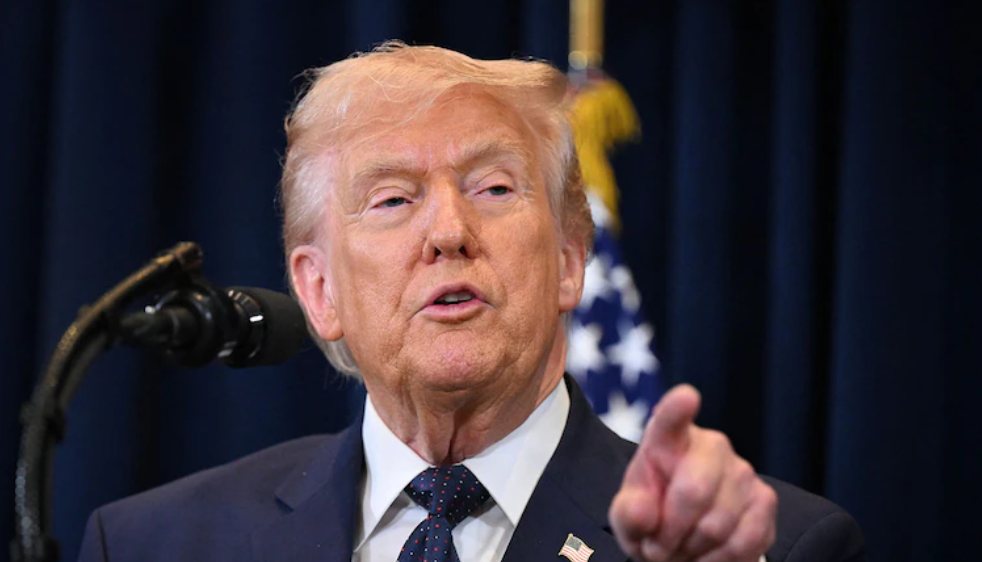
US President Donald Trump has said he has not yet decided whether to authorise major military strikes against Iran, stating that Tehran has become “more serious” in its negotiations with Washington even as tensions between the two countries remain high.

Speaking to reporters in the Oval Office on Friday, Trump said discussions with Iran were continuing and suggested diplomatic efforts were showing signs of progress.

“We’re talking to them right now. I think they’re getting more and more serious as the days go by,” Trump said, adding that no final decision had been taken on launching military action.

Trump says diplomacy remains an option

Trump said the United States remained prepared for military action if required but indicated that ongoing talks could still lead to an agreement.

“We’re locked and loaded and ready to go. But we’re talking to them, so I think while we’re talking, we’ll see what comes of it. I believe they’re very serious. They should be,” he said.

The US President also warned that Iran would face a “much higher level” of strikes if negotiations failed, while reiterating that preventing Tehran from developing a nuclear weapon remained his key red line.

The United States has said its military operations are aimed at preventing Iran from closing the strategically important Strait of Hormuz. Iran, meanwhile, has carried out retaliatory strikes on US bases, with four American service members reported killed.

Reports claim Trump discussed large-scale military operation

Trump’s remarks came after media reports suggested he met senior advisers to discuss the possibility of a large-scale military operation against Iran. Another report said he was considering a “massive attack”, although Trump did not confirm those reports during his interaction with journalists.

He also acknowledged that the prolonged conflict, which he had earlier expected to last only a few weeks, was approaching its fifth month and had become a political challenge ahead of the US midterm elections scheduled for November.

Trump issues warning over support for Iran

Trump also addressed reports claiming that Russia and China were providing intelligence or military support to Iran. He said both Chinese President Xi Jinping and Russian President Vladimir Putin had assured him they would not arm Tehran.

“I think they wouldn’t want to have me disappointed,” Trump said.

In a separate post on his Truth Social platform, Trump warned Moscow and Beijing against supplying weapons to Iran, saying such a move would not be in their interests.

He further stated that Xi had assured him during their meeting in Beijing in May that China would not provide weapons to Iran, while Putin had conveyed a similar position despite the ongoing war in Ukraine.

Latest world news

Visegrad Group backs India’s bid for permanent UN Security Council seat

India’s bid for a permanent UN Security Council seat received collective backing from the four Visegrad Group countries at a meeting in New York.
Published

on

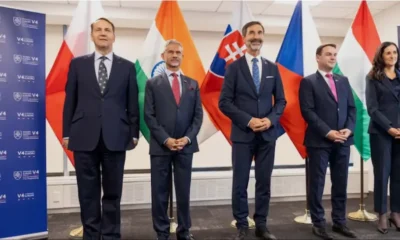
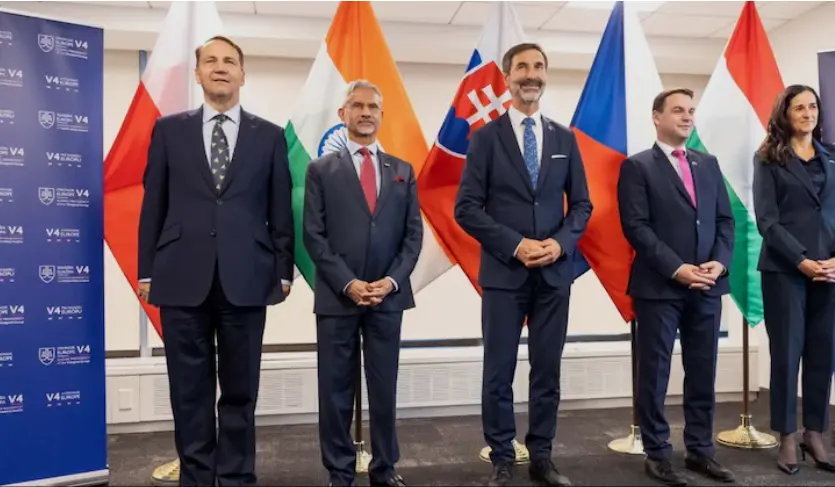
India’s campaign for a permanent seat on the United Nations Security Council received fresh backing from four Central European countries at a meeting on the sidelines of the 81st UN General Assembly in New York.

The Visegrad Group, comprising Poland, Hungary, Slovakia and the Czech Republic, backed India’s call for permanent membership of the UN Security Council.

The support came during the first V4+India foreign ministers’ meeting involving External Affairs Minister S Jaishankar and his counterparts from the four-member grouping.

What Slovakia said on India’s UNSC bid

Slovak Foreign and European Affairs Minister Juraj Blanar said the four Visegrad countries agreed that India should have a permanent place on the UN Security Council.

Blanar described India as a country from the Global South and an emerging power in the Indo-Pacific region while expressing the group’s support for India’s permanent membership.

The statement was made after the meeting with Jaishankar in New York.

India has been seeking reform of the Security Council, including permanent membership, arguing for greater representation of today’s global political landscape.

India and V4 agree to deepen cooperation

The meeting was not limited to the Security Council issue. Jaishankar said India and the four Visegrad countries agreed to strengthen cooperation across several areas.

The countries agreed to hold annual meetings of foreign ministers and establish an annual business forum to deepen economic engagement.

The discussions also covered technology and innovation, research and education, defence, space, connectivity, culture and people-to-people relations.

Jaishankar described the first V4+India meeting as a “new historic occasion” and said India had very good relations with the four countries.

The ministers also discussed major international developments, including the conflict in Ukraine and developments in the Gulf.

What is the Visegrad Group?

The Visegrad Group, also known as V4, is a regional grouping of four Central European countries — Poland, Hungary, Slovakia and the Czech Republic.

The group was established in 1991 and provides a platform for cooperation in areas including political, economic, security and other matters.

India seeks permanent seat on UN Security Council

The UN Security Council currently has 15 members, including five permanent members — China, France, Russia, the United Kingdom and the United States — and 10 non-permanent members elected for two-year terms.

India has been seeking comprehensive reform of the Security Council and a permanent seat as part of that process.

The backing from the Visegrad Group adds four more countries to the list of nations supporting India’s permanent-membership demand. However, the V4 countries’ support by itself does not change the existing structure of the Security Council or complete the UN reform process. Any expansion would require the necessary agreement among UN member states and changes to the UN Charter.

Continue Reading

Latest world news

Trump signs Russia sanctions bill, India faces 100% tariff threat

Donald Trump has signed the Russia sanctions bill into law, giving the US president authority to impose tariffs of up to 100% on countries buying Russian oil and gas, including India and China.

Published

on

Donald Trump

US President Donald Trump has signed a Russia sanctions bill into law, giving his administration the authority to impose tariffs of up to 100 per cent on countries that buy Russian oil and gas.

The legislation puts major Russian energy buyers, including India and China, at risk of additional US tariffs. However, the law does not automatically impose a 100 per cent tariff on either country. The actual tariff would depend on whether Trump chooses to exercise the authority granted under the legislation.

The signing came two days after the Republican-led US House of Representatives passed the sweeping sanctions package by 262-159.

The legislation, known as the Lindsey O Graham Sanctioning Russia and Iran Act of 2026, is aimed at reducing the financial resources supporting Russia’s war against Ukraine.

What does the Russia sanctions bill contain?

The new law targets Russian officials, banks, energy interests and foreign entities accused of supporting Moscow’s military operations.

It also provides for tariffs of up to 500 per cent on Russian goods. Separately, countries covered by provisions targeting purchases of Russian oil and gas could face duties of up to 100 per cent.

The legislation also includes sanctions against Russian President Vladimir Putin and senior members of the Russian government.

Why India faces a 100% tariff threat

India is among the major buyers of Russian crude oil and could therefore be affected by the new tariff authority.

An amendment proposed by Democratic Congressman Steny Hoyer sought to explicitly identify 10 countries — China, India, the UAE, Turkiye, Singapore, Azerbaijan, Kazakhstan, Hungary, Kyrgyzstan and Slovakia — as eligible for tariffs of up to 100 per cent under the secondary tariff provisions.

However, the amendment itself does not impose a 100 per cent duty on India.

Instead, the legislation gives Trump the power to impose such tariffs if he decides to use it. The eventual impact on Indian exports will depend on the tariff rate, if any, announced by the US administration.

What India said on Russian oil purchases

India had responded to the passage of the sanctions bill by reiterating its focus on energy security.

The Ministry of External Affairs said India remains committed to ensuring energy security for its 1.4 billion people and would continue to diversify its sources of energy based on changing market conditions.

The ministry also said India’s oil trade with Russia had been discussed at high levels with US officials in recent months and that New Delhi had clearly conveyed the potential implications for bilateral relations and the international energy market.

Previous US tariffs on India

The latest development comes after earlier tariff tensions between India and the US over Russian crude imports.

According to the report, Trump had previously imposed an additional 25 per cent tariff on Indian imports of Russian crude, on top of a 25 per cent reciprocal tariff. The additional tariff was removed in February 2026, while the reciprocal tariff was reduced to 18 per cent under a US-India trade framework.

The new law therefore creates another potential source of pressure on India-US trade relations, although the final effect will depend on how the Trump administration uses the tariff authority.

Continue Reading

Latest world news

US strike on Iran school that killed 150 may be war crime, UN panel says

A UN-backed panel said there were reasonable grounds to believe US forces committed war crimes, citing a strike on a primary school in Minab that killed more than 150 people.
Published

on

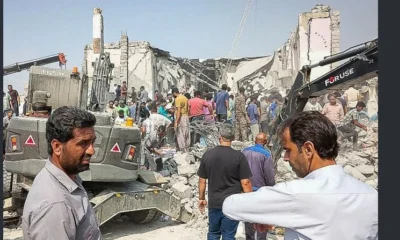
A UN-backed group of independent experts has said there are reasonable grounds to believe US forces committed war crimes during the conflict with Iran, citing two airstrikes that caused civilian deaths.

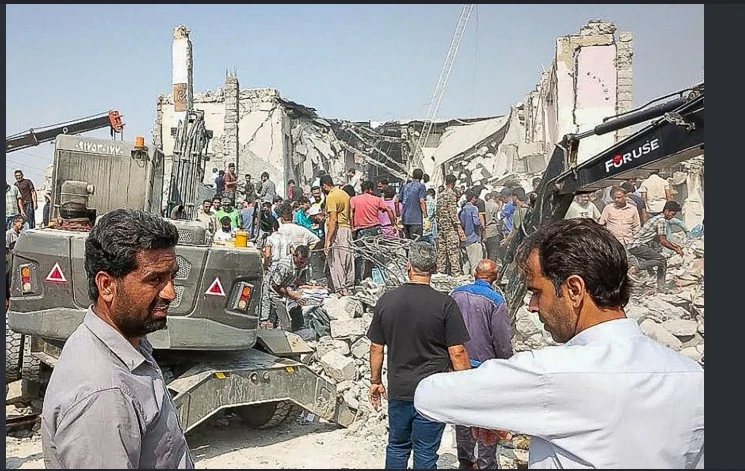
The UN-backed fact-finding mission, in a report submitted to the UN Human Rights Council in Geneva, examined a strike on the Shajareh Tayyebeh Primary School in Minab and another attack in Lamerd.

What the UN report said about the school strike

The mission said a Tomahawk cruise missile strike on the primary school in Minab in late February killed more than 150 people.

According to the report, the mission found reasonable grounds to believe the United States committed the war crime of launching indiscriminate attacks that resulted in civilian deaths or injuries or damage to civilian objects.

The Minab strike has previously been the subject of investigations into how the school was identified as a target. Earlier reports cited evidence suggesting the strike was carried out by US forces, while the Pentagon has said the incident was under investigation.

Another US strike examined by UN mission

The fact-finding mission also examined a separate US strike in Lamerd.

It said the attack dispersed clouds of tungsten pellets over a sports complex and a residential area, killing 22 people.

The report’s findings are not legally binding, but they could contribute to future efforts to establish accountability through international legal mechanisms, according to the report.

Pentagon investigation remains ongoing

The Pentagon has previously said the Minab incident was being investigated.

A Pentagon official said on Thursday that the investigation was still ongoing and declined to comment on the report from the UN-backed outside organisation.

The report also noted that investigators had previously examined possible failures surrounding the Minab strike, including problems with US intelligence systems and information about the site being used as a school.

UN panel also accuses Iran

The UN-backed mission’s report did not focus only on alleged US violations.

It also accused the Iranian government of gross human rights violations and crimes against humanity, including in connection with violent crackdowns on Iranian protesters.

The White House rejected the UN findings and accused Iran of committing war crimes, including attacks against neighbouring countries and other actions during the conflict.

Continue Reading

Trending

© Copyright 2022 APNLIVE.com