English हिन्दी
Connect with us

India News

Sonam Wangchuk says students’ protection was priority over Pradhan’s resignation

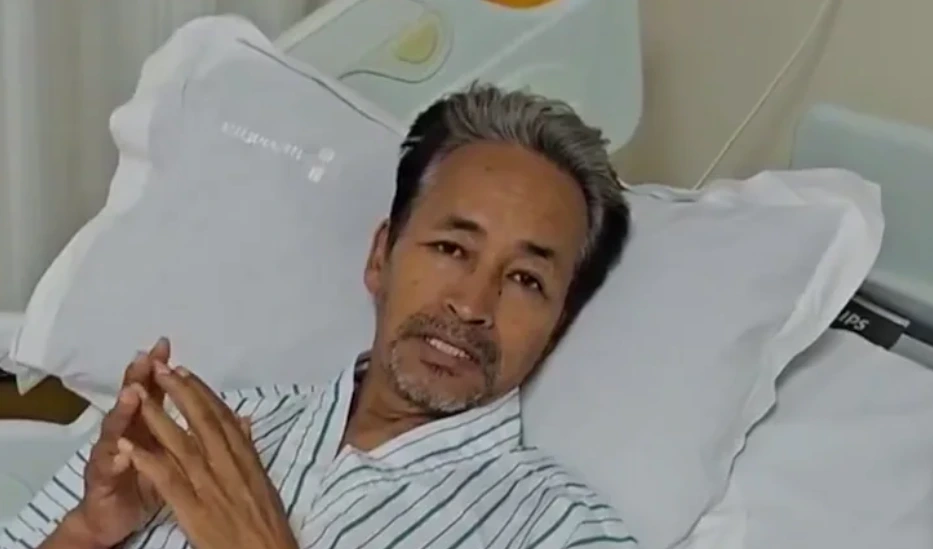
Activist Sonam Wangchuk has clarified that he ended his 26-day hunger strike after receiving written assurances from the Centre on protecting protesters and discussing examination reforms, saying the resignation of Education Minister Dharmendra Pradhan was not his immediate priority.

Published

on

Activist Sonam Wangchuk has explained why he ended his 26-day hunger strike without securing the resignation of Education Minister Dharmendra Pradhan, saying his immediate priority was protecting students and protesters from legal action.

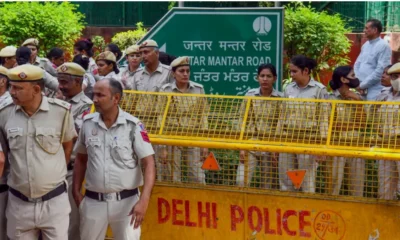
Wangchuk had been observing an indefinite fast since June 28 in solidarity with members of the Cockroach Janta Party (CJP), who have been protesting at Delhi’s Jantar Mantar over alleged irregularities in competitive examinations, demands for education reforms and the resignation of the education minister.

He ended his fast shortly after midnight on Thursday after the Centre gave written assurances that no cases would be registered against peaceful protesters, Parliament would hold a detailed discussion on examination reforms and paper leaks, and compensation for families of students who allegedly died by suicide following the NEET paper leak was under consideration.

Wangchuk explains why resignation was not his immediate demand

In a YouTube video recorded from his hospital bed and released on Friday night, the 59-year-old activist responded to criticism over ending his hunger strike without obtaining Dharmendra Pradhan’s resignation.

Wangchuk said the minister’s resignation remained an important issue but was not the central focus of his negotiations with the Centre.

According to him, ensuring that protesting students did not face FIRs or other legal action was a more urgent concern.

He said he believed the issue of the minister’s resignation would eventually resolve itself and that the movement demanding accountability would continue pursuing that objective.

Rejects allegations of reaching a deal

Wangchuk also dismissed allegations that he had struck a deal with the Centre to end his fast.

He said he was concerned about reports suggesting a possible crackdown on protesters and feared a repeat of the events of September 2025 in Ladakh, where he alleged security forces used force against young protesters.

According to Wangchuk, he believed ending his fast and appealing for peace could help prevent further escalation.

Questioning allegations against him, he said someone seeking a deal would not have remained on a hunger strike for 26 days.

Written assurance on protesters was key condition

Wangchuk said Union ministers JP Nadda and Jitendra Singh met him at Medanta Hospital in Gurugram after he was shifted there from the protest site.

He claimed the ministers agreed to positively consider compensation for families of students who allegedly died by suicide following the NEET paper leak and to support a discussion in Parliament on accountability in the examination system.

However, he said he refused to end his fast until the Centre provided a written assurance that peaceful protesters would not face legal action.

According to Wangchuk, the Centre initially offered only a verbal assurance, but he insisted on a written commitment before agreeing to conclude his fast.

Regrets supporters could not witness end of fast

Wangchuk also expressed disappointment that fellow protesters, Members of Parliament, CJP members and representatives from Ladakh could not be present when he ended his hunger strike.

He claimed many of them were not allowed to meet him before the Union ministers arrived at the hospital.

Calling it his biggest regret, Wangchuk said he had hoped to conclude his fast in the presence of those who had stood by him throughout the movement.

India News

Assam BJP leader Bikash Dhar found dead, 5 arrested for murder

BJP leader Bikash Dhar, 52, was found dead in an abandoned house in Assam’s Sribhumi district after being reported missing on August 12. Police have arrested five people in connection with the alleged murder.

Published

on

A 52-year-old BJP leader who had been missing for two days was found dead in Assam’s Sribhumi district on Friday, with police alleging that he was murdered.

Bikash Dhar, a resident of Chagalmowa village under Bazaricherra police station, was found dead inside an abandoned house in the Yogicherra area near the Tripura border on Friday morning.

Dhar’s family had filed a missing complaint on August 12 after he left home following a phone call.

According to his son Madan Dhar, Bikash left around 1 pm after saying that he had to attend an emergency meeting. When he did not return and his phone was switched off, the family began searching for him and later approached the police.

Five arrested in murder case

Sribhumi Superintendent of Police Leena Doley said an investigation was launched after the missing complaint was received. The probe was conducted under the supervision of the Additional Superintendent of Police (Crime).

Police said five people have been arrested in connection with the alleged murder. They were identified as Abdul Salam, Sifat Ali, Abdul Ahad, Saiful Ali and Badrul Haque.

According to the police, interrogation of Abdul Salam revealed that the accused had an enmity with Dhar. Police alleged that the group killed him and dumped his body near a water body.

Another person, identified as Sunam Miya, was named during the investigation and reportedly fled to Tripura on the night of the incident.

Police find injury and cut marks on body

Police said injury and cut marks were found on Dhar’s body, and a murder case has been registered.

During the recovery of the alleged weapon, police said accused Badrul Haque attempted to escape from custody. A police constable was injured during the incident.

Police said they fired at Haque’s leg to prevent him from escaping, resulting in a bullet wound.

The investigation into the circumstances surrounding Dhar’s death and the alleged involvement of the accused is underway.

Continue Reading

India News

Jharkhand CID raids multiple locations in JPSC exam irregularities case 

Jharkhand CID conducted raids across several districts to arrest seven accused in a case involving alleged irregularities in JPSC competitive examinations.

Published

on

The Jharkhand Crime Investigation Department (CID) has conducted raids at several locations across the state as part of its investigation into alleged irregularities in competitive examinations conducted by the Jharkhand Public Service Commission (JPSC).

According to a CID press release, the searches were carried out to arrest seven accused named in Case No. 16/2026 and execute warrants issued against them.

The accused have been identified as Aditya Pandey, Pawan Kumar Singh, Ravishankar Kumar, Santosh Kumar Singh, Sanand Prakash, Lalu Kumar Yadav and Saurabh Kumar Pandey.

The CID conducted searches in several districts as part of efforts to apprehend the accused. The agency said its investigation into the case is continuing.

CID examining evidence in exam irregularities case

The case relates to alleged irregularities in various competitive examinations conducted by the JPSC.

As part of the investigation, the CID has begun matching OMR carbon copies obtained during the probe and examining other evidence collected in the case.

The agency said further action would be taken according to law on the basis of the evidence gathered. It added that legally permissible action against those found involved in the case is underway.

ABVP protests over JPSC, JSSC exams

The CID raids come amid protests over alleged irregularities and paper leaks in examinations conducted by the JPSC and Jharkhand Staff Selection Commission (JSSC).

On August 13, the Akhil Bharatiya Vidyarthi Parishad (ABVP) held protests in several cities, demanding a Central Bureau of Investigation (CBI) probe and strict action against those responsible.

In New Delhi, students and ABVP workers protested outside Jharkhand Bhawan, calling on the Jharkhand government to take steps to restore confidence in the examination system.

According to the ABVP, similar protests were held in Lucknow, Kolkata, Guwahati, Agartala, Jaipur, Hyderabad, Ahmedabad, Surat, Gorakhpur, Jodhpur, Kota, Raipur, Bhubaneswar, Varanasi and Prayagraj, as well as at university campuses.

The student organisation has sought an impartial CBI investigation into alleged irregularities in JPSC and JSSC examinations. It has also demanded cancellation of the JSSC CGL examination, citing concerns over its integrity, along with fresh examinations where irregularities have been reported.

Meanwhile, JPSC-JSSC aspirants continue to protest at Jaipal Singh Munda Stadium in Ranchi. The ABVP has also alleged that students protesting peacefully on August 10 and 11 faced lathi-charge, water cannons and arrests.

Jharkhand CID has conducted raids at multiple locations in connection with alleged irregularities in JPSC competitive examinations and efforts to arrest seven accused named in Case No. 16/2026.

The action comes amid continuing student protests demanding a CBI probe into alleged JPSC-JSSC exam irregularities.

Continue Reading

India News

Karnataka Cabinet clears public property bill amid RSS registration row

Karnataka Cabinet approves a Bill to regulate the use of government premises and public property amid a political row over RSS registration.

Published

on

Priyank Kharge

The Karnataka Cabinet has approved a proposed law to regulate the use of government premises and public property in the state, amid an ongoing political debate over the registration and use of public spaces by the Rashtriya Swayamsevak Sangh (RSS).

The Karnataka Regulation of Use of Government Premises and Public Property Bill, 2026 was cleared by the Cabinet, Home Minister Priyank Kharge said after the meeting.

According to the government, the proposed legislation aims to establish a legal framework governing the use of government lands, buildings, playgrounds, parks, roads and other public assets by private individuals, organisations, associations and societies.

Kharge said the objective was to prevent unauthorised use and misuse of public property while ensuring that such assets are protected for public benefit.

What the Karnataka public property bill proposes

The proposed legislation is expected to lay down procedures for obtaining permission to use government property for events, meetings and other activities.

It also proposes provisions for penalties in cases involving misuse of government premises or damage to public property, according to officials.

The government is expected to introduce the Bill in the Karnataka legislature, where it will be taken up for discussion and passage.

Priyank Kharge denies Bill targets RSS

The proposed legislation comes against the backdrop of a row involving the RSS and its use of public property in Karnataka.

Kharge, however, rejected speculation that the Bill had been framed specifically against the RSS or any other organisation. He said the government did not have a particular institution, association, organisation, society, club, union, syndicate or NGO in mind.

The issue has been part of a wider political debate since 2025, with Kharge opposing the use of government premises and public property by the RSS and calling for the organisation to register formally.

In June, Kharge also wrote to RSS chief Mohan Bhagwat seeking clarity on the organisation’s legal status, financial transparency and constitutional accountability.

The development is likely to keep the debate over the use of public property and the legal status of organisations in Karnataka in focus as the proposed legislation moves to the state legislature.

Continue Reading

Trending

© Copyright 2022 APNLIVE.com