English हिन्दी
Connect with us

India News

Nepal flash flood flow reached 300 Kmph, experts warn of another deluge

Nepal’s flash flood may have involved a water mass moving at 300 kmph. Experts warn that three newly formed lakes could trigger another deluge.

Published

on

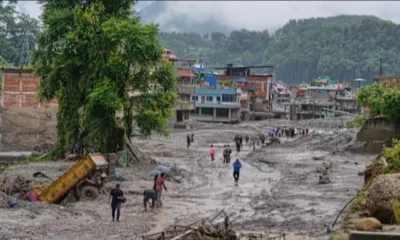
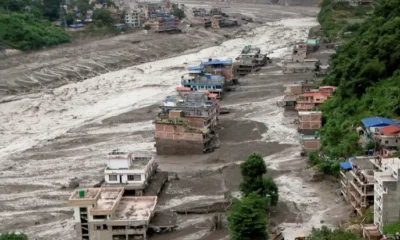
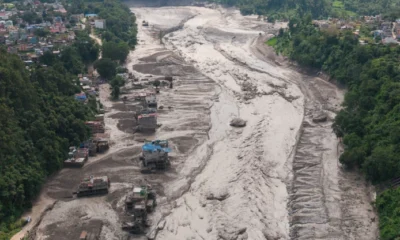
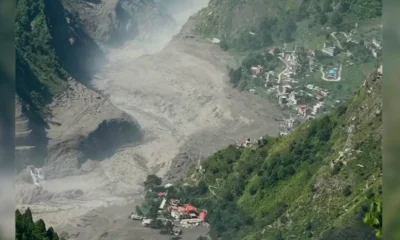
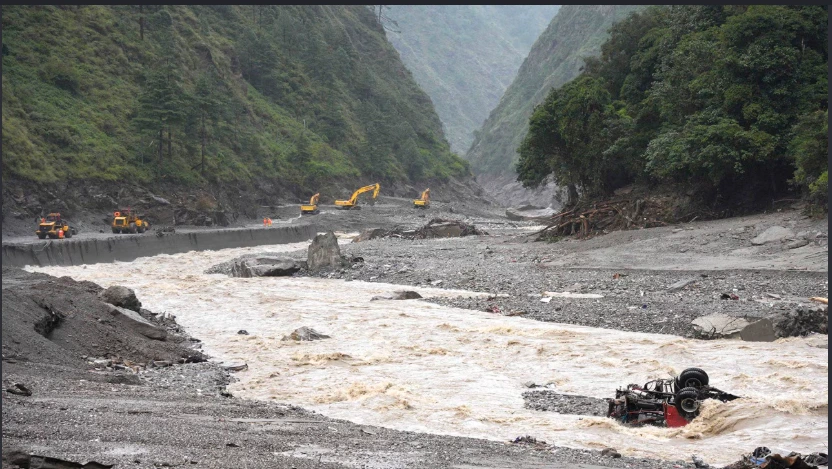
A massive flash flood that devastated Nepal’s Trishuli river valley earlier this week may have involved a water mass moving at nearly 300 kmph, according to a Nepal-based Himalayan glacier and mountain researcher.

The assessment comes as thousands of people remain unaccounted for following the disaster, with rescue efforts continuing and concerns mounting over the possibility of another flood.

Glacial collapse likely triggered the massive flood

Mountaineer Sanjit Singh Bal said the event appeared to have been caused by a glacial event. He said a glacier roughly a kilometre in size may have broken away at an altitude of around 5,000 metres before travelling downhill.

As it moved through the steep terrain, the mass may have encountered water bodies and accumulated large amounts of debris. The terrain then channelised the energy as the mass travelled towards the Tibet border crossing.

Dhananjay Regmi, a Nepal Himalayan glacier and mountain researcher, told that the flow of the water mass was around 300 kmph, higher than earlier estimates.

Three lakes raise fresh flood concerns

Experts said three lakes have now formed in the area, creating a potential risk of another flood.

According to Regmi, any fresh rockfall could have a cascading effect across all three lakes. He said controlled release of water would be the only way to avoid such a development, although there was no information that such a measure was being carried out at the time of the report.

For now, the suggested course of action is to move people to higher ground and wait.

Satellite images show glacier collapse

Ashutosh Mishra, managing partner of Snowscapes, said there was initially a suspicion that a breach in one of the three lakes had caused the disaster.

However, subsequent data indicated that the lakes were not the actual cause. Satellite images showed that an area of up to two square kilometres on the northern glacier of Langtang Lerung, a peak rising to around 7,000 metres, had collapsed.

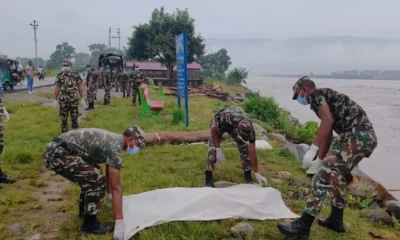
The disaster has left families searching for missing relatives in the affected areas. In Battar, people were seen desperately looking for information about their loved ones as the scale of destruction in the Trishuli valley became clearer.

For those still searching, the immediate priority remains finding and saving survivors, irrespective of whether they are family members or strangers.

India News

India became Vishwaguru through service, not power, says Mohan Bhagwat

RSS chief Mohan Bhagwat said India became a Vishwaguru through selfless service and its tradition of respecting diversity, rather than through power.

Published

on

Mohan Bhagwat

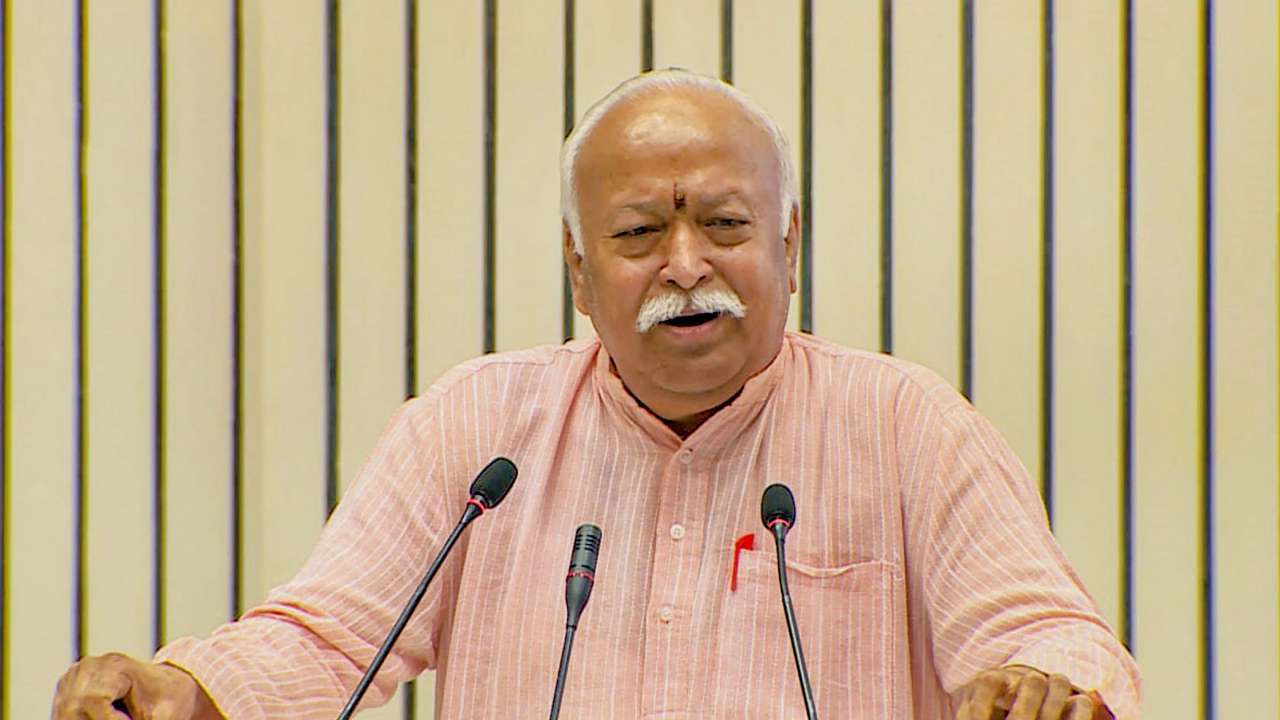
RSS chief Mohan Bhagwat said India’s standing in the world was built through its tradition of selfless service and humanitarian assistance, rather than through military or imperial power.

Addressing the “Hindu Vishwa Bandhu – Embrace the World in Friendship” gathering in Toronto, Bhagwat said India became a “Vishwaguru” (world teacher) through its character and service to humanity, rather than as a “Mahashakti” (superpower).

Bhagwat recalls India’s humanitarian tradition

Bhagwat cited historical examples of India providing refuge to people fleeing persecution and war. He recalled how the Maharaja of Jamnagar provided shelter and protection to Polish refugees during the Second World War until they could return safely.

He also referred to more recent humanitarian operations, saying Indian military transport aircraft had rescued citizens of seven other countries along with Indians during evacuations from a conflict zone in the Middle East.

The RSS chief said India has historically provided peaceful refuge to people belonging to different faiths, including Muslims, Christians, Jews and Parsis.

‘India never conquered any country’

Bhagwat contrasted India’s civilisational outreach with imperial expansion, saying Indian traditions focused on sharing knowledge rather than conquering territories.

He said Indian travellers historically reached different parts of the world but did not conquer countries. Instead, he said, they shared knowledge in areas including astronomy, Ayurveda and civilisational values.

Calling this tradition the “DNA of Bharat”, Bhagwat said India has continued to help people in distress, including in situations where assistance was not specifically requested.

Bhagwat stresses diversity and unity

Bhagwat also spoke about his understanding of the word “Hindu”, saying it cannot be defined by a particular language, form of worship or lifestyle. He said Hindus “respect all” and “accept all”.

He emphasised the need to respect and embrace diversity, describing it as an expression of an underlying unity.

According to Bhagwat, India’s ancient ethos recognises diversity as natural while treating unity as the fundamental reality.

He further invoked the philosophy of “Vasudhaiva Kutumbakam”, or the belief that the entire world is one family.

Bhagwat said that despite differences in appearance and other forms of diversity, people are essentially one and therefore serving others is a duty.

Continue Reading

India News

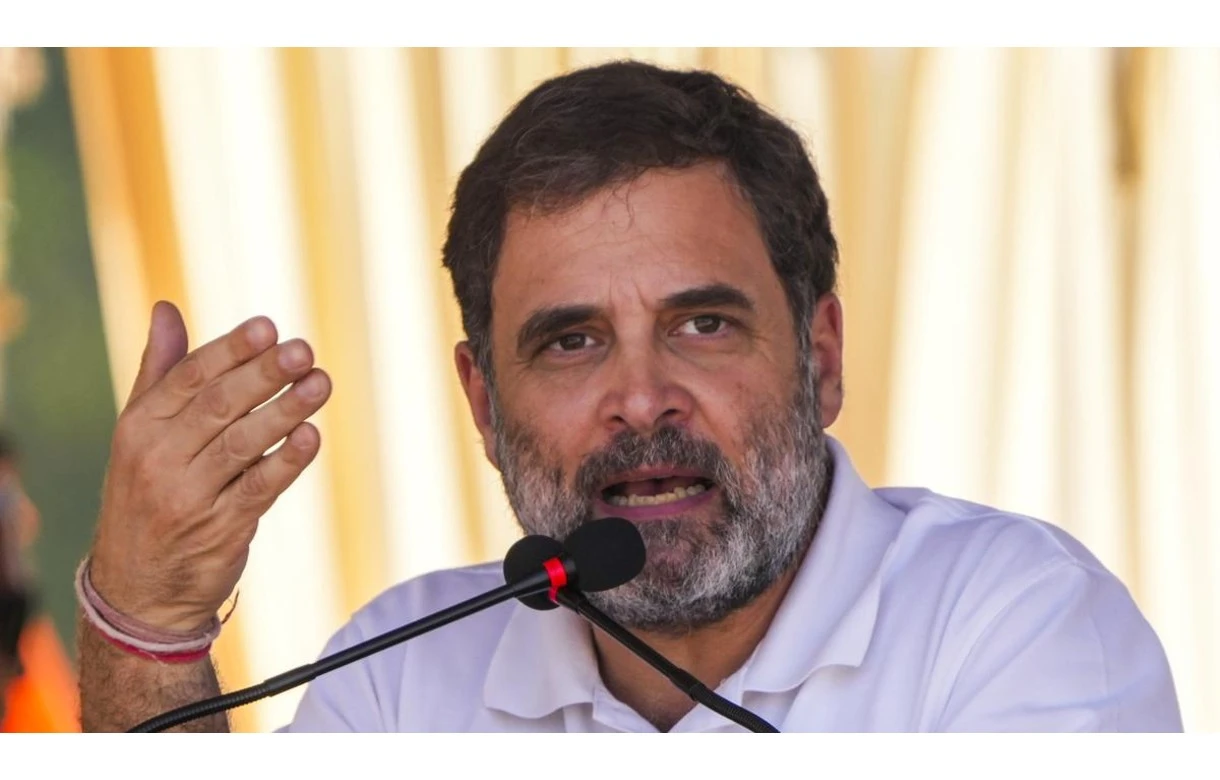
FIR against Rahul Gandhi over remarks on Haldwani purification row

Rahul Gandhi has been booked in Haldwani over alleged remarks concerning a purification ritual held at a venue where Mallikarjun Kharge addressed a rally.
Published

on

A First Information Report has been registered against Congress leader Rahul Gandhi in Uttarakhand’s Haldwani over his alleged remarks concerning a purification ritual carried out at a public venue following a Congress event.

The case relates to a controversy surrounding a religious ritual at Haldwani’s Ramlila Maidan, where Congress president Mallikarjun Kharge had addressed a rally. The incident has triggered a political dispute between the Congress and the BJP over allegations of caste discrimination.

What is the case against Rahul Gandhi?

According to the complaint, Rahul Gandhi’s remarks about the incident allegedly hurt the sentiments of members of the Valmiki community.

The complainant has alleged that Gandhi described the cleaning and havan ceremony as an act of untouchability and an atrocity against the Scheduled Caste community without verifying the circumstances surrounding the ritual.

The FIR invokes provisions of the Scheduled Castes and Scheduled Tribes (Prevention of Atrocities) Act, 1989, along with Sections 196 and 299 of the Bharatiya Nyaya Sanhita, 2023.

Congress-BJP clash over purification ritual

The controversy began after a “shuddhikaran” or purification havan was conducted at Haldwani’s Ramlila Maidan after Kharge addressed a Congress rally there.

Congress leaders have alleged that the ritual reflected caste-based discrimination because Kharge is a Dalit leader. Rahul Gandhi had demanded that Prime Minister Narendra Modi ensure an FIR against those responsible under the SC/ST Act.

The BJP has rejected the allegations and said the ritual was not linked to Kharge’s caste. Organisers have also said the havan was conducted to cleanse the venue of general filth rather than because of the identity of the Congress leader who had addressed the rally.

The FIR against Gandhi has now added another dimension to the ongoing political dispute.

Continue Reading

India News

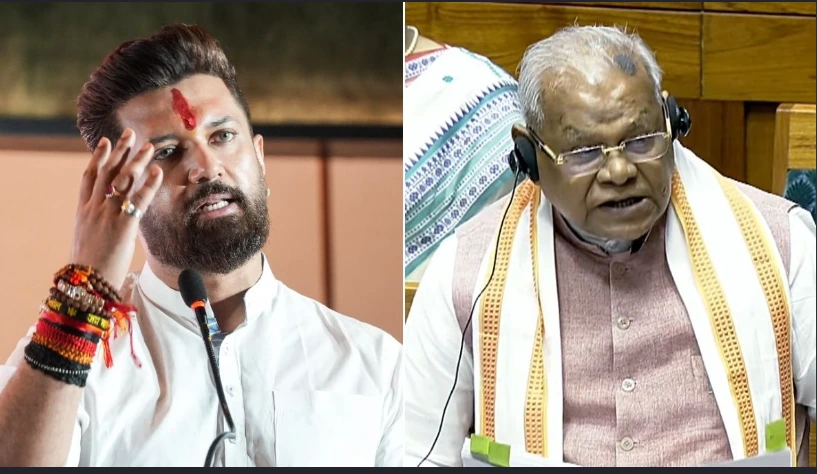
Chirag Paswan, Jitan Manjhi clash over Dalit quota, seek resignations

Union ministers Chirag Paswan and Jitan Ram Manjhi clash over a proposed Dalit sub-quota, with both sides demanding resignations.
Published

on

Union ministers Chirag Paswan and Jitan Ram Manjhi have clashed over the demand for a separate sub-category within the Scheduled Caste quota, with the disagreement escalating into calls for each other’s resignation.

The dispute began after Manjhi and his son, Bihar minister Santosh Kumar Suman, backed the idea of a sub-quota aimed at the most deprived sections among Dalits. Paswan, who heads the Lok Janshakti Party (Ram Vilas), opposed the proposal, arguing that it could create divisions within the community.

Chirag Paswan opposes sub-quota

Responding to questions about Manjhi and Suman’s position, Paswan said a separate sub-category would create a division within the Dalit community.

He also linked the issue to the debate over the creamy layer and said those supporting the concept should give up their respective posts.

Paswan’s position is also consistent with the stand taken by his late father, Ram Vilas Paswan, who had opposed the creation of a separate “Mahadalit” category in Bihar during Nitish Kumar’s tenure as chief minister.

Jitan Manjhi demands Paswan’s resignation

Manjhi rejected Paswan’s criticism and said it was Chirag Paswan who should resign.

The former Bihar chief minister argued that some Dalit communities are more vulnerable than others and therefore require targeted welfare measures through a separate sub-category.

Manjhi also questioned the relevance of the creamy-layer issue to the demand for a sub-quota.

Santosh Suman backs father

Santosh Kumar Suman also entered the dispute through posts on X. Without naming Paswan directly, he referred to him as his “younger brother” and said he would resign alongside Paswan if the latter took the lead.

Suman maintained that his position was neither against reservations nor in favour of introducing a creamy layer. He argued that a quota within the existing quota system was different from the creamy-layer concept.

He also cited communities including Musahar, Bhuia, Nat and Dom, saying they continue to face discrimination even within the Scheduled Castes.

JD(U) seeks to end quota controversy

The Janata Dal (United), the second-largest NDA constituent in Bihar after the BJP, sought to defuse the dispute.

JD(U) legislature party leader and state minister Shrawon Kumar said reservations were introduced through the Constitution and that there should be no dispute over quotas.

The disagreement between the two Union ministers comes amid a wider political debate over the distribution of reservation benefits among different Dalit communities.

Continue Reading

Trending

© Copyright 2022 APNLIVE.com