English हिन्दी
Connect with us

Latest world news

Nepal to bury unidentified flood victims, DNA tests to help identify them later

Nepal will bury unidentified flood victims after collecting DNA samples, assigning identification numbers and recording burial locations.

Published

on

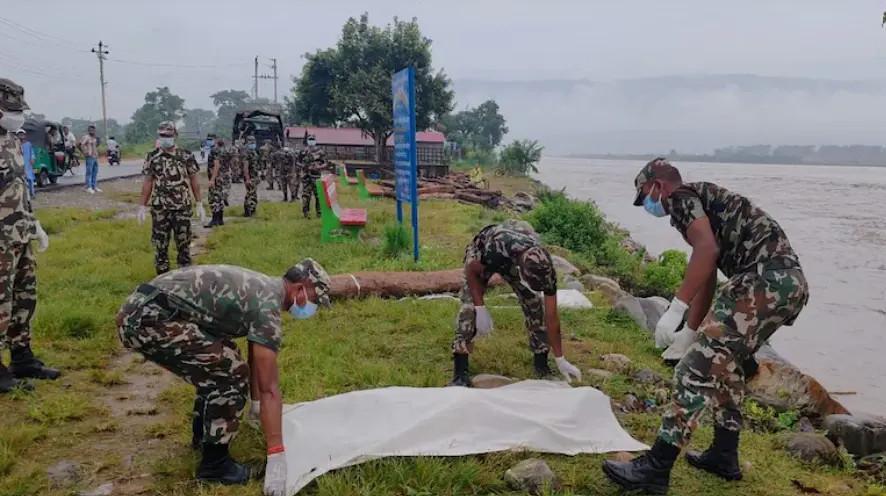
Nepal will begin burying unidentified and unclaimed bodies recovered from this week’s devastating flash floods, as authorities struggle with the deteriorating condition of the remains and limited facilities to store them.

At least 675 bodies have been recovered so far. Chitwan district, which borders India, has reported the highest number, with 233 bodies recovered.

Authorities decided to proceed with burials after health experts warned that the decomposition of bodies kept in temporary facilities could increase the risk of infection. In Chitwan, officials had been using a house as a temporary cooling centre, but the facility eventually ran out of space.

DNA samples collected before burial

Nepalese authorities are collecting DNA samples from unidentified bodies before they are buried. Each body is also being assigned a unique identification or reference number, along with details of its location.

The system is intended to allow relatives to identify and recover the remains later if a DNA match is established.

More than 100 bodies had undergone DNA profiling by Saturday afternoon and were ready for burial.

Burial sites designed for future exhumation

The burial pits are being dug about 1.5 metres deep, with a 40-centimetre gap between individual bodies. This arrangement is intended to make it possible to retrieve a specific body if its identity is established later.

The bodies are being placed in bags marked with their identification numbers. Concrete platforms and signboards will also be installed at burial sites to display the corresponding numbers.

Authorities also plan to document the burial process through photographs and video and geo-tag the burial locations.

How families can identify missing relatives

People searching for missing family members will be required to provide DNA samples at designated hospitals across Nepal.

Once the DNA results are available, health authorities will compare them with samples collected from the unidentified bodies. If a match is found, the corresponding identification number will be used to locate the burial site.

The police will then use their records to determine where the body was buried. The remains can subsequently be exhumed and handed over to the family.

Nepal Police has also uploaded details of unidentified and unclaimed bodies online to help with the identification process.

According to officials, 2,426 people, including hundreds of foreigners, remain missing in Nepal.

Latest world news

Nepal Flash Floods: Death toll rises to 676, nearly 3,000 missing

Nepal’s flash floods have killed 676 people and left nearly 3,000 missing as rescue teams continue operations in affected areas.

Published

on

Nepal’s death toll from the devastating flash floods along its border with Tibet has risen to 676, while nearly 3,000 people remain unaccounted for, as rescue operations continue for a fourth day.

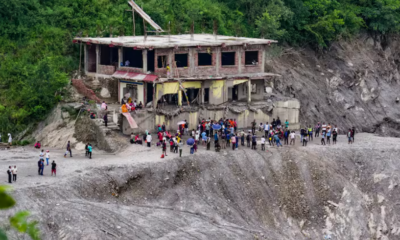
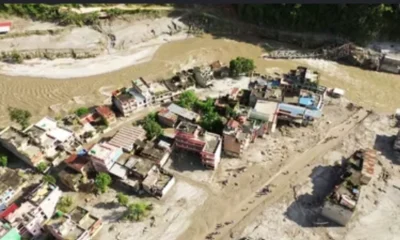
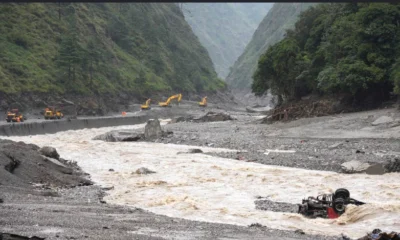
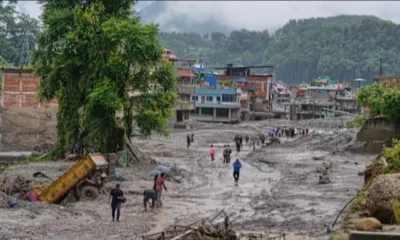
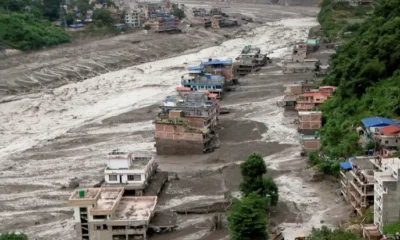
The disaster struck on Wednesday after a glacier collapse triggered a massive surge of water and debris into the Bhote Koshi River in Rasuwa district, near the Tibet border. The flood swept through settlements and damaged roads, bridges and other infrastructure across the affected areas.

Rescue Operations Intensify

Nepal has intensified search and rescue efforts in the worst-hit areas, including operations to reach people trapped inside tunnels at hydropower projects.

An Indian rescue team has reached Trishuli and carried out an aerial reconnaissance of the Chilime and Langtang areas to assess the situation and plan rescue operations.

The Nepal government is also working to clear roads blocked by flood debris and landslides to restore access to affected communities.

The difficult terrain and continuing risk of flooding have complicated rescue efforts. Nepal has sought specialised international assistance for operations requiring technical expertise.

Hundreds Of Indians Unaccounted For

India has been closely coordinating efforts to trace its citizens affected by the disaster.

The Ministry of External Affairs said 320 Indian nationals remained missing, while around 400 others were stranded on the Chinese side following the floods. At least 153 Indians stranded in China had safely crossed into Nepal, while 63 Indian nationals working at the Trishuli-One hydropower project were rescued.

The MEA also said around 100 people of Indian origin holding other nationalities remained uncontactable. Many may have been travelling for the Kailash Mansarovar Yatra.

India has sent relief supplies, medical personnel and a specialised team to assist Nepal with rescue operations.

Reconstruction Bill Could Run Into Billions

The scale of destruction has raised concerns over the cost of rebuilding infrastructure in the affected areas.

Nepal’s Foreign Minister Shisir Khanal said the reconstruction and rehabilitation effort could cost “billions of dollars”.

The floods destroyed or severely damaged homes, roads, bridges and hydropower infrastructure, leaving several areas difficult to access.

As search teams continue to look for survivors and missing people, authorities are also working to provide relief to communities devastated by the floods.

Continue Reading

Latest world news

Lake Ontario name to stay, Mark Carney rejects Trump’s Lake America move

Canadian PM Mark Carney has rejected Trump’s move to rename Lake Ontario as Lake America, saying Canadians will continue using its historic name.

Published

on

Donald Trump

Canadian Prime Minister Mark Carney has rejected US President Donald Trump’s decision to rename Lake Ontario as “Lake America”, saying Canadians will continue to use the lake’s historic name.

Trump signed an executive order on Thursday changing the name for US federal usage. However, the order does not determine what Canada, international organisations or other authorities call the lake.

Carney said the name Lake Ontario predates both Canada and the United States as modern nations. He stressed that Canadians would continue to recognise the lake by its existing name.

“Canadians also know that naming reality means calling it Lake Ontario — then, now and always,” Carney said in a social media post.

Why Trump renamed Lake Ontario

Trump announced that the lake would be renamed “Lake America” during remarks at the White House. The US president said the change would take effect immediately.

The move comes amid strained relations between Washington and Ottawa, including an ongoing dispute over trade and tariffs.

Lake Ontario is one of North America’s five Great Lakes and is shared by Canada and the United States. About 52 per cent of its surface area lies in Canada, while the remainder is in New York state.

Carney highlights Lake Ontario’s history

Carney also pointed to the Indigenous origins of the name Lake Ontario. The name is derived from the Wendat language and has been used for more than 400 years, predating the establishment of both countries in their present forms.

New York Governor Kathy Hochul also indicated that the state would continue referring to the body of water as Lake Ontario, highlighting that Trump’s order is limited to US federal usage.

The dispute over the name adds another symbolic point of friction to already tense US-Canada relations.

Continue Reading

Latest world news

105 Indians among 400 travellers missing in Nepal flash floods, 46 dead

At least 46 people have died and 384 travellers, including 105 Indians, are missing after flash floods hit northern Nepal.

Published

on

At least 46 people have died after a massive flash flood in Nepal’s Bhote Koshi River swept through parts of the country’s northern districts.

The flooding affected Nuwakot and Dhading districts, with floodwaters coming from the Tibetan side of the border. Several villages were reportedly washed away, while roads and other infrastructure suffered extensive damage.

At least 105 Indians are among 384 travellers reported missing from the affected area. The missing travellers include people who were travelling towards Kailash Mansarovar in Tibet with different travel agencies.

384 travellers reported missing

According to the Nepal Tourism Board, 384 travellers are missing, including 291 foreigners and 93 Nepali nationals.

Of the foreign nationals reported missing, 105 are Indians. The travellers were on their way to the Kailash Mansarovar Yatra when the flash flood struck.

The disaster has also affected security personnel. At least 26 Nepal Police personnel remain missing in Rasuwa district, while the Armed Police Force has reported seven missing personnel.

The Nepal Army has deployed helicopters and disaster response personnel to the affected areas. Authorities are also collecting information about the damage caused by the floods.

Six hydropower facilities damaged

The floods have also damaged major power infrastructure in Nepal.

The Nepal Electricity Authority said six of its major hydropower and transmission facilities were damaged. These include Rasuwagadhi, Chilime, Trishuli 3A, Trishuli 3B Hub 220 kV Substation, Trishuli Hydropower Station and Devighat Hydropower Station.

The authority said the damage to production, transmission and distribution facilities has disrupted electricity supplies.

Several highways in Nepal have also been closed following the flooding.

Nepal PM convenes emergency meeting

Prime Minister Balendra Shah has convened an emergency meeting of the National Disaster Risk Reduction and Management Authority to review the situation.

Mr Shah said work had begun to take necessary measures in coordination with medical teams, scouts and the Red Cross.

Videos shared by Nepal Police and others showed torrents of muddy water moving through mountain valleys in areas bordering Tibet.

Authorities have warned people living close to rivers to move to safer locations as rescue and assessment operations continue.

Monsoon rains between June and September regularly cause floods and landslides across South Asia. Scientists have also linked climate change to an increase in the frequency and intensity of extreme weather events in the region.

Continue Reading

Trending

© Copyright 2022 APNLIVE.com