English हिन्दी
Connect with us

Latest Politics News

Amit Shah gets home, Rajnath Singh defence ministry… Know more about Modi cabinet 2019

Published

on

Amit Shah gets home, Rajnath Singh defence ministry… Know more about Modi cabinet 2019

[vc_row][vc_column][vc_column_text]Narendra  Modi sworn-in as Prime Minister for the second term on May 30, soon after his oath taking ceremony, people were eagerly waiting to know which minister gets what.

Giving a relief to the political enthusiasts, the portfolios of the council of ministers in the second term of Modi government is out.

In Narendra Modi cabinet 2019, former BJP President Amit Shah gets home ministry, Rajnath Singh defense Ministry, Nirmala Sitharaman became first woman to get Finance Ministry.

Cabinet ministers 2019

Narendra Modi: Prime Minister, Ministry of Personnel, Public Grievances and Pensions; Department of Atomic Energy; Department of Space; all important policy matters; and all other portfolios not allocated to any Minister
Rajnath Singh: Minister of Defence
Amit Shah: Minister of Home Affairs
Nitin Gadkari: Minister of Road Transport and Highways; and Minister of Micro, Small and Medium Enterprises
DV Sadananda Gowda: Minister of Chemical and Fertilisers
Nirmala Sitharaman: Minister of Finance; and Minister of Corporate Affairs
Ramvilas Paswan: Minister of Consumer Affairs, Food and Public Distribution
Narendra Singh Tomar: Minister of Agriculture and Farmers Welfare; Minister of Rural Development; and Minister of Panchayati Raj
Ravi Shankar Prasad: Minister of Law and Justice; Minister of Communications; and Minister of Electronics and Information Technology
Harsimrat Kaur Badal: Minister of Food Processing Industries
Thaawar Chand Gehlot: Minister of Social Justice and Empowerment
Dr. S Jaishankar: Minister of External Affairs
Ramesh Pokhriyal ‘Nishank: Minister of Human Resource Development
Arjun Munda: Minister of Tribal Affairs
Smriti Zubin Irani: Minister of Women and Child Development; Minister of Textiles
Dr. Harsh Vardhan: Minister of Health and Family Welfare;’ Minister of Science and Technology; and Minister of Earth Sciences
Prakash Javadekar: Minister of Environment, Forest and Climate Change; and Minister of Information and Broadcasting
Piyush Goyal: Minister of Railways; and Minister of Commerce and Industry
Dharmendra Pradhan: Minister of Petroleum and Natural Gas; and Minister of Steel
Mukhtar Abbas Naqvi: Minister of Minority Affairs
Pralhad Joshi: Minister of Parliamentary Affairs; Minister of Coal; and Minister of MInes
Dr. Mahendra Nath Pandey: Minister of Skill Development and Entrepreneurship
Arvind Sawant: Minister of Heavy Industries and Public Enterprise
Giriraj Singh: Minister of Animal Husbandry, Dairying and Fisheries
Gajendra Singh Shekhawat: Minister of Jal Shakti

Also Read: One-third new faces, more than half of ministers in previous govt dropped: key takeaways

Ministers of State (Independent Charge)

Santosh Kumar Gangwar: MoS (independent charge) of the Ministry of Labour and Employment.
Rao Inderjit Singh: MoS (independent charge) of the Ministry of Statistics and Programme Implementation, and MoS (independent charge) of the Ministry of Planning.
Shripad Yesso Naik: MoS (independent charge) of the Ministry of Ayurveda, Yoga and Naturopathy, Unani, Siddha and Homoeopathy (AYUSH); and MoS in the Ministry of Defence.
Dr. Jitendra Singh: MoS (independent charge) of the Ministry of Development of North Eastern Region, MoS in the Prime Minister’s Office; MoS in the Ministry of Personnel, Public Grievances and Pensions; MoS in the Department of Atomic Energy; and MoS in the Department of Space.
Kiren Rijiju:
 MoS (Independent Charge) of the Ministry of Youth Affairs and Sports; and MoS in the Ministry of Minority Affairs.
Prahalad Singh Patel: Minister of State (independent charge) of the Ministry of Culture, and MoS (Independent Charge) of the Ministry of Tourism.
Raj Kumar Singh: MoS (independent charge) of the Ministry of Power; MoS (independent charge) of the Ministry of New and Renewable Energy; and MoS in the Ministry of Skill Development and Entrepreneurship.
Hardeep Singh Puri: MoS (independent charge) of the Ministry of Housing and Urban Affairs; MoS (independent charge) of the Ministry of Civil Aviation; and MoS in the Ministry of Commerce and Industry.
Mansukh L Mandaviya: MoS (independent charge) of the Ministry of Shipping and MoS in the Ministry of Chemicals and Fertilisers.

Ministers of State

Faggan Singh Kulaste: MoS in the Ministry of Steel.
Ashwini Kumar Choubey: MoS in the Ministry of Health and Family Welfare.
Arjun Ram Meghwal: MoS in the Ministry of Parliamentary Affairs, and MoS in the Ministry of Heavy Industries and Public Enterprises.
VK Singh: MoS in the Ministry of Road Transport and Highways.
Krishan Pal: MoS in the Ministry of Social Justice and Empowerment.
Danve Raosaheb Dadarao: MoS in the Ministry of Consumer Affairs, Food and Public Distribution.
G Kishan Reddy: MoS in the Ministry of Home Affairs.
Parshottam Rupala: MoS in the Ministry of Agriculture and Farmers Welfare.
Ramdas Athawale: MoS in the Ministry of Social Justice and Empowerment.
Sadhvi Niranjan Jyoti: MoS in the Ministry of Rural Development.
Babul Supriyo: MoS in the Ministry of Environment, Forest and Climate Change.
Sanjeev Kumar Balyan: MoS in the Ministry of Animal Husbandry, Dairying and Fisheries.
Dhotre Sanjay Shamrao: MoS in the Ministry of Human Resource Development; MoS in the Ministry of Communications; and MoS in the Ministry of Electronics and Information Technology.
Anurag Singh Thakur: MoS in the Ministry of Finance; and MoS in the Ministry of Corporate Affairs.

Also Read: New Education Policy, in first 100 days plan,submitted to HRD Minister Ramesh Pokhriyal

Angadi Suresh Channabasappa: MoS in the Ministry of Railways.
Nityanand Rai: MoS in the Ministry of Home Affairs.
Rattan Lal Kataria: MoS in the Ministry of Jal Shakti; and MoS in the Ministry of Social Justice and Empowerment.
V Muraleedharan: MoS in the Ministry of External Affairs; and MoS in the Ministry of Parliamentary Affairs.
Renuka Singh Saruta: MoS in the Ministry of Tribal Affairs.
Som Parkash: MoS in the Ministry of Commerce and Industry.
Rameswar Teli: MoS in the Ministry of Food Processing Industries.
Pratap Chandra Sarangi: MoS in the Ministry of Micro, Small and Medium Enterprises; and MoS in the Ministry of Animal Husbandry, Dairying and Fisheries.
Kailash Choudhary: MoS in the Ministry of Agriculture and Farmers Welfare.
Debasree Chaudhuri: MoS in the Ministry of Women and Child Development.[/vc_column_text][/vc_column][/vc_row]

India News

PM Modi assures no discrimination in women’s quota, delimitation debate intensifies in Parliament

PM Narendra Modi has assured that women’s reservation will be implemented without discrimination, amid a heated debate over delimitation in Parliament.

Published

on

PM modi

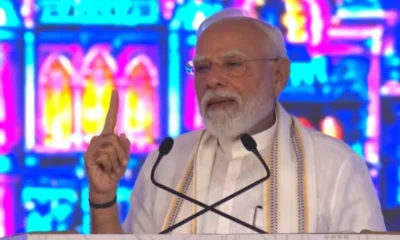
Prime Minister Narendra Modi has assured that there will be no discrimination in the implementation of women’s reservation, as Parliament witnessed a sharp debate over the proposed linkage between the quota and delimitation exercise.

During the ongoing special session, the government reiterated its commitment to ensuring fair representation while addressing concerns raised by opposition parties regarding the timing and structure of the legislation.

The proposed framework aims to reserve 33 percent of seats for women in the Lok Sabha and state assemblies. However, its implementation is tied to a fresh delimitation exercise, which is expected after the next census.

Opposition questions timing and intent

Opposition leaders have raised concerns that linking the women’s quota to delimitation could delay its implementation. They argue that the process of redrawing constituencies may push the actual rollout further into the future.

The issue has triggered a broader political confrontation, with multiple parties questioning whether the move could alter representation across states.

Some critics have also alleged that the delimitation exercise could disproportionately benefit certain regions based on population, a charge the government has rejected.

Government reiterates commitment to fair implementation

Responding to these concerns, the Centre has maintained that the reforms are necessary to ensure accurate and updated representation based on population data.

Leaders from the ruling side have repeatedly emphasized that the process will be carried out transparently and without bias. The assurance that there will be “no discrimination” is aimed at addressing fears among states and opposition parties.

The debate marks a key moment in Parliament, with both sides engaging in intense exchanges over one of the most significant electoral reforms in recent years.

Continue Reading

India News

Give all tickets to Muslim women, Amit Shah says, attacking Akhilesh Yadav on sub-quota demand

A sharp exchange between Amit Shah and Akhilesh Yadav in Parliament over sub-quota for Muslim women highlights key divisions on women’s reservation implementation.

Published

on

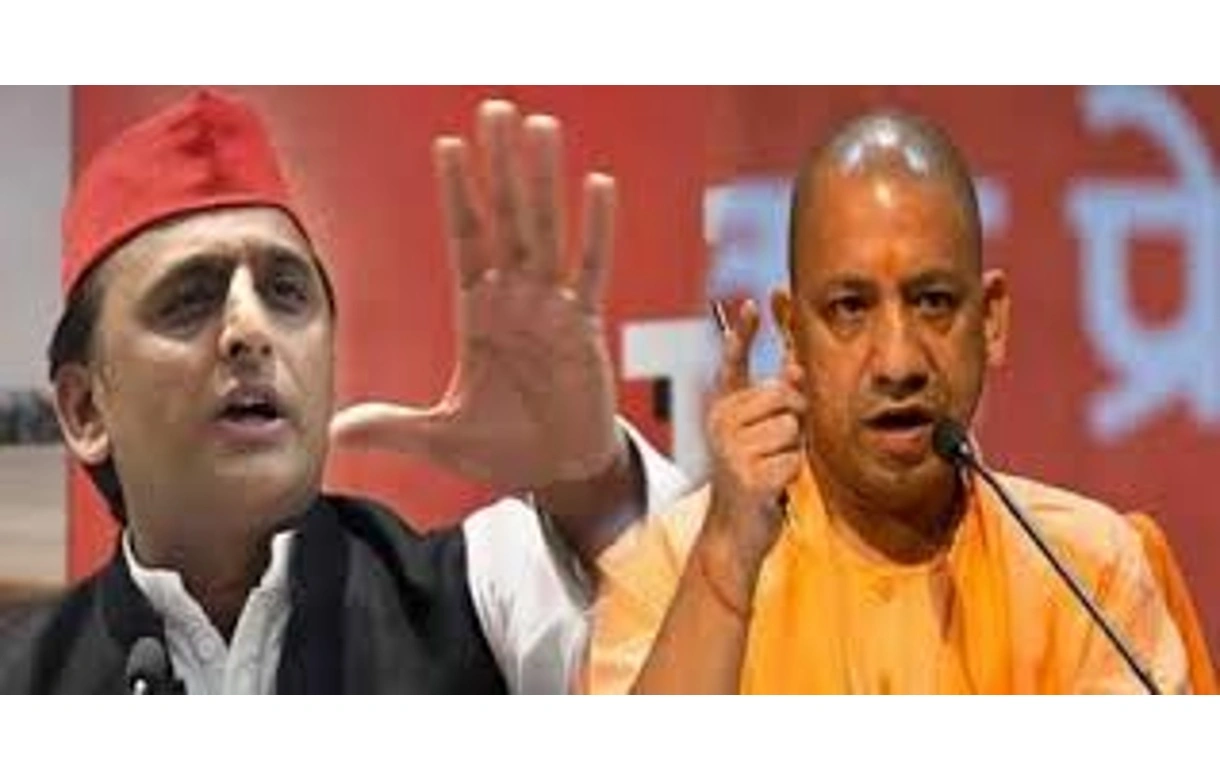
A heated exchange broke out in Parliament during discussions on the women’s reservation framework, with Union Home Minister Amit Shah and Samajwadi Party chief Akhilesh Yadav locking horns over the demand for a sub-quota for Muslim women.

The debate unfolded as the government pushed forward key legislative measures to implement 33% reservation for women in the Lok Sabha and state assemblies.

Akhilesh Yadav argued that the proposed reservation must ensure representation for women from marginalised communities, including Other Backward Classes (OBCs) and Muslim women. He said that without such provisions, large sections could remain excluded from political participation.

He also questioned the timing of the bill, alleging that the Centre was avoiding a caste census. According to him, a census would lead to renewed demands for caste-based reservations, which the government is reluctant to address.

Government rejects religion-based quota

Responding to the demand, Amit Shah made it clear that reservation based on religion is not permitted under the Constitution.

He stated that any proposal to provide quota to Muslims on religious grounds would be unconstitutional, firmly rejecting the idea of a separate sub-quota for Muslim women within the broader reservation framework.

The government has maintained that the existing framework already includes provisions for Scheduled Castes (SC) and Scheduled Tribes (ST) women within the overall reservation structure.

Wider political divide over implementation

The issue of sub-categorisation within the women’s quota has emerged as a major flashpoint, even as most opposition parties broadly support the idea of women’s reservation.

Samajwadi Party leaders reiterated that their support for the bill depends on inclusion of OBC and minority women, while the government continues to defend its constitutional position.

The debate is part of a broader discussion during the special Parliament session, where multiple bills linked to delimitation and implementation of the women’s quota are being taken up.

Continue Reading

India News

Raghav Chadha’s security withdrawn by Punjab amid AAP rift, Centre steps in with cover

Punjab withdraws Raghav Chadha’s security amid party tensions, Centre offers fresh protection.

Published

on

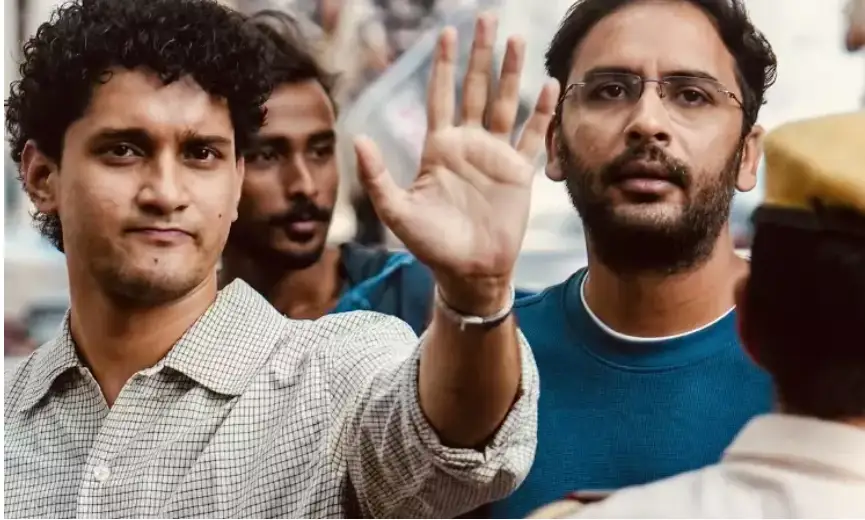
The Punjab government has withdrawn the Z+ category security cover provided to Raghav Chadha, amid an ongoing rift within the Aam Aadmi Party.

According to sources, the security personnel deployed by Punjab Police have been asked to report back, marking a significant development in the political dispute involving the Rajya Sabha MP.

The move comes shortly after Chadha was removed from his position as deputy leader of the party in the Rajya Sabha, signalling deepening differences between him and the party leadership.

Centre offers fresh security arrangement

Soon after the withdrawal, the Ministry of Home Affairs stepped in to provide security cover to Chadha.

Sources indicate that he will now receive Z-category security in Delhi and Punjab, while a Y-category cover may be provided in other parts of the country.

This shift ensures continued protection for the MP despite the withdrawal of state-provided security.

Fallout linked to political disagreement

The development is part of a broader fallout between Chadha and his party. He was recently replaced as deputy leader in the Rajya Sabha, with the party reportedly expressing dissatisfaction over his political approach and conduct in Parliament.

Chadha, however, has denied the allegations, calling them baseless and asserting that his focus has been on raising public issues rather than engaging in political confrontation.

Growing divide within party ranks

Once considered a close associate of Arvind Kejriwal and a prominent face of the party, Chadha’s recent removal from key roles and the withdrawal of his security underline a widening internal divide.

He is among the few leaders in the party who have recently found themselves at odds with the leadership, indicating shifting dynamics within the organisation.

Continue Reading

Trending

© Copyright 2022 APNLIVE.com