
India News
Sushma Swaraj announces evacuation of Indians from South Sudan

[vc_row][vc_column][vc_column_text]Escalating violence in the African country evokes government response
By Abu Turab[/vc_column_text][vc_column_text]Government is planning to evacuate Indian nationals from South Sudan because of escalating violence between the anti- and pro-government forces in that country. There are some 450 Indians engaged in business or in the service sector.
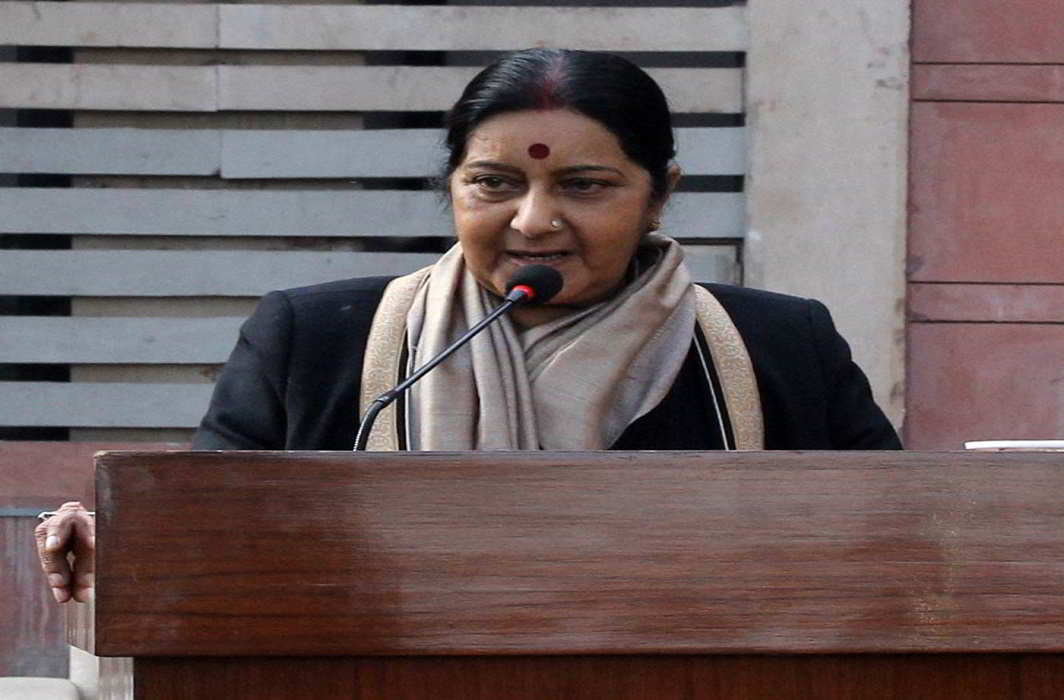
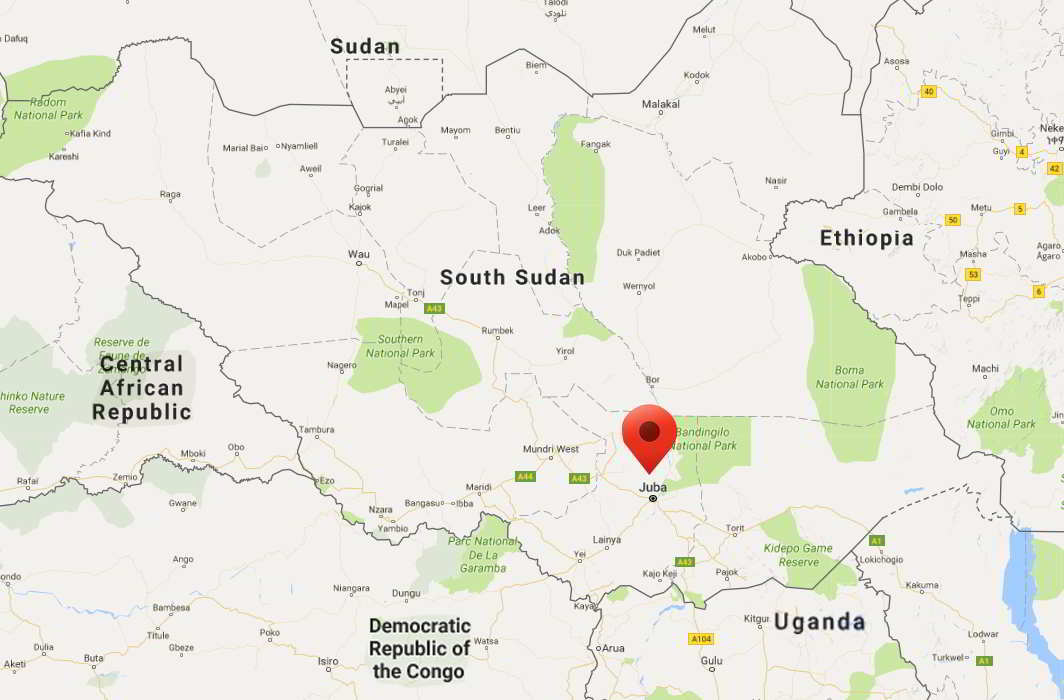
Minister of External Affairs Sushma Swaraj, in one of her tweets on Saturday, said “I am aware of the developments in South Sudan. We are planning evacuation of Indian nationals.” She has asked Indians to register with the Indian Embassy in Juba, the capital of that country.
According to PTI, there are a few hundred Indians in South Sudan. Some of them have set up business in Juba and others are working for various companies. A small number of Indians are also working with Christian missionaries.
In July last year, Minister of State for External Affairs General VK Singh led the evacuation of Indian nationals there. Two C-17 military transport aircraft were sent to Juba to evacuate over 300 stranded Indians.
 On August 3, last year, Minister of State for External Affairs M J Akbar while responding to a question in the Lok Sabha said that “no Indian national is stuck in South Sudan. There are around 700 Indians and their number keeps on fluctuating depending on their service conditions.”
He further elaborated that in order to alleviate the difficulties faced by Indians in South Sudan, the government had launched operation Sankat Mochan on 14-15 July, evacuating 153 Indians and two Nepalese citizens. He clarified that “no other Indian is desirous of being evacuated from South Sudan. Normalcy has returned to Juba, with operations of regular commercial flights.”
According to the information provided by the Ministry of External Affairs in July last year, there were around 600 Indians in South Sudan, of them 450 in Juba and 150 in other parts of the country. At that time, some 300 Indians got themselves registered for evacuation, but only 153 turned to board the aircraft.
South Sudan, the youngest African country, gained independence in 2011 after 98 per cent voted to leave Sudan. Soon after it became independent, civil war broke out between two ethnic groups, Dinka and Nuer, who have been exchanging gunfire almost every day. According to a UN report at least 50,000 have been killed and more than two million have been displaced, while nearly five million are facing severe food shortage.
Lead picture: External Affairs Minister Sushma Swaraj is planning evacuation of Indian nationals from Sudan. Photo: UNI[/vc_column_text][/vc_column][/vc_row]


India News
Supreme Court questions EC over missing records in Sringeri election dispute
The Supreme Court questioned the Election Commission over missing video footage of the 2023 counting in Karnataka’s Sringeri constituency. The case involves a revised result following a recount of postal ballots.

India News
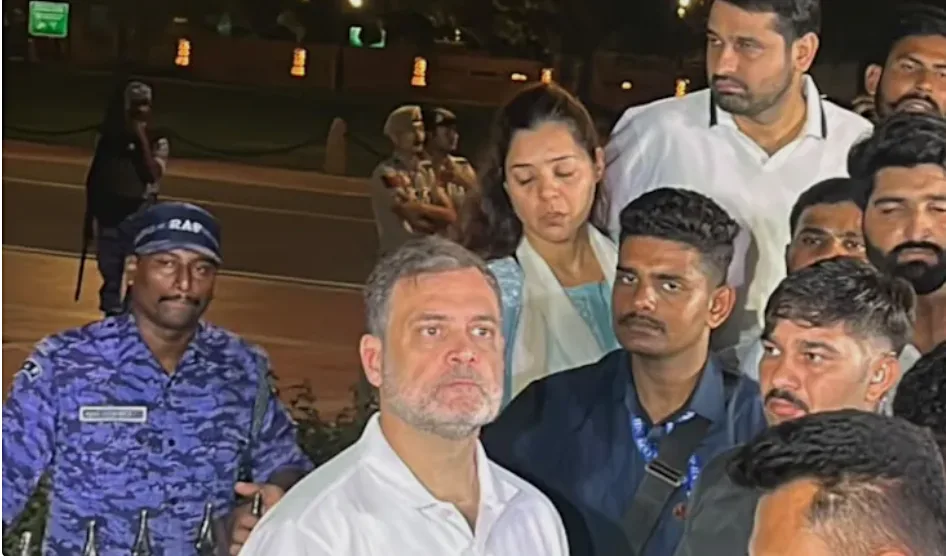
Rahul Gandhi joins India Gate protest by Ankita Bhandari’s parents
Rahul Gandhi joined the protest by Ankita Bhandari’s parents at India Gate in New Delhi on October 14. The demonstration has brought renewed attention to the 2022 murder case and the family’s concerns following Dushyant Gautam’s appointment as Sikkim Governor.
India News
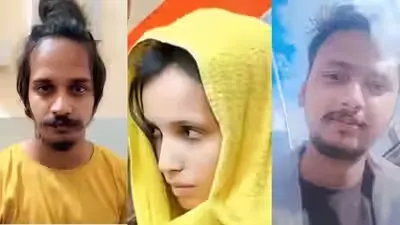
Meerut murder: Muskaan Rastogi and Sahil Shukla get death sentence
A Meerut court has sentenced Muskaan Rastogi and Sahil Shukla to death in the blue drum murder case involving the killing of merchant navy officer Saurabh Rajput in March 2025.

CJP leaders Saurav Das, Ashutosh Ranka, Ajinkya Shinde sent to 5-day judicial custody

PM Modi speaks to Mark Carney as India and Canada push to strengthen ties

S Jaishankar says India is a natural option for Russia amid Europe tensions

Meerut murder: Muskaan Rastogi and Sahil Shukla get death sentence

Rahul Gandhi joins India Gate protest by Ankita Bhandari’s parents

Supreme Court questions EC over missing records in Sringeri election dispute
Rahul Gandhi joins India Gate protest by Ankita Bhandari’s parents
Meerut murder: Muskaan Rastogi and Sahil Shukla get death sentence
PM Modi speaks to Mark Carney as India and Canada push to strengthen ties
S Jaishankar says India is a natural option for Russia amid Europe tensions

Afghan Men Try To Hang With The Jet Engine Of The Aircraft in Kabul- Afghanistan News – Kabul News
Trending Top 10 News: 10000 Crore Fine on Flipkart, Apple to Launch Unique Feature, Hdfc Bank Job Ad

Trending Top 10 News: Nokia 6310, Apple sales, Bachpan ka Pyar Video Kid, Dainik Bhaskar IT Raid

Trending Top 10 News: Canada bans Indian flights, Rain in Delhi NCR, AIMIM Twitter hacked, Raj Kundra case

Trending Top 10 News: Shein India, Apple New Service, Pocket Oxygen, Oppo Launched New Phone
-
 India News21 hours ago
CJP leaders Saurav Das, Ashutosh Ranka, Ajinkya Shinde sent to 5-day judicial custody
-
 India News20 hours ago
PM Modi speaks to Mark Carney as India and Canada push to strengthen ties
-
 Latest world news21 hours ago
S Jaishankar says India is a natural option for Russia amid Europe tensions
-
 India News10 hours ago
Meerut murder: Muskaan Rastogi and Sahil Shukla get death sentence
-
 India News9 hours ago
Rahul Gandhi joins India Gate protest by Ankita Bhandari’s parents
-
 India News9 hours ago
Supreme Court questions EC over missing records in Sringeri election dispute
