English हिन्दी
Connect with us

India News

Anti-CAA protests: Delhi cop killed in violence, situation tense in northeast Delhi

One Delhi Police head constable died and one DCP injured during clashes between two groups in Delhi’s Gokulpuri. After the situation at Maujpur, where pro and anti-CAA protesters clashed, went out of control, Section 144 was imposed at ten locations in North-east Delhi.

Published

on

delhi violence

A Delhi Police head constable was killed today and a senior officer injured after clashes erupted between anti-CAA protesters and those supporting the citizenship law in Delhi’s Gokulpuri. The situation in northeast Delhi’s Maujpur, Jaffarabad and surrounding areas also went out of control. The police have imposed Section 144 at 10 locations in the area.

Constable Ratan Lal was posted at the ACP Gokalpuri office in Delhi. He was hit by a stone. DCP Amit Sharma, who was injured during the clashes, has been hospitalised.

In videos of today’s violence, a man can be seen running towards an unarmed officer waving what appears to be a gun and firing in the air. In another video, people can be seen throwing stones at each other.

Sources at the Ministry of Home Affairs suggest that the violence was orchestrated most likely in the wake of US President Donald Trump’s visit to India. After visiting Ahmedabad and Agra, the Trumps, on a two-day visit, will arrive in Delhi by 7.30 this evening.

Delhi police commissioner Amulya Patnaik, who is present in the control room, is closely monitoring the situation, sources said.

Senior officials are on ground and sufficient forces have been deployed. The situation in Delhi is under control, Union Home Secy Ajay Bhalla said.

Delhi Chief Minister Arvind Kejriwal has also urged the Lieutenant Governor Anil Baijal and Home Minister Amit Shah to restore law and order and ensure peace in the city.

“I just spoke to the LG. He has assured that more police forces are being sent. Violence will not be tolerated by anyone. I request people to maintain peace. No solution will come out of violence,” Kejriwal said.

In an earlier tweet, Kejriwal said that nobody should be allowed to orchestrate flagrations.

The LG, too, has instructed the police to maintain the law and order in the national capital.

“We have spoken to both sides, now the situation is calm. We are continuously speaking to people, now the situation is under control,” said Ved Prakash Surya DCP (North-East).

Hundreds of protesters had gathered under the Jaffarabad Metro station on Saturday for a peaceful anti-CAA protest. The next morning was also peaceful till BJP leader Kapil Mishra, who has a history of making communal and incendiary comments, held a pro-CAA rally in the area. At the rally, he gave an “ultimatum” to the Delhi police to clear the roads in the area or else, he said, they would have to hit the streets.

“If it doesn’t happen then don’t come to us to make us understand. We will not listen to you. We will be peaceful till US President Donald Trump is here. After that, we won’t listen to even you if the roads are not cleared,” Mishra said.

Mishra had asked people on Twitter to gather at Maujpur at 3 pm on Sunday “to give an answer to Jaffrabad”.

In another tweet, the former AAP leader threatened that “there won’t be another Shaheen Bagh”.

Several people were injured in clashes that followed in Maujpur. Protesters torched at least two houses, a police bus and a fire engine in Jaffrabad and Maujpur.

A group of lawyers have filed a police complaint against Mishra for his provoking and inciteful tweets and remarks he made at the protest site.

As violence spiralled on the second day, the police have appealed for peace.

“It is appealed to the people of Delhi and particularly to the North East District to maintain peace and harmony and not to believe in any false rumours. It is also appealed to the media not to circulate any disturbing pictures which may further aggravate the situation. Delhi Police is making every effort to restore normalcy,” the police said.

Entry and exit gates of Jaffrabad, Maujpur-Babarpur, Gokulpuri, Johri Enclave and Shiv Vihar Metro stations are closed. Trains will terminate at the Welcome metro station.

India News

India-US trade deal first phase finalised, drafting underway

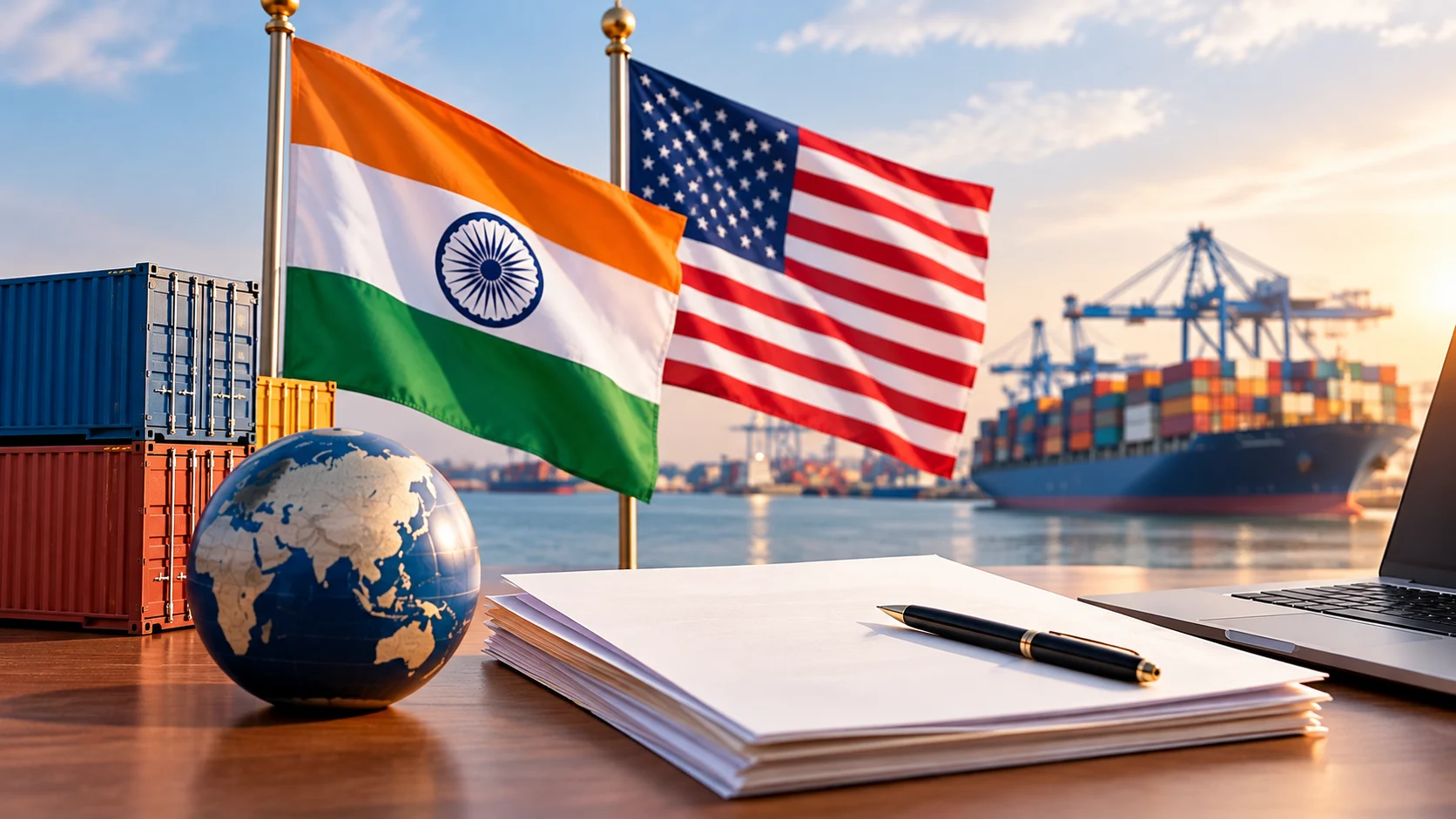
The first phase of the India-US trade agreement has been finalised and is undergoing legal drafting, Commerce Minister Piyush Goyal said. The deal is expected to be operationalised once India secures a competitive advantage over peer countries.

Published

on

The first phase of the proposed India-US trade agreement has been finalised and is undergoing legal drafting, Commerce and Industry Minister Piyush Goyal said on Thursday. However, the agreement is yet to be fully finalised and implemented, with India seeking a competitive advantage over other countries before putting it into operation.

Speaking at the SRCC Centenary Conclave in New Delhi, Goyal said the first tranche of the bilateral agreement had been finalised and was going through the legal drafting process. He expressed hope that the process would be completed soon.

The minister said implementation would follow once India secured a comparable or competitive advantage over its peer countries in the American market.

India seeks an advantage over competing exporters

India wants its exporters to receive favourable market access and tariff terms compared with competitors. Goyal’s remarks indicate that the relative position of Indian goods in the US market remains an important consideration before the agreement becomes operational.

External Affairs Minister S Jaishankar also spoke about the negotiations at the Bloomberg New Economy Forum this week. He said the discussions were approaching a possible resolution but noted that India’s position relative to competing economies remained an issue.

Jaishankar said the outcome would depend partly on the terms negotiated between India and the United States and partly on how India fares against other competing economies.

Trade negotiations moving forward, says Commerce Secretary

Commerce Secretary Rajesh Agrawal said the negotiations were progressing in the right direction and that both countries hoped to conclude and sign the agreement at the earliest possible time.

He explained that the signing would depend on the formalisation of the broader tariff structure in the United States. Parallel work was also underway in Washington, including processes linked to Section 301.

Agrawal indicated that the two sides would move towards signing the agreement at a mutually agreed time after the relevant tariff framework was formalised.

Earlier this month, US Trade Representative Jamieson Greer said India and the United States were working to resolve outstanding issues, although an agreement was not imminent at that point.

India-US trade talks and bilateral relations

India and the United States have been negotiating the proposed bilateral trade pact since early 2025. The discussions aim to address tariff-related differences, reduce non-tariff barriers and improve market access between the two countries.

The negotiations have taken place against the backdrop of broader strains in bilateral relations, including disputes over tariffs and differences concerning other policy issues.

While the finalisation of the first tranche marks progress in the negotiations, the agreement still needs to move through the remaining legal and procedural steps before it can be signed and implemented.

The next steps will depend on the completion of legal drafting, the finalisation of the US tariff framework and the two countries’ agreement on the terms governing the pact.

Continue Reading

India News

Nobody can browbeat judiciary, Chief Justice warns over Rahul Gandhi’s march

The Supreme Court issued notices to opposition leaders, including Rahul Gandhi and Akhilesh Yadav, over their march to the court on October 12 concerning irregularities in the Special Intensive Revision of electoral rolls.
Published

on

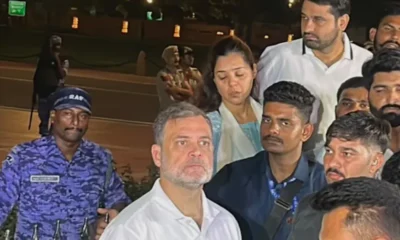
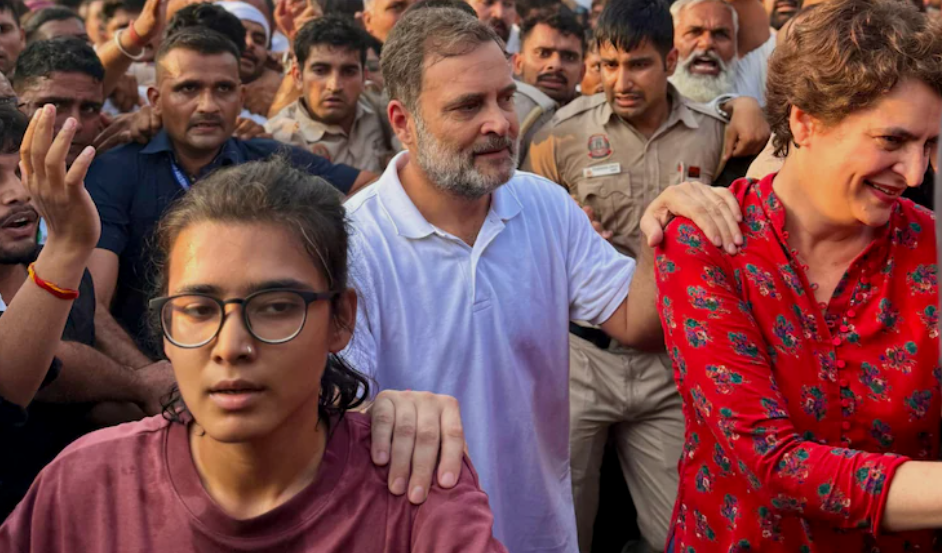
The Supreme Court has issued notices to Congress leader Rahul Gandhi, Samajwadi Party chief Akhilesh Yadav and other protesters over the opposition’s October 12 march to the apex court. The march was organised to raise concerns about alleged irregularities in the Special Intensive Revision (SIR) of electoral rolls.

The court’s remarks that nobody can browbeat the judiciary have brought the focus back to the dispute over the opposition’s protest and the appropriate way to raise grievances before the court.

Why the opposition marched to the Supreme Court

The march was part of the opposition’s campaign against what it described as irregularities in the voter-list revision process. The opposition has raised concerns over alleged electoral malpractice and demanded action concerning the Election Commission and the revision of electoral rolls.

Rahul Gandhi had led the march to the Supreme Court after Chief Justice of India Surya Kant declined a request to meet opposition leaders, including Gandhi and Congress president Mallikarjun Kharge.

The Chief Justice had advised the leaders to approach the court through the judicial process rather than seek an administrative meeting to discuss issues already pending before the Supreme Court.

Chief Justice’s position on approaching the court

The Chief Justice had said that the Supreme Court’s doors were open to every citizen and that people could approach it through petitions. He also indicated that matters affecting citizens would be considered in accordance with the law.

The distinction between the administrative and judicial functions of the court was central to the disagreement over the opposition leaders’ request for a meeting. The Chief Justice’s position was that pending legal issues should be addressed through judicial proceedings.

Supreme Court issues notices over the march

The Supreme Court issued notices to Rahul Gandhi, Akhilesh Yadav and other protesters concerning the October 12 march. The proceedings relate to the protest over irregularities in the Special Intensive Revision of electoral rolls.

The opposition’s allegations about the voter-list revision remain allegations and should not be treated as established findings merely because the matter has reached the court.

The developments have placed the opposition’s protest, its concerns over electoral rolls and the judiciary’s role in addressing such disputes at the centre of the ongoing debate.

Continue Reading

India News

Dhruv Rathee gets fresh summons in 2018 BJP IT cell video case

YouTuber Dhruv Rathee has received fresh summons from a Delhi court in a 2018 criminal defamation case filed by Vikas Pandey over a video concerning the BJP IT Cell. The matter will next be heard on October 17.
Published

on

Dhruv Rathi

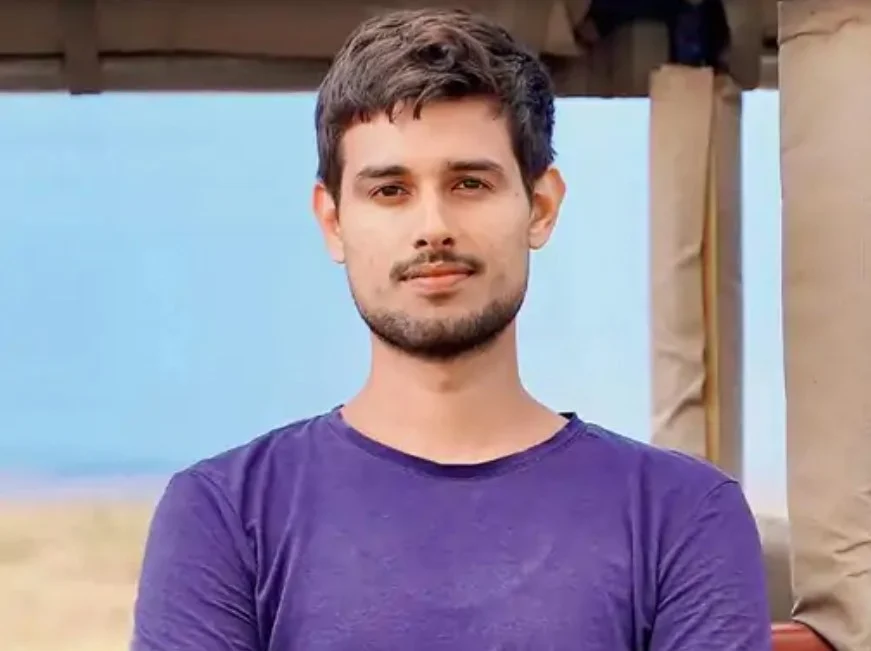
YouTuber Dhruv Rathee has received fresh summons from a Delhi court in a criminal defamation case linked to his 2018 video titled “BJP IT Cell Part 2”. The complaint was filed by Vikas Pandey, who alleged that the video contained defamatory claims about him.

The latest court action follows renewed efforts to serve Rathee with the summons while he is in India. The matter is scheduled to be heard next on October 17.

Judicial Magistrate Rahul Jain of the Saket District Court passed the order on October 12. The fresh summons were issued after the complainant’s lawyer informed the court that Rathee, who usually resides abroad, was in India in connection with the ongoing Cockroach Janta Party (CJP) protests in Delhi.

What is the case against Dhruv Rathee?

The criminal defamation complaint concerns Rathee’s video, “BJP IT Cell Part 2”, which was published in 2018.

Pandey, who founded the social media page “I Support Narendra Modi”, alleged that Rathee’s video accused him of being associated with the BJP IT Cell and offering Rs 50 lakh through an intermediary to Mahavir Prasad. According to the complaint, the money was allegedly offered to persuade Prasad to withdraw allegations that the BJP IT Cell spreads fake news.

These claims form part of the complainant’s allegations. The court’s issuance of summons does not establish that the allegations against Rathee are true or amount to a finding of guilt.

Why has the court issued fresh summons?

According to the court proceedings, the complainant’s side had been attempting to serve Rathee with summons for several years. The court had initially summoned him through an order dated July 23, 2019, but the process of serving the summons had faced delays.

The complainant’s lawyer sought an earlier hearing after learning that Rathee was in India. The application argued that his presence in the country offered an opportunity to complete the service of summons without further delay.

The court subsequently directed that fresh summons be issued. The latest report states that the summons were served at Rathee’s Gurugram residence during his visit to India.

How is Arvind Kejriwal linked to the case?

The case also involved Aam Aadmi Party (AAP) leader Arvind Kejriwal, who had re-shared Rathee’s video on X, then known as Twitter, in 2018.

Pandey filed a separate complaint against Kejriwal over the re-sharing of the video. The Delhi High Court later declined to quash the summons issued to Kejriwal.

In February 2024, the Supreme Court stayed the trial court proceedings against Kejriwal in the matter. During the proceedings, his lawyer told the court that Kejriwal acknowledged making a mistake by re-tweeting the video.

The proceedings against Rathee continued, leading to the fresh summons issued by the Saket court.

What happens next?

The case is scheduled for its next hearing on October 17. The proceedings concern the pending criminal defamation complaint and the steps taken to serve Rathee with the court’s summons.

The allegations in the complaint remain allegations unless established through the legal process.

Continue Reading

Trending

© Copyright 2022 APNLIVE.com