
India News
Kafeel Khan walks free from Mathura jail, Sharjeel Usmani gets bail


Almost 12 hours after the Allahabad High Court dropped charges under the National Security Act (NSA) against him, Dr Kafeel Khan was released from Mathura jail on Tuesday midnight. The HC had ordered the immediate release of Khan saying his speech at the Aligarh Muslim University didn’t promote hatred or violence and instead gave a call for national integration. Khan had vociferously protested against the Citizenship Amendment Act and the National Register of Citizens. In another development on Tuesday, Sharjeel Usmani, a former AMU student, was also released on bail by a sessions court in Aligarh.
After his release from Mathura jail, Khan told the media that the charges against him were baseless and fictitious. He also took a swipe at the UP STF for not harming him during his transit from Mumbai to Mathura, in a reference to the alleged encounter killing of don Vikas Dubey during transit in July this year.

In the Dr Kafeel Khan case, the HC bench comprising Chief Justice Govind Mathur and Justice Saumitra Dayal Singh on Tuesday had allowed the habeas corpus petition filed by Khan’s mother, seeking his release. The court had stated that Khan’s speech did not promote any kind of hatred or violence.
“A complete reading of the speech also nowhere threatens peace and tranquility of the city of Aligarh. The address gives a call for unity among citizens. The speech also deprecates any kind of violence. It appears that the District Magistrate had selective reading and selective mention for few phrases from the speech ignoring its true intent,” the judgment read.
On December 12 last year, Dr Khan had made a speech at the AMU gate against the CAA and NRC. He was arrested on January 29 by the UP STF for alleged hate speech and was lodged in Mathura jail. After his detention, the UP government had invoked the National Security Act, 1980 against Khan. Though an Aligarh court had granted Khan bail on February 10, he could not be released as the Aligarh DM had added charges under NSA against him. His NSA detention was extended by three months on May 12 and then again on August 4 for three more months.
Usmani, on the other hand, had been arrested from his home in Azamgarh in December last year. Though he had also been protesting the CAA, he had been accused of inciting violence.
Read Also: Decks cleared for Dr Kafeel Khan release as Allahabad HC drops NSA charges
In what is being hailed as the government’s going easy on dissenters including Khan and Usmani, the Delhi High Court had also granted bail to Pinjra Tod member Devangana Kalita on Tuesday. Kalita and Natasha Narwal had been arrested in the last week of May in connection with an anti-CAA protest which is being blamed as a trigger for the riots in East Delhi in late February this year. Kalita’s bail was set on a bond of Rs 25,000.








India News
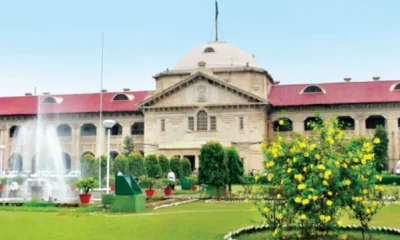
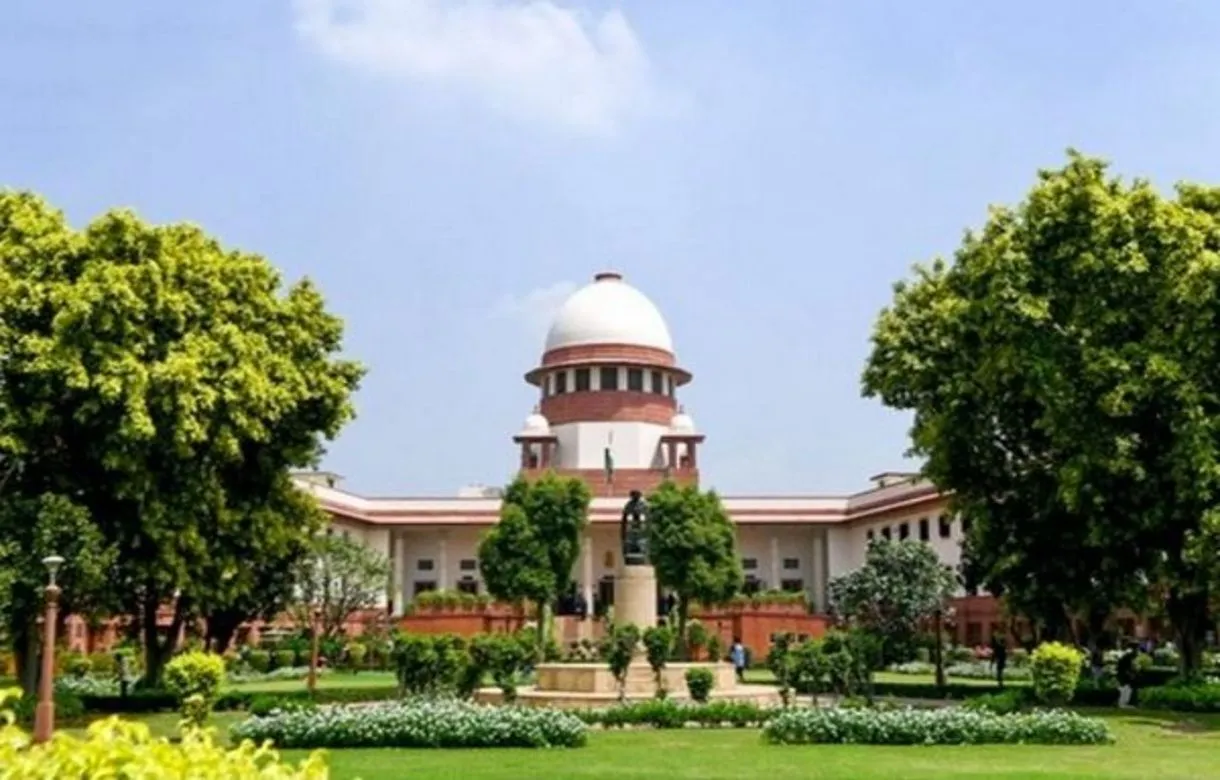
Supreme Court questions EC over missing records in Sringeri election dispute
The Supreme Court questioned the Election Commission over missing video footage of the 2023 counting in Karnataka’s Sringeri constituency. The case involves a revised result following a recount of postal ballots.

India News
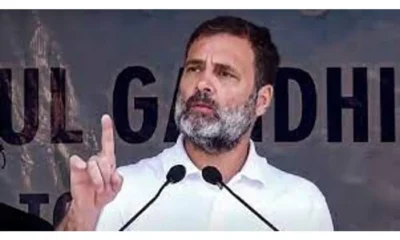
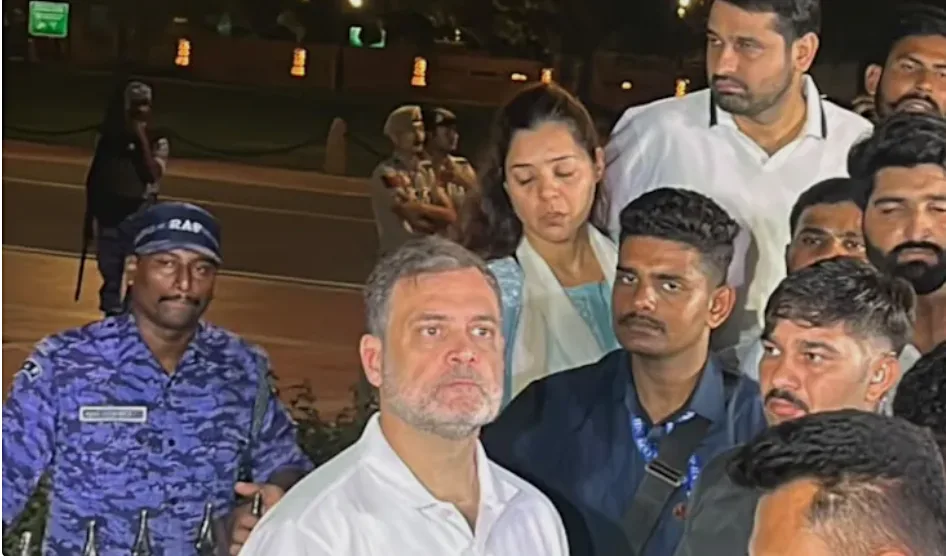
Rahul Gandhi joins India Gate protest by Ankita Bhandari’s parents
Rahul Gandhi joined the protest by Ankita Bhandari’s parents at India Gate in New Delhi on October 14. The demonstration has brought renewed attention to the 2022 murder case and the family’s concerns following Dushyant Gautam’s appointment as Sikkim Governor.
India News
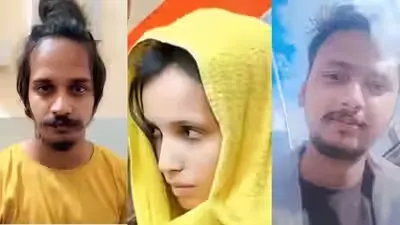
Meerut murder: Muskaan Rastogi and Sahil Shukla get death sentence
A Meerut court has sentenced Muskaan Rastogi and Sahil Shukla to death in the blue drum murder case involving the killing of merchant navy officer Saurabh Rajput in March 2025.

CJP leaders Saurav Das, Ashutosh Ranka, Ajinkya Shinde sent to 5-day judicial custody

PM Modi speaks to Mark Carney as India and Canada push to strengthen ties

S Jaishankar says India is a natural option for Russia amid Europe tensions

Meerut murder: Muskaan Rastogi and Sahil Shukla get death sentence

Rahul Gandhi joins India Gate protest by Ankita Bhandari’s parents

Supreme Court questions EC over missing records in Sringeri election dispute
Rahul Gandhi joins India Gate protest by Ankita Bhandari’s parents
Meerut murder: Muskaan Rastogi and Sahil Shukla get death sentence
PM Modi speaks to Mark Carney as India and Canada push to strengthen ties
S Jaishankar says India is a natural option for Russia amid Europe tensions

Afghan Men Try To Hang With The Jet Engine Of The Aircraft in Kabul- Afghanistan News – Kabul News
Trending Top 10 News: 10000 Crore Fine on Flipkart, Apple to Launch Unique Feature, Hdfc Bank Job Ad

Trending Top 10 News: Nokia 6310, Apple sales, Bachpan ka Pyar Video Kid, Dainik Bhaskar IT Raid

Trending Top 10 News: Canada bans Indian flights, Rain in Delhi NCR, AIMIM Twitter hacked, Raj Kundra case

Trending Top 10 News: Shein India, Apple New Service, Pocket Oxygen, Oppo Launched New Phone
-
 India News23 hours ago
CJP leaders Saurav Das, Ashutosh Ranka, Ajinkya Shinde sent to 5-day judicial custody
-
 India News23 hours ago
PM Modi speaks to Mark Carney as India and Canada push to strengthen ties
-
 Latest world news23 hours ago
S Jaishankar says India is a natural option for Russia amid Europe tensions
-
 India News12 hours ago
Meerut murder: Muskaan Rastogi and Sahil Shukla get death sentence
-
 India News12 hours ago
Rahul Gandhi joins India Gate protest by Ankita Bhandari’s parents
-
 India News11 hours ago
Supreme Court questions EC over missing records in Sringeri election dispute
