
India News
Lalu’s deputy Raghuvansh Prasad Singh quits RJD over Tejashwi inductees
In June this year, Singh had said he was not happy with the induction of some people into the party when the inflow of people who flocked to the RJD went up after party president Lalu Prasad Yadav’s son Tejashwi Yadav took charge of affairs following the imprisonment of Lalu on corruption charges…


With the elections to the Bihar Assembly due in a month or so, the Rashtriya Janata Dal (RJD) lost its national president and former Union Minister Raghuvansh Prasad Singh, who resigned from the party on Thursday. In June this year, Singh had said he was not happy with the induction of some people into the party when the inflow of people who flocked to the RJD went up after party president Lalu Prasad Yadav’s son Tejashwi Yadav took charge of affairs following the imprisonment of Lalu on corruption charges in the fodder scam.
The move comes as a blow to the RJD’s chances of presenting a credible opposition party that can shoulder an alliance against the National Democratic Alliance of the ruling Janata Dal (United) and the BJP. In a letter addressed to Lalu, Singh said he had backed the RJD chief for 32 years after the death of Karpoori Thakur, but will not do so anymore.

Raghuvansh Prasad Singh is presently undergoing post Covid-19 treatment at All India Institute of Medical Sciences in Delhi, from where he wrote this resignation on a notepad. Earlier in June, Singh had quit the party’s vice president post. He had been been ridiculed by Lalu’s elder son Tej Pratap Yadav who said the RJD was an ocean and Singh was just a mug of water from it and his absence will not be felt.
Singh held the cabinet portfolio of rural development in the Manmohan Singh UPA-1 government.
Reports said Raghuvansh Prasad Singh was reportedly unhappy over the proposed induction of muscleman Rama Singh into the RJD. Earlier, Tej Pratap’s father-in-law Chandrika Rai joined the NItish Kumar-led ruling JD (U) after his daughter was involved in a marital dispute.
Despite the Covid-19 pandemic, Bihar is set to elect its 243-member assembly. Though the Election Commission of India has issued directives to conduct election, dates for the election are yet to be announced.





India News
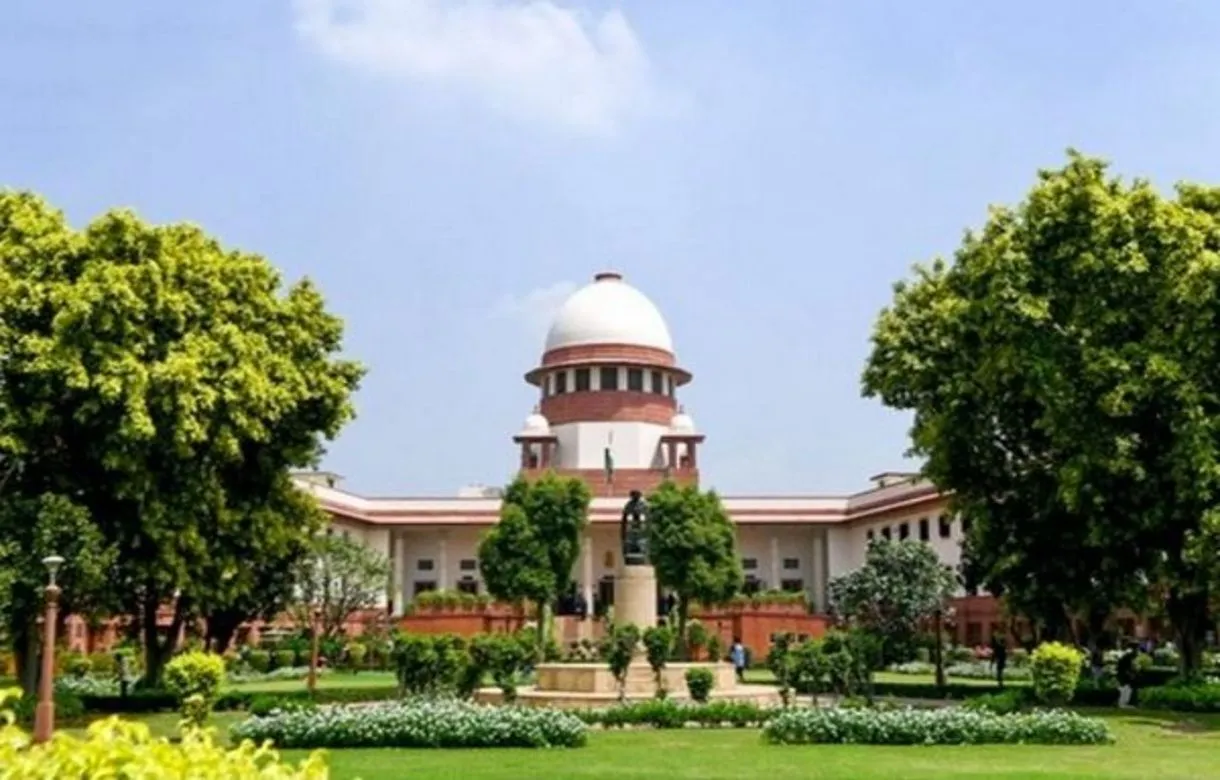
Supreme Court questions EC over missing records in Sringeri election dispute
The Supreme Court questioned the Election Commission over missing video footage of the 2023 counting in Karnataka’s Sringeri constituency. The case involves a revised result following a recount of postal ballots.

India News
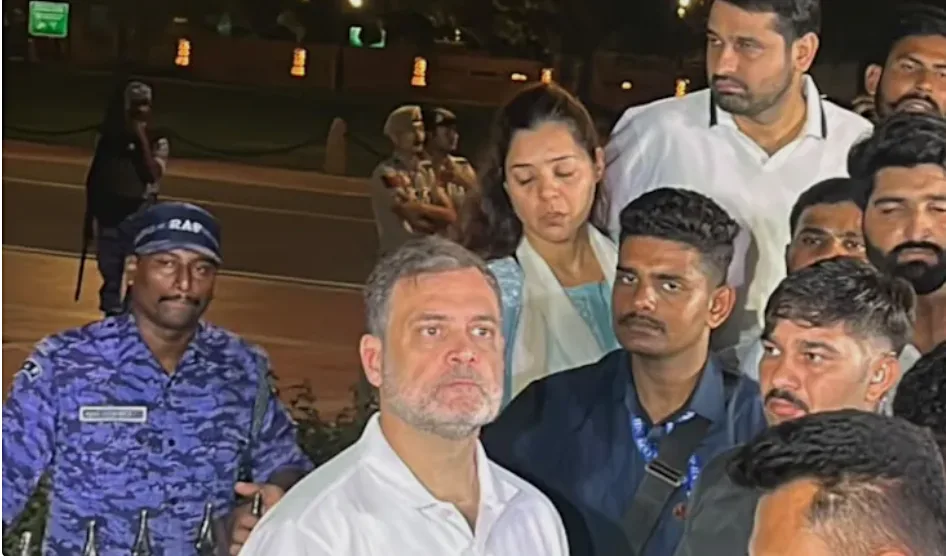
Rahul Gandhi joins India Gate protest by Ankita Bhandari’s parents
Rahul Gandhi joined the protest by Ankita Bhandari’s parents at India Gate in New Delhi on October 14. The demonstration has brought renewed attention to the 2022 murder case and the family’s concerns following Dushyant Gautam’s appointment as Sikkim Governor.
India News
Meerut murder: Muskaan Rastogi and Sahil Shukla get death sentence
A Meerut court has sentenced Muskaan Rastogi and Sahil Shukla to death in the blue drum murder case involving the killing of merchant navy officer Saurabh Rajput in March 2025.

CJP leaders Saurav Das, Ashutosh Ranka, Ajinkya Shinde sent to 5-day judicial custody

PM Modi speaks to Mark Carney as India and Canada push to strengthen ties

S Jaishankar says India is a natural option for Russia amid Europe tensions

Meerut murder: Muskaan Rastogi and Sahil Shukla get death sentence

Rahul Gandhi joins India Gate protest by Ankita Bhandari’s parents

Supreme Court questions EC over missing records in Sringeri election dispute
Rahul Gandhi joins India Gate protest by Ankita Bhandari’s parents
Meerut murder: Muskaan Rastogi and Sahil Shukla get death sentence
PM Modi speaks to Mark Carney as India and Canada push to strengthen ties
S Jaishankar says India is a natural option for Russia amid Europe tensions

Afghan Men Try To Hang With The Jet Engine Of The Aircraft in Kabul- Afghanistan News – Kabul News
Trending Top 10 News: 10000 Crore Fine on Flipkart, Apple to Launch Unique Feature, Hdfc Bank Job Ad

Trending Top 10 News: Nokia 6310, Apple sales, Bachpan ka Pyar Video Kid, Dainik Bhaskar IT Raid

Trending Top 10 News: Canada bans Indian flights, Rain in Delhi NCR, AIMIM Twitter hacked, Raj Kundra case

Trending Top 10 News: Shein India, Apple New Service, Pocket Oxygen, Oppo Launched New Phone
-
 India News20 hours ago
CJP leaders Saurav Das, Ashutosh Ranka, Ajinkya Shinde sent to 5-day judicial custody
-
 India News20 hours ago
PM Modi speaks to Mark Carney as India and Canada push to strengthen ties
-
 Latest world news20 hours ago
S Jaishankar says India is a natural option for Russia amid Europe tensions
-
 India News10 hours ago
Meerut murder: Muskaan Rastogi and Sahil Shukla get death sentence
-
 India News9 hours ago
Rahul Gandhi joins India Gate protest by Ankita Bhandari’s parents
-
 India News8 hours ago
Supreme Court questions EC over missing records in Sringeri election dispute
