English हिन्दी
Connect with us

Latest business news

Govt to bring law to recover dues from Nirav Modi-type fugitive economic offenders

Published

on

Govt to bring law to recover dues from Nirav Modi-type fugitive economic offenders

The Narendra Modi government will bring in a new law — the Fugitive Economic Offenders Bill — to confiscate assets of those who flee the country and refuse to return after committing frauds in excess of Rs 100 crore, said media reports.

The move comes in the backdrop of major bank frauds coming to light in quick succession recently. Nirav Modi, a diamond merchant accused in the Rs. 11,400-crore Punjab National Bank case, and his family members are currently abroad. In another case involving Rs. 389 crore of the Oriental Bank of Commerce, a Delhi-based jewellery exporter and his business partners fled the country in 2014. Under the existing laws, the bank has failed to recover the dues in the past three years, reported The Hindu.

In September, the Union Law ministry had approved the finance ministry’s draft of Fugitive Economic Offenders Bill, 2017, and its passage into law is now being expedited as part of the government’s response to the PNB scam, said a report in Moneycontrol.com.

The draft Bill followed an announcement in the Union Budget for 2017-18 that the government planned to introduce a legal measure to confiscate assets of the economic offenders who flee to foreign jurisdictions to escape the clutches of law.

The move came after Vijay Mallya, who owed more than Rs. 9,000 crore to the public sector banks, flew out of the country and refused to come back. It set off prolonged and multi-pronged legal proceedings, with the government still fighting a legal battle for his extradition from the UK.

The draft Bill defines a fugitive economic offender as any individual against whom an arrest warrant has been issued and who has either left the country or refuses to come back to face prosecution.

The Bill is likely to be introduced after Parliament reconvenes on March 6 for the second part of the Budget session. It defines fugitive economic offender as a person who has an arrest warrant issued in respect of a scheduled offence and who leaves or has left India so as to avoid criminal prosecution, or refuses to return to India to face criminal prosecution.

The draft Bill covers a wide range of offences including wilful loan defaults, cheating and forgery, forged or fraudulent document of electronic records, duty evasion and non-repayment of deposits among others.

As proposed, the Enforcement Directorate will be empowered under the Prevention of Money Laundering Act (PMLA) to initiate the proceedings. It has a provision enabling repayment of dues to creditors by disposing of confiscated assets, in case the accused offender continues to evade prosecution.

As listed in the draft Bill’s schedule, it will be applicable to various financial and allied offences as defined under the Indian Penal Code, the Prevention of Corruption Act, the Securities and Exchange Board of India Act, Customs Act and so on.

Once voted into law the new legislation will empower investigating agencies to confiscate, and vest with themselves, any property of the absconding offenders without an encumbrances.

Also, at the discretion of any Court, such person or any company where the absconder is a promoter or key managerial personnel or majority shareholder, may be ‘disentitled’ from bringing forward or defending any civil claim, in effect taking away the fugitive offenders’ rights to reclaim the assets.

The Bill’s provision is compatible with the provisions of United Nations Convention against Corruption (ratified by India in 2011) that recommends “non-conviction-based asset confiscation for corruption-related cases”.

In order to ensure that courts are not over-burdened with such cases, only those cases where the total value involved in such offences is Rs 100 crore rupees or more, is within the purview of this Bill. The Bill makes provisions for a court of law — a “Special Court” under the Prevention of Money Laundering Act (PMLA) — to declare a person a “fugitive economic offender”.

“It is widely felt that the spectre of high-value economic offenders absconding from India to defy the legal process seriously undermines the rule of law in India. It is necessary to provide an effective, expeditious and constitutionally permissible deterrent to ensure that such actions are curbed. To serve these ends, this Bill is being proposed,” said the Moneycontrol.com report, citing a government source.

While the PMLA allows the Enforcement Directorate (ED) to seize an accused, the law did not allow complete ‘non-conviction’ based asset attachment without any encumbrances.

Under current rules, the ED is entitled to provisionally attach a defaulter’s property “pending trial subject to confirmation by the adjudicating authority and appeal”. On conviction in the trial, the property stands confiscated, free from all encumbrances, to the central government – but it is a long drawn process.

Further, in large defaults, criminal proceedings are likely to be in several criminal courts across the country where assets are located. This multiplicity of proceedings may lead to conflicting orders of attachment by different courts.

Also, a court is unlikely to attach property outside its jurisdiction in the first place without the procedure for endorsement being followed. As a result of such delays, such offenders can continue to remain outside the jurisdiction of Indian courts for a considerable period of time.

The Fugitive Economic Offenders Bill is aimed at addressing these drawbacks. It will allow quicker attachment and disposal of property and assets helping recovery of defrauded or defaulted amount. It will also act as a deterrent for offenders to flee the country.

India News

Bank holiday today: Are banks open or closed on June 29? Here’s what RBI calendar says

Banks in Himachal Pradesh and Mizoram will remain closed on June 29, 2026, due to regional holidays, while banking operations will continue normally in most other states.
Published

on

Bank Holidays

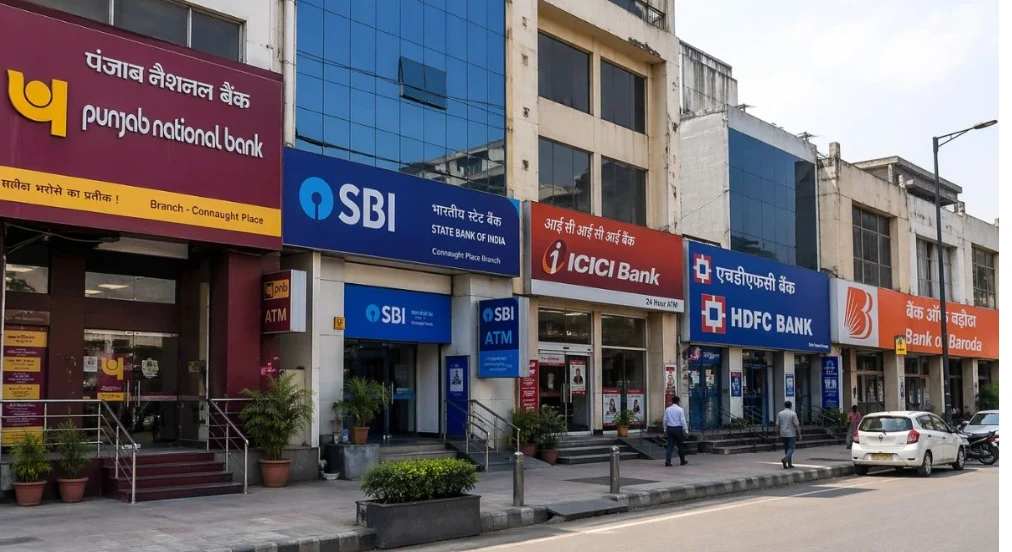
As June comes to an end, many customers are wondering whether banks across the country are open on June 29, 2026. According to the Reserve Bank of India’s (RBI) holiday calendar, bank operations will not be affected nationwide, but branches in some states will remain closed due to local holidays.

Banks closed in these states on June 29

Banks will remain shut in Himachal Pradesh on Monday, June 29, on account of Sant Guru Kabir Jayanti. In addition, bank branches in Mizoram will remain closed to observe Remna Ni, a regional public holiday.

However, bank branches in most other states and Union Territories are expected to function normally as June 29 is not a nationwide banking holiday.

Will online banking services remain available?

Even when physical branches remain closed, customers can continue using digital banking facilities. Services such as internet banking, mobile banking, UPI transactions, ATM withdrawals and cash deposits at ATMs will remain operational.

Customers planning to visit a bank branch are advised to check with their local branch beforehand, as holiday schedules may vary depending on the state and local observances.

Continue Reading

India News

Union Budget 2026 highlights: Nirmala Sitharaman Raises Capex to Rs 12.2 Lakh Cr, West Bengal Gets Major Allocation

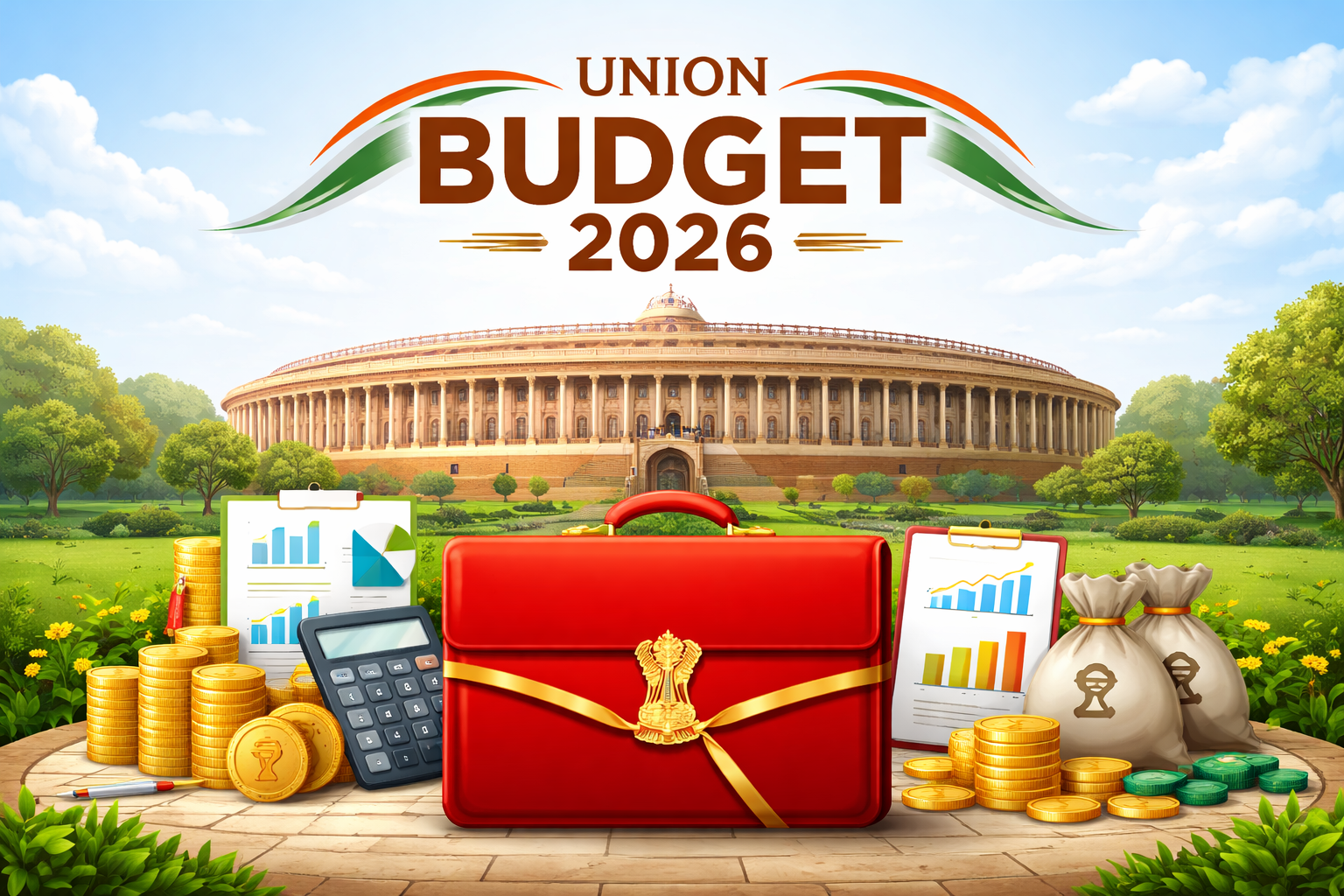
Finance Minister Nirmala Sitharaman is presenting the Union Budget 2026 in Parliament today. Follow this space for live updates, key announcements, and policy insights.

Published

on

Finance Minister Nirmala Sitharaman arrives to present Union Budget 2026

Finance Minister Nirmala Sitharaman will shortly present the Union Budget 2026 in the Lok Sabha, marking her ninth consecutive Budget. The annual financial statement is expected to outline the government’s policy priorities, reform agenda and spending plans for the coming year. Stay tuned for live updates, key announcements and immediate reactions as the Budget speech unfolds.

Finance Minister Nirmala Sitharaman tabled her ninth Union Budget today, beginning her speech at 11 am.

Nirmala Sitharaman is set to present her ninth Union Budget today, with the finance minister scheduled to begin her speech at 11 am.

Budget 2026 live updates: Presenting the Union Budget for 2026–27, Finance Minister Nirmala Sitharaman said the occasion coincided with Magh Purnima and the birth anniversary of Guru Ravidas. She noted that over the past 12 years, India’s economic journey has been defined by stability, fiscal discipline, sustained growth and moderate inflation.

The budgeted fiscal deficit for fiscal 2026 is estimated at 4.4 per cent of gross domestic product (GDP)

Planned capital expenditure this fiscal year Rs 11.2 lakh crore

Rare earth corrdiors in Odisha and Kerala

Hi-tech tool rooms to be set up by PSUs

Construction equipment scheme to be launched

Container manufacturing scheme for Rs 10,000 crore over 5 years

Rs 10,000 crore SME Growth Fund

Semi-conductor mission to get Rs 40,000 crore

Rs 12.2 lakh crores for infrastructure development

Dedicated RITES to repurpose land of Central PSUs

20 new waterways over next 5 years to be connected

7 high-speed corridors on rail

High-level committee on banking for next phase of Viksit Bharat

Capital expenditure hike of to ₹12.2 lakh crore in Budget 2026, with West Bengal receiving a significant share of allocations.

Mahatma Gandhi Gram Swaraj Initiative aimed at boosting the khadi, handloom, and handicrafts sectors.

High-speed rail corridors: Mumbai-Pune, Pune-Bengaluru, Hyderabad-Bengaluru, Chennai-Bengaluru, Delhi-Varanasi, Varanasi-Siliguri, Pune-Hyderabad

Five university campuses to be established near industrial corridors

Lakpati Didi program expanded in Budget 2026 to reach more beneficiaries across India.

Fiscal deficit for FY26 revised to 4.4%; Budget Estimate for FY27 set at 4.3%.

TCS on overseas tour packages cut to 2% to ease travel costs

Tax holiday to foreign companies that provide cloud services by setting up data centres in India till 2047

17 cancer drugs exempted from import duties

Continue Reading

India News

Union budget 2026 to be presented on Sunday with special trading session

The Union Budget 2026 will be presented on a Sunday for the first time in over two decades, with NSE and BSE announcing special trading sessions for the day.

Published

on

Nirmala Sitharaman

For the first time in more than two decades, the Union Budget will be presented on a Sunday. Finance Minister Nirmala Sitharaman is scheduled to table the Union Budget for 2026 in the Lok Sabha on February 1 at 11 am, even as the day is usually observed as a holiday for government offices and financial markets.

February 1 falls on a Sunday this year, raising questions about market operations and investor response. To ensure uninterrupted trading and immediate market reaction to budget announcements, stock exchanges have announced special arrangements for the day.

Markets to remain open on budget day

Both the National Stock Exchange and the Bombay Stock Exchange have confirmed that markets will remain open on February 1. The NSE has announced a special trading session, with the pre-open market scheduled from 9 am to 9:08 am, followed by normal trading hours from 9:15 am to 3:30 pm.

The BSE has also declared the day a special trading day, with regular market hours applicable. Trading is expected to continue across equity, derivatives, and futures and options segments.

What the Sunday budget means for investors

A weekend budget presentation is seen as offering certain advantages for market participants. With trading active on the same day, investors will be able to respond to policy announcements immediately rather than waiting for the next working day.

The Sunday timing also gives investors, analysts, and financial institutions additional time to go through detailed proposals, including tax changes, fiscal deficit targets, and sector-wise allocations. The extended window for analysis may help reduce sharp, headline-driven reactions and encourage more informed decision-making.

With fewer competing developments on a non-working day, budget announcements are also expected to receive more focused attention from markets and stakeholders.

Parliamentary schedule and key milestones

The Economic Survey is expected to be tabled on January 29, ahead of the budget presentation. The Budget Session of Parliament began on January 28 with the President’s address to a joint sitting of the Lok Sabha and Rajya Sabha.

The upcoming budget will mark Nirmala Sitharaman’s ninth consecutive Union Budget. It will also be India’s 80th budget since Independence. Since 2017, Union Budgets have been presented at 11 am on February 1, following a timing change introduced during the tenure of former finance minister Arun Jaitley.

Continue Reading

Trending

© Copyright 2022 APNLIVE.com