English हिन्दी
Connect with us

Latest business news

How to Buy an iPhone with the Bajaj Finserv EMI Card

iPhones are on the wishlist of many Apple enthusiasts and gadget lovers. These smartphones, manufactured by Apple, one of the leading companies in the world, come with a wide range of cutting edge features

Published

on

Apple iPhone 14 Pro Max

iPhones are on the wishlist of many Apple enthusiasts and gadget lovers. These smartphones, manufactured by Apple, one of the leading companies in the world, come with a wide range of cutting edge features. The experience of owning and using an iPhone is definitely different and unmatched. 

However, as with any product that is as feature-rich and well-designed as the iPhone, the price tag on these devices can be quite a downer. If you have the latest iPhone in your cart, but the steep price is stopping you from checking out, here’s an idea. Why not buy your iPhone on EMI?

Buying an iPhone on EMI 

Normally, when you make a purchase at a store or online, you will have to pay the entire price upfront. Now, in the case of an iPhone, paying the whole cost at the time of purchase can be quite challenging, because even entry level phones from Apple cost around Rs. 40,000 or more.

However, you can work around this by buying your iPhone on EMI or Equated Monthly Instalments. This means the purchase price of the iPhone will be divided into multiple EMIs across the EMI tenure you choose. You can then pay back the cost across this tenure by breaking up the lump sum payment into smaller EMIs.

For availing this service, you will have to pay an additional interest on the purchase price. But by applying for the Bajaj Finserv Card online, you can get your iPhone on no cost EMIs too, meaning that you don’t have to pay any extra charges.

How to Buy an iPhone with the Bajaj Finserv EMI Card

Buying an iPhone on EMI with the Bajaj Finserv EMI Card is fairly easy. You only need to follow the steps listed below.

Step 1: Browse the latest iPhones on the websites of our partner stores.

Step 2: Select the iPhone you wish to purchase and click on ‘Buy Now.’

Step 3: At the time of checkout, choose the Bajaj Finserv EMI Card as your preferred mode of payment and select the ‘No Cost EMI’ option.

Step 4: Choose the tenure over which you want to pay the EMIs.

Step 5: Click on ‘Submit’ and place your order. 

That’s it! This is all you need to do to buy your preferred iPhone on EMI. Using the Bajaj Finserv Card online is very simple. You can also use the card to pay for your Apple smartphone on EMI at any of the physical branches of our partner stores. 

Read Also: MP: Police arrest Muslim activist under NSA and sent to jail for speaking against bulldozer drive in Khargone

Reasons to Buy iPhones on EMI with the Bajaj Finserv EMI Card

There are many advantages that come with using the Bajaj Finance Card online to buy your preferred iPhone on EMI. Here are the top benefits. 

  • Zero Down Payment 

You can buy the best iPhones in the market on EMI even without a credit card. And you don’t even need to make a down payment on your purchase. 

  • High Pre-Approved Loan Limit

With the Bajaj Finserv EMI Card, you get a high pre-approved loan up to Rs. 4 lakhs. This is more than sufficient for you to get your preferred iPhone and pay for it in instalments.

  • Convenient Repayment Tenures

You can choose to repay your EMIs over convenient repayment tenures ranging from 3 to 24 months. 

  • No Foreclosure Charges

In case you want to pay off your purchase cost before the end of the repayment tenure, you can do so without any foreclosure charges. This can be done at any time after the first EMI has been paid.

  • No Added Charge on EMIs

You do not need to pay any additional interest charges on the EMIs, thanks to the no cost EMI option offered on the Bajaj Finserv EMI Card.

Conclusion

So, as you can see, it is extremely easy to buy your favourite iPhone on EMI using the Bajaj Finserv EMI Network Card. The steps listed in this article should help you make your purchase easily. Once you’ve made your purchase, remember to pay your EMIs on time, so your credit history and your credit score can benefit from your timely repayments.

Bilkis Bano case: Relatives welcome rape convicts with sweets and hugs after release | WATCH

Video of pizza dough under mop goes viral, Domino’s face Twitterati ire | WATCH


India News

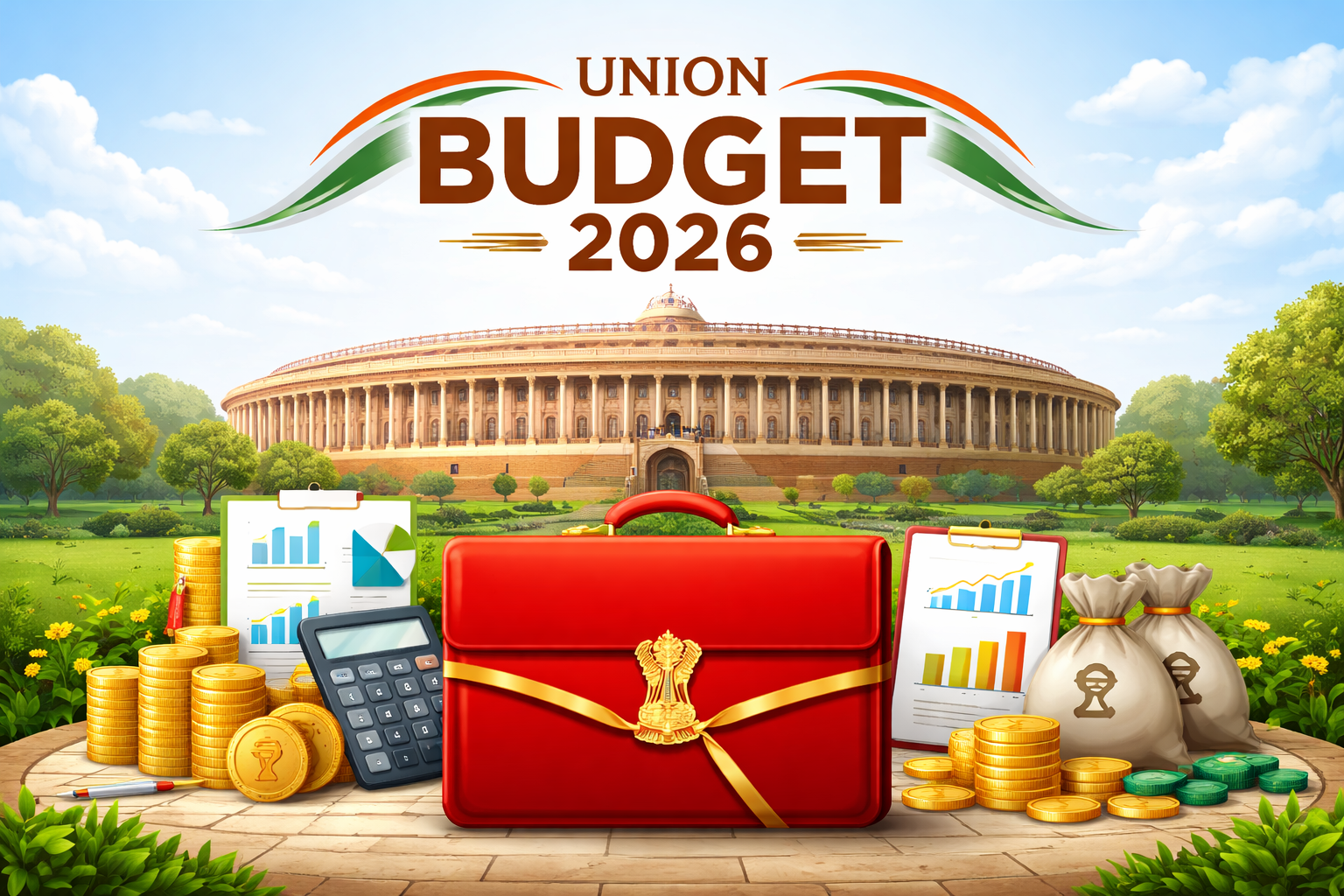
Union Budget 2026 highlights: Nirmala Sitharaman Raises Capex to Rs 12.2 Lakh Cr, West Bengal Gets Major Allocation

Finance Minister Nirmala Sitharaman is presenting the Union Budget 2026 in Parliament today. Follow this space for live updates, key announcements, and policy insights.

Published

on

Finance Minister Nirmala Sitharaman arrives to present Union Budget 2026

Finance Minister Nirmala Sitharaman will shortly present the Union Budget 2026 in the Lok Sabha, marking her ninth consecutive Budget. The annual financial statement is expected to outline the government’s policy priorities, reform agenda and spending plans for the coming year. Stay tuned for live updates, key announcements and immediate reactions as the Budget speech unfolds.

Finance Minister Nirmala Sitharaman tabled her ninth Union Budget today, beginning her speech at 11 am.

Nirmala Sitharaman is set to present her ninth Union Budget today, with the finance minister scheduled to begin her speech at 11 am.

Budget 2026 live updates: Presenting the Union Budget for 2026–27, Finance Minister Nirmala Sitharaman said the occasion coincided with Magh Purnima and the birth anniversary of Guru Ravidas. She noted that over the past 12 years, India’s economic journey has been defined by stability, fiscal discipline, sustained growth and moderate inflation.

The budgeted fiscal deficit for fiscal 2026 is estimated at 4.4 per cent of gross domestic product (GDP)

Planned capital expenditure this fiscal year Rs 11.2 lakh crore

Rare earth corrdiors in Odisha and Kerala

Hi-tech tool rooms to be set up by PSUs

Construction equipment scheme to be launched

Container manufacturing scheme for Rs 10,000 crore over 5 years

Rs 10,000 crore SME Growth Fund

Semi-conductor mission to get Rs 40,000 crore

Rs 12.2 lakh crores for infrastructure development

Dedicated RITES to repurpose land of Central PSUs

20 new waterways over next 5 years to be connected

7 high-speed corridors on rail

High-level committee on banking for next phase of Viksit Bharat

Capital expenditure hike of to ₹12.2 lakh crore in Budget 2026, with West Bengal receiving a significant share of allocations.

Mahatma Gandhi Gram Swaraj Initiative aimed at boosting the khadi, handloom, and handicrafts sectors.

High-speed rail corridors: Mumbai-Pune, Pune-Bengaluru, Hyderabad-Bengaluru, Chennai-Bengaluru, Delhi-Varanasi, Varanasi-Siliguri, Pune-Hyderabad

Five university campuses to be established near industrial corridors

Lakpati Didi program expanded in Budget 2026 to reach more beneficiaries across India.

Fiscal deficit for FY26 revised to 4.4%; Budget Estimate for FY27 set at 4.3%.

TCS on overseas tour packages cut to 2% to ease travel costs

Tax holiday to foreign companies that provide cloud services by setting up data centres in India till 2047

17 cancer drugs exempted from import duties

Continue Reading

India News

Union budget 2026 to be presented on Sunday with special trading session

The Union Budget 2026 will be presented on a Sunday for the first time in over two decades, with NSE and BSE announcing special trading sessions for the day.

Published

on

Nirmala Sitharaman

For the first time in more than two decades, the Union Budget will be presented on a Sunday. Finance Minister Nirmala Sitharaman is scheduled to table the Union Budget for 2026 in the Lok Sabha on February 1 at 11 am, even as the day is usually observed as a holiday for government offices and financial markets.

February 1 falls on a Sunday this year, raising questions about market operations and investor response. To ensure uninterrupted trading and immediate market reaction to budget announcements, stock exchanges have announced special arrangements for the day.

Markets to remain open on budget day

Both the National Stock Exchange and the Bombay Stock Exchange have confirmed that markets will remain open on February 1. The NSE has announced a special trading session, with the pre-open market scheduled from 9 am to 9:08 am, followed by normal trading hours from 9:15 am to 3:30 pm.

The BSE has also declared the day a special trading day, with regular market hours applicable. Trading is expected to continue across equity, derivatives, and futures and options segments.

What the Sunday budget means for investors

A weekend budget presentation is seen as offering certain advantages for market participants. With trading active on the same day, investors will be able to respond to policy announcements immediately rather than waiting for the next working day.

The Sunday timing also gives investors, analysts, and financial institutions additional time to go through detailed proposals, including tax changes, fiscal deficit targets, and sector-wise allocations. The extended window for analysis may help reduce sharp, headline-driven reactions and encourage more informed decision-making.

With fewer competing developments on a non-working day, budget announcements are also expected to receive more focused attention from markets and stakeholders.

Parliamentary schedule and key milestones

The Economic Survey is expected to be tabled on January 29, ahead of the budget presentation. The Budget Session of Parliament began on January 28 with the President’s address to a joint sitting of the Lok Sabha and Rajya Sabha.

The upcoming budget will mark Nirmala Sitharaman’s ninth consecutive Union Budget. It will also be India’s 80th budget since Independence. Since 2017, Union Budgets have been presented at 11 am on February 1, following a timing change introduced during the tenure of former finance minister Arun Jaitley.

Continue Reading

India News

Modi says right time to invest in Indian shipping sector; meets global CEOs

Published

on

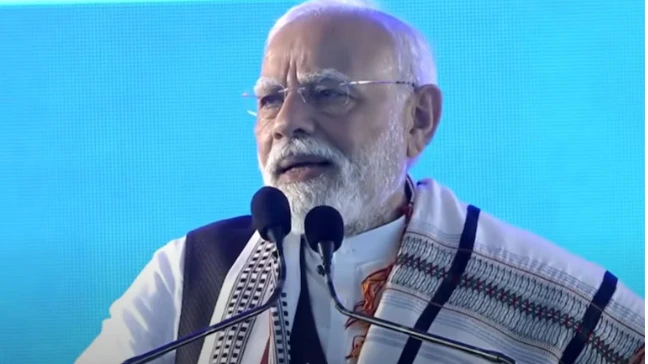
PM Narendra Modi

Prime Minister Narendra Modi on Wednesday exhorted global investors to take bets on the Indian shipping sector, pointing out that this is the “right time” for such a move.

The Prime Minister also met a select chief executives of global majors, including DP World and APM, at a specially convened meeting on the sidelines of the India Maritime Week 2025 held here.

“For all of you hailing from different countries, this is the right time to work in the Indian shipping sector and also expand (your presence),” Modi said during a public address before the closed-door meeting with CEOs.

Modi listed several targets being chased by India in the maritime sector over the next few years, and underlined the importance of the global community in the same.

“You all are an important partner who will help us achieve all our aims. We welcome your ideas, innovations and investments,” Modi said.

He said that India allows 100 per cent foreign direct investment in the shipping and ports sector, and also provides incentives under the “Make In India, and Make For The World” vision.

Addressing an audience, including leaders of various companies, the Prime Minister affirmed India’s commitment to strengthening the supply chain resilience at a global level.

He also said that India is engaged in creating world-class mega ports, and cited the work undertaken on the Vadhavan Port to the north of the financial capital, which entered the top-10 firms in the world on the first day.

The government is also looking to grow the capacity at 12 major ports by four times and increase India’s share in containerised cargo at the global level.

Later, Modi held a meeting with top CEOs of shipping sector companies from across the world.

As per people in the know, he met AP Moller-Maersk Chairman Robert Maersk Uggla, DP World Group Chairman Sultan Ahmed bin Sulayem, Mediterranean Shipping Company Chief Executive Soren Toft, Adani Ports and SEZ Managing Director Karan Adani and French company CMA-CGM’s Senior Vice President Ludovic Renou.

The participation from over 85 countries in the IMW sends a strong message, Modi said, noting the presence of CEOs of major shipping giants, startups, policymakers, and innovators at the event.

The Prime Minister also thanked Port of Singapore (PSA) for the nearly Rs 8,000 crore investment in the Jawaharlal Nehru Port Authority’s fourth terminal, pointing out that this is also the largest FDI in the port sector in India.

Modi said more than 150 new initiatives have been launched under the ‘Maritime India Vision’, resulting in nearly doubling the capacity of major ports, a substantial reduction in turnaround time, and a new momentum in cruise tourism.

—PTI

Continue Reading

Trending

© Copyright 2022 APNLIVE.com