English हिन्दी
Connect with us

India News

PM Modi urges shift to alternative energy and fuel austerity amid Middle East crisis

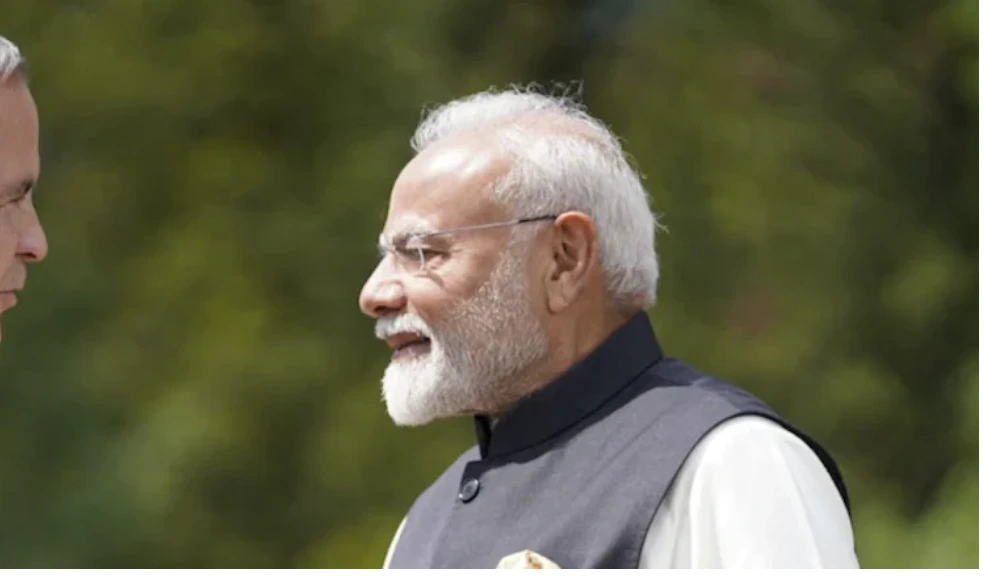
In response to severe energy and supply chain strains caused by the ongoing war in West Asia, Prime Minister Narendra Modi has ordered an intensive push toward alternative energy sources while urging the public to cut down on fuel consumption.

Published

on

As the escalating conflict in West Asia continues to disrupt international supply chains and impact global markets, Prime Minister Narendra Modi has urged senior ministers and citizens to aggressively explore alternative energy sources and adopt conservation practices. Chaired by the Prime Minister, a high-level meeting of the Cabinet Committee on Security (CCS) evaluated the short, medium, and long-term economic and strategic implications of the ongoing Middle East war involving the US, Israel, and Iran.

The government’s primary focus remains on safeguarding citizens from the economic shockwaves of the conflict, which has heavily strained global petroleum, power, and fertiliser sectors. Media reports indicate that the blockade of critical trade lifelines like the Strait of Hormuz has sent oil marketing companies into severe daily revenue losses to keep domestic prices regulated, prompting a nationwide call for energy self-reliance and behavioral transformation.

High-Level review targeting energy security and supply stabilization

During the top-tier strategy session, the Prime Minister reviewed the immediate and prolonged steps required to guarantee uninterrupted supplies of essential commodities. Senior cabinet members—including the ministers of finance, external affairs, petroleum, and defense—assessed India’s overall preparedness.

“Chaired a meeting of the CCS to review the mitigating measures in the wake of the ongoing conflict in West Asia,” the Prime Minister stated in a digital update. He added that discussions heavily emphasized diversifying import sources for key industrial segments, boosting domestic distribution logistics, and establishing a robust shield against international market volatility.

The continuous monitoring of geopolitical developments is aimed at protecting both public consumption interests and large-scale industrial requirements.

A call for public fuel conservation and alternative energy

Addressing the wider public, the Prime Minister described the current global context as a challenging period that demands unified national resilience. He appealed to the citizens of the country to voluntarily cut back on petrol and diesel consumption, highlighting fuel austerity as a national responsibility to conserve precious foreign exchange reserves.

Suggested measures echo the structural adaptations utilized during the pandemic, including encouraging carpooling, optimizing the use of public urban metro systems, and transitioning back to remote work, virtual meetings, and online conferences where applicable.

Simultaneously, the administration is pressing forward with structural energy sector upgrades. Efforts are being channeled into accelerating non-fossil fuel power generation, advancing battery energy storage systems, and scaling up strategic petroleum reserves to ensure that India remains insulated from future external maritime and geopolitical chokepoints.

India News

Punjab espionage ring exposed as Pathankot man arrested for transmitting army movements to Pakistan

A major espionage module has been uncovered in Punjab’s Pathankot. Police arrested Baljit Singh for installing an internet-linked CCTV camera on National.

Published

on

In a significant development for national security, the police in Punjab’s Pathankot have dismantled a suspected cross-border spying network. A local resident has been taken into custody for allegedly sharing highly sensitive details regarding the movements of the Indian Army and various paramilitary units with handlers based in Pakistan.

The suspect, identified as Baljit Singh (also known as Bittu), belongs to Chakk Dhariwal village. According to senior police officials, Singh had strategically set up an internet-linked closed-circuit television (CCTV) camera at a shop situated near a bridge on the crucial Pathankot-Jammu stretch of National Highway-44. This setup allowed him to monitor and track the logistical movements of defense and paramilitary forces along the corridor.

Surveillance feed routed internationally

Senior Superintendent of Police, Daljinder Singh Dhillon, confirmed that the live digital surveillance feed from this highway camera was being routed electronically to operatives located in Pakistan as well as other international destinations.

During his interrogation, the accused admitted to installing the internet-enabled camera at a roadside shop near Sujanpur earlier this year in January. He further disclosed that he was receiving instructions from an unidentified handler operating out of Dubai, who had initially transferred a sum of Rs 40,000 to him for executing the task. Following his arrest, security personnel recovered the CCTV unit along with the accompanying Wi-Fi internet router used to transmit the data.

Multiple suspects booked as investigation widens

The breakthrough came after intelligence inputs pointed toward highly suspicious activities along the crucial highway stretch. Acting on the information, the Sujanpur police registered a formal case involving four individuals. Alongside Baljit Singh, the case names Vikramjit Singh (alias Vikka), Balwinder Singh (alias Vicky), and Taranpreet Singh (alias Tannu). Media reported that law enforcement considers the accused to be actively involved in anti-national and illicit networks.

A comprehensive dossier detailing the security breach has been forwarded to high-ranking federal and state authorities. Law enforcement teams are currently conducting extensive raids across the region to apprehend the remaining co-conspirators who are on the run. Meanwhile, an in-depth investigation is underway to fully trace the financial trails and chart out the wider cross-border connections underlying this spy module.

Continue Reading

India News

Cockroach Janata Party X handle withheld in India, founder launches new digital platform

The satirical digital campaign, Cockroach Janata Party, saw its official X handle withheld in India following a legal demand, prompting its founder to immediately launch a new alternative profile.

Published

on

The official X (formerly Twitter) account of the Cockroach Janata Party (CJP), a satirical digital movement that took social media by storm, was withheld in India on Thursday. According to the microblogging platform, the profile was restricted “in response to a legal demand.”

Responding to the development, the platform’s founder, Abhijeet Dipke, launched a new alternative handle on X within hours, titled ‘Cockroach is Back’, using the tagline ‘Cockroaches Don’t Die’.

Sparked by controversial remarks

The online campaign emerged on May 16, 2026, as a satirical response to an oral observation made by Chief Justice of India Surya Kant during a Supreme Court hearing a day prior. The Chief Justice had reportedly compared unemployed youth to “cockroaches” and “parasites of society,” criticizing those who enter activism or media spaces to attack institutions. Although the Chief Justice later issued a strongly worded clarification stating his comments were misquoted and targeted individuals using fake and bogus professional degrees, the remark had already triggered a massive viral movement online.

The satirical group quickly grew a substantial presence across various social media platforms. Before being withheld, the original X handle had acquired over 201,000 followers, attracting support from digital users, activists, and politicians alike.

Founder calls action a ‘self-goal’

Abhijeet Dipke, a 30-year-old political communication strategist who founded the movement, expressed little surprise over the restriction. Dipke stated that hacking attempts had been observed on their profiles prior to the restriction.

“This action was expected since there were attempts to hack the account yesterday. But this is a self-goal by the government,” Dipke told media. He further alleged that the rapid growth of the handle and the underlying movement might have caused apprehension within administrative circles. The group plans to pursue the matter through legal channels.

Despite the restriction on X within Indian jurisdiction, the movement’s Instagram account remains active, where it has reportedly accumulated significant digital traction. Meanwhile, the newly launched alternative X profile, ‘Cockroach is Back’, rapidly drew tens of thousands of followers within just a few hours of its creation.

Continue Reading

India News

Jammu Kashmir terrorist mastermind shot dead in Muzaffarabad

Highly wanted Al-Badr operational commander Arjamand Gulzar alias Burhan Hamza was shot dead by unidentified gunmen in Muzaffarabad, marking another massive setback for cross-border terror structures.

Published

on

In an ongoing series of mysterious hits targeting high-profile terrorists, a prominent operational chief of the banned terror outfit Al-Badr has been eliminated in Pakistan-Occupied Jammu and Kashmir (PoJK). Arjamand Gulzar, who went by the alias Burhan Hamza, was shot dead by unidentified assailants in Muzaffarabad. He was heavily sought after by Indian security agencies for running an extensive terror network across Jammu and Kashmir.

According to security confirmations, Hamza played an active role in driving anti-India activities and was heavily involved in radicalising local youths, primarily across South Kashmir. His death marks another critical disruption for outfits attempting to reactivate cross-border terror channels into the Valley.

From Pulwama to the operational ranks of Al-Badr

A native of Ratnipora village located in Jammu and Kashmir’s Pulwama district, Gulzar crossed over to Pakistan around seven years ago, where he subsequently aligned himself with the Al-Badr group. Over the years, he quickly scaled the ranks to become its core operational commander, steering logistics that included recruitment, financial streams, and smuggling weapon consignments into Kashmir.

Recognising the severe security threat he posed, the Ministry of Home Affairs had officially designated him as a terrorist in 2022. He was placed prominently on the most-wanted lists due to his sustained orchestrations of violence in Pulwama and neighbouring south Kashmir areas.

Orchestrator of digital radicalisation

Security officials highlighted that Gulzar operated much like previous neutralised figures such as Burhan Wani, heavily leaning on digital radicalisation. He exploited social media ecosystems and localized networks to pull impressionable youth into terror folds.

His operations spanned strategically sensitive zones including Pulwama, Awantipora, and Shopian. Operating securely from bases across the border, he synchronized actions with ground-level overground workers (OGWs) to distribute finances, transfer operational commands, and channel arms. Investigators had previously tied his name to multiple security offenses involving grenade offensives, terror recruitment drives, and explosive cache recoveries.

Ongoing wave of targeted hits on terror leaders

Media reports state that this assassination adds to a broader pattern observed since 2023, where more than 50 elite commanders affiliated with prominent terror factions like Lashkar-e-Taiba (LeT), Jaish-e-Mohammed (JeM), and Hizbul Mujahideen have been systematically gunned down by unknown attackers across Pakistan and PoJK.

Just last month, a notable Lashkar-e-Taiba commander identified as Sheikh Yousuf Afridi—who shared close operational ties with Hafiz Saeed—was shot dead by mystery gunmen who fired multiple rounds at him in the Khyber Pakhtunkhwa province. Prior to that incident in March, another key LeT founding figure, Amir Hamza, survived an assassination attempt when an unidentified gunman fired at him outside a television station in Lahore.

Continue Reading

Trending

© Copyright 2022 APNLIVE.com