English हिन्दी
Connect with us

India News

5 years of Demonetisation: Social media users trend black day of Indian Economy, know why

Demonetisation is the act of removing a currency unit’s legal tender status. It takes place whenever a national currency is changed.

Published

on

Demonetisation is the act of removing a currency unit's legal tender status. It takes place whenever a national currency is changed.

By Tarannum

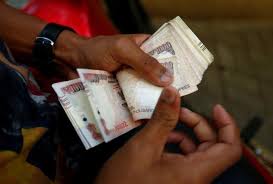
It has been five years since demonetisation took place on November 8, 2016. The announcement came later in the evening that surely shocked the people of the country. In the announcement, PM Modi said that Rs 500 and Rs 1000 currency notes will no longer be used as legal tenders. However, on this day, what came to our notice was a bit peculiar. Some of the users on social media started trending the hashtag ‘black day in Indian Economy’, in which it was mentioned that demonetisation was the black day of the economy.

One of the users wrote on Twitter that Demonetisation is a case of intentional looting and legalised plunder of our country. It has ruined our country’s economy and many small business owners and poor people have suffered greatly as a result of the government’s rash action.

Another user wrote that despite demonetisation, the cash circulation increased as well as the cash with the public also increased. He further said that no major black money was recovered that led to a negative impact on GDP.

Yet another user said that it was a masterstroke in which 99.8% of the money returned to circulation and millions of people lost their jobs and businesses. Adding further to it, he said that demonetisation has caused the death of innocent lives, distress to the working class and destruction of the economy.

What is Demonetisation?

Demonetisation is the act of removing a currency unit’s legal tender status. It takes place whenever a national currency is changed. It entails removing the current form or forms of money from circulation and replacing them with new notes or coins.
Read Also: Five years of demonetisation: A quick look at how it affected the economy

What was the reason for implementing demonetisation in India?

Demonetisation was done to minimise the amount of counterfeit cash in the economy, which is used to fund criminal activity. As soon as the announcement of demonetisation came, people started rushing to exchange their Rs 500 and Rs 1000 currency notes, resulting in cash shortages around the country.

Long queues were seen outside the banks, ATMs and small firms experienced temporary cash loss. The situation was considerably worse in rural India, where residents struggled to exchange and withdraw money due to a shortage of banks and ATMs in their area.

India News

BJP raises seat offer to Eknath Shinde’s Shiv Sena to nearly 90 ahead of Mumbai civic polls, talks continue

The BJP has raised its seat offer to Eknath Shinde’s Shiv Sena to nearly 90 for the upcoming BMC elections, but fresh talks are needed as differences persist within the Mahayuti.

Published

on

With the Brihanmumbai Municipal Corporation (BMC) elections drawing closer, the seat-sharing tussle within the Mahayuti alliance continues, with the BJP increasing its offer to Eknath Shinde-led Shiv Sena but failing to reach the party’s expectations.

According to sources, the BJP has now proposed close to 90 seats for the Shinde faction in the upcoming Mumbai civic polls. This is a significant jump from its earlier offer of 52 seats but still falls short of what Shinde is seeking. The Shiv Sena leader has reportedly reduced his demand from an initial 125 seats to 112, yet remains dissatisfied with the latest formula.

Chief Minister Devendra Fadnavis is expected to hold another round of discussions with Shinde to break the deadlock. Sources indicate that the BJP is unlikely to stretch its offer much further, especially after its strong showing in recent statewide local body elections.

BJP firm after strong local poll performance

The BJP has emerged as the single largest party in the recent local polls, securing 117 municipal president posts. In comparison, the Shinde-led Shiv Sena won 53 posts, while Ajit Pawar’s faction of the NCP secured 37. These results have strengthened the BJP’s negotiating position ahead of the BMC elections.

However, the current seat-sharing calculations could change if Ajit Pawar decides to contest the Mumbai civic polls as part of the alliance. Senior NCP leader Sunil Tatkare confirmed that no final decision has been taken yet, noting that discussions with alliance partners are ongoing.

Nawab Malik factor complicates alliance talks

A major point of contention within the Mahayuti is the issue of senior NCP leader Nawab Malik, who is facing multiple corruption cases, including a money laundering case linked to underworld activities. While the alliance has made it clear that Malik is unacceptable as part of its Mumbai setup, Ajit Pawar is reportedly firm on backing him.

Mumbai BJP chief Ameet Satam has publicly stated that the party would not align with any group that includes Malik. Sources added that if the NCP joins the alliance in Mumbai, it may be asked to project a different leader and contest a limited number of seats.

BMC elections timeline

The countdown to the Brihanmumbai Municipal Corporation elections has already begun, with less than a month left for polling. Voting is scheduled for January 15, with counting set to take place the following day. A total of 2,869 municipal seats will be contested, including 227 seats in the BMC.

Continue Reading

India News

Everyone has their demands: Robert Vadra responds to calls for Priyanka Gandhi as PM candidate

Robert Vadra has reacted to growing calls for Priyanka Gandhi as a prime ministerial candidate, saying leadership speculation should not overshadow pressing issues like pollution and employment.

Published

on

Robert Vadra

Businessman Robert Vadra has reacted cautiously to growing political chatter around Congress leader Priyanka Gandhi Vadra being projected as a future prime ministerial candidate, saying such expectations are natural but the priority should remain on issues directly affecting the people.

The remarks came after Congress Lok Sabha member Imran Masood publicly pitched Priyanka Gandhi, the party’s general secretary and MP from Wayanad, as a potential prime ministerial face. The statement triggered sharp reactions from the BJP, particularly in the backdrop of criticism over Priyanka Gandhi’s response to violence against minorities in Bangladesh.

Focus should remain on people’s issues, says Vadra

Speaking to media, Robert Vadra said that demands and expectations often emerge from different sections, but leadership speculation should not distract from pressing national concerns.

“Everyone has their own demands. There are demands from various quarters that Priyanka should come forward. There are also demands that I should enter politics. But right now, the focus should be on the real issues that concern the people of the country,” Vadra said.

He underlined that challenges such as pollution, education and employment deserve greater attention in public and political discourse.

Emphasis on brotherhood and unity

Commenting on the situation in Bangladesh, Vadra stressed the importance of harmony and communal unity, cautioning against divisive narratives.

He said that during his visits to religious places across the country, he has observed similar values and concerns among people of different faiths. According to him, unity and brotherhood should guide discussions, rather than any Hindu-Muslim divide.

“No one should be involved in divisive activities. The focus should be on serious challenges facing the country,” he added.

Domestic concerns should come first

Vadra also said that national priorities must take precedence before engaging with issues beyond India’s borders.

“First, we should focus on matters related to our own country. After that, we can look at issues concerning Bangladesh or any other nation,” he said.

Pollution needs urgent attention

Highlighting environmental concerns, Vadra said pollution in the national capital has reached alarming levels and requires immediate solutions. He noted that the issue did not receive adequate discussion during the Winter Session of Parliament.

He pointed out that Priyanka Gandhi had also intended to raise the issue of pollution in Parliament. Vadra suggested that if domestic measures fail, international cooperation could be explored to address worsening air quality.

Christmas greetings and call for peace

On the occasion of Christmas, Vadra extended greetings, saying he prayed for peace, unity and the overall well-being of the country.

Continue Reading

India News

J&K cabinet clears residential plot allotment for flood-affected families

The Jammu and Kashmir cabinet has approved allotment of residential plots to families affected by floods and landslides in August and September, paving the way for rehabilitation.

Published

on

j nd k

In a significant relief measure for disaster-hit families in Jammu and Kashmir, the government has approved the allotment of residential plots to people whose homes were damaged or destroyed in floods and landslides earlier this year. The decision aims to help affected families rebuild their houses at safer locations.

The Jammu and Kashmir cabinet, led by Chief Minister Omar Abdullah, has cleared the 5 Marla residential land allotment scheme. A senior official said the proposal has been forwarded to the Lieutenant Governor for assent, marking an important step towards large-scale rehabilitation.

According to the government, the decision will cover families impacted by floods, cloudbursts and landslides that occurred during August and September across the Union Territory. Most of the damage was reported from the Jammu region, where thousands of houses were affected due to extreme weather events.

Official data shared earlier in Parliament indicated that the disasters caused widespread destruction. Around 200 people lost their lives, while more than 8,400 houses were damaged. In addition to property losses, large tracts of agricultural land were affected, and livestock losses were also reported.

A significant number of casualties occurred during religious pilgrimages. On August 14, flash floods at the Machail Yatra base camp in Chisoti area of Kishtwar district claimed over 60 lives, with several people reported missing. Another tragedy struck on August 26, when a massive landslide hit the Mata Vaishno Devi Yatra track in Katra amid heavy rainfall, killing 35 pilgrims.

Following the Katra incident, protests were held against the shrine board over the continuation of the yatra despite weather warnings. The Lieutenant Governor had ordered a probe into the landslide, directing a three-member committee to submit its report within two weeks. However, the report has not yet been made public.

While ex-gratia relief has already been provided to the families of those who lost their lives, the demand for land allotment to rebuild homes at safer locations has remained a key concern among survivors. Officials said identifying suitable land that is both safe and acceptable to local communities has been challenging.

A senior official said groundwork at the district level has largely been completed and the cabinet’s approval has paved the way for the rehabilitation process. The Centre has already sanctioned the reconstruction of 5,000 houses damaged in the floods in Jammu and Kashmir.

Continue Reading

Trending

© Copyright 2022 APNLIVE.com