English हिन्दी
Connect with us

India News

Adani issue: Supreme Court says no to Centre’s sealed cover panel suggestion

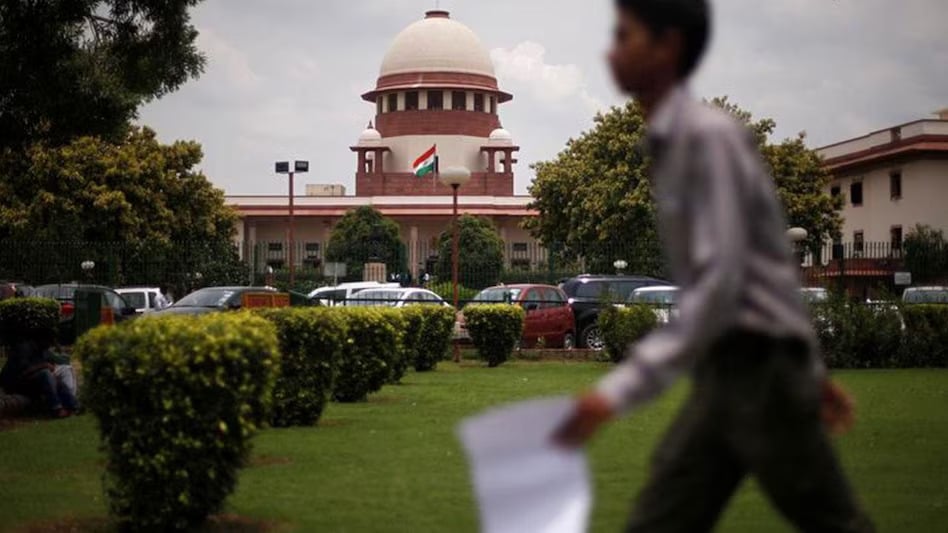
Citing the need to maintain “full transparency”, the Supreme Court, Friday, turned down a sealed cover suggestion from the Centre on a proposed panel of experts to strengthen regulatory measures for the stock market in the wake of the recent rout in the shares of the Adani Group.

Published

on

Supreme Court

Citing the need to maintain “full transparency”, the Supreme Court, Friday, turned down a sealed cover suggestion from the Centre on a proposed panel of experts to strengthen regulatory measures for the stock market in the wake of the recent rout in the shares of the Adani Group.

A bench comprising Chief Justice D Y Chandrachud and Justices P S Narasimha and J B Pardiwala, told the Centre that it will not accept the sealed cover suggestion because the apex court wants to maintain full transparency in the interest of the investors.

Taking into account the Adani Group share crisis, the Supreme Court had on February 10, said the interests of investors in the country need to be protected against market volatility while also directing the Centre to consider setting up panel of domain experts headed by a former judge to look into strengthening the regulatory measures.

Adani Group has endured over $120 billion in market losses- nearly half of the conglomerate’s estimated value—since the damning report released by US short-seller Hindenburg Research last month.

Hindenburg Research published a report last month, accusing the Adani Group of indulging in improper use of offshore tax havens and stock manipulation while also raising concerns about high debt and the valuations of seven listed Adani companies.

Read Also: UK journalist’s reaction visiting Tamil Nadu for first time goes viral | WATCH

The group has denied the allegations, saying the short-seller’s narrative of stock manipulation has “no basis” and stems from an ignorance of Indian law, adding that it has always made the necessary regulatory disclosures.

However, the short-seller hit back with a scathing response titled “Fraud cannot be obfuscated by nationalism or a bloated response that ignores every key allegation we raised,”.

Hindenburg Research accused the Adani Group of holding back India’s progress by draping itself in the Indian flag while systematically looting the nation.

On February 2, Thursday, the National Stock Exchange (NSE) put Adani Ports, Adani Enterprises, and Ambuja Cements under additional surveillance measure (ASM) framework, thus requiring 100 precent margin to trade in their shares.

The Adani Group, led by billionaire chairman Gautam Adani—who himself has faced a massive dip in personal fortune and dropped out of the Forbes top 10 rich list—cancelled its fully subscribed Rs 20,000 crore Follow-On Public Offering (FPO) and returned money to its investors.

The Adani crisis also put the Prime Minister in the firing zone as Opposition parties have levelled allegations of a nexus between Gautam Adani meteoric rise since Narendra Modi’s election to the nation’s top post in 2014. However, PM Modi hasn’t directly issued a response instead resorting to taking snide jibes at his political opponents without naming anyone.

Adani’s downfall will weaken PM Modi, spur democratic revival in India: George Soros

Madhya Pradesh court sentences fire department officer to 4 years in jail for submitting fake engineering degree

India News

Heavy rain triggers flash floods and landslides across Jammu and Kashmir, damaging roads and property

Heavy rainfall triggered flash floods and landslides across Jammu and Kashmir, damaging infrastructure, disrupting traffic and prompting authorities to issue a weather advisory.

Published

on

Monsoon in Jammu and Kashmir

Heavy rainfall across several parts of Jammu and Kashmir triggered flash floods and landslides, causing widespread damage to roads, vehicles and residential property. The adverse weather also disrupted traffic in multiple areas, prompting authorities to advise people to remain vigilant.

Flash flood causes destruction in Doda

A flash flood struck the Thathri sub-division of Doda district after heavy overnight rainfall, leading to significant damage to homes, vehicles and other property.

Floodwaters surged through the Thathri market after water levels in local streams rose rapidly. Large quantities of mud, stones and debris entered residential areas, inundating houses and damaging parked vehicles as water flowed through roads and marketplaces.

Residents said the flooding occurred suddenly, leaving little time to respond. Officials have started assessing the damage, while restoration and relief work is underway.

Local residents alleged that debris from ongoing link road construction is frequently dumped into the Thathri stream. They claimed the accumulated material obstructs the natural flow of water, increasing the risk of flooding during heavy rainfall. Residents urged the administration to take corrective measures to prevent similar incidents in the future.

Doda-Kishtwar highway affected by flash floods

Continuous rainfall also triggered flash floods that damaged the Doda-Kishtwar highway, disrupting vehicular movement on the route.

Officials said floodwaters deposited large amounts of mud, boulders and debris on the highway. A portion of the road was damaged, forcing authorities to suspend traffic until conditions improve.

In neighbouring Kishtwar district, heavy rain triggered a landslide and mudslide near the tunnel area of the under-construction 540 MW Kwar Hydroelectric Power Project, adding to the weather-related disruption in the region.

Administration issues weather advisory

The administration had earlier issued an advisory warning of heavy rainfall, thunderstorms, flash floods and landslides in vulnerable areas across Jammu and Kashmir.

Authorities advised residents, particularly those living near rivers, streams and nallahs, to remain alert and avoid unsafe locations during the ongoing spell of rain.

Samba receives highest rainfall

According to the Meteorological Department, Samba recorded the highest rainfall in the Jammu region during the 24-hour period ending at 8:30 am on Monday, receiving 90 mm of rainfall.

Kathua received 66.2 mm, followed by Katra (44.4 mm), Doda (42 mm), Jammu (41.8 mm), Udhampur (40.6 mm), Bhaderwah (33.6 mm), Kishtwar (24 mm), Reasi (10.5 mm), Batote (4.7 mm), Ramban (4.5 mm) and Banihal (0.4 mm).

Continue Reading

India News

Mumbai-Pune train services remain suspended for second day after landslides, Central Railway issues fresh cancellation list

Heavy rainfall-triggered landslides have disrupted Mumbai-Pune train services for a second consecutive day, with Central Railway cancelling several MEMU services and continuing restoration work.

Published

on

Train services between Mumbai and Pune remained suspended for the second consecutive day on Tuesday after heavy monsoon rains triggered multiple landslides in the Bhor Ghat section of the Central Railway network, affecting one of Maharashtra’s busiest rail corridors.

Railway officials continued restoration work across the affected stretch, where mud, rocks and boulders have blocked tracks following persistent rainfall. Authorities said services will resume only after a detailed safety inspection confirms that the route is fit for operations.

Landslides disrupt railway operations in Bhor Ghat

The disruption was caused by multiple landslides in the Karjat-Lonavala section. A major landslide occurred between Thakurvadi and Monkey Hill Loop Cabin (MHLC) on the Up Main Line in the Mumbai division. Another incident was reported on the Middle Line between Khandala and Monkey Hill.

Continuous rainfall has destabilised slopes in the ghat region, resulting in debris falling onto multiple railway tracks and making train movement unsafe.

Teams from Central Railway have been working with heavy machinery to remove debris, inspect the tracks and restore services. However, ongoing rainfall has slowed restoration efforts, prompting authorities to continue the suspension of train operations in the interest of passenger safety.

Central Railway cancels six MEMU services

Central Railway has released a fresh list of cancelled MEMU services for July 7, 2026.

The cancelled trains are:

  • DRD-PNVL MEMU (Train No. 69164), departure 5:25 am
  • PNVL-DSR MEMU (Train No. 69165), departure 9:20 am
  • BSR-PNVL MEMU (Train No. 69168), departure 12:10 pm
  • PNVL-BSR MEMU (Train No. 69167), departure 2:35 pm
  • BSR-PNVL MEMU (Train No. 69166), departure 4:40 pm
  • PNVL-DRD MEMU (Train No. 69161), departure 7:05 pm

Passengers have been advised to check the latest train status through official railway platforms before travelling.

Railway Minister reviews restoration efforts

Union Railway Minister Ashwini Vaishnaw reviewed the ongoing restoration work and directed officials from Central and Western Railway to coordinate efforts to restore services at the earliest without compromising passenger safety.

Railway authorities said operations would resume only after a comprehensive inspection confirms that the affected tracks are safe for regular train movement.

Heavy rain also impacts road traffic

The intense rainfall has also disrupted road transport between Mumbai and Pune. Landslides and waterlogging affected parts of the Mumbai-Pune Expressway as well as the old Mumbai-Pune Highway, causing temporary traffic disruptions before authorities cleared the affected sections.

Meanwhile, the India Meteorological Department (IMD) has issued a red alert for several parts of Maharashtra, warning of continued heavy to very heavy rainfall. Officials cautioned that further showers could trigger additional landslides and delay the restoration of railway services.

Railway authorities said updates on cancellations, diversions and the resumption of train services will continue to be issued as restoration work progresses.

Continue Reading

India News

PM Modi’s Indonesia visit to boost defence, digital and strategic partnership

Prime Minister Narendra Modi’s Indonesia visit is expected to strengthen bilateral ties through new initiatives in defence, digital infrastructure, maritime security, trade and critical minerals.

Published

on

PM Narendra Modi

Prime Minister Narendra Modi’s upcoming visit to Indonesia is expected to give fresh momentum to the growing strategic partnership between the two countries, with discussions likely to cover defence cooperation, maritime security, digital connectivity, trade, critical minerals and several other sectors.

India’s Ambassador to Indonesia, Sandeep Chakravorty, said the relationship between New Delhi and Jakarta has entered a stronger phase following Indonesian President Prabowo Subianto’s visit to India as the Chief Guest for the Republic Day celebrations last year. He said the Prime Minister’s visit is expected to further strengthen this trajectory through a series of new understandings and agreements.

Defence and maritime cooperation likely to receive major push

According to the ambassador, defence and maritime security will remain key pillars of the discussions during the visit.

He highlighted Indonesia’s strategic location along the Malacca Strait, describing secure sea lanes as vital for both countries and the wider Indo-Pacific region. He stressed that uninterrupted maritime connectivity remains essential for global trade and regional stability.

Without revealing specific details, Chakravorty indicated that the visit could produce significant outcomes in defence cooperation, saying several important announcements are expected.

‘BrahMos Plus’ hints at broader defence partnership

The ambassador also suggested that defence ties between India and Indonesia are moving beyond discussions centred on the BrahMos supersonic cruise missile.

Responding to a question about future cooperation, he remarked that the next phase would be “BrahMos Plus,” while refraining from providing further details.

He said future collaboration is expected to focus on defence manufacturing, technology partnerships, training and capacity building. India, he noted, has emerged as an important exporter of defence equipment and could support Indonesia’s efforts to strengthen its domestic defence manufacturing capabilities.

Military cooperation is also expanding, with India set to participate with troops for the first time in the multinational Garuda Shield military exercise after previously attending as an observer.

Digital connectivity and UPI integration gain momentum

Digital cooperation is expected to be another major highlight of the visit.

The ambassador said Indonesia is preparing to launch its Open Network for Digital Commerce (ONDC)-inspired platform during Prime Minister Modi’s visit, making it the fastest international adopter of India’s digital public infrastructure model.

The initiative is expected to support nearly 65 million micro, small and medium enterprises (MSMEs) in Indonesia by creating a more open digital commerce ecosystem.

Chakravorty also said discussions on integrating India’s Unified Payments Interface (UPI) with Indonesia’s payment systems have reached an advanced stage.

While technical integration remains complex due to Indonesia’s multiple payment-switch networks, he expressed confidence that progress would continue and the Prime Minister’s visit could accelerate the process.

Critical minerals and investment to feature prominently

Critical minerals are also expected to be a major area of cooperation as both countries look to strengthen supply chains for clean energy technologies and electric vehicle manufacturing.

Indonesia possesses significant reserves of nickel and other strategic minerals, while India is seeking reliable supplies to support its manufacturing ambitions.

The ambassador said India plans to invest in processing critical minerals within Indonesia rather than importing only raw materials. He added that such investments would support industrial development in both countries while contributing to India’s self-reliance goals.

Cultural ties to be highlighted

Apart from strategic and economic cooperation, the visit is also expected to showcase the longstanding cultural relationship between India and Indonesia.

Both countries will launch a 15-month programme commemorating Rabindranath Tagore’s 1927 visit to Indonesia, recognising his influence on the country’s educational and cultural landscape.

Prime Minister Modi is also expected to visit Yogyakarta, a city known for its historic temples, reflecting the deep civilisational links shared by the two nations.

With cooperation expanding across defence, digital infrastructure, trade and critical minerals, the visit is expected to mark another important step in strengthening the India-Indonesia strategic partnership and advancing cooperation in the Indo-Pacific region.

Continue Reading

Trending

© Copyright 2022 APNLIVE.com