English हिन्दी
Connect with us

India News

Aditya L1 mission: Countdown for ISRO’s Solar mission starts today; check launch time and key objectives

ISRO Chief S Somanath said the space agency was preparing for the launch and the countdown for Aditya L1 will begin today.


Published

on

Aditya-L1

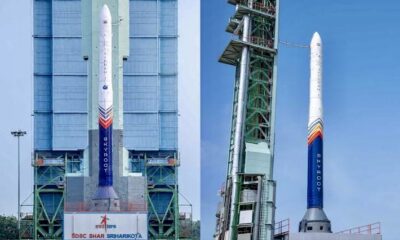
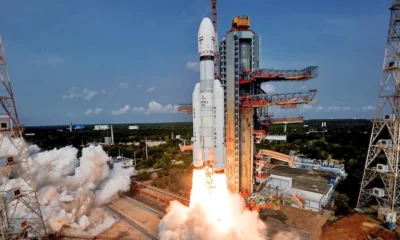
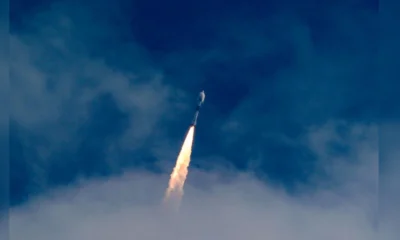
After the groundbreaking success of India’s moon mission, Chandrayaan-3, ISRO is gearing up for another mission but this time to the Sun. The India Space Research Organisation (ISRO) is set to launch its first space-based solar mission Aditya L1 on Friday. The launch is scheduled to take place on September 2 at 11:50 a.m. from the Sriharikota spaceport in Andhra Pradesh.

ISRO Chief S Somanath said the space agency was preparing for the launch and the countdown for Aditya L1 will begin today. He said that they were just getting ready for the launch. The rocket and satellite are ready and they have completed the rehearsal for the launch. 
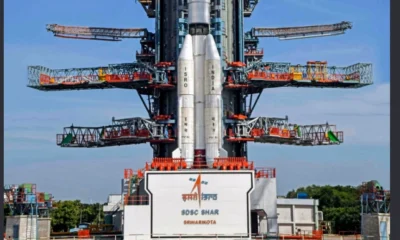
Adiya-L1 spacecraft will provide remote observations of the solar corona and in situ observations of the solar wind at L1, the Sun-Earth Lagrangian point. The L1 point is located about 1.5 million kilometers from the Earth. 

Exceptionally, this will be India’s first space mission dedicated to observations of the Sun to be launched by the Bengaluru-headquartered space agency.

The ISRO team is ready for the launch, Somnath told the reporters. He said that the rocket, as well as the satellite, are ready with the launch also completed. The Indian space agency has commenced the mission’s countdown on Friday.

Aditya L1 will be placed in a halo orbit around the Lagrange point (L1) of the Sun-Earth system. A satellite that is placed in the halo orbit around the L1 point has the advantage of viewing the Sun continuously without any occultation/eclipses. This provides a greater advantage of observing solar activities and their effect on space weather in real time.

The location shall be a balancing point of the gravitational forces of the Sun and the Earth. The position where the two gravitational forces cancel out each other allows objects to stay at a fixed position, helping in the reduction of the use of fuel by the spacecraft.

The first Indian space mission to study the sun will carry payloads expected to provide crucial information to understand the problem of coronal heating, coronal mass ejection, pre-flare and flare activities, and their characteristics, dynamics of space weather, propagation of particle and fields, etc.

India News

Galgotias University asked to vacate India AI Summit over Chinese robot dog row

Galgotias University has reportedly been asked to vacate its stall at the India AI Impact Summit after a Chinese-made robotic dog was allegedly presented as a university innovation.

Published

on

Galgotias University has reportedly been asked to vacate its exhibition space at the India AI Impact Summit in New Delhi after a controversy erupted over the display of a robotic dog at the event.

The Greater Noida-based institution came under scrutiny after a video from the summit went viral on social media. In the clip, representatives of the university were seen presenting a robotic dog as a product developed by its Centre of Excellence.

Robot identified as Unitree Go2

The robotic dog displayed at the summit was identified as the Unitree Go2, a commercially available quadruped robot manufactured by Chinese robotics company Unitree. The model is available for purchase in India at a price ranging between Rs 2 lakh and Rs 3 lakh.

At the summit, the machine was introduced under the name “Orion”. In one of the widely circulated videos, a university representative claimed during a media interaction that the robot had been developed at Galgotias University’s Centre of Excellence.

Another clip showed a professor making a similar assertion, stating that the robot was built by the university team. Social media users later pointed out that the device matched the Unitree Go2 model and alleged that imported technology was being presented as an indigenous innovation.

University issues clarification

Following the backlash, Galgotias University released a statement on X, formerly Twitter, clarifying that the robotic dog had been procured from Unitree and was being used as a learning tool for students.

In its statement, the university said the robodog was acquired to help students experiment and expand their technical understanding. It further stated that it had not built the robot nor claimed to have done so.

However, the clarification drew further criticism online. A Community Note was added to the university’s post, stating that the claim of never presenting the robodog as its own was misleading. The note highlighted that the robot had been renamed “Orion” and that university representatives had explicitly claimed it was developed by their team during the event.

Faculty response amid reports of removal

Responding to the controversy, Neha, a communications faculty member at the School of Management who had earlier described the robot as a Galgotias innovation, said the issue may have stemmed from a misunderstanding during interaction with the media. She stated that she is not part of the AI department and that the robot was brought for projection purposes.

Meanwhile, amid reports that the university had been asked to vacate its stall at the summit, Professor Aishwarya Shrivastava said that they had no such information at that point.

Social media backlash intensifies

The controversy gained momentum after several users on X shared side-by-side comparisons of the robot displayed at the summit and promotional images of the Unitree Go2 available online.

One widely circulated post stated:

“This is Unitree Go2, a Chinese robot that can be ordered online. How is this being presented as developed by the university?”

Another user wrote:

“Renaming a commercial product ‘Orion’ doesn’t make it indigenous. This is a standard Unitree model.”

Multiple posts questioned how a commercially available imported product was described as a Centre of Excellence innovation during a national AI-focused summit.

The university later described the criticism as part of a “propaganda campaign” against it. Its post itself carried a Community Note stating that video evidence showed representatives claiming the robot was developed in-house.

The episode has sparked wider debate online over transparency, attribution and accurate representation of technology at innovation events.

Continue Reading

India News

Sarpanch from AAP shot dead at wedding in Punjab’s Tarn Taran

A sarpanch affiliated with AAP was shot dead during a wedding in Punjab’s Tarn Taran district. His cousin was injured in the attack. The incident comes weeks after a similar killing in Amritsar. Police investigation is underway.

Published

on

A village sarpanch affiliated with the Aam Aadmi Party (AAP) was shot dead during a wedding function in Punjab’s Tarn Taran district, police said.

Harpinder Singh was attending a wedding ceremony at a farmhouse located along the Tarn Taran-Bathinda National Highway when two unidentified assailants opened fire. He died in the attack. His cousin, Jarmanjit Singh, sustained injuries and was rushed for medical treatment.

The incident has triggered concern in the region, with authorities probing the circumstances surrounding the shooting.

Similar killing reported in Amritsar last month

The killing comes weeks after another sarpanch linked to AAP was shot dead in a separate incident in Amritsar.

Jarmal Singh had gone to a wedding hall to attend a relative’s marriage when unidentified men shot him in the head. He later succumbed to injuries during treatment at a hospital.

In that case, Jarnail Singh was targeted when gunmen entered the venue and opened fire. Video footage retrieved from the wedding hall showed two attackers approaching from behind and shooting him in the back of the head. The sudden firing led to panic among guests, who scrambled for safety.

Police later arrested two shooters along with five other accused in connection with the Amritsar incident.

Investigations are ongoing in the Tarn Taran case to identify and apprehend the assailants.

Continue Reading

India News

Ajit Pawar plane crash black boxes damaged in fire, AAIB begins probe

The AAIB said both black boxes of the Learjet 45 that crashed in Baramati were damaged in fire. DFDR data has been retrieved while the CVR is under examination.

Published

on

Ajit Pawar plane crash

The Aircraft Accident Investigation Bureau (AAIB) has confirmed that the flight recorders from the Learjet 45 aircraft involved in the fatal crash in Baramati were damaged due to prolonged exposure to intense heat.

The accident occurred on January 28, 2026, when the chartered Learjet 45, registered as VT-SSK, crash-landed at the runway threshold in Baramati, Maharashtra. The investigation is being conducted strictly under the Aircraft (Investigation of Accidents and Incidents) Rules, 2017, and in accordance with international standards laid down in ICAO Annex 13, as stated by the Ministry of Civil Aviation.

Both flight recorders exposed to fire

Officials said the aircraft was fitted with two independent flight recorders. Both devices were subjected to intense heat for a prolonged period during the crash and sustained fire damage.

Despite the damage, the Digital Flight Data Recorder (DFDR), manufactured by L3-Communications, has been successfully downloaded at the AAIB Flight Recorder Laboratory. Meanwhile, the Cockpit Voice Recorder (CVR), manufactured by Honeywell, is currently undergoing detailed technical examination.

Authorities have sought assistance from the Accredited Representative of the State of Manufacture to provide specialised support in retrieving data from the damaged CVR.

Investigation to remain evidence-based

The AAIB stated that it is following all prescribed technical and procedural protocols to ensure a thorough, objective and evidence-based investigation. The bureau reiterated its commitment to transparency and said further details will be shared at an appropriate stage.

The investigation body also urged stakeholders to refrain from speculation while the probe is underway. Earlier, authorities had emphasised that no premature conclusions should be drawn until the analysis is fully completed. The black box data is expected to provide crucial insights into the sequence of events leading to the crash.

Five people died in the crash

According to the Directorate General of Civil Aviation (DGCA), five people, including the crew members, were on board the chartered aircraft flying from Mumbai to Baramati when it crash-landed at the runway threshold.

Among those killed was Ajit Pawar, who was travelling to Baramati to campaign for the Zilla Panchayat elections.

Continue Reading

Trending

© Copyright 2022 APNLIVE.com