English हिन्दी
Connect with us

India News

AgustaWestland deal: Christian Michel extradited to India, produced in CBI court

Published

on

AgustaWestland Deal

[vc_row][vc_column][vc_column_text]The alleged middleman in Rs.3,600 crore AgustaWestland chopper deal, Christian Michel, was extradited to India late night on Tuesday, Dec 4 and produced in a CBI court today after questioning in CBI headquarters.

The extradition procedure followed External Affairs Minister Sushma Swaraj’s discussions with UAE counterpart Abdullah bin Zayed in Abu Dhabi. The move is seen as significant because Michel is a British national being extradited to India from Dubai.

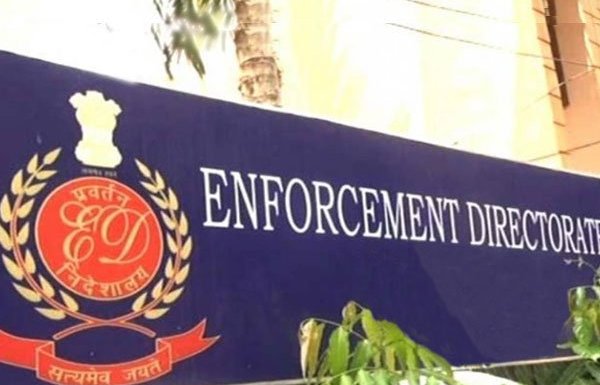
The extradition operation code-named ‘Unicorn’, the CBI said, was carried out under the ‘guidance’ of National Security Advisor Ajit Doval and being coordinated by interim agency Director M Nageswar Rao. Both the Central Bureau of Investigation (CBI) and the Enforcement Directorate (ED) have filed cases against him.

Michel was taken to CBI headquarters following a medical checkup after being brought to India. He reached the CBI headquarters at 1:38am, reported The Hindustan Times (HT).

“Christian Michel James will be examined with respect to his involvement in the case and confronted with documents recovered during raids by Swiss Authorities and received by CBI through LRs indicating the bribes paid by Mr Christian Michel James to the Indian authorities for securing the contract for supply of VVIP helicopters from M/s AgustaWestland,” CBI said in a statement.

The AgustaWestland case involves the deal to purchase 12 luxury helicopters for use by the President, Prime Minister, former prime ministers and other VIPs, when Manmohan Singh’s Congress-led coalition was in power. The government scrapped the contract in 2014 amid allegations that AgustaWestland, whose parent company Finmeccanica faced charges of bribery in Italy, had paid kickbacks in India.

Michel’s alleged involvement in the purchase of VVIP helicopters first surfaced in 2012. He was alleged to have entered into a criminal conspiracy with co-accused including the then IAF chief SP Tyagi and his family members, and government officials all of whom had abused their official positions by reducing the service ceiling of the VVIPs helicopter from 6,000 metres to 4,500 metres.

The CBI has alleged there was an estimated loss of Euro 398.21 million (approximately Rs 2,666 crore) to the exchequer in the deal that was signed on February 8, 2010 for the supply of VVIP choppers worth Euro 556.262 million.

Michel is one of the three middlemen being examined in the case, along with Guido Haschke and Carlo Gerosa.

Michel is wanted for commercial fraud, bribery and money laundering in connection with the deal. The Enforcement Directorate has accused Michel of receiving 30 million Euros (about Rs. 225 crore) from AgustaWestland as kickbacks.

The ED investigation found that remittances made by Michel through his Dubai-based firm Global Services to a media firm he floated in Delhi, along with two Indians, were made from the funds which he got from AgustaWestland through “criminal activity” and corruption being done in the chopper deal that led to the subsequent generation of proceeds of crime.

Michel has refuted the allegations.

Michel was arrested in the UAE last year on the basis of an Interpol notice and was out on bail.

In July, Michel’s lawyer alleged that he was being pressured by Indian agencies to frame Congress leader Sonia Gandhi in return for amnesty from criminal proceedings.

On August 26, UAE had asked a court on the possibility of extraditing a British national to a third country. The court said a few days later that extradition is possible.

On November 19. Dubai’s highest court approved India’s request to extradite Michel, subject to the move being approved by the UAE’s justice minister. On Monday, the Dubai government passed an administrative order to enable Michel’s extradition.

Officials said Swaraj’s presence in Dubai for a meeting of the India-UAE Joint Commission helped push the process.

Last month, the Dubai Cassation Court effectively ended the legal challenge to Michel’s extradition by upholding an appellate court’s decision to extradite him though he pleaded ‘not guilty’.

Alleged irregularities in the AgustaWestland deal were repeatedly raised by the Bharatiya Janata Party during its successful 2014 general elections campaign. Michel’s extradition comes at a time when the Opposition has been targeting the government over a deal for the purchase of Rafale combat aircraft.

The BJP said the extradition in the case from the UPA era is a diplomatic victory for India and could spell “serious trouble” for the Congress’s “first family”, referring to Gandhis while at the same time asserting that the development was an unequivocal affirmation of the Narendra Modi government’s seriousness in fighting corruption.[/vc_column_text][/vc_column][/vc_row]

India News

PM Modi assures no discrimination in women’s quota, delimitation debate intensifies in Parliament

PM Narendra Modi has assured that women’s reservation will be implemented without discrimination, amid a heated debate over delimitation in Parliament.

Published

on

PM modi

Prime Minister Narendra Modi has assured that there will be no discrimination in the implementation of women’s reservation, as Parliament witnessed a sharp debate over the proposed linkage between the quota and delimitation exercise.

During the ongoing special session, the government reiterated its commitment to ensuring fair representation while addressing concerns raised by opposition parties regarding the timing and structure of the legislation.

The proposed framework aims to reserve 33 percent of seats for women in the Lok Sabha and state assemblies. However, its implementation is tied to a fresh delimitation exercise, which is expected after the next census.

Opposition questions timing and intent

Opposition leaders have raised concerns that linking the women’s quota to delimitation could delay its implementation. They argue that the process of redrawing constituencies may push the actual rollout further into the future.

The issue has triggered a broader political confrontation, with multiple parties questioning whether the move could alter representation across states.

Some critics have also alleged that the delimitation exercise could disproportionately benefit certain regions based on population, a charge the government has rejected.

Government reiterates commitment to fair implementation

Responding to these concerns, the Centre has maintained that the reforms are necessary to ensure accurate and updated representation based on population data.

Leaders from the ruling side have repeatedly emphasized that the process will be carried out transparently and without bias. The assurance that there will be “no discrimination” is aimed at addressing fears among states and opposition parties.

The debate marks a key moment in Parliament, with both sides engaging in intense exchanges over one of the most significant electoral reforms in recent years.

Continue Reading

India News

Give all tickets to Muslim women, Amit Shah says, attacking Akhilesh Yadav on sub-quota demand

A sharp exchange between Amit Shah and Akhilesh Yadav in Parliament over sub-quota for Muslim women highlights key divisions on women’s reservation implementation.

Published

on

A heated exchange broke out in Parliament during discussions on the women’s reservation framework, with Union Home Minister Amit Shah and Samajwadi Party chief Akhilesh Yadav locking horns over the demand for a sub-quota for Muslim women.

The debate unfolded as the government pushed forward key legislative measures to implement 33% reservation for women in the Lok Sabha and state assemblies.

Akhilesh Yadav argued that the proposed reservation must ensure representation for women from marginalised communities, including Other Backward Classes (OBCs) and Muslim women. He said that without such provisions, large sections could remain excluded from political participation.

He also questioned the timing of the bill, alleging that the Centre was avoiding a caste census. According to him, a census would lead to renewed demands for caste-based reservations, which the government is reluctant to address.

Government rejects religion-based quota

Responding to the demand, Amit Shah made it clear that reservation based on religion is not permitted under the Constitution.

He stated that any proposal to provide quota to Muslims on religious grounds would be unconstitutional, firmly rejecting the idea of a separate sub-quota for Muslim women within the broader reservation framework.

The government has maintained that the existing framework already includes provisions for Scheduled Castes (SC) and Scheduled Tribes (ST) women within the overall reservation structure.

Wider political divide over implementation

The issue of sub-categorisation within the women’s quota has emerged as a major flashpoint, even as most opposition parties broadly support the idea of women’s reservation.

Samajwadi Party leaders reiterated that their support for the bill depends on inclusion of OBC and minority women, while the government continues to defend its constitutional position.

The debate is part of a broader discussion during the special Parliament session, where multiple bills linked to delimitation and implementation of the women’s quota are being taken up.

Continue Reading

India News

No state will lose a seat, Centre assures as delimitation debate takes centre stage in Parliament

Parliament’s special session begins with key focus on implementing women’s reservation and delimitation, setting the stage for major electoral changes.

Published

on

Parliament

A special session of Parliament commenced on Thursday, with the Centre set to take up crucial legislation related to women’s reservation and delimitation of constituencies. The session, scheduled over three days, is expected to witness intense debate as the government pushes forward its legislative agenda.

At the centre of discussions is the proposal to operationalise the women’s reservation law, which seeks to allocate 33 percent of seats in the Lok Sabha and state assemblies to women. The law, passed earlier, requires enabling provisions before it can be implemented.

The rollout of the reservation is closely tied to the delimitation exercise — a process that redraws parliamentary constituencies based on updated population data. The implementation is expected only after the next census and delimitation process are completed.

The government is aiming to put in place the framework so that the reservation can be enforced in future elections, likely around 2029.

Delimitation and numbers at play

Delimitation is a key aspect of the proposed changes, as it will determine how seats are redistributed and which constituencies are reserved. The exercise is expected to reflect population shifts and may also involve an increase in the total number of Lok Sabha seats.

This linkage has made the issue politically sensitive, with several opposition parties backing women’s reservation in principle but raising concerns over how and when delimitation will be carried out.

Political reactions and expected debate

The session is likely to see sharp exchanges between the government and opposition. While there is broad agreement on increasing women’s representation, disagreements remain over the timing, process, and potential political implications of the delimitation exercise.

Some leaders have argued that delimitation could significantly alter the balance of representation among states, making it a contentious issue beyond the women’s quota itself.

The government, however, has framed the move as a step toward strengthening women’s participation in governance and ensuring more inclusive policymaking.

Continue Reading

Trending

© Copyright 2022 APNLIVE.com