
India News
Air India flight hits Trichi airport wall on takeoff, lands at Mumbai; all 136 passengers safe


An Air India flight with 136 passengers on board hit the perimeter wall at Trichy international airport during take-off early on Thursday and had to be diverted to Mumbai.
Air India flight IX-611 took off from the Trichy airport around 1:20 am for Dubai, hit the ATC compound wall at Trichy Airport and was damaged. The flight, however, continued its journey despite damage to the aircraft with the pilots apparently unaware of the incident. No passenger suffered any injury.
An airline statement said that pilots were informed about the aircraft hitting the wall only after they were airborne, who responded that the aircraft systems were operating normally. The crew, however, decided to divert the Boeing 737 aircraft to Mumbai where it landed at 5:20 am, said media reports.
It was later declared fit for operations after inspection at Mumbai airport.
Two of the aircraft wheels hit the airport perimeter wall, which collapsed on impact, said an NDTV report quoting officials.
Later officials found that the plane’s body had tears, cracks and dents that were potentially very dangerous. Broken parts of the plane’s antenna were found on the ground at the Trichy airport, an officer said.
“They scraped the underbelly, had it been a bit lower, that would have been the end,” according to a pilot quoted by NDTV. The pilot quoted was not from the flight.

In a statement released by Air India, the airline said, “After flight IX 611 from Trichy to Dubai had taken off from Trichy at about 1.30 am today, it was reported by local airport officials at Trichy that they have observed that the aircraft might have come in contact with the airport perimeter wall. The matter was conveyed to the pilot in command. The pilot in command reported that the aircraft systems were operating normally.”
“It was decided to divert the aircraft to Mumbai as a precautionary measure. The flight was diverted to Mumbai and it landed safely at about 5.35 am in Mumbai and taxied on its own power to the parking stand. All 130 passengers and six crew members on board the aircraft were alighted safely. No one suffered any injuries,” it added.
The airline also said that refreshments were served to the passengers at the Mumbai airport following which another aircraft was arranged to continue the flight to Dubai with a fresh team of crew.
“The pilot in command was Capt. D. Ganesh Babu who has a flying experience on the B 737 aircraft of 3600 hours including about 500 hours as Commander. The First Officer was Capt. Anurag who has an experience of about 3,000 hours on the B 737. The two pilots have been de-rostered pending investigation. The matter has been duly reported to the DGCA and the airline is fully cooperating with the investigation,” the airline said.
Minister of Civil Aviation Suresh Prabhu has ordered an inquiry into the incident. Both the pilot and co-pilot have been de-rostered pending investigation.
Taking to Twitter, Union Minister Suresh Prabhu said he has spoken to the secretary and other senior officials of the civil aviation department and has ordered a high-level inquiry into the incident. “Air India has constituted a sub-committee and is looking into all safety-related issues within the organisation, including subsidiaries,” he said.
“Directorate general of civil aviation officers are present at the site for preliminary inquiry and officers from the Aircraft Accident Investigation Bureau have also been deputed into the case,” he added.








India News
Mamata Banerjee slams poll body over officials’ transfer, calls move unprecedented
Mamata Banerjee has criticised the Election Commission for transferring senior officials ahead of West Bengal elections, alleging bias and procedural overreach.


India News
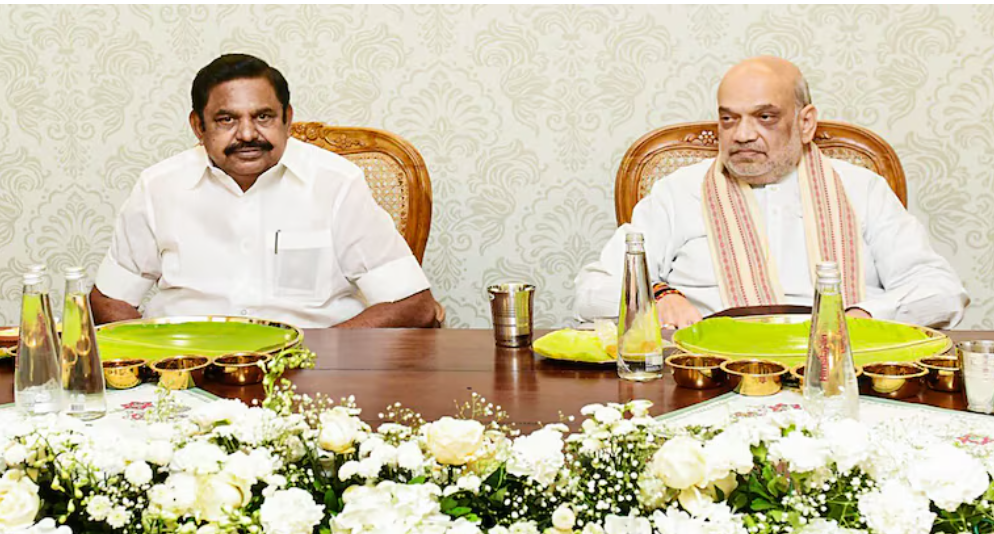
AIADMK-BJP seat-sharing talks to be finalised soon, says Edappadi K Palaniswami after Amit Shah meet
AIADMK chief Edappadi K Palaniswami says seat-sharing talks with BJP are in final stages and will conclude within days ahead of Tamil Nadu 2026 elections.
India News
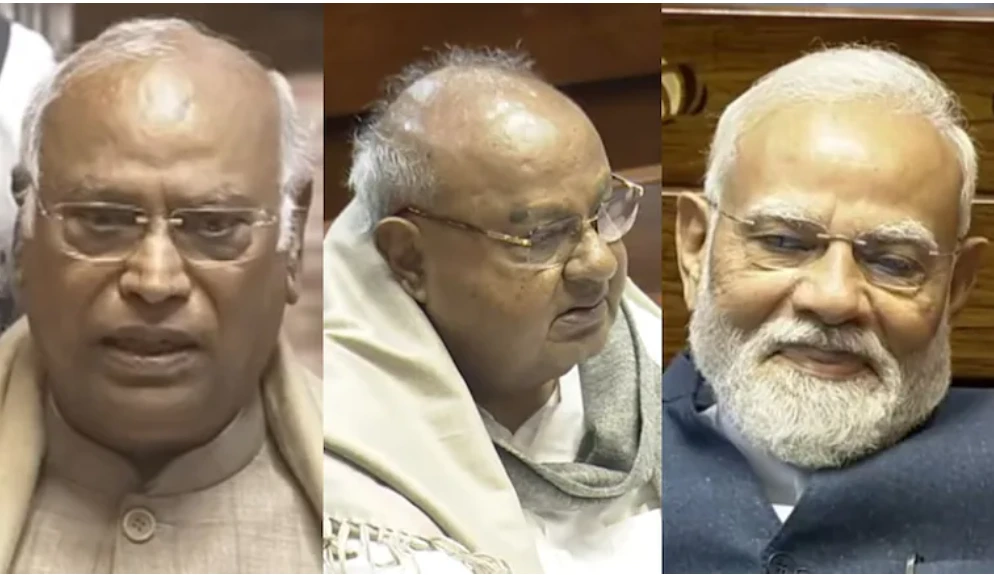
Deve Gowda hits back at Kharge’s married PM jibe, calls congress tie-up abusive relationship
HD Deve Gowda rebuts Mallikarjun Kharge’s remarks, saying JD(S) did not desert Congress and was forced to exit an “abusive” alliance.

Iran strike on Qatar LNG hub raises concerns for India’s energy security

Russian oil tanker rerouted to India amid Middle East crisis, to reach Mangaluru on March 21

Ustaad Bhagat Singh review: Pawan Kalyan shines in high-action entertainer

Eid 2026 in India may fall on March 20 or 21, moon sighting on March 19 to decide

Mamata Banerjee slams poll body over officials’ transfer, calls move unprecedented

Oppo K14 5G launched in India with 7000mAh battery, starts at Rs 17,999
Mamata Banerjee slams poll body over officials’ transfer, calls move unprecedented

PM Modi speaks to Qatar, France, Jordan, Oman and Malaysia leaders on Middle East tensions

AIADMK-BJP seat-sharing talks to be finalised soon, says Edappadi K Palaniswami after Amit Shah meet
Eid 2026 in India may fall on March 20 or 21, moon sighting on March 19 to decide

Afghan Men Try To Hang With The Jet Engine Of The Aircraft in Kabul- Afghanistan News – Kabul News
Trending Top 10 News: 10000 Crore Fine on Flipkart, Apple to Launch Unique Feature, Hdfc Bank Job Ad

Trending Top 10 News: Nokia 6310, Apple sales, Bachpan ka Pyar Video Kid, Dainik Bhaskar IT Raid

Trending Top 10 News: Canada bans Indian flights, Rain in Delhi NCR, AIMIM Twitter hacked, Raj Kundra case

Trending Top 10 News: Shein India, Apple New Service, Pocket Oxygen, Oppo Launched New Phone
-
 Latest world news23 hours ago
Iran strike on Qatar LNG hub raises concerns for India’s energy security
-
 Latest world news18 hours ago
Russian oil tanker rerouted to India amid Middle East crisis, to reach Mangaluru on March 21
-
 Entertainment17 hours ago
Ustaad Bhagat Singh review: Pawan Kalyan shines in high-action entertainer
-
 Festivals17 hours ago
Eid 2026 in India may fall on March 20 or 21, moon sighting on March 19 to decide
-
 India News4 hours ago
Mamata Banerjee slams poll body over officials’ transfer, calls move unprecedented
-
 India News4 hours ago
AIADMK-BJP seat-sharing talks to be finalised soon, says Edappadi K Palaniswami after Amit Shah meet
-
 Latest world news4 hours ago
PM Modi speaks to Qatar, France, Jordan, Oman and Malaysia leaders on Middle East tensions
-
 Gadgets3 hours ago
Oppo K14 5G launched in India with 7000mAh battery, starts at Rs 17,999
