English हिन्दी
Connect with us

India News

Amit Shah calls new criminal laws historic reform, says they will ensure timely Justice

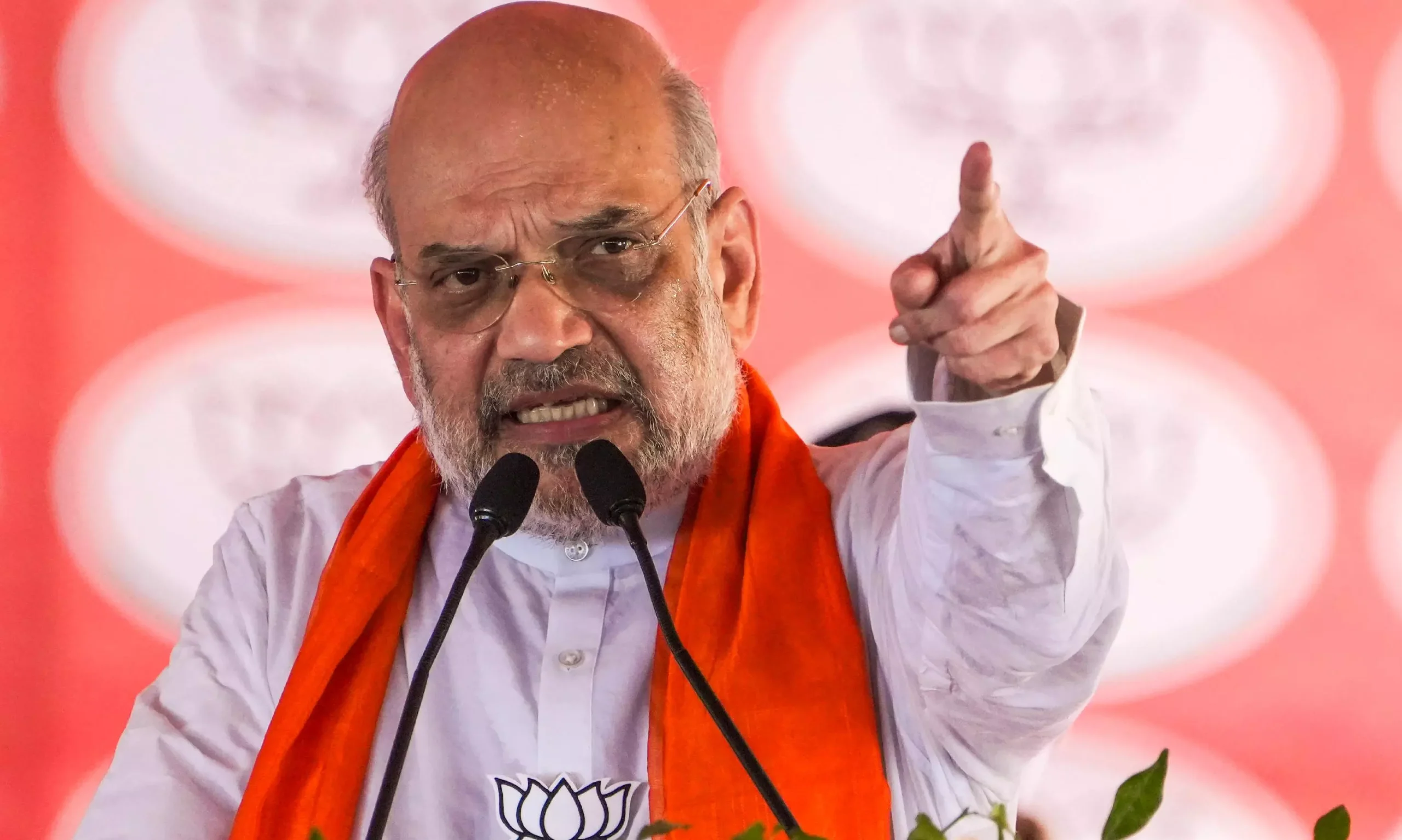
Amit Shah described the implementation of the new criminal laws as a historic reform that will make India’s justice system modern, transparent, and time-bound.

Published

on

Union Home Minister Amit Shah on Monday termed the implementation of India’s three new criminal laws as a “historic reform”, calling it the biggest transformation in the country’s justice system in the 21st century. Speaking at the Jaipur Exhibition and Convention Centre (JECC), Shah said the new legal framework aims to make justice faster, fairer, and more accessible for every citizen.

Shift From Punishment To Justice

The exhibition in Jaipur highlights how India’s criminal justice system has evolved from being punitive to justice and transparency-oriented. Shah said that earlier, cases would remain pending for 25 to 30 years, depriving citizens of justice. The new laws, he said, will ensure time-bound trials and investigations, ending the culture of prolonged litigation.

“The three new laws will provide easy and timely access to justice for all. Through these laws, our justice system will now focus on justice rather than punishment,” Shah said. He added that this change will rebuild public faith in the judiciary and simplify legal procedures.

“Most Modern System In The World”

Expressing confidence in the reforms, Shah said, “After the complete implementation of these laws, India’s criminal justice system will become the most modern in the world.”

The new laws — Bharatiya Nyaya Sanhita (BNS), Bharatiya Nagarik Suraksha Sanhita (BNSS), and Bharatiya Sakshya Adhiniyam (BSA) — came into effect on July 1, 2024, replacing colonial-era legislations like the Indian Penal Code (IPC), Code of Criminal Procedure (CrPC), and Indian Evidence Act.

Faster Prosecution And Digital Reforms

Under the new system, chargesheets must be filed within 60 days for regular offences and 90 days for serious crimes. Shah noted that within a year of implementation, over 50% of chargesheets are already being filed on time — a figure expected to rise to 90% next year.

He also said the reforms reduce the need for physical appearances in court through video conferencing, allowing accused persons, police, doctors, and experts to attend proceedings remotely. This, he said, will save time, money, and reduce chances of undertrial escapes.

The system also introduces e-FIR and Zero FIR provisions, simplifying how citizens file complaints. Shah cited data from Rajasthan, where conviction rates increased from 42% to 60% since the laws came into effect, with expectations to reach 90% in the near future.

Training And Implementation

The government has trained lakhs of police personnel and judicial officers to ensure a smooth rollout of the new framework. The exhibition also demonstrated how the victim-centric approach has improved investigation quality and productivity.

The event will continue till October 18, though Shah suggested extending it to allow more public participation.

He also virtually launched several development projects worth ₹4 lakh crore, part of the ‘Rising Rajasthan’ summit commitments, asserting that the BJP government “delivers what it promises.”

India News

Noida workers protest under probe as X Storm social media group comes under scanner

Probe into Noida workers protest highlights suspected role of ‘X Storm’ social media group and digital coordination behind the unrest.

Published

on

Authorities have intensified their investigation into the recent workers’ protest in Noida, with a social media network known as “X Storm” now emerging as a key focus in the probe.

The unrest, which began as a demonstration over wage-related concerns, escalated into violence in parts of the industrial hub, prompting a wider inquiry into the factors behind the mobilisation of large groups of workers.

According to officials, investigators are examining how digital platforms may have been used to coordinate the protests. Preliminary findings suggest that multiple online groups and accounts played a role in rapidly mobilising participants and spreading messages related to the agitation.

The role of social media has come under particular scrutiny, with authorities looking into whether organised efforts were made to amplify tensions. Officials are also probing the origin of messages circulated online and the possible involvement of coordinated networks.

Recent findings indicate that such protests may not have been entirely spontaneous. Investigations in similar cases have revealed the use of newly created social media accounts, messaging platforms, and closed groups to mobilise crowds quickly and maintain anonymity.

Additionally, concerns have been raised about external elements potentially influencing the protests. Earlier reports have pointed to the involvement of non-worker participants and coordinated digital campaigns that may have contributed to the escalation of violence.

The Noida protest is part of a broader wave of labour unrest driven by demands for higher wages and improved working conditions. The demonstrations turned violent in some areas, with incidents of stone pelting, arson, and clashes with police reported during the peak of the agitation.

Authorities are now focusing on tracing digital footprints, identifying administrators of online groups, and determining whether there was any larger network orchestrating the unrest.

The investigation remains ongoing, with officials stating that appropriate action will be taken based on the findings.

Continue Reading

India News

Rahul Gandhi’s Bengal poll visit cancelled amid permission row, Congress targets Trinamool

Rahul Gandhi’s Bengal visit was cancelled after authorities did not grant permission, triggering a political row between Congress and Trinamool.

Published

on

Rahul-Gandhi

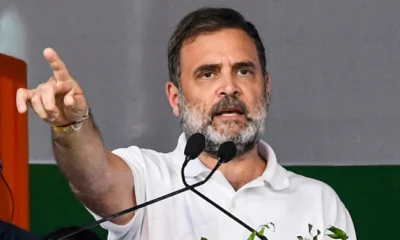
Congress leader Rahul Gandhi’s scheduled visit to West Bengal for election campaigning has been cancelled after the party failed to secure the required administrative permission for public events.

The visit, planned for April 23, was called off after the party waited until the evening for clearance but did not receive approval in time to make necessary arrangements.

Congress leaders have alleged that the local administration, under the influence of the ruling Trinamool Congress, did not grant permission for the rally. The party claimed that despite waiting until around 6 pm, the approval did not come through, forcing them to cancel the programme.

Trinamool response

The Trinamool Congress rejected the allegations, stating that all political parties must follow established procedures for holding public meetings. A party minister said applications must be submitted through the designated system within a specified time frame before events.

The Trinamool also indicated that the state government is currently in a caretaker role during the election period, suggesting that questions regarding permissions fall under the purview of the Election Commission.

Fresh dates likely

Congress sources said the party is still keen for Rahul Gandhi to campaign in the state and may seek fresh permission for a visit on April 25 or 26.

Political context

The development comes amid heightened political activity ahead of the 2026 West Bengal Assembly elections, where multiple parties are campaigning aggressively. The Congress and Trinamool Congress, despite being part of broader opposition alignments at the national level, remain direct rivals in the state.

Recent reports also indicate that permission-related issues have affected campaign events in the state, with some rallies being cancelled due to lack of police clearance.

Continue Reading

India News

India will never bow to terror, PM Modi says on Pahalgam attack anniversary

PM Modi remembers victims of the Pahalgam terror attack and reiterates India’s unwavering stand against terrorism.

Published

on

Prime Minister Narendra Modi on Wednesday paid tribute to the victims of the Pahalgam terror attack, marking its first anniversary with a strong message against terrorism.

Remembering those who lost their lives, the Prime Minister said the victims “will never be forgotten” and expressed solidarity with their families. He described the attack as a tragedy that continues to weigh on the nation’s conscience.

Reaffirming India’s position, he said the country stands united in both grief and resolve, adding that India will never bow to any form of terror and that the designs of terrorists will not succeed.

The Pahalgam terror attack took place on April 22, 2025, in Jammu and Kashmir, where 26 civilians, mostly tourists, were killed in one of the deadliest attacks on civilians in recent years.

A reminder of national resolve

The anniversary has been observed as a moment of remembrance and reflection across the country. It highlights both the human cost of terrorism and India’s continued commitment to counter such threats.

Security forces have also reiterated their resolve to ensure justice for the victims and maintain strong vigilance against terrorism.

The Prime Minister’s message underscores a broader policy of zero tolerance towards terrorism, reinforcing that acts targeting innocent civilians will not weaken the country’s determination.

Continue Reading

Trending

© Copyright 2022 APNLIVE.com