English हिन्दी
Connect with us

India News

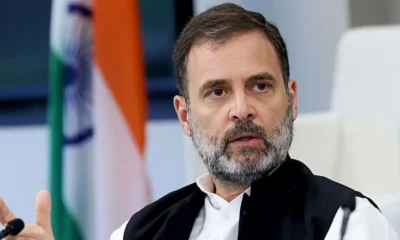
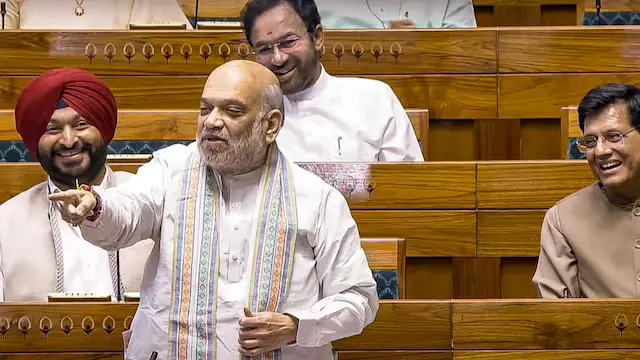
Amit Shah, Rahul Gandhi clash in Lok Sabha as debate on electoral reforms turns heated

A fiery confrontation broke out in the Lok Sabha as Amit Shah and Rahul Gandhi clashed over voter list irregularities, historical allegations, and the Special Intensive Revision process, leading to an Opposition walkout.

Published

on

Amit Shah

Union Home Minister Amit Shah and Leader of the Opposition Rahul Gandhi were locked in a sharp confrontation in the Lok Sabha during the ongoing debate on electoral reforms. The exchange intensified when Gandhi challenged the Home minister to engage in a direct debate over his press conferences alleging irregularities in voter lists.

Shah counters allegations over voter rolls

During his address, Amit Shah criticised the Opposition for raising doubts about existing voter lists while simultaneously objecting to the Special Intensive Revision (SIR) process. He remarked that concerns over voter rolls often emerged only when the Opposition performed poorly in elections. Taking aim at Gandhi’s earlier briefings on alleged discrepancies—one of which had been described as a “Hydrogen Bomb”—Shah accused certain political families of practicing “generational vote theft”.

As Gandhi intervened, demanding Shah explain the immunity provided to Election Commissioners and challenging him to debate the content of his press conferences, the Home minister firmly stated that Parliament would not run as per Gandhi’s directions and that he would decide the order of his responses.

Rahul Gandhi accuses Home minister of avoiding key questions

Unconvinced by Shah’s reply, Gandhi labelled the minister’s remarks “defensive and fearful”. Shah responded that he would not be provoked and asserted that “vote theft” happens when electoral mandates are overturned.

Attack on Nehru-Gandhi family escalates tensions

Amit Shah intensified his criticism by invoking historical examples. He claimed the first instance of “vote theft” occurred during the selection of India’s first Prime Minister, alleging that Sardar Vallabhbhai Patel had secured more votes than Jawaharlal Nehru from provincial Congress units. Shah also referenced the 1975 court verdict that struck down Indira Gandhi’s election from Rae Bareli, calling the events that followed a major attempt at “vote theft”.

He further mentioned a court case alleging that Sonia Gandhi had cast a vote before becoming an Indian citizen—a point immediately contested by Congress MPs.

Opposition walks out after EVM, SIR remarks

Shah asserted that the Opposition’s objections to Electronic Voting Machines and resistance to SIR were attempts to retain ineligible names, including illegal immigrants, on voter lists. This led to a walkout by Opposition MPs.

Outside Parliament, Gandhi reiterated that the minister had not addressed core issues such as transparency in voter lists, clarity on the EVM architecture, or the evidence he presented in his press conferences.

India News

Kharge’s terrorist remark on PM Modi sparks row, Congress chief issues clarification

Kharge’s controversial remark on PM Modi sparks backlash, with BJP hitting out and the Congress chief later issuing a clarification.

Published

on

Congress president Mallikarjun Kharge faces criticism after controversial remark on Prime Minister Narendra Modi, says statement was misinterpreted

A political controversy erupted after Congress president Mallikarjun Kharge referred to Prime Minister Narendra Modi as a “terrorist” during a public address, triggering sharp reactions from the ruling party.

Following the backlash, Kharge issued a clarification, stating that his remarks were misinterpreted and that he did not intend to label the Prime Minister as a terrorist. He instead accused Modi of using threatening language in political discourse.

The comment quickly drew strong criticism from the Bharatiya Janata Party (BJP), with leaders calling the remark inappropriate and accusing the Congress of lowering political discourse. The exchange reflects heightened tensions between the ruling party and the opposition amid the ongoing election season.

Union Finance Minister Nirmala Sitharaman also condemned the remark, describing it as “atrocious” and indicative of a new low in political rhetoric.

The incident has further intensified the war of words between the two parties, with both sides trading accusations as campaigning gains momentum.

Continue Reading

India News

Fresh violence in Manipur as Naga and Kuki groups clash after ambush

Clashes between Naga and Kuki groups erupted in Manipur’s Senapati district after an ambush on civilians, raising fresh concerns over ethnic tensions in the region.

Published

on

mainpur violence

Fresh violence broke out in Manipur’s Senapati district after an ambush on civilians triggered clashes between Naga and Kuki groups, escalating tensions in the hill regions.

According to media reports, the confrontation followed an ambush in which civilians were targeted, leading to anger among local groups and subsequent clashes.

Reports indicate that civilians were killed in the incident, which intensified distrust between communities. Following this, local organisations announced shutdowns and protests, disrupting normal life in several areas.

Security forces have been deployed, and authorities are monitoring the situation closely as tensions remain high.

Clashes were reported in areas near district borders, where both sides confronted each other during enforcement of shutdown calls. The situation escalated into violence, with reports of gunfire and physical altercations in certain pockets.

Authorities have been closely monitoring the situation, and security forces have been deployed to prevent further escalation. However, normal life in affected areas has been disrupted due to fear and uncertainty.

Manipur has witnessed a prolonged period of ethnic tension in recent years, particularly involving different communities in the hill districts. While earlier conflicts largely involved other groups, the latest clashes signal a widening of the unrest.

Experts note that such incidents, especially attacks on civilians, often act as flashpoints that quickly spiral into broader community confrontations.

Continue Reading

India News

TMC and DMK recalibrate poll campaign strategy as I-PAC faces scrutiny

TMC and DMK are recalibrating poll strategies as I-PAC faces scrutiny, though on-ground campaign activities remain steady.

Published

on

Assembly elections

Campaign activities continue on ground while engagement with I-PAC leadership reportedly declines after recent developments

Amid ongoing assembly election campaigns, the Trinamool Congress (TMC) and the Dravida Munnetra Kazhagam (DMK) are recalibrating their poll strategies as political consultancy firm Indian Political Action Committee comes under scrutiny.

According to media reports, campaign activities at the ground level remain largely unaffected in both states. Party workers continue voter outreach, rallies, and booth-level coordination without any visible slowdown.

However, there has been a noticeable reduction in engagement with I-PAC’s senior leadership following recent developments, including investigative actions involving the firm.

Sources indicate that while the broader campaign machinery remains intact, both TMC and DMK are making internal adjustments to ensure continuity and minimise dependence on external strategists. This includes greater reliance on party cadres and local leadership for campaign execution.

The developments come at a crucial time, with elections underway and political parties aiming to maintain momentum. Despite the situation surrounding I-PAC, both parties appear focused on sustaining their outreach efforts and adapting strategies as needed.

Continue Reading

Trending

© Copyright 2022 APNLIVE.com