
India News
Amit Shah says son Jay Shah did not wrong as he done no business with Govt

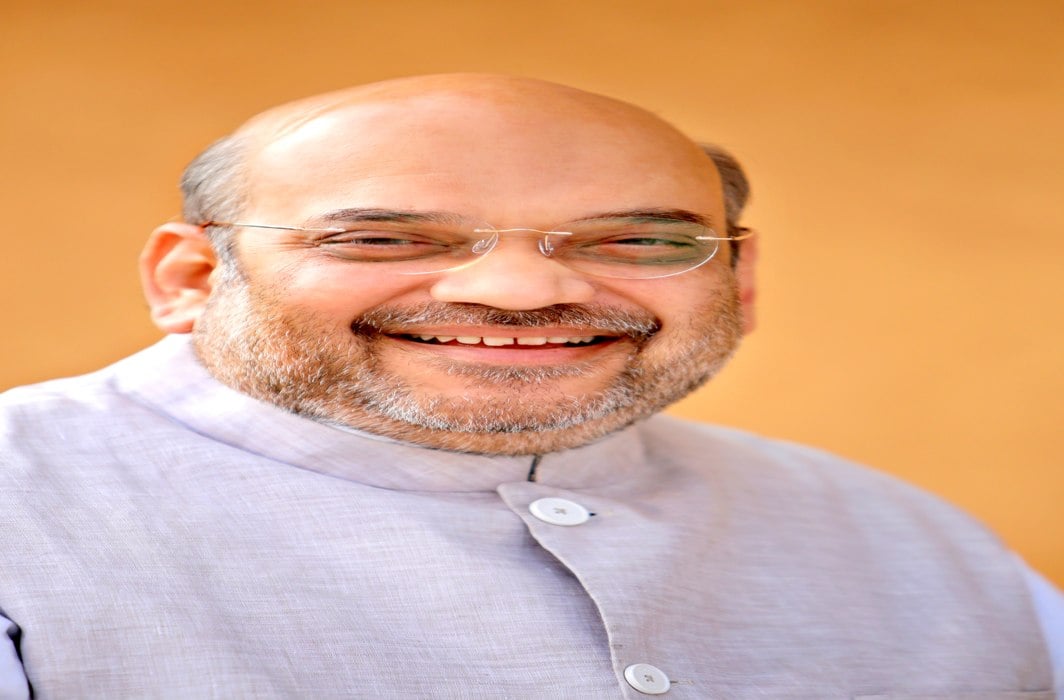
[vc_row][vc_column][vc_column_text]BJP president Amit Shah sought to defend his son Jay Shah’s business growing 16000-fold after his party came to power, saying his company had not received any contract or land from the government and there was no corruption in its businesses.
“As far as the company is concerned, it has not done business worth a rupee with the government. It has not got government land worth a rupee, it has not got any government contract worth even a rupee,” Shah said.
The BJP chief said that by filing a defamation suit, his son had voluntarily sought an inquiry into the allegations. “The court will now decide on the matter. Jay has moved the court,” he said at a programme organised by a news channel here.
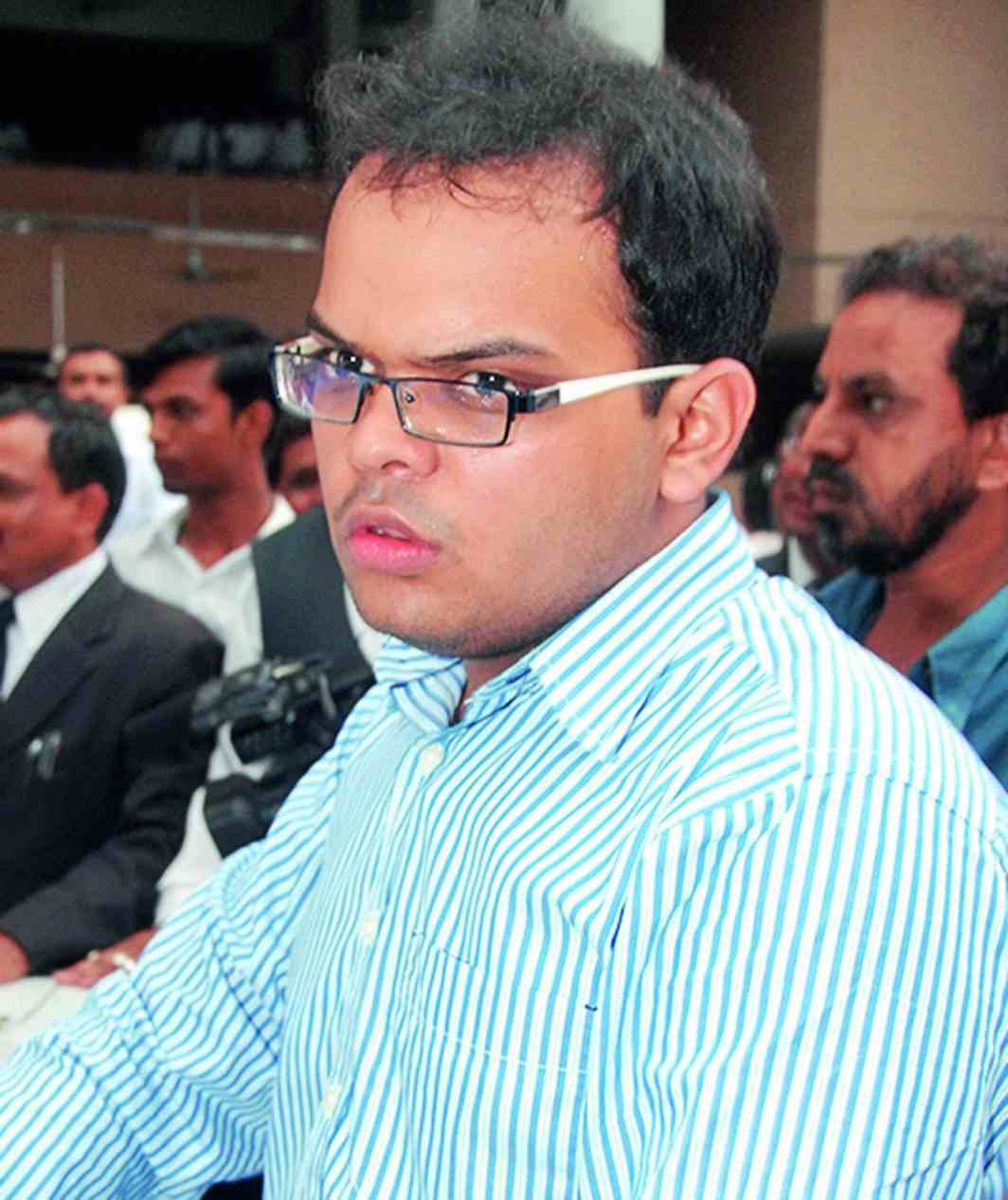 Hitting out at his detractors, Shah said if there were any documents to prove allegations of wrongdoing by his son’s company, they should be produced before a court of law.
News website The Wire had reported that the turnover of Jay Shah’s company had risen spectacularly after the BJP came to power in 2014.
BJP president Amit Shah said the company traded in agricultural commodities such as rice and millets. “They are saying the company’s turnover rose to Rs 80 crore from a mere Rs 50,000, but they are not showing that it incurred a loss of Rs 1.5 crore. This is a high-volume, low-profit business. If the company’s turnover becomes Rs 1 crore, its profit does not become Rs 1 crore. Despite this turnover, he did not earn profit. All the payments were made through cheque; there is no question of money laundering,” he said.
Asked how could the company get a loan of Rs 25 crore from a cooperative bank, Shah said, “You have to understand first that it was not a loan, but a letter of credit. We were given a credit to lift material against cash deposits. Jay’s cash was lying in the bank, and we have paid the loan with interest.”
Seeking to project his son’s defamation suit against the news portal as evidence of his being clean, Amit Shah slammed Congress leaders for demanding an inquiry into Jay’s business dealings, asking why no Congress leader had ever filed a defamation suit when corruption allegations were levelled against them.
“Have they ever filed a criminal defamation or a Rs 100-crore civil defamation suit? Why could they not gather the courage to file such a suit?” he asked.
“The company has not taken commission as in the case of Bofors,” Shah said, referring to the payoffs scandal allegedly involving the Nehru Gandhi family.
A Gujarat court had adjourned hearing on a criminal defamation petition filed by Jay Shah against The Wire on an application filed on behalf of senior lawyer SV Raju, representing Jay, on his non availability. Jay had also filed a civil defamation suit at Ahmedabad district (Mirzapur) court against the website and sought damages of Rs 100 crore.[/vc_column_text][/vc_column][/vc_row]









India News
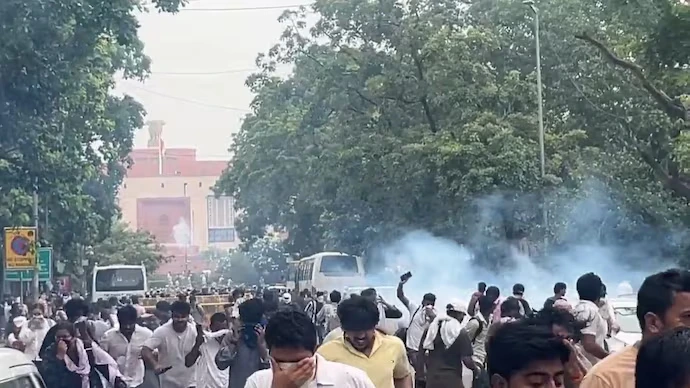
Delhi deploys 25,000 personnel, installs CCTV cameras ahead of CJP march
More than 25,000 police and paramilitary personnel have been deployed in Delhi ahead of the CJP’s planned protest march at Connaught Place. Authorities have also imposed restrictions and stepped up CCTV surveillance.

India News
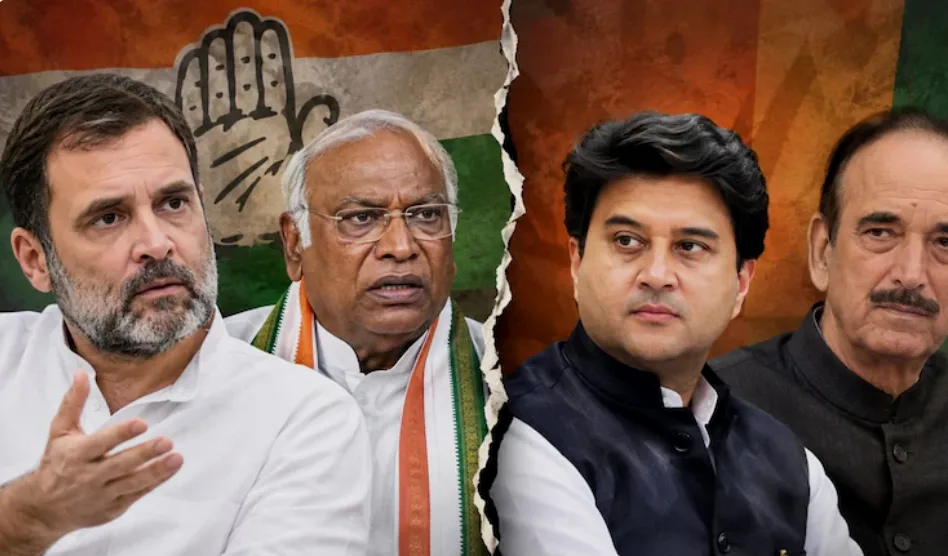
Mallikarjun Kharge’s ‘Your Friends’ jab at Rahul Gandhi over congress exits
Congress president Mallikarjun Kharge took a dig at Rahul Gandhi after the Leader of the Opposition reportedly described former party leaders Jyotiraditya Scindia and Ghulam Nabi Azad as among those who had left the Congress.
India News
Delhi Police offers 11-person limit for CJP’s Connaught Place protest
Delhi Police has offered to facilitate a group of 11 people at Central Park in Connaught Place for the Cockroach Janata Party’s October 16 protest, while warning that violations of prohibitory orders could invite legal action.


India-US trade deal first phase finalised, drafting underway

Election Commission orders voter roll revision in 17 states, UTs

Actor Imran Khan asked to leave India after CJP protest

Delhi Police offers 11-person limit for CJP’s Connaught Place protest

Mallikarjun Kharge’s ‘Your Friends’ jab at Rahul Gandhi over congress exits

Magnitude 7 earthquake strikes Russia’s Kamchatka Peninsula

Delhi deploys 25,000 personnel, installs CCTV cameras ahead of CJP march
Mallikarjun Kharge’s ‘Your Friends’ jab at Rahul Gandhi over congress exits
Delhi Police offers 11-person limit for CJP’s Connaught Place protest
Actor Imran Khan asked to leave India after CJP protest

Afghan Men Try To Hang With The Jet Engine Of The Aircraft in Kabul- Afghanistan News – Kabul News
Trending Top 10 News: 10000 Crore Fine on Flipkart, Apple to Launch Unique Feature, Hdfc Bank Job Ad

Trending Top 10 News: Nokia 6310, Apple sales, Bachpan ka Pyar Video Kid, Dainik Bhaskar IT Raid

Trending Top 10 News: Canada bans Indian flights, Rain in Delhi NCR, AIMIM Twitter hacked, Raj Kundra case

Trending Top 10 News: Shein India, Apple New Service, Pocket Oxygen, Oppo Launched New Phone
-
 India News23 hours ago
India-US trade deal first phase finalised, drafting underway
-
 India News21 hours ago
Election Commission orders voter roll revision in 17 states, UTs
-
 India News20 hours ago
Actor Imran Khan asked to leave India after CJP protest
-
 India News19 hours ago
Delhi Police offers 11-person limit for CJP’s Connaught Place protest
-
 India News8 hours ago
Mallikarjun Kharge’s ‘Your Friends’ jab at Rahul Gandhi over congress exits
-
 India News7 hours ago
Delhi deploys 25,000 personnel, installs CCTV cameras ahead of CJP march
-
 Latest world news7 hours ago
Magnitude 7 earthquake strikes Russia’s Kamchatka Peninsula
