
India News
Is Hindu Rashtra Unnecessary? India Became Hindu Raj in 1947

[vc_row][vc_column][vc_column_text]By: Saeed Naqvi
How indistinguishable the Congress ideologically is from the BJP was the theme of the main edit page article written by French scholars Christophe Jaffrelot and Gilles Verniers in the Indian Express on October 5.
The editor grasped the heart of the matter and gave it an apt headline: Congress and the BJP, “Tweedledum and Tweedledee”. The Jaffrelot-Verniers duet have, for their laboratory, focused on Gujarat – on how principal leaders have swung from one side to the other, repeatedly, like trapeze artistes in a circus.
I suspect this is the beginning of a wider research because the Tweedledum-Tweedledee image is applicable to all regions wherever there is some Congress presence. In most places it looks like the BJP’s B team, and has conceded spaces to it for that very reason.
In recent decades there have been two distinct postures the Congress has struck towards the BJP. In Madhya Pradesh, under the leadership of Arjun Singh and Digvijay Singh, the party has taken the BJP head on. There was no other force to combat.
In Kerala, particularly under K. Karunakaran’s chief ministership, the party turned to the Sangh Parivar, whenever help was required for electoral battle with the Left Front. In fact Karunakaran was a master at ambidextrous politics. On one occasion in Kozhikode he maneuvered the Congress, BJP and Muslim League on the same side to defeat CPM’s T.K. Hamza.
 What has been the result of the Congress grappling with Hindutva in Bhopal or flirting with it in Thiruvanthapauram?
State and district level Muslim congress leaders I met last week in Indore, Dhar and Mandu painted a dismal picture of their circumstance. Their party’s high command in New Delhi or Bhopal took them for granted. “TINA (There Is No Alternative) factor applies to us” Mohammad Kamran, youth Congress leader lamented. When a Muslim majority village was gutted, no “senior” (for which read “Hindu”) congress leader turned up to inquire.
Circumstances in Rajasthan are similar. When 10 Muslims were shot dead by policemen in Gopalgarh in 2011, an hour’s drive from Delhi, neither Rahul Gandhi nor Home Minister, P. Chidambaram considered it worth their while to visit despite several delegations imploring them to do so. This was the first instance in the country of police firing inside a mosque.
In Kerala, the frequent Congress dependence on sectarian groups has had the effect of slowly opening the door just enough for Hindutva forces to make a bid for replacing the Congress. That this process has been slow is attributable to the state’s distinct and enlightened social structure.
This did not deter Karunakaran from his efforts to “Brahminize” Rajiv Gandhi who, in his perception, would not graduate from the ranks of the “Baba log” without persistent “ang pradarshan” or ritual prayers at the Krishna temple in Guruvayur. Whether Rajiv transited to becoming a Brahmin or even a Hindu is less than clear. What is certain is that he developed a taste for Guruvayur’s famous rice and milk pudding, payasam, large quantities of which were made available for his extended family’s New Year celebrations at Lakshadweep islands.
Rajiv Gandhi’s unprecedented victory in the December 1984 elections (404 seats in House of 514) was interpreted as Hindu consolidation in response to minority communalism which had resulted in Indira Gandhi’s assassination. Even the party, treasurer, Sitaram Kesari, non communal to his finger tips, interpreted the mandate in majoritarian terms.
In 1986, V.N. Gadgil, among the more enlightened General Secretaries of the Congress, told me in great confidence: “the feeling is widespread among Hindus, that Muslims were being appeased.”
This thinking guided subsequent Congress actions, making it just as indistinguishable from the BJP as Jeffrelot and Verniers found it in Gujarat. How “appeased” the Muslims were became clear in the Sachar Committee report on their social-economic conditions during sixty years of Congress rule. They had, in their social status, tumbled below the lowest Dalits.
Ranganath Misra Commission’s recommendations to help Muslims out of the plight described by Sachar Committee, was placed on the shelf where it gathers dust to this day.
Srikrishna Commission which named politicians directly involved in Mumbai riots of 1992-93 in which 900 people (majority of them Muslims) were killed and their shops and houses gutted, has remained secret.
It would require amnesia of a very high order to heap all the credit for the brazen saffronization at Naendra Modi’s door. It would require magic or miracle to have advanced the Hindutva cause with such rapidity in three years. Frankly, the ground has been prepared over the past 70 years.
We must not forget, the Hindu Mahasabha, RSS, Akhil Bharatiya Ram Rajya Parishad and elements in the Congress were quite “indistinguishable” one from the other all along.
The founder of the Hindu Mahasabha, Pandit Madan Mohan Malaviya was a four time President of the Congress. His vision of India would not have been very different from that of the Banaras Hindu University which he founded.
Rajeshwar Dayal, the first Home Secretary of UP, in his memoirs, A Life of Our Times, mentions an astonishing story about Pandit Govind Ballabh Pant, UP’s first Chief Minister and RSS supremo Guru Golwalkar. The RSS chief was found with a trunk load of incriminating evidence of extensive plans for communal violence in Western UP. The Chief Minister however enabled him to escape.
It all leads to the inescapable conclusion, argued in my book “Being The Other: The Muslim in India”. Having accepted Mountbatten’s June 3, 1947, plan for the Partition of India, Congress de facto accepted the Two-Nation theory while publicly arguing against it. Dissembling was essential to keep Kashmir. On August 15, 1947, India seamlessly glided from British Raj to Hindu Raj. It could have been named Hindustan (just as the other country was called Pakistan). With Hindu at the helm a more honest bargain on sharing power would have been possible. The painful process of a second distillation for a Hindu Rashtra could have been avoided.[/vc_column_text][/vc_column][/vc_row]





India News
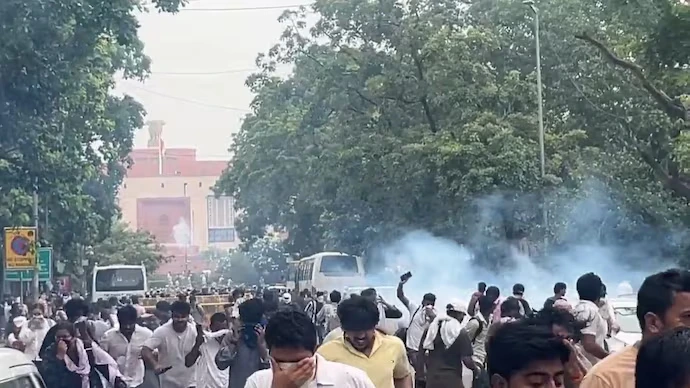
Delhi deploys 25,000 personnel, installs CCTV cameras ahead of CJP march
More than 25,000 police and paramilitary personnel have been deployed in Delhi ahead of the CJP’s planned protest march at Connaught Place. Authorities have also imposed restrictions and stepped up CCTV surveillance.

India News
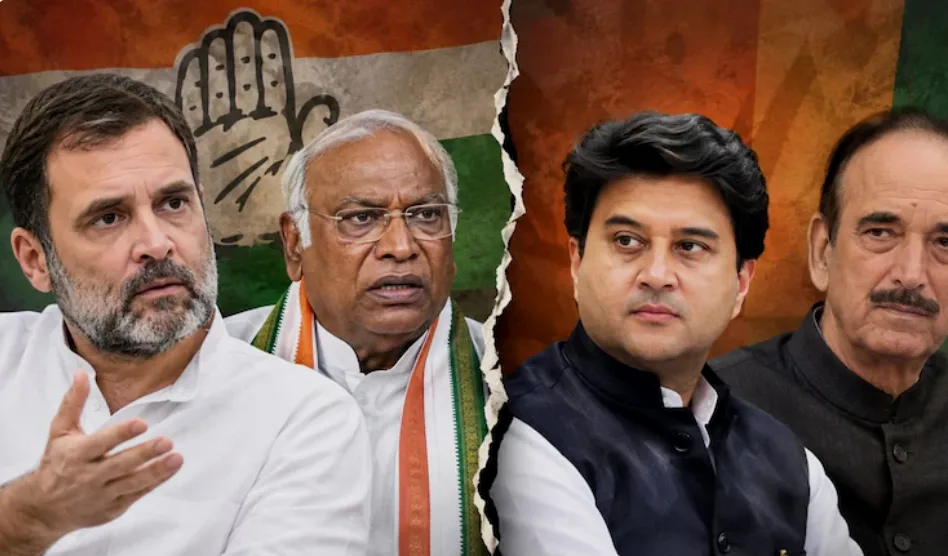
Mallikarjun Kharge’s ‘Your Friends’ jab at Rahul Gandhi over congress exits
Congress president Mallikarjun Kharge took a dig at Rahul Gandhi after the Leader of the Opposition reportedly described former party leaders Jyotiraditya Scindia and Ghulam Nabi Azad as among those who had left the Congress.
India News
Delhi Police offers 11-person limit for CJP’s Connaught Place protest
Delhi Police has offered to facilitate a group of 11 people at Central Park in Connaught Place for the Cockroach Janata Party’s October 16 protest, while warning that violations of prohibitory orders could invite legal action.


India-US trade deal first phase finalised, drafting underway

Election Commission orders voter roll revision in 17 states, UTs

Actor Imran Khan asked to leave India after CJP protest

Delhi Police offers 11-person limit for CJP’s Connaught Place protest

Mallikarjun Kharge’s ‘Your Friends’ jab at Rahul Gandhi over congress exits

Magnitude 7 earthquake strikes Russia’s Kamchatka Peninsula

Delhi deploys 25,000 personnel, installs CCTV cameras ahead of CJP march
Mallikarjun Kharge’s ‘Your Friends’ jab at Rahul Gandhi over congress exits
Delhi Police offers 11-person limit for CJP’s Connaught Place protest
Actor Imran Khan asked to leave India after CJP protest

Afghan Men Try To Hang With The Jet Engine Of The Aircraft in Kabul- Afghanistan News – Kabul News
Trending Top 10 News: 10000 Crore Fine on Flipkart, Apple to Launch Unique Feature, Hdfc Bank Job Ad

Trending Top 10 News: Nokia 6310, Apple sales, Bachpan ka Pyar Video Kid, Dainik Bhaskar IT Raid

Trending Top 10 News: Canada bans Indian flights, Rain in Delhi NCR, AIMIM Twitter hacked, Raj Kundra case

Trending Top 10 News: Shein India, Apple New Service, Pocket Oxygen, Oppo Launched New Phone
-
 India News22 hours ago
India-US trade deal first phase finalised, drafting underway
-
 India News20 hours ago
Election Commission orders voter roll revision in 17 states, UTs
-
 India News20 hours ago
Actor Imran Khan asked to leave India after CJP protest
-
 India News18 hours ago
Delhi Police offers 11-person limit for CJP’s Connaught Place protest
-
 India News7 hours ago
Mallikarjun Kharge’s ‘Your Friends’ jab at Rahul Gandhi over congress exits
-
 India News7 hours ago
Delhi deploys 25,000 personnel, installs CCTV cameras ahead of CJP march
-
 Latest world news6 hours ago
Magnitude 7 earthquake strikes Russia’s Kamchatka Peninsula
