English हिन्दी
Connect with us

India News

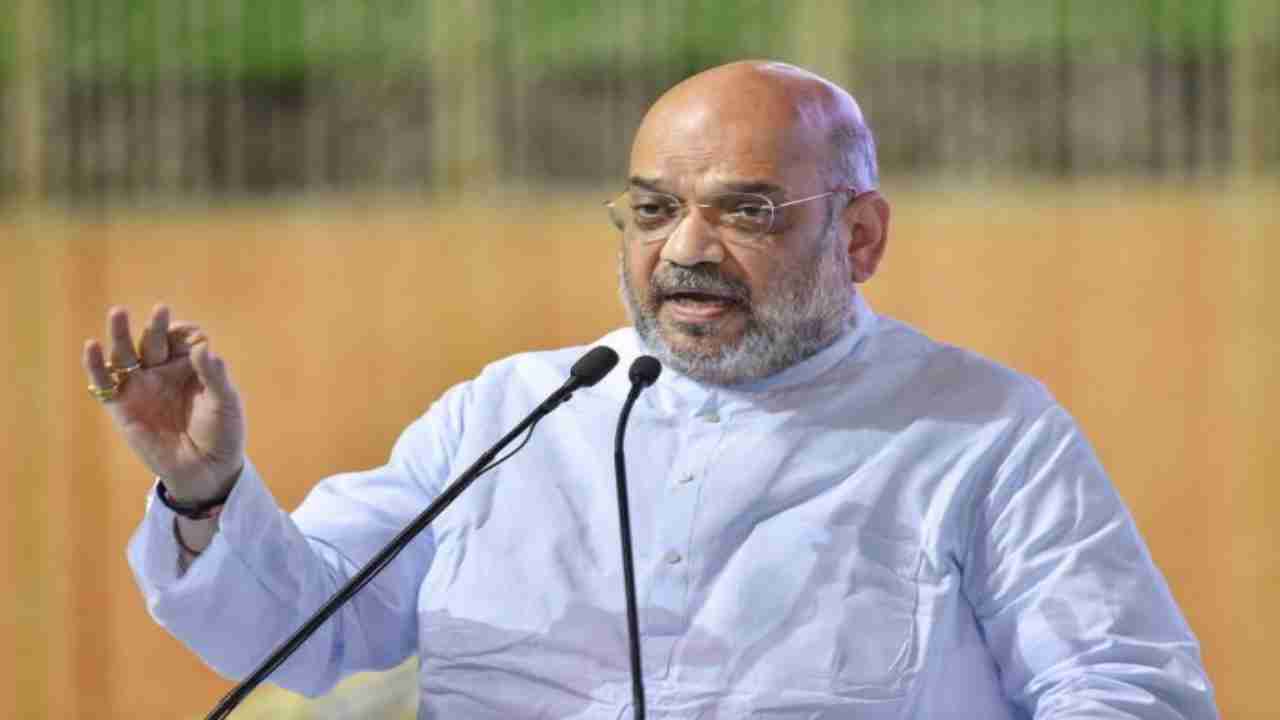
Amit Shah’s remarks regarding imposition of Hindi language in the country draw flak on Twitter

Presiding the 37th meeting of the Parliamentary Official Language Committee, Shah discussed the importance of Hindi and emphasized making it an appropriate alternative to the English language across India.

Published

on

Amit Shah

The debate over the imposition of the Hindi language created a stir on Twitter after Union Home Minister Amit Shah remarked that Hindi should be regarded as an alternative to English and that people from different states of the country should converse in Hindi.

Presiding the 37th meeting of the Parliamentary Official Language Committee, Shah discussed the importance of Hindi and emphasized making it an appropriate alternative to the English language across India. However, this didn’t go well with the people, especially the South Indians.
Former Chief Minister of Karnataka Siddaramaiah tweeted that as a Kannadiga, he takes strong offense to Amit Shah’s comment on official language and medium of communication. Hindi is not our National Language and we will never let it be, he added.

Read Also: Amit Shah’s remarks regarding imposition of Hindi language in the country draw flak on Twitter

One user wrote that for Kannadigas, except Kannada, the rest all foreign languages!! Non-Hindi states should remind Mr Shah that this is Union and we can make our choices, he added. Another commented that he is Half Kannadiga and Half Telugodu by birth. It’s my choice to decide which language I should learn and which language not to learn, stop imposing Hindi on us, he wrote.

I am a Marathi. I use English to communicate with my Tamil, Bengali, and Punjabi friends. It’s my wish. GOI cannot dictate me to use a particular language. Hindi imposition and imperialism are worse than the oppression by the British, said another.

Shah stated that the moment has come for Hindi to become a major part of the country’s unity and also informed that now 70 percent of the agenda of the Cabinet is prepared in Hindi. The home minister stated that when citizens of different states communicate with one another, they should do so in the language of India.

‘CBI officer switched off phone’: Aakar Patel seeks action against CBI after being stopped at Bengaluru airport

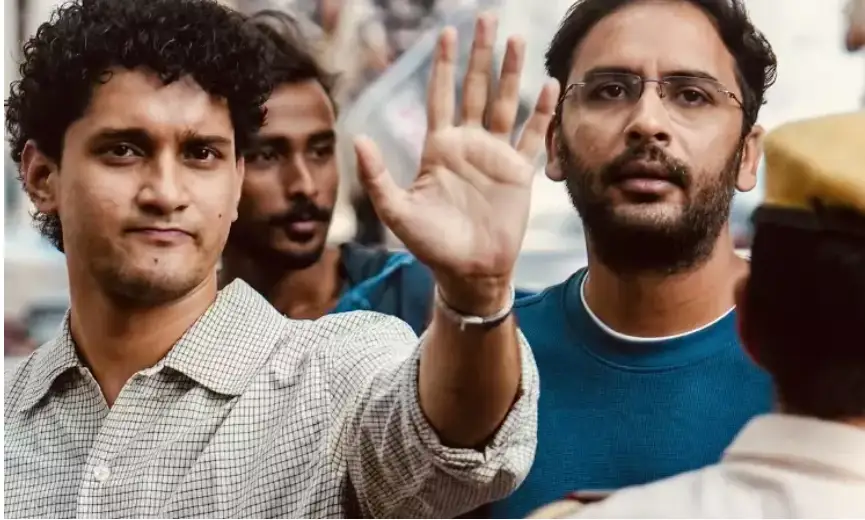
Madhya Pradesh: Group of men including journalist stripped at Sidhi police station, SHO says they were kept in underwear because of security purposes

India News

CJP says Dharmendra Pradhan’s resignation non-negotiable ahead of third round of talks

CJP has hardened its stand before the third round of talks with the Centre, insisting that Education Minister Dharmendra Pradhan’s resignation remains its primary and non-negotiable demand.

Published

on

The Cockroach Janta Party (CJP) has reiterated that the resignation of Union Education Minister Dharmendra Pradhan remains its top demand, just hours before the third round of discussions with the Centre on Saturday.

CJP spokesperson Ashutosh Ranka said the organisation would see little purpose in continuing negotiations if the government was unwilling to remove the minister.

In a post on X, Ranka said Dharmendra Pradhan’s resignation was “non-negotiable” and added that there was no point in holding further discussions if the government rejected the demand.

The third round of talks is scheduled for Saturday afternoon after Union Ministers JP Nadda and Jitendra Singh met CJP representatives for nearly two hours during the second round of discussions on Friday.

According to the CJP, it has placed three key demands before the Centre:

  • Resignation of Education Minister Dharmendra Pradhan.
  • A guarantee that no legal action will be taken against protesting students.
  • Compensation of Rs 1 crore for the families of students who allegedly died by suicide following the NEET paper leak.

During Friday’s meeting, the Centre agreed in principle to two of the demands — ensuring no legal action against protesting students and providing compensation. However, the demand for the Education Minister’s resignation remains unresolved.

Speaking after the meeting, JP Nadda said the protesters had also submitted five suggestions for reforms to the examination system. He said the government would hold internal discussions before responding during Saturday’s meeting.

Government sources, however, indicated that Dharmendra Pradhan’s resignation is not under consideration. According to the sources, the government believes resignation is not the appropriate course of action and continues to back the minister.

Meanwhile, the Centre has announced several measures aimed at tackling examination paper leaks. Prime Minister Narendra Modi has announced the establishment of fast-track courts to hear paper leak cases, while the government is preparing amendments to strengthen the law with stricter punishments and higher fines.

The Centre has also replaced the Education Secretary and removed 47 officials of the National Testing Agency (NTA), while promising broader reforms within the examination body.

Responding to the action against NTA officials, Ashutosh Ranka said the move alone was insufficient. He maintained that accountability ultimately rests with the Education Minister and reiterated that Dharmendra Pradhan must resign.

Continue Reading

India News

PM Modi’s Instagram reel on exam paper leaks crosses record 303 million views amid Jantar Mantar protests

Prime Minister Narendra Modi’s direct video address addressing exam paper leaks has crossed 303 million views on Instagram amid student demonstrations at Jantar Mantar.

Published

on

Prime Minister Narendra Modi has crossed a global digital milestone, with a single Instagram reel gathering over 303 million views within a 24-hour period. The massive social media turnout eclipsed the previous global record of 300 million views. The digital milestone unfolded against the backdrop of ongoing demonstrations by thousands of youth and student protesters gathered at New Delhi’s Jantar Mantar demanding systemic reforms and accountability following examination malpractices.

Following the high engagement on his initial post, the Prime Minister released a follow-up video message titled “Thank you friends” to express gratitude to young citizens for their constructive suggestions and feedback.

Late-night message addresses student concerns

The record-breaking digital engagement began with a rare late-night selfie video posted by Prime Minister Modi. In the clip, he directly addressed public anxieties regarding examination paper leaks and promised strict executive action against offenders.

By utilizing a direct video format aimed at connecting with younger demographics, the Prime Minister emphasized that the administration treats competitive exam malpractices with extreme seriousness rather than as a minor issue.

Cabinet plans fast-track courts and strict penalties

Detailing actions undertaken over the preceding two and a half months, the Prime Minister stated that the primary objective of the administration has been protecting candidates from losing an academic year. He highlighted the extensive administrative coordination required to arrange re-examinations swiftly for affected candidates.

Furthermore, Prime Minister Modi announced that the Union Cabinet will move forward with a strict legal framework. The proposed measures include establishing fast-track courts and imposing harsh penalties on individuals or criminal syndicates involved in leaking examination papers.

The initial late-night communication generated a surge of approximately one million new followers on the Prime Minister’s profile overnight. In his follow-up statement, PM Modi appreciated the active dialogue created among the youth, remarking that citizen engagement helps strengthen governance.

“This love of yours will remain, and our bond will continue to connect with even more vibrancy,” the Prime Minister stated, thanking supporters for their active involvement.

Continue Reading

India News

Sonam Wangchuk says students’ protection was priority over Pradhan’s resignation

Activist Sonam Wangchuk has clarified that he ended his 26-day hunger strike after receiving written assurances from the Centre on protecting protesters and discussing examination reforms, saying the resignation of Education Minister Dharmendra Pradhan was not his immediate priority.

Published

on

Activist Sonam Wangchuk has explained why he ended his 26-day hunger strike without securing the resignation of Education Minister Dharmendra Pradhan, saying his immediate priority was protecting students and protesters from legal action.

Wangchuk had been observing an indefinite fast since June 28 in solidarity with members of the Cockroach Janta Party (CJP), who have been protesting at Delhi’s Jantar Mantar over alleged irregularities in competitive examinations, demands for education reforms and the resignation of the education minister.

He ended his fast shortly after midnight on Thursday after the Centre gave written assurances that no cases would be registered against peaceful protesters, Parliament would hold a detailed discussion on examination reforms and paper leaks, and compensation for families of students who allegedly died by suicide following the NEET paper leak was under consideration.

Wangchuk explains why resignation was not his immediate demand

In a YouTube video recorded from his hospital bed and released on Friday night, the 59-year-old activist responded to criticism over ending his hunger strike without obtaining Dharmendra Pradhan’s resignation.

Wangchuk said the minister’s resignation remained an important issue but was not the central focus of his negotiations with the Centre.

According to him, ensuring that protesting students did not face FIRs or other legal action was a more urgent concern.

He said he believed the issue of the minister’s resignation would eventually resolve itself and that the movement demanding accountability would continue pursuing that objective.

Rejects allegations of reaching a deal

Wangchuk also dismissed allegations that he had struck a deal with the Centre to end his fast.

He said he was concerned about reports suggesting a possible crackdown on protesters and feared a repeat of the events of September 2025 in Ladakh, where he alleged security forces used force against young protesters.

According to Wangchuk, he believed ending his fast and appealing for peace could help prevent further escalation.

Questioning allegations against him, he said someone seeking a deal would not have remained on a hunger strike for 26 days.

Written assurance on protesters was key condition

Wangchuk said Union ministers JP Nadda and Jitendra Singh met him at Medanta Hospital in Gurugram after he was shifted there from the protest site.

He claimed the ministers agreed to positively consider compensation for families of students who allegedly died by suicide following the NEET paper leak and to support a discussion in Parliament on accountability in the examination system.

However, he said he refused to end his fast until the Centre provided a written assurance that peaceful protesters would not face legal action.

According to Wangchuk, the Centre initially offered only a verbal assurance, but he insisted on a written commitment before agreeing to conclude his fast.

Regrets supporters could not witness end of fast

Wangchuk also expressed disappointment that fellow protesters, Members of Parliament, CJP members and representatives from Ladakh could not be present when he ended his hunger strike.

He claimed many of them were not allowed to meet him before the Union ministers arrived at the hospital.

Calling it his biggest regret, Wangchuk said he had hoped to conclude his fast in the presence of those who had stood by him throughout the movement.

Continue Reading

Trending

© Copyright 2022 APNLIVE.com