English हिन्दी
Connect with us

India News

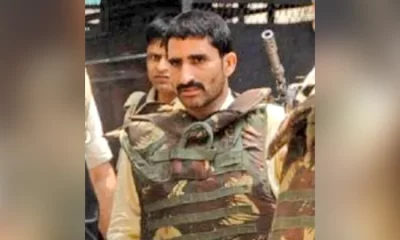
Umesh Pal murder case: Gangster-politician Atiq Ahmad’s son Asad killed in encounter with UP Police

Jailed gangster-politician Atiq Ahmad’s son, Asad, was on Thursday killed in an encounter by the Uttar Pradesh Police in Jhansi.


Published

on

Umesh Pal murder case

Jailed gangster-politician Atiq Ahmad’s son, Asad, was on Thursday killed in an encounter by the Uttar Pradesh Police in Jhansi.
According to reports, Mohammad Asad Ahmad and another man, identified as Ghulam—both wanted in the Umesh Pal murder case and each carrying a bounty of Rs 5 lakh on their heads—were gunned down by the Special Task Force (STF) of the Uttar Pradesh Police in Jhansi.

They said that a team of UP Police’s STF led by Deputy SP Navendu and Deputy SP Vimal, killed the gangster’s son and an associate during a gunfight, adding that sophisticated foreign-made weapons were recovered from the slain men.

Earlier today, Atiq Ahmad was produced before the Chief Judicial Magistrate (CJM) Court in Prayagraj in connection with the Umesh Pal murder case.

Read Also: 41 Jharkhand BJP members, including former CMs, Union Minister, booked for violating prohibitory orders

The Umesh Pal case

Umesh Pal, then a zila panchayat member, had come forward as the prime witness in BSP MLA Raju Pal’s murder, who was killed on January 25, 2005.

Umesh Pal had claimed that Atiq Ahmad and aides kidnapped him at gunpoint on February 28, 2006 after he refused retract his statement given to the police in the BSP leader’s killing. Based on his complaint, the police on July 5, 2007, had lodged an FIR against Ahmed, his brother, and others.

The UP Police had submitted a chargesheet in the matter against 11 accused. One of them later died.

On February 24 this year, Umesh Pal was shot dead along with his two security men in Prayagraj. Atiq and his brother—who were both in jail at the time—are also the accused in the conspiracy to assassinate Umesh Pal.

Last month, Ahmad was pronounced guilty in the 2006 Umesh Pal kidnapping case by an MP-MLA court in Uttar Pradesh’s Prayagraj and handed a life-sentence along with two others, while his brother, Khalid Azim alias Ashraf and six other accused in the case were acquitted.

Special MP-MLA court judge Dinesh Chandra Shukla pronounced the guilty verdict against Atiq Ahmad, Lawyer Saulat Hanif and Dinesh Pasi under section 364-A (kidnapping or abduction in order to murder) of the Indian Penal Code (IPC) which carries the death penalty as the maximum sentence.

Justice Shukla sentenced the guilty trio to 14 years life imprisonment in the case.

ED registers case against BBC India under FEMA for foreign exchange violations

Surat court to hear Rahul Gandhi’s plea against conviction in 2019 Modi surname remark case

India News

Veeramani POCSO case: Vijay questions Stalin over earlier probe

Tamil Nadu Chief Minister Vijay has questioned MK Stalin over the handling of the Veeramani POCSO case, while Stalin has rejected allegations that the previous DMK government protected anyone.

Published

on

Actor Vijay

Tamil Nadu Chief Minister and Tamilaga Vettri Kazhagam (TVK) president C Joseph Vijay has questioned DMK president MK Stalin over the handling of the POCSO case involving Gem Granites founder R Veeramani. The political exchange follows renewed investigation into allegations involving minor girls.

Vijay’s remarks came as the ruling TVK stepped up its questions about how the case was handled during the previous DMK government. The party’s IT wing has alleged that the earlier investigation was weakened and questioned why a final report was filed.

The allegations have been rejected by the DMK. Stalin has said that no order was issued by the DMK government to protect anyone in the case and has called the allegations false and defamatory.

What did Vijay say about the Veeramani case?

Vijay questioned Stalin over the handling of the case and demanded an explanation from the former chief minister.

The TVK has specifically questioned why action was not taken against Veeramani during the previous administration and why the earlier investigation resulted in a closure report.

The party has also raised questions about the role of officials involved in the earlier investigation. These are political allegations made by the TVK and have not been established as facts.

What is the Veeramani POCSO case?

The case concerns allegations of sexual abuse of minors involving R Veeramani, the founder of Gem Granites.

The case came under renewed scrutiny after a special POCSO court rejected an earlier closure report and ordered further investigation. The expanded probe has subsequently identified additional alleged survivors who were minors at the time of the alleged offences, according to current reporting.

The investigation is also examining the circumstances surrounding the earlier probe and whether there were any lapses in how the case was handled.

What has MK Stalin said?

Stalin has rejected allegations that the previous DMK government protected Veeramani.

He has said that no order was issued by the DMK government to shield anyone in the case. Stalin has also said that everyone responsible for the alleged offences, including anyone who aided or attempted to protect the accused, should face the law.

The DMK president has further said that the focus should remain on securing justice for the affected girls rather than making political allegations.

Why has the case become a political issue?

The Veeramani case has become the subject of a political dispute between the ruling TVK and the DMK over the handling of the earlier investigation.

The TVK is questioning the previous government’s handling of the case, while the DMK has denied that it intervened to protect the accused.

At this stage, claims about political interference or deliberate weakening of the earlier investigation should be treated as allegations unless established by the ongoing investigation or judicial proceedings.

Continue Reading

India News

Women wrestlers challenge Brij Bhushan’s acquittal in sexual harassment case

Four women wrestlers have challenged the acquittal of former WFI chief Brij Bhushan Sharan Singh and co-accused Vinod Tomar in a sexual harassment case.

Published

on

Brij Bhushan Sharan Singh

Four women wrestlers have approached a Delhi court challenging the acquittal of former Wrestling Federation of India (WFI) chief and BJP leader Brij Bhushan Sharan Singh in a sexual harassment case.

The wrestlers have also challenged the acquittal of co-accused Vinod Tomar. The matter is scheduled to be heard by a Special Judge at the Rouse Avenue Courts.

The appeal challenges the order passed by an Additional Chief Judicial Magistrate on August 3, 2026, when Brij Bhushan and Tomar were acquitted in the case.

Wrestlers challenge court’s reasoning

In their appeal, the wrestlers have argued that the acquittal order is legally unsustainable and that the evidence was not assessed appropriately.

They have also alleged that the order relied on assumptions about how victims of sexual assault and harassment were expected to behave instead of assessing the evidence and circumstances of the complainants.

The challenge seeks judicial scrutiny of the findings that resulted in the acquittal of Brij Bhushan and Tomar.

Brij Bhushan was acquitted in August

The Rouse Avenue court acquitted Brij Bhushan Sharan Singh on August 3 in the sexual harassment case involving women wrestlers. The court’s decision followed consideration of the evidence and statements presented during the proceedings.

The case had emerged after several women wrestlers accused the former WFI chief of sexual harassment. The allegations had led to a major protest by wrestlers in 2023.

The latest appeal means the acquittal is now being challenged before a higher court.

Continue Reading

India News

Congress protests against Gyanesh Kumar, demands Election chief’s resignation

Congress workers took to the streets against Chief Election Commissioner Gyanesh Kumar, with protests and demonstrations held over the party’s allegations concerning the Election Commission.

Published

on

Congress stepped up its campaign against Chief Election Commissioner Gyanesh Kumar, with party workers taking to the streets and demanding his resignation amid the ongoing row over the Election Commission.

The protests followed repeated criticism by Congress leaders of the poll panel and its functioning. The party has alleged irregularities in the electoral process and has sought accountability from the Election Commission.

Congress leaders have also targeted Gyanesh Kumar personally, with Rahul Gandhi among those calling for the Chief Election Commissioner to step down.

Congress takes protest to streets

Congress workers staged demonstrations in different places as part of the party’s campaign against the Election Commission.

The protests featured sharp symbolism, including masks and handcuffs, as Congress sought to highlight its allegations against the poll panel and demand action against Gyanesh Kumar.

The demonstrations are part of a wider confrontation between the Congress and the Election Commission over issues related to electoral rolls and the conduct of elections.

Congress demands Gyanesh Kumar’s resignation

The Congress has repeatedly demanded the resignation of Gyanesh Kumar, accusing the Election Commission of failing to adequately address the concerns raised by the opposition party.

Rahul Gandhi has also stepped up his criticism of the poll panel. In a statement on Thursday, he demanded that Gyanesh Kumar resign and alleged that the Election Commission had acknowledged the issue of “vote theft”. These are allegations made by the Congress and should not be treated as an established finding unless confirmed by the relevant authority.

The dispute comes amid a broader political debate over electoral rolls, voter verification and the functioning of the Election Commission.

Election Commission under opposition scrutiny

The Congress has intensified its campaign against the poll body in recent weeks, with party leaders repeatedly questioning its decisions and procedures.

The Election Commission, meanwhile, has maintained that India’s electoral process is conducted according to the Constitution, electoral laws and prescribed procedures. Chief Election Commissioner Gyanesh Kumar has previously defended the integrity of the electoral system and rejected claims that electronic voting machines can be remotely hacked.

The latest protests add to the continuing political confrontation over the Election Commission and the opposition’s demands concerning the poll panel’s functioning.

Continue Reading

Trending

© Copyright 2022 APNLIVE.com