English हिन्दी
Connect with us

Top Stories

UP Assembly passes bill on lifts, escalators, registration must before installation

The Bill further directed that the approval must be renewed every five years and also have to be tested every year. A fee of Rs 1,500 needs to be deposited for the same.

Published

on

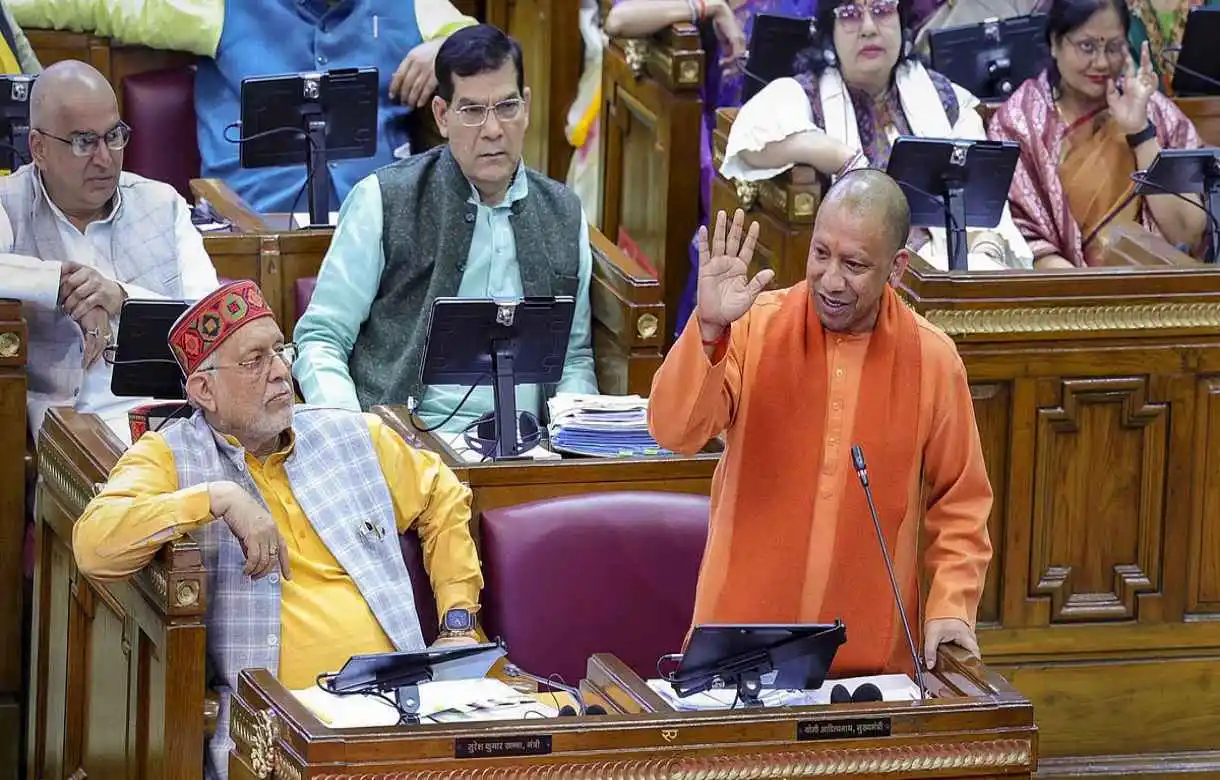
The Uttar Pradesh Assembly on Saturday passed the Lift and Escalator Bill, 2024 and Uttar Pradesh Lokayukta and Up-Lokayukta (Amendment) Bill, 2024.

According to Bill, registration will be mandatory for the installation of lifts and escalators in the state.

In the Lokayukta and Up-Lokayukta Bill, a provision has been made to reduce the tenure of the anti-corruption ombudsman from eight years to five years.

Speaking on the Lift and Escalator Bill, Energy Minister Arvind Kumar Sharma cited an incident that took place in Noida, in which MLAs Dhirendra Singh and Pankaj Singh had demanded a law for lifts and escalators.

Sharma further informed that apart from a mandatory registration for installing lifts and escalators in public, the concerned person has to inform the authority immediately in case of an accident. A provision has also been made for insurance and compensation.

The Bill, which will be an Act now, seeks to get approval from the Energy Department for the installation of lifts and escalators. The Bill makes it mandatory for the agencies, that manufacture, install lifts and escalators, and maintain them, to register with the Director of Electrical Safety.

The Bill further directed that the approval must be renewed every five years and also have to be tested every year. A fee of Rs 1,500 needs to be deposited for the same.

A fine will be imposed on the concerned person If they disobey the orders and ignore to do so.

Maharashtra, Gujarat, West Bengal and Haryana already have laws for installing lifts but there was no such law for it in UP, said Sharma while describing the Bill as the need of the hour.

The implementation of the Bill will not only curb the accident but also strengthen the system.

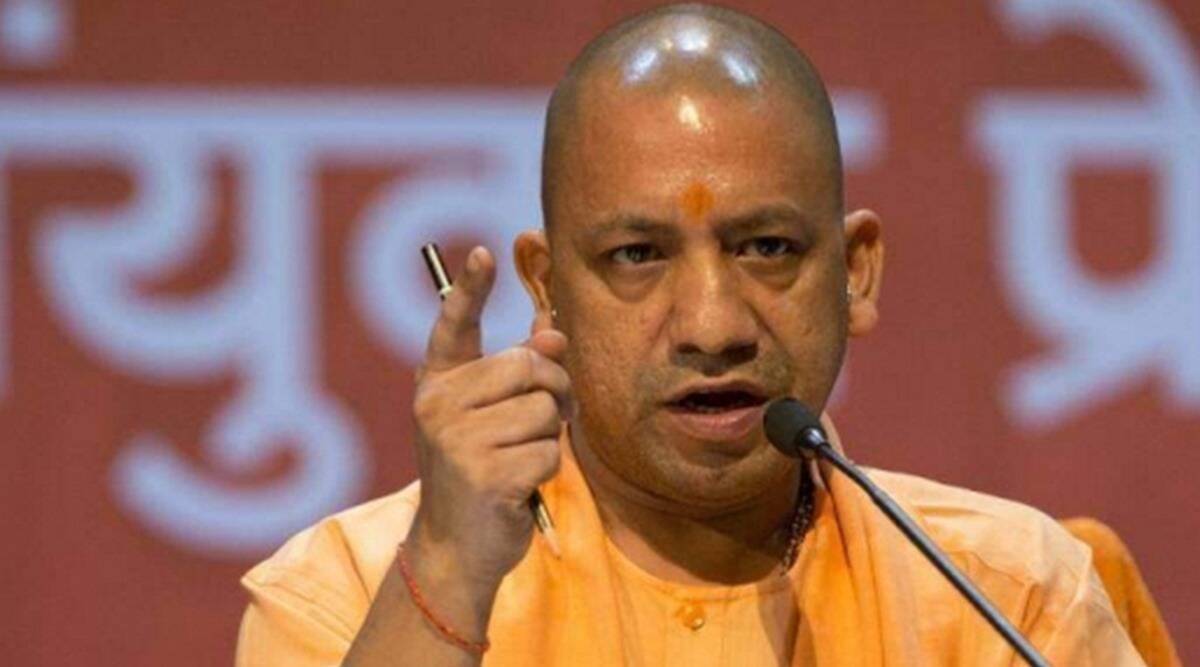
While speaking on the Bill, the BJP member Dhirender Singh thanked Chief Minister Yogi Adityanath and the Energy Minister Sharma for making it possible. He said the Bill will prove to be a milestone.

Latest world news

Bangladesh student leader killing sparks allegation against Yunus-led interim government over February polls

The killing of Bangladesh student leader Sharif Osman Hadi has led to protests and serious allegations against the Yunus-led interim government over the February national election.

Published

on

The killing of Bangladesh student leader Sharif Osman Hadi has triggered sharp political allegations, with his family accusing elements within the Muhammad Yunus-led interim government of attempting to derail the country’s upcoming national election scheduled for February.

Sharif Osman Hadi, spokesperson of Inquilab Moncho — a cultural platform that emerged from the July 2024 uprising — was shot at close range in Dhaka on December 12. He was later airlifted to Singapore for advanced treatment, where he succumbed to his injuries on December 18. His death led to violent protests in parts of the capital, including attacks on offices of newspapers and cultural organisations.

Brother alleges political motive behind killing

At a protest gathering in Shahbagh, Sharif Osman Hadi’s brother, Sharif Omar Hadi, accused a section of the interim government of orchestrating the killing to disrupt the election process.

“You had Osman Hadi killed, and now you are trying to foil the election by using this as an issue,” Omar said while addressing protesters. He claimed that his brother was firm on holding the national election by February and did not align himself with any agency or “foreign masters”.

Omar demanded a swift and transparent trial, warning that delays would damage the election environment. He alleged that the authorities have failed to show any visible progress in the investigation so far.

“If justice for Osman Hadi is not delivered, you too will be compelled to flee Bangladesh one day,” Omar said, drawing an apparent reference to former Prime Minister Sheikh Hasina, who left the country following last year’s nationwide protests that resulted in a change of regime.

Claims of wider conspiracy surface

Leaders of Inquilab Moncho also alleged that the killing was part of a broader conspiracy to undermine the gains of the July uprising and weaken Bangladesh’s sovereignty. They claimed that international intelligence agencies and their local collaborators were involved in the murder.

The group demanded that the government identify and present the accused through an investigation meeting international standards within a fixed timeframe. They warned that protests would intensify if their demands were not met.

Protesters said demonstrations would continue until justice is delivered for Sharif Osman Hadi.

Protest plans and political developments

Leaders of Inquilab Moncho announced that they would not hold any programmes on December 25, the day when Bangladesh Nationalist Party’s acting chairman Tarique Rahman is scheduled to return to the country. They expressed hope that Rahman would extend solidarity to their movement demanding justice.

The allegations and ongoing protests have added to political tensions in Bangladesh as the interim government faces growing scrutiny ahead of the proposed February election.

Continue Reading

India News

India’s LVM3 Baahubali rocket launches heaviest satellite ever from Indian soil

India’s LVM3 ‘Baahubali’ rocket has successfully launched the heaviest satellite ever from Indian soil, placing the BlueBird 6 communication satellite into low Earth orbit.

Published

on

Bahubali Rocket

India has marked a major milestone in its space programme as the Launch Vehicle Mark-3 (LVM3), popularly known as the ‘Baahubali’ rocket, successfully placed the heaviest-ever satellite launched from Indian soil into orbit on Wednesday.

The mission, LVM3-M6, lifted off from the second launch pad at the Sriharikota spaceport in Andhra Pradesh, carrying BlueBird 6, a next-generation communication satellite developed by US-based company AST SpaceMobile.

Mission lifts off from Sriharikota

The 43.5-metre-tall LVM3 rocket, powered by two S200 solid strap-on boosters, took off at 8:55 am after the completion of a 24-hour countdown. The spaceport is located around 135 km east of Chennai.

After a flight lasting nearly 15 minutes, the BlueBird Block-2 satellite separated from the launch vehicle and was injected into its intended low Earth orbit at an altitude of about 520 km.

Confirming the success of the mission, ISRO Chairman and Secretary, Department of Space, Dr V Narayanan said the satellite had been placed “successfully and precisely” into the designated orbit.

Heaviest payload carried by an Indian launcher

According to ISRO, this mission marks the heaviest satellite ever launched from Indian soil using an Indian rocket. Dr Narayanan said the flight was also the third fully commercial mission of the LVM3.

He added that the mission demonstrated the strong performance record of the heavy-lift vehicle and highlighted its reliability in the global launch market.

Focus on space-based mobile broadband

BlueBird 6 is part of the BlueBird Block-2 series of communication satellites. These satellites are designed to provide space-based cellular broadband connectivity directly to standard mobile smartphones, without the need for any special hardware or equipment.

The aim of the technology is to enable broadband services straight from space, expanding connectivity to regions with limited or no terrestrial network coverage.

PM Modi calls launch a proud milestone

Prime Minister Narendra Modi congratulated the teams involved and described the launch as a significant achievement for India’s space sector.

In a statement, the Prime Minister said the successful placement of the US satellite into orbit strengthens India’s heavy-lift launch capability and reinforces the country’s growing role in the global commercial launch market.

Continue Reading

India News

Protests outside Bangladesh High Commission in Delhi over lynching of Hindu youth in Bangladesh

Protests broke out outside the Bangladesh High Commission in Delhi following the lynching of a Hindu youth in Bangladesh’s Mymensingh, with demonstrators demanding justice and accountability.

Published

on

Protests outside Bangladesh High Commission in Delhi over lynching of Hindu youth in Bangladesh

A large protest was held outside the Bangladesh High Commission in New Delhi following the lynching of a Hindu man, Dipu Chandra Das, in Bangladesh’s Mymensingh district. Several demonstrators gathered near the diplomatic mission, holding placards and raising slogans while demanding justice for the victim and accountability from Bangladeshi authorities.

The protest was led by Vishwa Hindu Parishad and Bajrang Dal, who alleged a pattern of violence against Hindus and vandalism of religious sites in Bangladesh. Protesters attempted to push through police barricades, leading to clashes with security personnel. To disperse the crowd and prevent escalation, police resorted to a lathi-charge.

Slogans such as “Bharat Mata Ki Jai”, “Yunus Sarkar hosh me aao” and “Hindu hatiya band karo” were raised as tensions mounted. According to reports, protesters managed to break through at least two layers of barricading before police regained control of the situation. Some demonstrators were detained as authorities worked to clear the area and restore order.

Several protesters were also seen burning effigies of Bangladesh’s interim chief Muhammad Yunus. One protester said that remaining silent would put others at risk, while another alleged attacks on Hindus in Bangladesh. Security agencies had already been on alert and deployed police and paramilitary forces in multiple layers around the High Commission to prevent any untoward incident.

Details of lynching incident in Bangladesh

Dipu Chandra Das, a 25-year-old garment factory worker, was lynched to death by a mob in Baluka area of Mymensingh on December 18 over allegations of blasphemy. His body was later set on fire, triggering widespread outrage and condemnation. At least 12 people have been arrested in connection with the killing.

Diplomatic response from Bangladesh

Earlier, Bangladesh summoned the Indian High Commissioner, expressing concern over protests and incidents targeting its diplomatic missions in India. The Bangladesh Foreign Ministry condemned acts of violence and intimidation against diplomatic establishments, stating that such incidents threaten the safety of diplomatic personnel and undermine principles of mutual respect.

The ministry urged India to conduct a thorough investigation, prevent recurrence of such incidents and ensure security of Bangladesh’s diplomatic missions. The incidents cited included vandalism at the Bangladesh Visa Centre in Siliguri on December 22 and the protest outside the High Commission in New Delhi on December 20.

India, however, dismissed allegations of inadequate security, stating that the protest in New Delhi was brief and posed no threat to the mission. The diplomatic row has its roots in the killing of the Hindu youth in Bangladesh, which has raised international concerns about the safety of minorities.

Continue Reading

Trending

© Copyright 2022 APNLIVE.com