English हिन्दी
Connect with us

Top Stories

Uttar Pradesh: Man arrested for packing non-veg food in newspapers with photos of deities

A man named Talib has been arrested for selling non-veg packed newspapers that feature photos of Hindu deities in Uttar Pradesh’s Sambhal.

Published

on

Man arrested in UP
Talib has been booked under Section 295 A (deliberate act intended to stomp on the religious sentiments of any group) of the IPC.

A man in Uttar Pradesh’s Sambhal has been arrested for selling non-veg packed newspapers that feature photos of Hindu deities. The Hindu Jagran Manch (HJM) district Kailash Gupta has filed an FIR against the person at the Sadar Police Station for insulting the religious beliefs of a particular community. The man has been identified as Mohammad Talib.

Talib has been booked under Section 295 A (deliberate act intended to stomp on the religious sentiments of any group) of the IPC. According to the reports, the Uttar Pradesh police have found newspapers with photos of deities in huge numbers at the hotel counter named Mehak Restaurant.

Read Also: Goa: Anmod Ghat Road closed due to heavy landslide, flood

https://twitter.com/ivishalkaushik/status/1543943882131394560?s=24&t=rRILRgZwEKy2A50Kw3Kkxw

On questioning the Mehak Restaurant, the owner said that his worker had bought newspapers from a salvage store and used these newspapers to wrap food items for customers, just like many restaurants do, without realizing that these newspapers depict photos of Hindu deities.

The family member of Talib, who has been running the restaurant since 2012, said newspapers have been used to pack food items for years. He further said that no one remembers the headlines or photographs in the newspapers before using them to wrap food items.

Earlier, during the Navaratri festival, a local Hindi daily reported that Talib used to pack non-veg items in the newspapers that depicted photos of Hindu deities. According to Circle officer Jitendra Kumar, police rushed to the hotel after receiving a report on Sunday night and seized the objectionable items. Owing to the complex situation, police instantly filed an FIR and detained the owner of the restaurant for insulting a certain group’s religious beliefs.

Haryana: Man opens fire outside Panchkula cafe and flees the spot quickly, bouncer injured; investigation underway

Petrol, diesel to get cheaper in Maharashtra as new CM announces tax cut

Latest world news

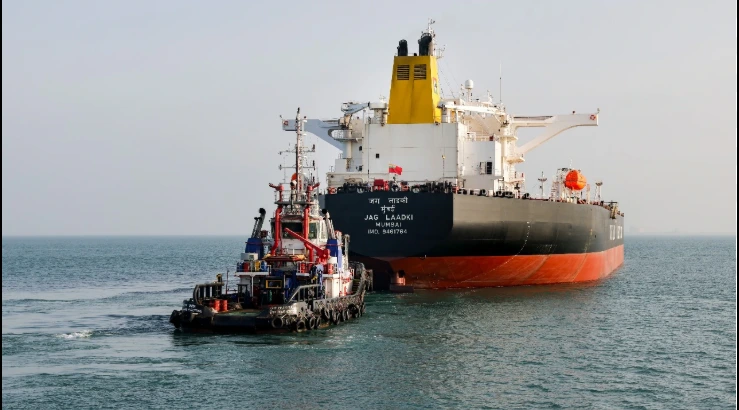
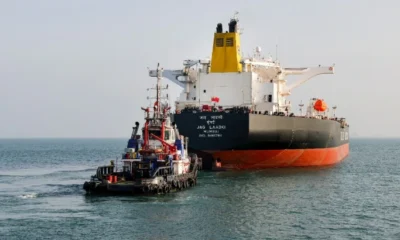
Will Russian oil imports be cut? India reiterates energy security as top priority

India has reiterated that its energy security needs remain paramount, even as the US pushes for a halt to Russian oil imports and links trade concessions to energy sourcing.

Published

on

India has reiterated that its energy security requirements will continue to guide decisions on crude oil imports, amid renewed pressure from the United States to halt purchases from Russia.

Responding to questions on India’s oil sourcing strategy, the Ministry of External Affairs (MEA) said the country’s priority remains meeting the energy needs of its 1.4 billion population. The government emphasised that diversification of energy supplies is central to ensuring stable and affordable access to fuel.

“Insofar as India’s energy sourcing is concerned, ensuring the energy security of 1.4 billion Indians is the supreme priority of the government,” MEA spokesperson Randhir Jaiswal said during a press briefing.

He added that India’s approach involves sourcing energy in line with market conditions and evolving global dynamics, a position the government has consistently articulated over time.

US pressure and tariff rollback linked to trade framework

The remarks come after the White House stated that India had committed to stopping direct or indirect imports of Russian oil and would instead increase purchases from the United States. This claim formed part of the context under which Washington decided to withdraw additional tariffs earlier imposed on Indian goods over New Delhi’s purchases of Russian crude.

The US has repeatedly argued that revenues from Russian oil exports are being used to fund the ongoing war in Ukraine, an allegation that Moscow has denied.

India, however, has not announced any formal change in its oil import policy and has continued to stress that energy decisions are driven by national interest.

Russia says India free to choose suppliers

The Kremlin has also weighed in on the issue, saying India is free to procure oil from any source it chooses. Kremlin spokesperson Dmitry Peskov noted that Russia is not India’s sole supplier of oil and petroleum products.

“India has always purchased these products from other countries. Therefore, we see nothing new here,” Peskov said.

Trade deal outlines tariff changes on both sides

Under the broader trade framework with the US, India has agreed to eliminate or reduce tariffs on all US industrial goods and a wide range of agricultural and food products. These include dried distillers’ grains, red sorghum for animal feed, tree nuts, fresh and processed fruits, soybean oil, as well as wine and spirits.

In return, the US will impose a reciprocal tariff of 18 per cent on Indian-origin goods under the relevant executive order. The tariff will apply to sectors such as textiles and apparel, leather and footwear, plastics and rubber, organic chemicals, home decor, artisanal products, and certain categories of machinery.

Continue Reading

India News

BJP’s Ritu Tawde set to become Mumbai mayor, Shiv Sena’s Sanjay Ghadi named deputy

BJP’s Ritu Tawde is set to take charge as Mumbai mayor, marking the first break in Shiv Sena’s 25-year dominance of the post. Shiv Sena’s Sanjay Ghadi will serve as deputy mayor.

Published

on

BJP corporator Ritu Tawde is set to take over as the next Mumbai mayor, marking a significant political shift in the Brihanmumbai Municipal Corporation (BMC). This will be the first time in 25 years that the mayor’s post will not be held by the Shiv Sena.

Tawde, who represents Ghatkopar, has previously served as chairperson of the BMC’s education committee. Her name was announced by BJP leader Amit Satam on Saturday.

Shiv Sena to hold deputy mayor’s post

Shiv Sena leader Sanjay Shankar Ghadi will be the Deputy Mayor of Mumbai. Elected from Ward No. 5 in the January 15 civic elections, Ghadi will serve a 15-month term. The Shiv Sena has decided to rotate the deputy mayor’s post among four of its corporators.

Ghadi was among the leaders who joined Maharashtra Deputy Chief Minister Eknath Shinde’s faction in 2022, a move that led to the collapse of the Maha Vikas Aghadi government.

The Shiv Sena announced Ghadi’s candidature through party leader Rahul Shewale.

BJP-led alliance crosses majority mark

In the 227-member civic body, the BJP emerged as the single largest party with 89 seats, while the Shiv Sena secured 29 seats. Together, the ruling alliance has 118 corporators, comfortably crossing the majority mark of 114 and ensuring control over the mayoral post.

The Shiv Sena (UBT), which governed the BMC continuously since 1997, won 65 seats. Its allies, the Maharashtra Navnirman Sena (MNS) and the Nationalist Congress Party (Sharad Pawar faction), secured six and one seats, respectively.

The Congress won 24 seats, AIMIM eight, the NCP (Ajit Pawar faction) three, and the Samajwadi Party two seats.

Civic polls held after nine-year gap

The high-stakes BMC elections were conducted after a nine-year gap. The civic body had been under a state-appointed administrator since March 7, 2022, following the end of the previous term.

The BMC remains the country’s richest civic body, with its budget for the 2025–26 financial year pegged at Rs 74,450 crore.

Continue Reading

Latest world news

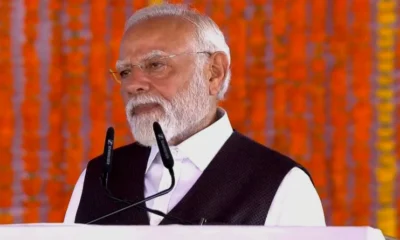
PM Modi thanks President Trump, says India-US trade framework reflects strong partnership

PM Modi said the India-US interim trade framework reflects growing trust between the two countries and offers tariff relief and new opportunities for Indian exporters.

Published

on

Modi trump

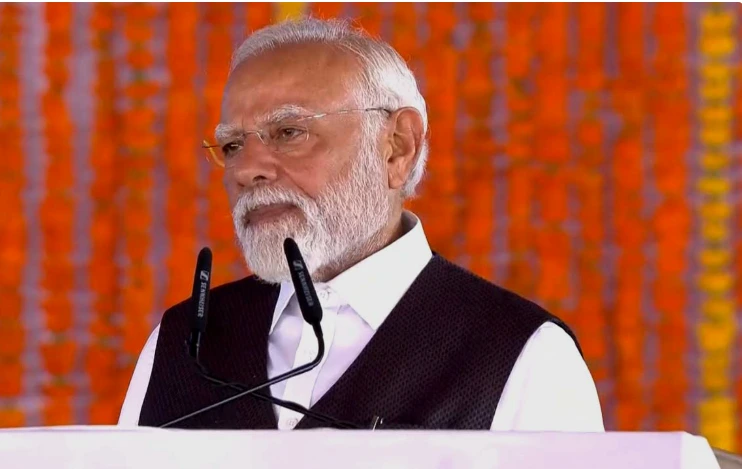
Prime Minister Narendra Modi has welcomed the newly announced interim trade framework between India and the United States, describing it as a reflection of the “growing depth, trust and dynamism” in bilateral relations.

The Prime Minister said the agreement highlights US President Donald Trump’s “personal commitment to robust ties between our countries” and opens up fresh opportunities across multiple sectors of the Indian economy.

Under the framework, the United States will apply a reciprocal tariff rate of 18 per cent on Indian goods. The uniform rate places India in a comparatively stronger position than several countries in the region and provides a competitive advantage for Indian exporters.

Focus on employment, innovation and supply chains

In a post on X, PM Modi said the interim framework is expected to generate large-scale employment, particularly for women and young people. He added that the agreement would deepen cooperation in investment and technology while strengthening resilient and trusted supply chains.

According to the Prime Minister, both countries share a commitment to promoting innovation, and the framework would contribute to global economic growth by enhancing trade and industrial collaboration.

Key sectors set to benefit from tariff relief

The 18 per cent tariff rate is expected to support Indian exporters in sectors such as textiles, apparel, leather goods, chemicals and engineering products. The framework also strengthens India’s position against regional competitors that rely heavily on cost-based exports.

The agreement further opens a path to tariff removal on a wide range of Indian goods, including generic pharmaceuticals, gems and diamonds, and aircraft parts. These sectors already have a strong global presence and face steady demand in the US market.

Washington will also remove tariffs on certain Indian aircraft and aircraft components, while India will receive a preferential tariff rate quota for automotive parts. However, outcomes related to generic drugs and pharmaceutical ingredients will depend on the findings of a US Section 232 investigation.

Preferential market access beyond tariffs

Beyond tariff measures, both countries have agreed to provide preferential market access in sectors of sustained mutual interest, marking another step toward closer economic cooperation under the interim framework.

Continue Reading

Trending

© Copyright 2022 APNLIVE.com