
India News
Burari mass deaths: Handwritten notes reveal chilling details, Crime Branch to quiz relatives


The mysterious death of 11 family members has not been ascertained whether it is a case of murder or a mass suicide. 10 of them were found hanging from an iron-mesh in the ceiling inside one room in Burari’s Sant Nagar area on Sunday morning on 1 July, whereas, the body of a 77-year-old woman was lying with her throat slit on the floor in another room.
Two of the deceased were children – both aged around 15, ANI reported. The bodies of the women and children were found hanging with their hands tied, blindfolded and mouths taped.
The deceased were identified as Narayan Devi (77), her two sons Bhavnesh (50) and Lalit (45), her daughters-in-law Savita (48) and Teena (42), her daughter Pratibha (57), and her grandchildren Priyanka (33), Nitu (25), Monu (23), Dhruv (15) and Shivam (15). The family owns a pet dog that was found tied on the terrace.
Cops suspect ‘godman’ spur Delhi family to commit suicide
Police suspect ‘spiritual’ belief may have pushed the family to take their own lives as some handwritten notes have been discovered that mention the occult and “ways to attain salvation”(Moksha).
Vinit Kumar, Additional Deputy Commissioner of Police (DCP) North, said, “During the search of the house, certain handwritten notes have been found which point towards observance of some definite spiritual and mystical practices by the whole family. These notes have a strong similarity with the manner in which the mouths, eyes of the deceased were tied and taped. This is being investigated further to establish their links with the deaths,” Indian Express reported.
“Coincidentally, these notes have a strong similarity with the manner in which the mouths, eyes etc of the deceased were tied and taped. The same is being investigated further to establish its links with the deaths,” said Vinit Kumar, additional DCP (north) on Sunday.
What do the handwritten notes say?
The handwritten notes stated, “The human body is temporary and one can overcome fear by covering their eyes and mouth”. It was written: everyone should be blindfolded, shouldn’t be able to see anything except zero, use cotton stole or saree along with the rope, use dim lights, Bebe’ (grandmother) can lie down in the other room as she can’t stand, everyone should be more firm and think alike and carry the act between midnight and 1 am.
A note written on June 26 says ‘have to meet God on June 30’. The last one reads: “Stool ka upyog karne se, haath, aankh aur muu bandhne se hi moksh ki prapti hogi (Using a stool, and keeping the hands, eyes and mouth tied up will help attain salvation).” It’s still unclear if the notes were written by a family member or someone from outside. Cops are looking into the possibility of a godman having spurred the family to take the extreme step, Zee News reported.
How incident came to light
Around 6.30 am on Sunday, the milk supplier left a crate outside the shop as it was closed, but the main door of the house was open. Gurucharan, a neighbour, noticed the crate lying unattended. Finding the door open, he went upstairs and found that 10 of the family members were hanging from an iron grill meant for ventilation. The neighbour who had spotted the bodies had gone to the family’s shop to buy milk. When he found the shop shut, he went upstairs to call the owner and saw the bodies.
Police rushed its forensic team to the spot. The cops reviewed the CCTV footage of the area and found that nobody entered the house during the night.
“I informed the neighbours. In the meantime, I searched for Narayan Aunty, who was found dead in the adjacent room. At 7.30 am, a call to the police control room was made and the crime team reached the spot,” Gurucharan said.
Requesting anonymity, officers close to the probe said that apart from spiritual and religious books, they have found a register with the handwritten notes.
According to neighbors, all the family members were very spiritual and every day they would place a plank outside their house with handwritten positive quotes. For the past one week, Lalit was on a maun vrat (observing a vow of silence), neighbours said.
What the police found suspicious was that the placement of the 11 pipes is similar to the placement of how the bodies were found from the house. The police are trying to ascertain whether the four pipes placed in a different way signify the male members while the others denote the female members of the family. One of the pipes is placed away from the others, raising suspicions of whether that has any relation to the body of the elderly woman found on the floor of the house.
Police investigation
Police sources revealed that the deaths were planned days in advance. Three members wanted to commit suicide but later decided to kill the entire family, police added. The family’s pet Labrador was tied on the terrace. The police have also collected fingerprints from the dog’s leash and will use them to ascertain who was behind the crime.
The police have ascertained that Narayana (grandmother) was killed and a murder case under Section 302 of the IPC has been registered. Meanwhile, the police are awaiting the post-mortem reports for the other 10 members.
The police say Narayan Devi’s youngest son Lalit Bhatia, 45, drove the “mass suicide” and jotted down the notes that included “instructions”. He began writing these notes in 2015. He had reportedly taken a vow of silence a few years ago but had recently started talking again, about “visits” from his dead father.
One of his notes appeared to predict doomsday and advised the family that they would be saved.
The entry read: “Antim samay mein, aakhri ichha ki purti ke waqt, aasman hilegi dharti kaanpegi, us waqt tum ghabrana mat, mantra ka jaap badha dena, mein aakar utar loonga aur ko bhi utarne mein madad karunga (in your last hours, while your last wish is fulfilled, the skies will open up and the earth will shake, don’t panic but start chanting the mantra louder. I will come to save you, I will bring you down and help with the others too).” Lalit Bhatia allegedly told the family that he received this message from his father and everyone should follow it.
Family relatives denied the reports of the 11 pipes mystery in the house
The relatives of the Bhatia family have filed a police complaint claiming that it not a case of suicide. The relatives have claimed that the family had never been under the influence of any occultist. “We have filed a police complaint because this isn’t a suicide case. I don’t believe in media reports. They had never been in contact with any ‘baba’,” Bhatia family’s relative Dinesh said.
What the police found suspicious was that the placement of the 11 pipes is similar to the placement of how the bodies were found from the house. However, the family relatives rubbished reports of the 11 pipes in the house having any relation to the deaths. “The pipes in the wall might have been for ventilation,” he added.
Sujata Nagpal, the daughter of the 77-year-old Narayan Devi found dead on the floor, said the media was speculating things and circulating suicide theories. “I used to speak to my mother every alternate day. Everything was going fine within our family. We are a well-educated family and do not believe in babas. It is not a case of suicide. The media has been speculating things and publishing wrong information that my family members committed suicide,” she said.
Another relative, Manoj Bhatia said, “I am in a complete state of shock. They weren’t staunch in their religious beliefs. We still cannot understand the reason (of the deaths) but this is definitely not a case of suicide.”
Lalit Bhatia’s sister Sujata, who lives in Panipat, wept over the unspeakable tragedy and said: “I can’t believe that they committed suicide. Everyone was so happy. Someone has killed my family and the police have to find them,” Zee news reported.
However, sources say that the investigation will consider all plausible angles and the case have been transferred to the crime branch. According to media reports, Crime branch will soon quiz the Burari relatives, India Today reported.
The Bhatia family, who are originally from Rajasthan, ran a grocery shop near the local gurudwara and also ran a furniture business.








India News
PM Modi to inaugurate Rs 169-crore RBI data centre in Odisha on October 25
Prime Minister Narendra Modi is scheduled to visit Odisha on October 25 to inaugurate the Reserve Bank of India’s Rs. 169-crore data centre in Jatni, near Bhubaneswar.


India News
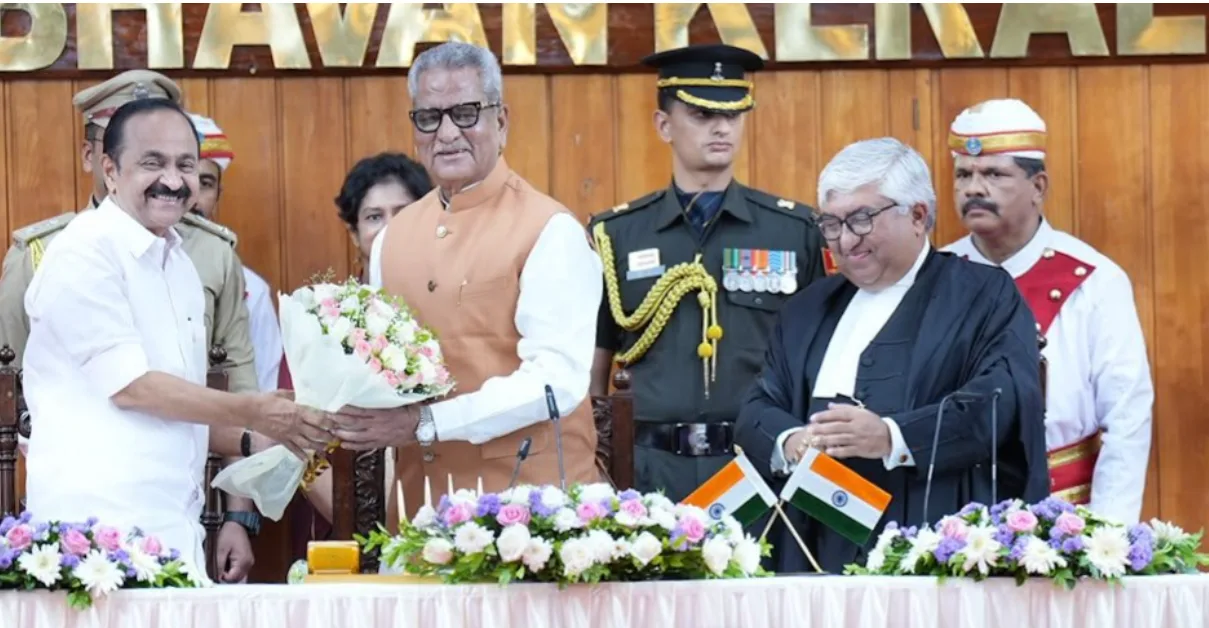
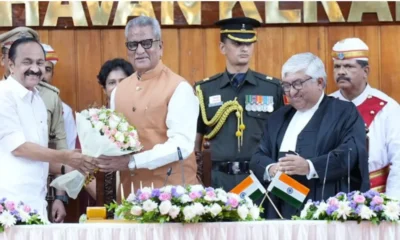
Om Prakash Mathur sworn in as Keralam Governor
Om Prakash Mathur was sworn in as Keralam Governor on Friday. Kerala High Court Chief Justice Soumen Sen administered the oath at Lok Bhavan in Thiruvananthapuram.
India News
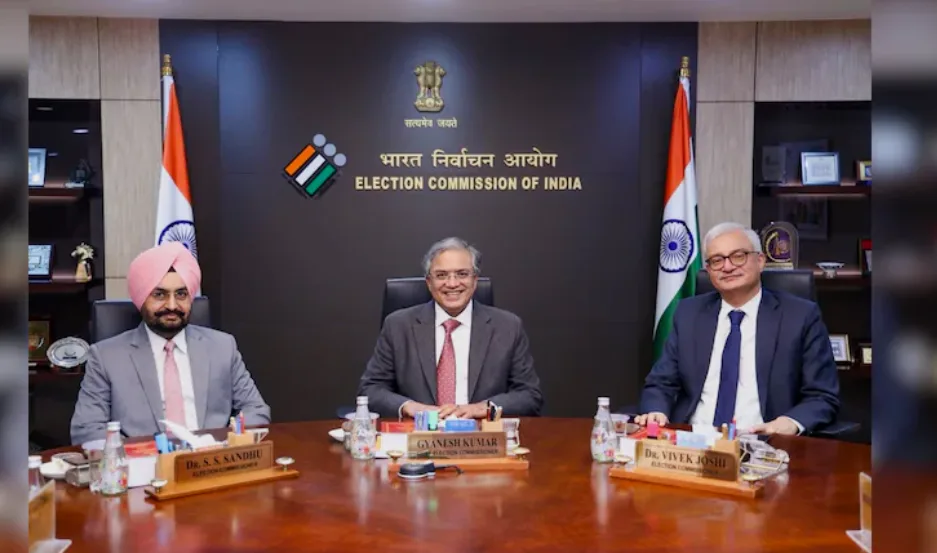
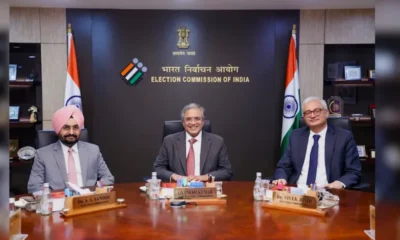
Two election commissioners complained against senior poll officer, RTI reveals
An RTI response has shed light on complaints by two Election Commissioners against a senior poll panel officer and the Cabinet Secretariat’s decision not to intervene directly.

Amit Shah says congress won’t return to power for 30 years

Punjab strike hits public services as 3 lakh employees and roadways workers protest

Two election commissioners complained against senior poll officer, RTI reveals

Om Prakash Mathur sworn in as Keralam Governor

PM Modi to inaugurate Rs 169-crore RBI data centre in Odisha on October 25
PM Modi to inaugurate Rs 169-crore RBI data centre in Odisha on October 25
Om Prakash Mathur sworn in as Keralam Governor
Two election commissioners complained against senior poll officer, RTI reveals
Punjab strike hits public services as 3 lakh employees and roadways workers protest
Amit Shah says congress won’t return to power for 30 years

Afghan Men Try To Hang With The Jet Engine Of The Aircraft in Kabul- Afghanistan News – Kabul News
Trending Top 10 News: 10000 Crore Fine on Flipkart, Apple to Launch Unique Feature, Hdfc Bank Job Ad

Trending Top 10 News: Nokia 6310, Apple sales, Bachpan ka Pyar Video Kid, Dainik Bhaskar IT Raid

Trending Top 10 News: Canada bans Indian flights, Rain in Delhi NCR, AIMIM Twitter hacked, Raj Kundra case

Trending Top 10 News: Shein India, Apple New Service, Pocket Oxygen, Oppo Launched New Phone
-
 India News24 hours ago
Amit Shah says congress won’t return to power for 30 years
-
 India News12 hours ago
Punjab strike hits public services as 3 lakh employees and roadways workers protest
-
 India News12 hours ago
Two election commissioners complained against senior poll officer, RTI reveals
-
 India News1 hour ago
Om Prakash Mathur sworn in as Keralam Governor
-
 India News54 mins ago
PM Modi to inaugurate Rs 169-crore RBI data centre in Odisha on October 25
